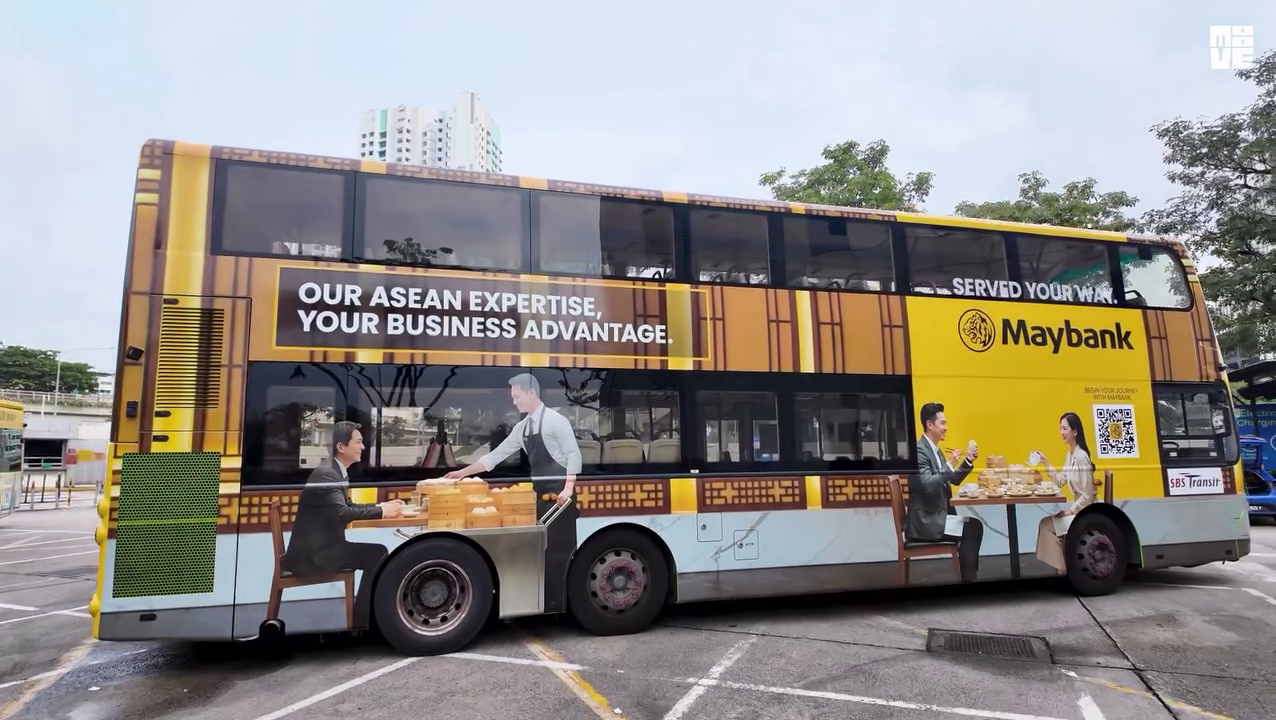
Full-body bus advertising has made a return to Singapore’s public buses, nearly a decade after such campaigns were last permitted.
These relaxed standards mark a new era for the city’s Out-of-Home (OOH) advertising landscape, enabling large-format creative campaigns to reappear on the nation’s roads.
Two-thirds rule
Further reading: Commercial Advertising on Bus Contracting Model Buses | Land Transport Guru
Before the introduction of the Bus Contracting Model (BCM) in 2016, public transport operators were allowed to wrap buses almost entirely with advertisements, provided that the front of the vehicle remained uncovered. This ensured that the operator logo and livery colours at the front remained visible for commuter recognition. On double-deck buses, the upper deck front windscreen could also be fully wrapped.
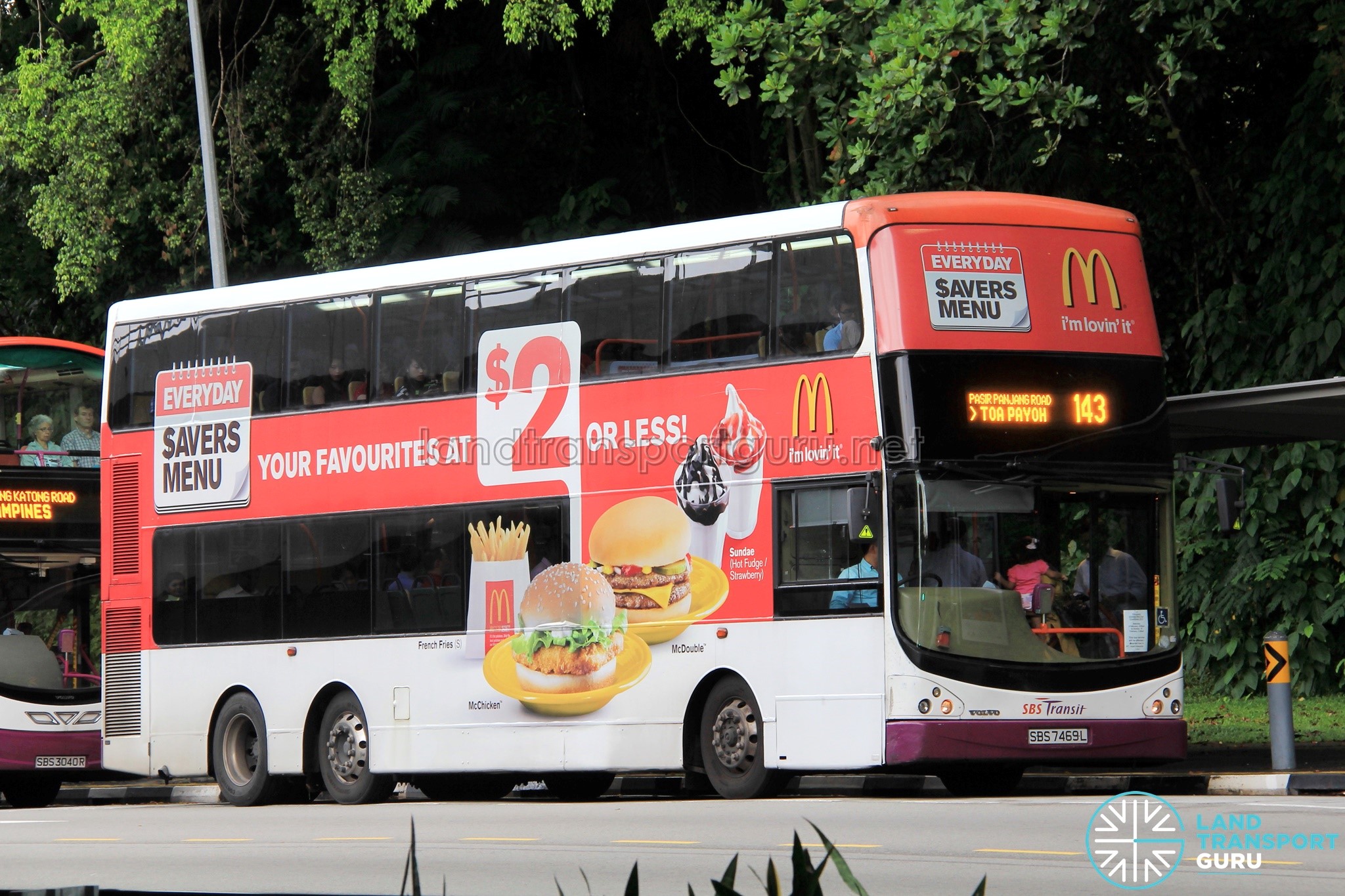
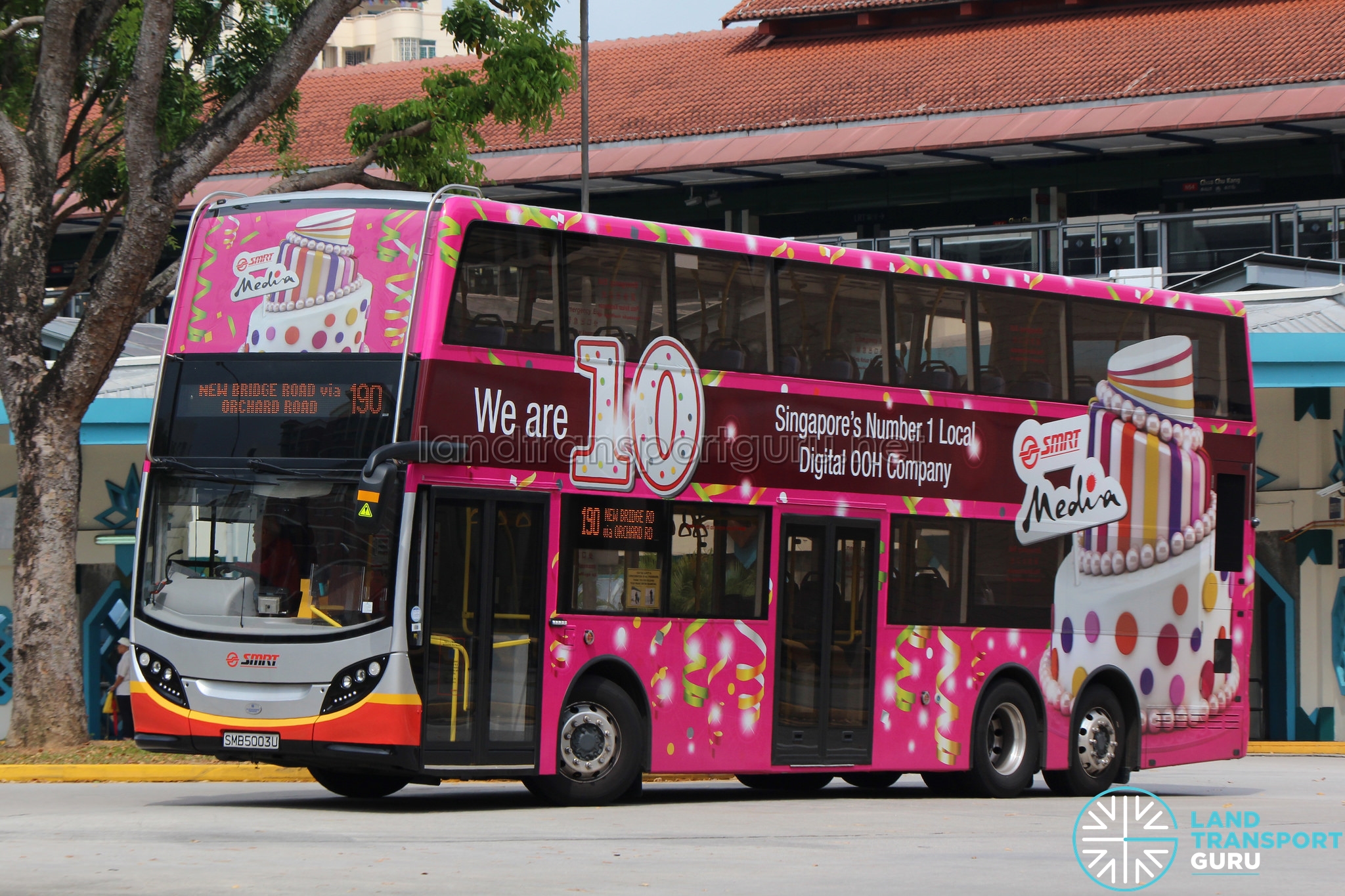
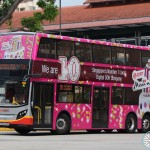
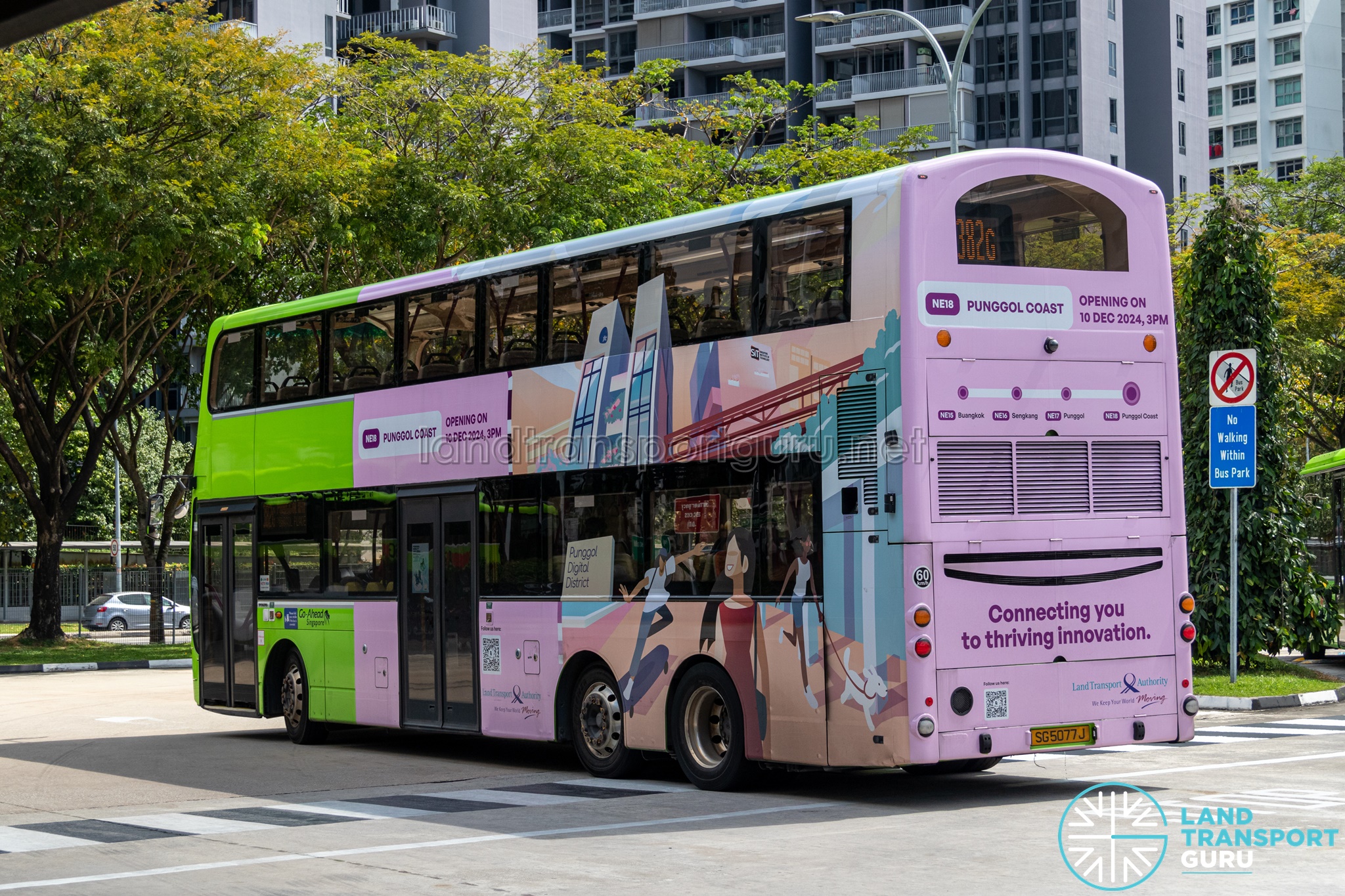
With the implementation of the BCM, however, new guidelines restricted advertising to the rear two-thirds of the bus, leaving the front third clear of commercial content, and the operator logo visible on both sides. This policy remained in place for almost ten years, with only limited exceptions for sanctioned campaigns, like the HeyChingay50Bus campaign in 2022.

New Advertising Contract
In 2025, the Land Transport Authority (LTA) revised its approach to bus advertising. Under Contract PT807, effective 1 November 2025, the LTA awarded Moove Media Pte. Ltd. exclusive rights to manage advertising spaces across all public buses and bus interchanges. The contract will run for seven years, with an option to extend for an additional two years.
This marks the first time that a single media operator will oversee advertising across the entire public bus network, replacing the previous framework where each Public Transport Operator (PTO) managed its own advertising assets. The LTA expects to collect approximately S$150 million in concession fees over the seven-year duration.
New Advertising Standards
Recent campaigns, such as this one by Maybank, have showcased the revised advertising standards. The new regulations allow full-body wraps similar to pre-2016 practices. Both sides of the bus may now feature complete advertisements, while the front of the bus remains free of advertising.
To preserve operator visibility, logos appear on a white background in three designated areas: above the front entrance door (kerbside), below the driver’s cabin window (offside) and on the rear bumper (offside). Double-deck buses continue to keep their front windscreens unobstructed, maintaining a clear view for upper-deck passengers.
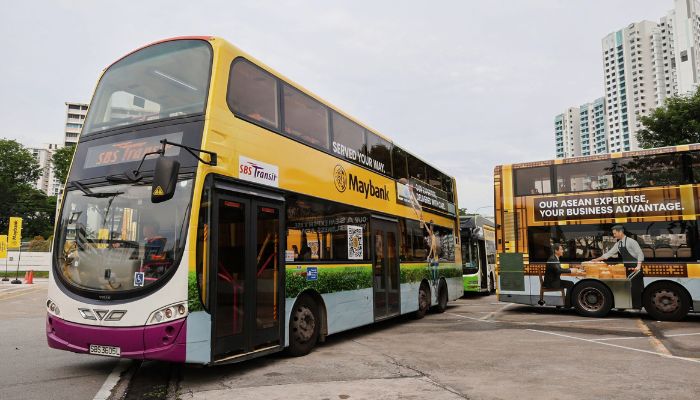
In addition, advertisements may now extend slightly further toward the front, covering the bus’s A-pillar and curving around the front-side edges.
Social Media
View this post on Instagram
Dynamic Bus – Digital Billboard
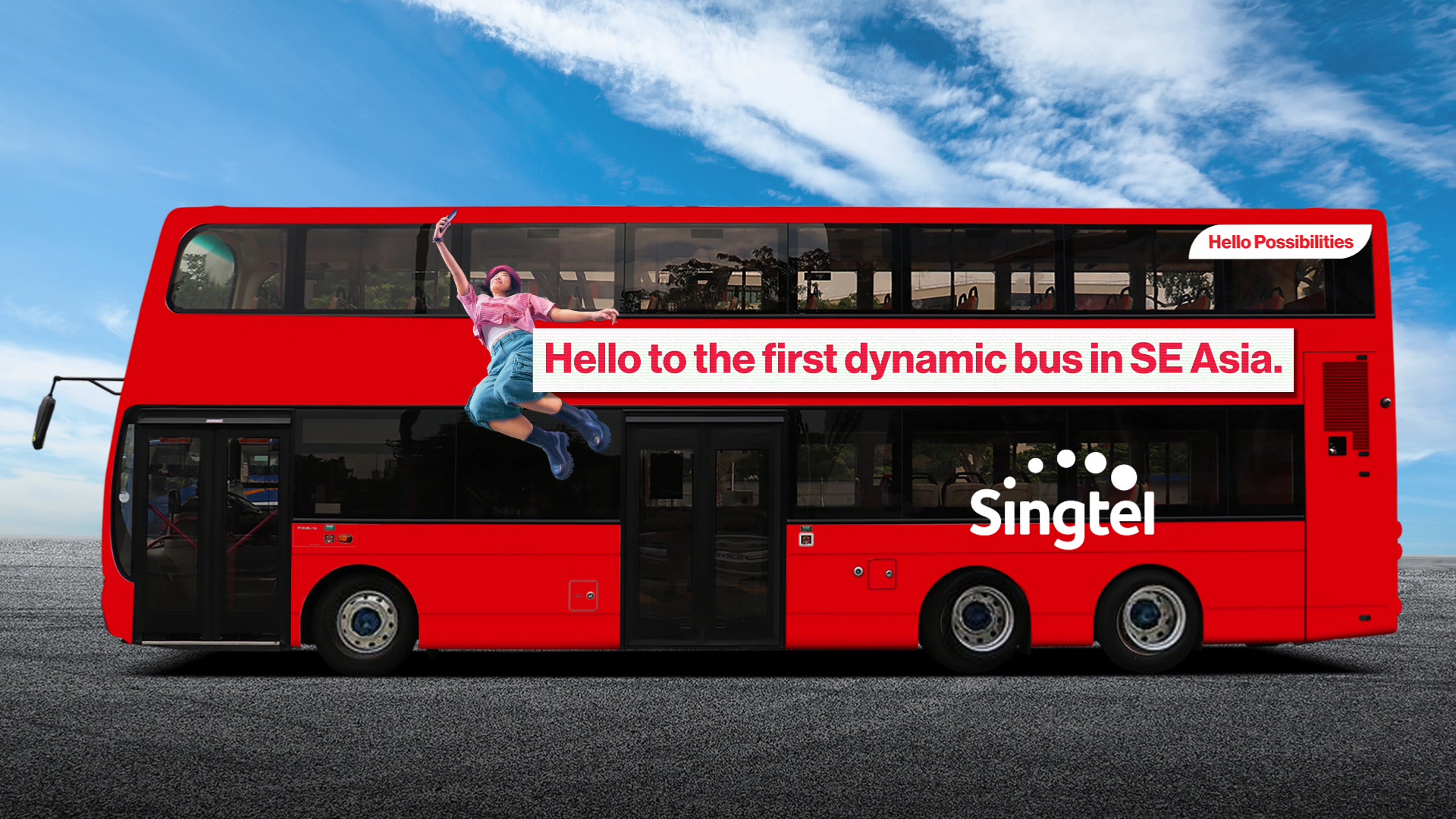
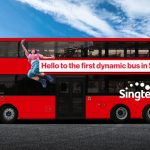
Alongside the return of full-body wraps, Moove Media launched the “Dynamic Bus” on 14 October 2025, touted as Southeast Asia’s first double-deck bus equipped with a large-format digital landscape screen.
The digital panel, measuring 6.9 metres wide by 0.58 metres tall, is currently the largest mobile digital display in Singapore. It is also able to deliver time-, location-, and weather-specific content dynamically. Singtel and DBS were announced as launch partners in Moove Media’s October 2025 press release.
See Also:
References:
- LTA Appoints Moove Media as Advertising Operator for Buses and Bus Interchanges – Land Transport Authority
- Moove Media Launches Dynamic Bus Advertising: Singapore’s Largest Moving Smart Digital Billboard – ComfortDelGro
- Moove Media Instagram
- Maybank marks 65th anniversary with fully-wrapped corporate bus fleet via Moove Media – MARKETECH APAC
Honestly, what took them so long, when all along they have a ready example to copy: United Kingdom with the way they do full body advertisement while still have operator logo?
The new format is exactly the United Kingdom practice, other than a few minor differences.
Meanwhile, I just saw a R151 train with stickers pasted on the exterior. This may mean that the MRT exterior advertisement may be coming back. Although, the visibility is honestly blocked by the platform screen door and the noise barrier. Should just drop the idea.
With money, anything can happen.
Those companies definitely paid more money to get more advertising space.
They allow more advertising space probably to get more money.
Thot this is good news as revenue will serve as collection from concession fees. As a general public, did not understand the 2/3 advertising rule as I had found some full advertising to be attractive in the past. There were more bus adverts during the full body advertising era.
I don’t think this would mark a full return to pre-BCM bus advertising though, only a brief respite. You can see it through the brief Chingay50 campaign – while we thought the full-body bus advertising would permanently returned, some opposition parties were quite critical about the move to full-body wrap and called the LTA to move back to Tower Transit-style wrapping, which the LTA complied back then. Also, we know that despite the brief respite, we know two bus operators who would continue to use TTS-style wrapping, and two other bus operators who would continue to follow in their footsteps despite being the more established operators.
What is TTS style??
TTS-style wrap is the 2/3 wrap. TTS (as the operator to win the first BCM package) is the first operator to use this style of bus wrap, so it’s called the TTS-style wrap.
Now don’t get me wrong – I’m not against TTS or anything, but it’s referred to the TTS-style wrap. And I don’t want to jinx it or something, but the reality is this. We (myself included) all support full-body bus ads, but there will be haters who dislike them and prefer the TTS-style wrap even more.
what tts style sia? this one lta regulation silly. dont be such a loser tts hater la. everything also throw hate to tts for no reason.
Nope. With the rise of online advertising, I do not think there will be an increase in bus advertisements just because full body advertisement wraps are approved.
Hopefully this means fares can decrease from the increased ad revenue