
This article summarises the findings of the Rail Reliability Taskforce, which was convened on 19 September 2025 to develop and implement immediate solutions to improve rail reliability and joint responses to train service disruptions.
The Taskforce was formed in response to 15 service disruptions between July and September 2025, which affected multiple MRT and LRT lines, with faults arising from various systems, including signalling, traction power, and rolling stock.
The Taskforce conducted joint technical audits and in-depth reviews of asset renewal, spares, data, workforce capability, and service recovery processes, supported by an Independent Advisory Panel with deep international metro experience. Its findings were submitted to the Acting Minister for Transport on 30 December 2025.
On 13 February 2026, the Government accepted the task force’s findings, while simultaneously committing to accelerating rail asset renewal in the coming years.
Core Recommendations
1. Accelerate Renewal of Three “Core” Systems
The Taskforce’s foremost recommendation is to prioritise and accelerate the renewal of three critical rail systems:
- Rolling stock
- Signalling systems
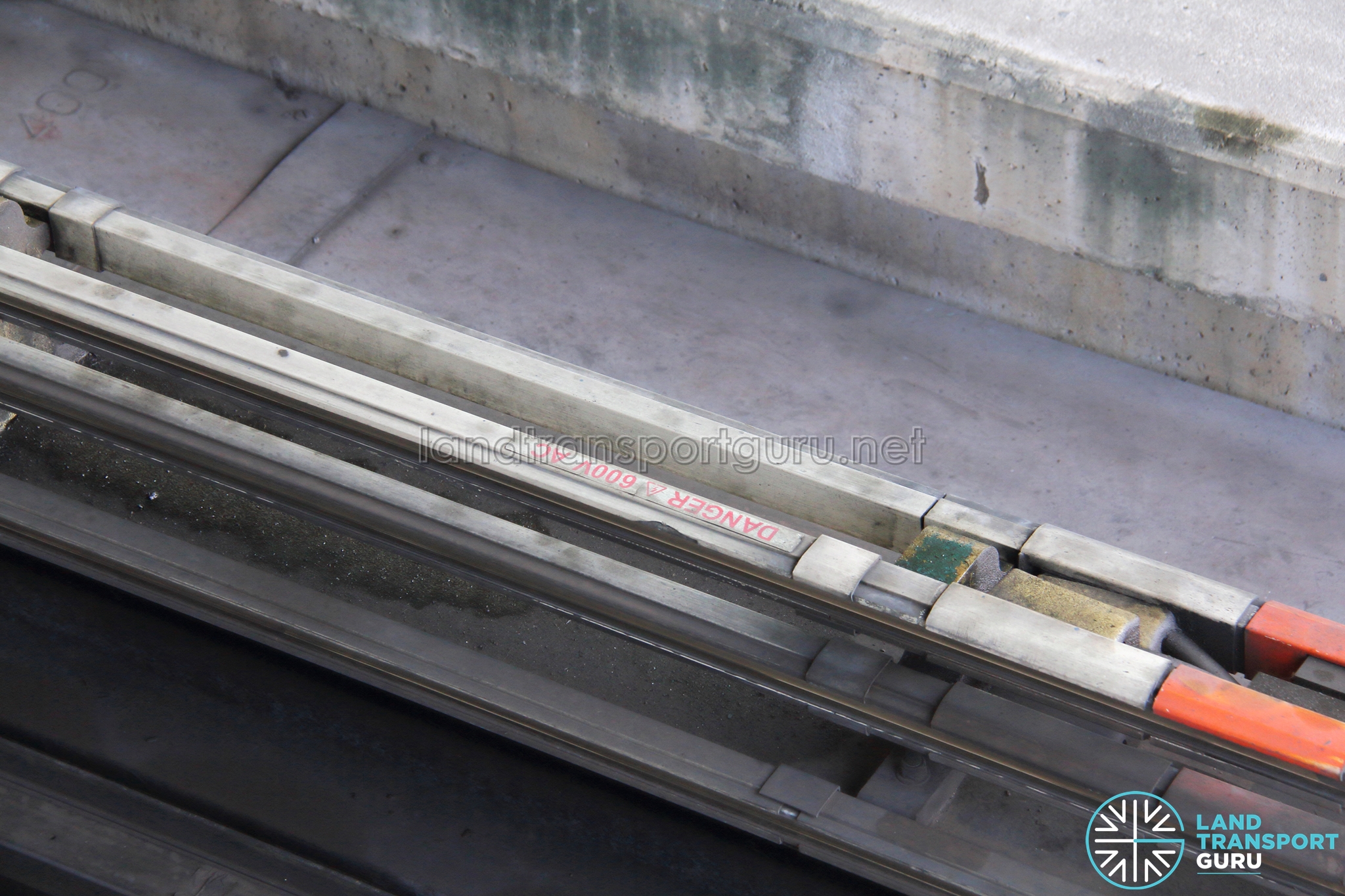
- Traction power systems
These are identified as single‑point-of-failure systems with the highest operational impact, as a single major failure typically results in prolonged service delays or full line suspensions.
Furthermore, Singapore’s rail network is sufficiently mature that multiple assets face ageing/obsolescence risks at the same time.

The Taskforce recommends:
- Shorten renewal timelines for these three systems (rather than stretching renewals over longer periods to minimise short‑term disruption)
- Increase engineering hours materially, including scheduling longer service adjustments and, where needed, full‑day closures to carry out renewal works expeditiously, efficiently and safely. This is positioned as a necessary trade‑off to reduce the complexity of coordinating, integrating, and testing new systems while maintaining day‑to‑day operations.
- Bring forward risk‑sensitive renewals in subsystems where there is evidence of “converging risk factors” (e.g. age, capacity strain, cascading failure potential).
- The report cites traction power systems as an example, where a failure of one power component can add strain on adjacent power components operating near-capacity, leading to cascading failures
2. Enhance System Resilience: Adding Redundancy, Backup Capacity, & Bypass Modes
In examining the 15 service disruptions between July and September 2025, the Taskforce found that the root causes were unrelated. However, it suggested the need for additional backup or bypass systems and procedures to allow train operations to continue or resume more quickly after a minor fault has occurred.

Key technical recommendations include:
- Backup power resilience for NEL: strengthen the ability to sustain operations during intake faults by upgrading intake capacity and adding standby options; and, longer‑term, build a dedicated higher‑capacity backup intake in the City area.
- Signalling bypass: explore an Automatic Train Protection (ATP) bypass concept that permits manual low‑speed driving (capped at 18 kph) to the next station to detrain passengers, reducing the need for detrainment onto tracks, and enabling faster withdrawal of the affected train. The report notes similar approaches in other metros.
- Subsystem‑specific enhancements: pursue targeted redundancy and bypass measures across power, signalling and rolling stock subsystems, as detailed in Annexe C of the report.
3. Enhance Asset Renewal Practices
On asset renewal practices, the Taskforce makes the following recommendations:
- Use more extensive condition monitoring to continuously and proactively identify deteriorating parts
- Increase inspection and test frequency for equipment critical to operations
- Giving higher priority to critical systems whose failures most affect service
In the near-term, the Taskforce recommends LTA and Public Transport Operators (PTOs) jointly identify and monitor sub‑systems with outsized disruption impacts, develop a deeper understanding of failure modes, and implement mitigation measures.
4. Strengthen Spares Management and Supply Chain Resilience
The Taskforce identifies spares availability as a growing vulnerability in an ageing rail network. Each line contains thousands of unique components, some of which face long procurement lead times, OEM obsolescence, and rising replacement costs.
When spares are unavailable, even relatively contained faults can result in extended service disruptions. Yet, spares management is inherently complex, with varying component lifespans, deterioration in storage, and costly write‑offs when systems are replaced early.
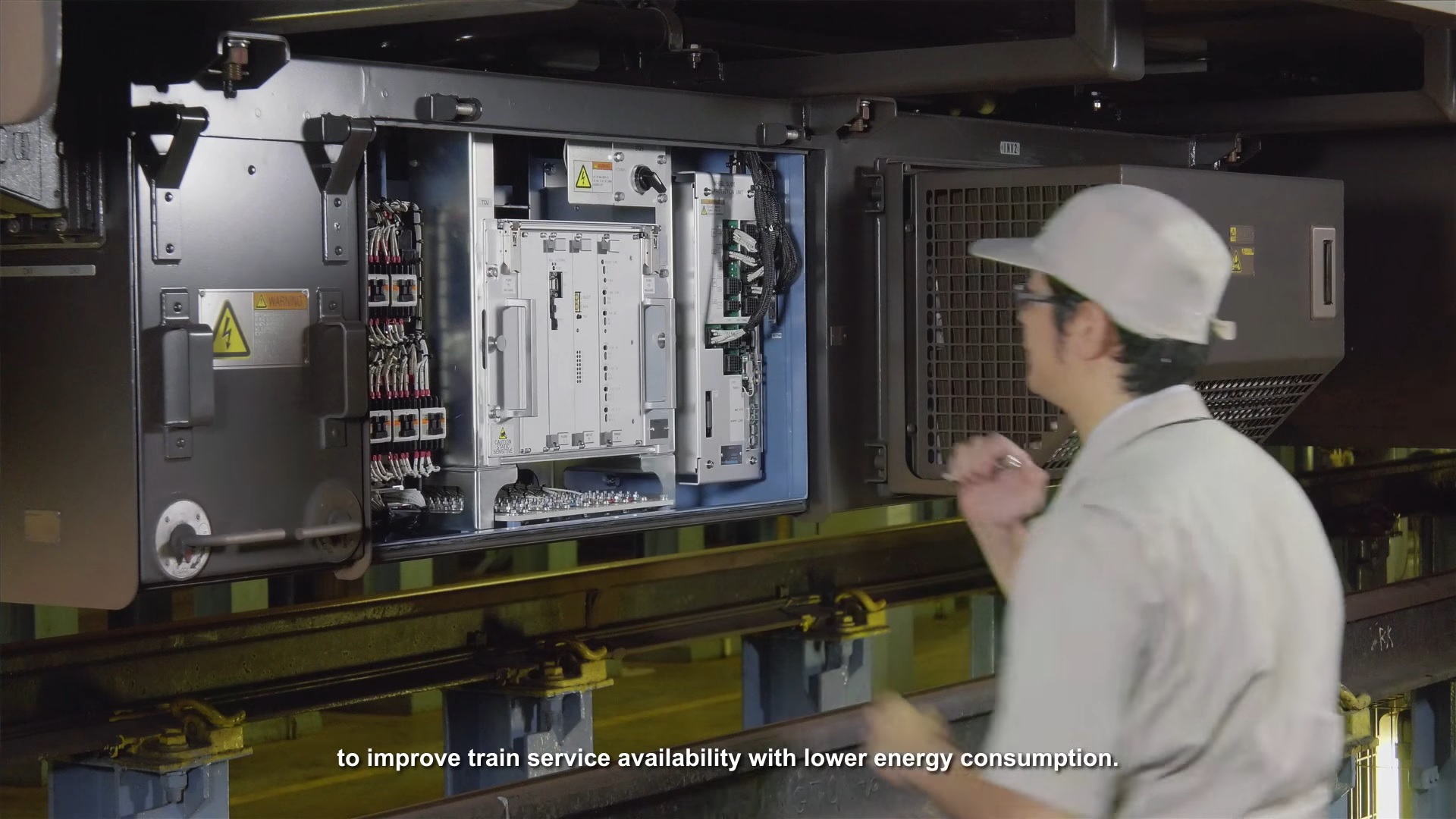
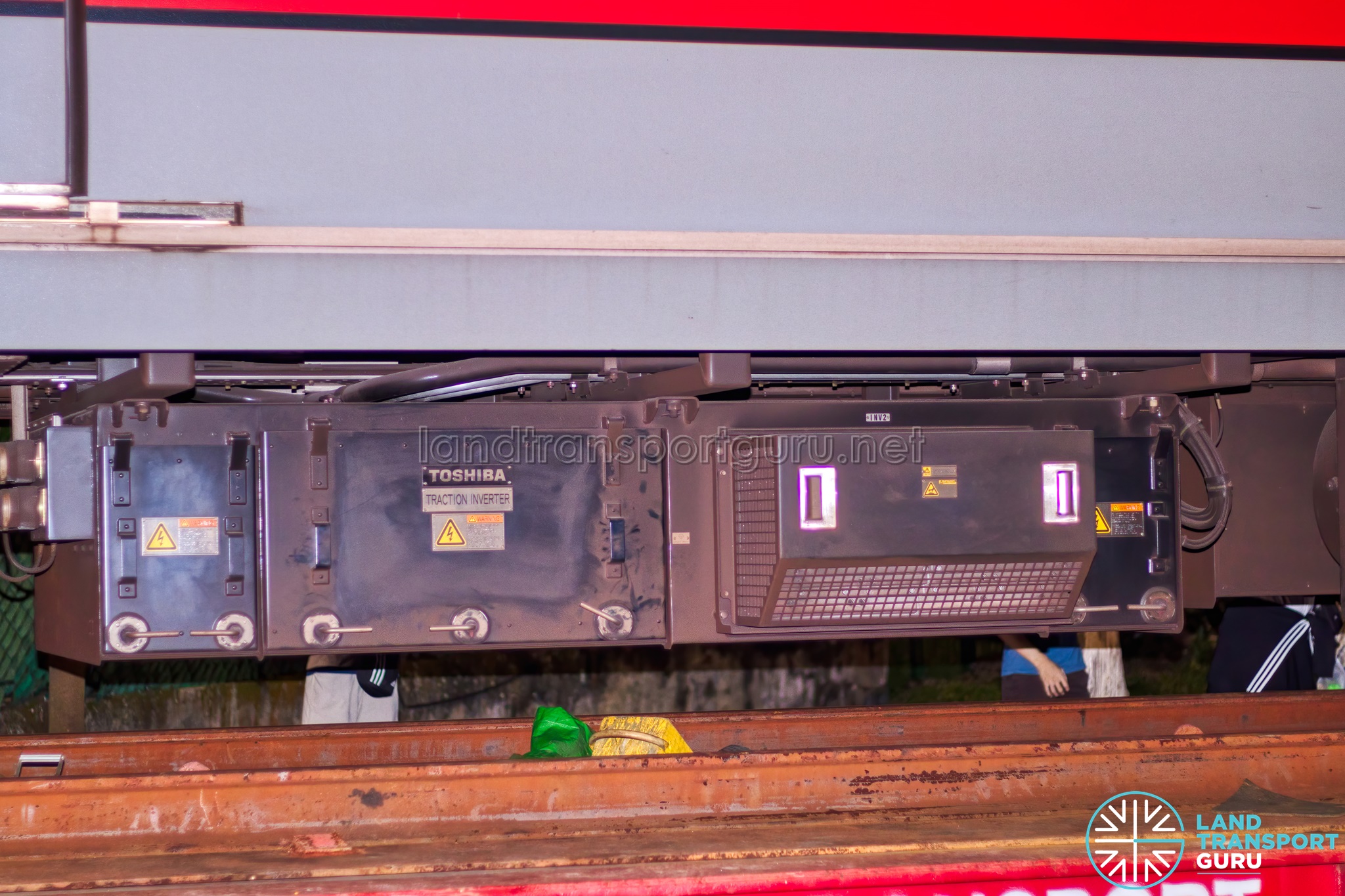

To mitigate this risk, the Taskforce recommends:
- Systematic collection of more component data (e.g. performance, failure rates, environmental influences, maintenance history) to improve forecasting of spares beyond generic OEM recommendations.
- Building larger buffer stocks, especially for components nearing end‑of‑support, to sustain reliable operations until full system renewal.
- Procuring more spares earlier in the system lifecycle to leverage economies of scale and price certainty.
On the cost implications, the Taskforce further recommends:
- Extended OEM service support contracts, including technology refresh provisions.
- Localisation of repair capabilities, particularly for electronic cards, to shorten turnaround times and reduce reliance on large inventories.
- For example, Basic to moderate repairs to electronic cards are now performed in-house by PTOs
- Exploring cost-sharing arrangements between LTA and PTOs for holding larger buffers of spares.
- Exploring a wider range of alternative sources for spares if localisation is not feasible, including exploring consolidation of purchases with other metro operators.
5. Move Toward Standardised and Modular System Design
The Taskforce notes that decades of line‑by‑line procurement have resulted in significant variability across rail subsystems, increasing maintenance complexity and limiting the ability to share spares or expertise across lines. While this approach previously maximised procurement competition, it now imposes rising lifecycle costs and operational risk.
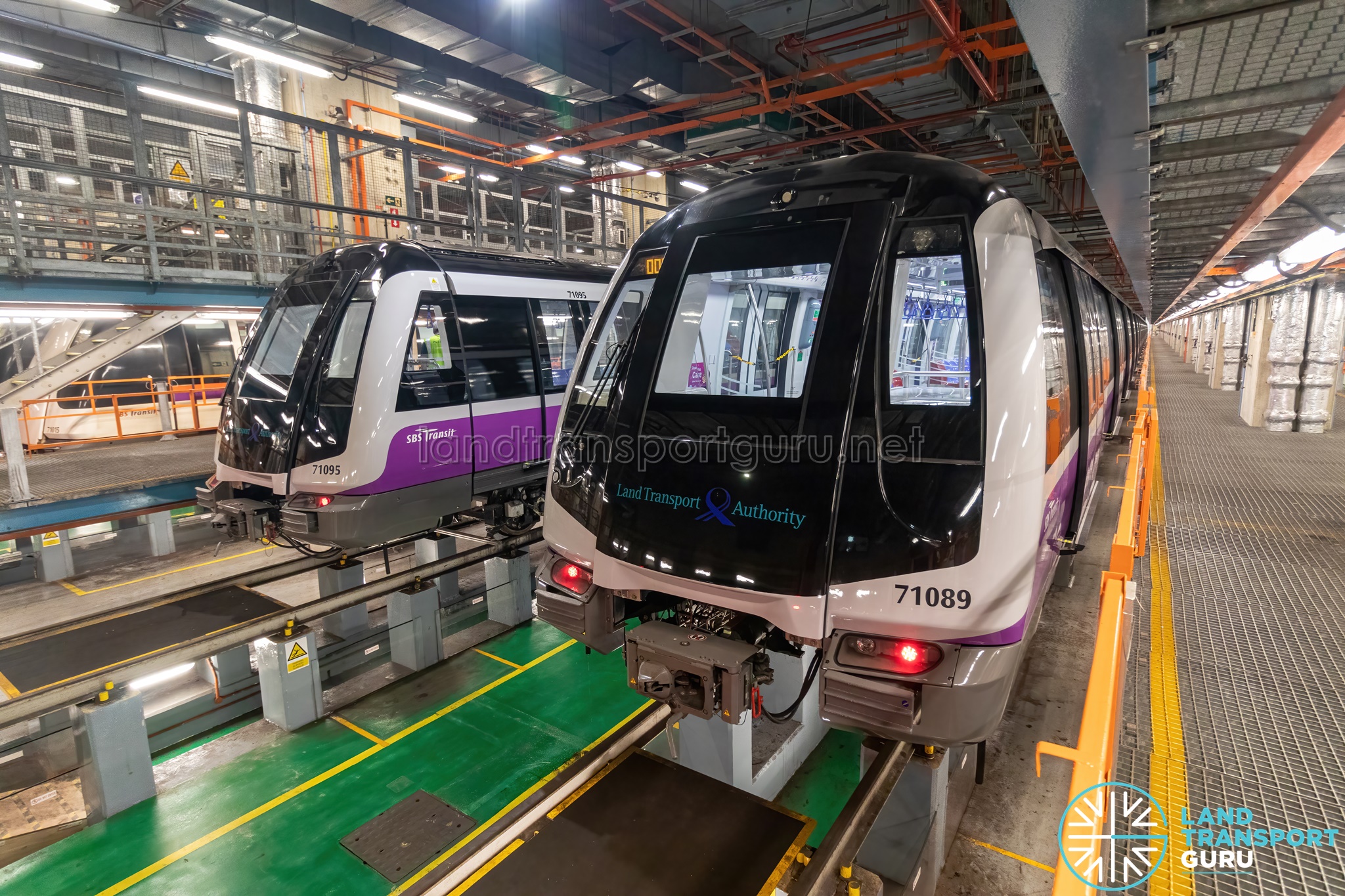
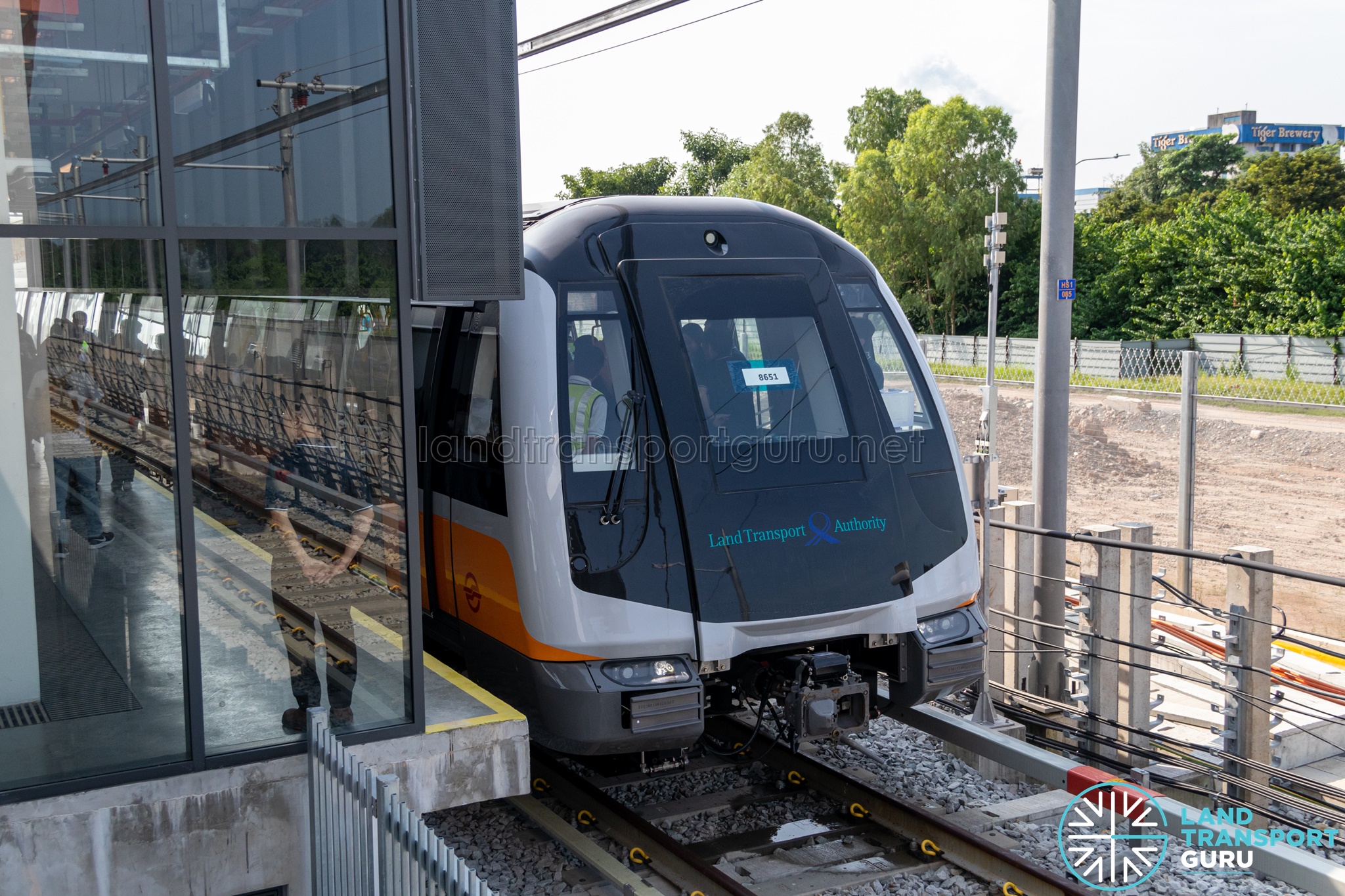
To address this, the Taskforce recommends:
- Greater upfront design standardisation across rail systems to reduce unnecessary variability and avoid the proliferation of customised solutions.
- Adopt modular system architecture to enable incremental upgrades and faster replacement of sub‑systems, reducing downtime and avoiding full overhauls where possible.
- Build strategic partnerships with other metro operators and OEMs on common design/procurement standards to unlock economies of scale and knowledge sharing.
- Adapt procurement strategies to increase commonality—for example, exploring clustered train buys across lines when renewal/expansion cycles align (the report cites NEL and CCL as an example).
6. Establish Network‑Wide Condition Monitoring + a Common Rail Data Platform
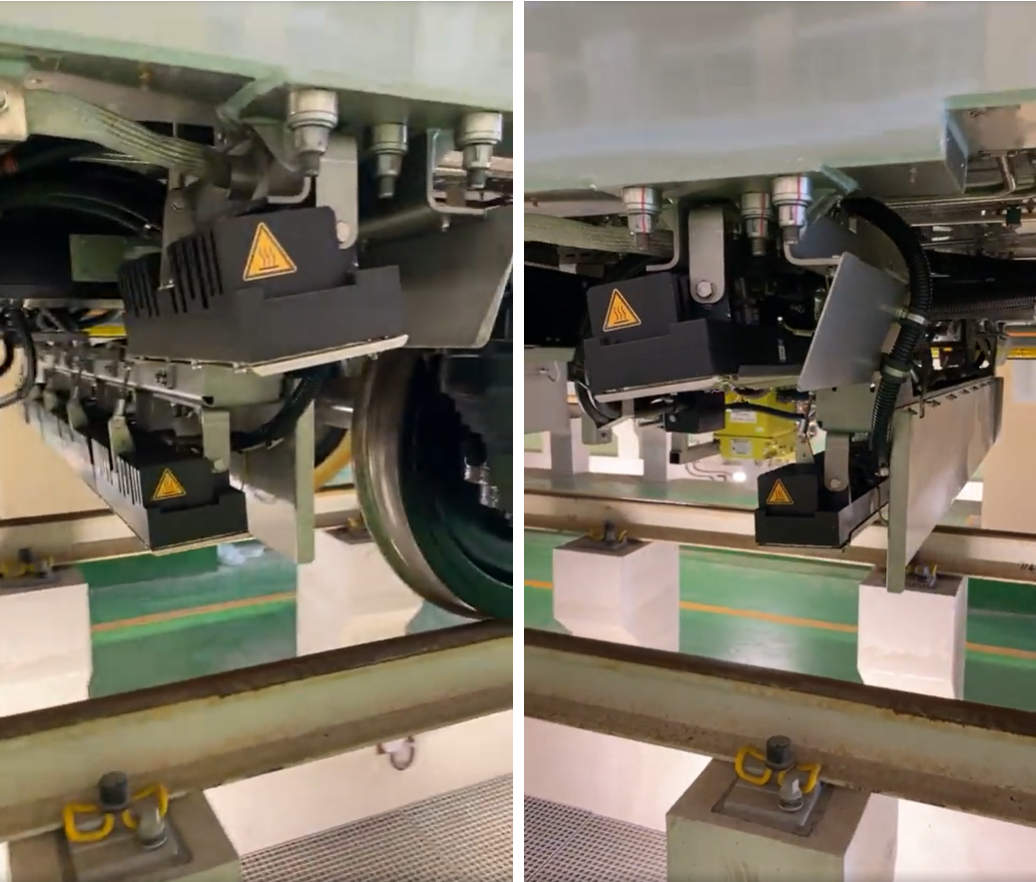
While condition monitoring systems already exist across the network, the Taskforce found that they are non‑standardised, fragmented, and often confined to individual lines or operators, limiting their effectiveness in predictive maintenance and renewal planning.
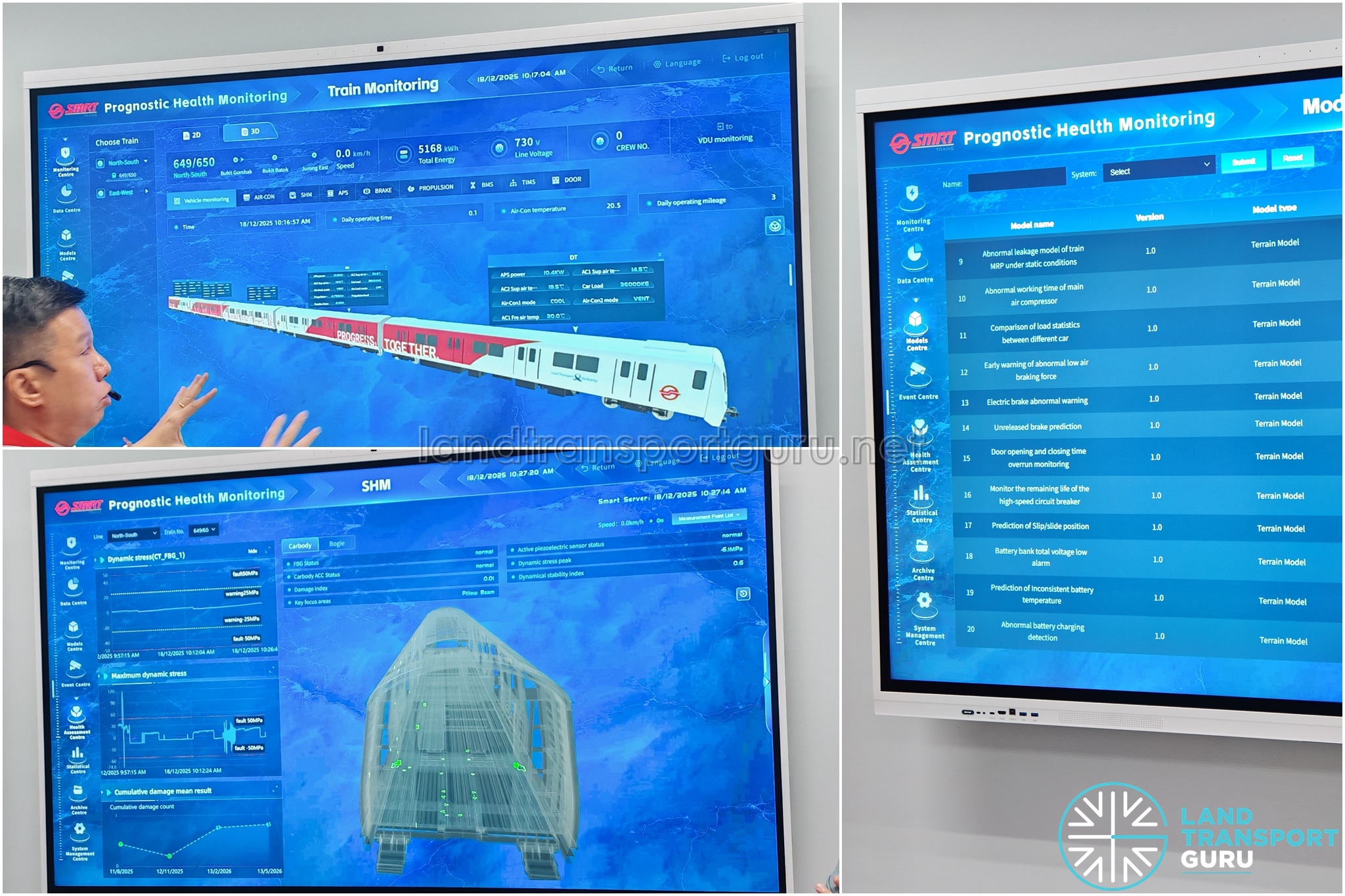
The Taskforce therefore recommends:
- Developing a more comprehensive and standardised practice of condition monitoring across all lines and operators in the rail network, guided by a baseline standard and roadmap (referenced in Annexe D).
- Building a common, integrated data collection and management system shared across the LTA and PTOs, enabling data transparency between multiple parties, cross‑line benchmarking, and joint decision‑making.
- Put in place formal governance agreements covering:
- design/installation/use of condition monitoring tools, and
- data sharing across the sector for better monitoring and asset insights.
This integrated data foundation is positioned as essential for pre‑emptive maintenance and later scaling of advanced digital capabilities (e.g., AI / more sophisticated analytics tools).
7. Deepen Workforce Capability and Professionalisation
The Taskforce stresses that technological improvements must be matched by workforce transformation. As maintenance becomes data‑driven (condition monitoring, predictive maintenance, integrated platforms), railway professionals need new skills and stronger professionalisation pathways.
Key recommendations include:
- LTA to co‑fund and work with operators on initiatives to upskill staff in digital capabilities (e.g. condition monitoring and predictive maintenance).
- Expand scenario/team‑based training and broader use of simulators to strengthen incident response coordination.
- Establish a targeted grant/fund mechanism to support small‑scale deployments of innovative projects that improve technology use by rail workers, and reduce barriers to adoption.
The Singapore Rail Academy (SGRA) was set up by the LTA in 2017 to provide common training to engineers newly-recruited by the LTA and rail operators. Complementing the SGRA, both rail operators have their respective training institutes, such as SMRT Institute (SMRTi) and SBST’s Rail Training Institute (RTI).
The Taskforce recommends that the scope of SGRA be expanded:
- Expand SGRA’s mandate to harmonise training policies and standards for both rail maintenance and operations across PTOs
- Shift SGRA to joint administration by LTA and PTOs, to ensure shared ownership of training outcomes
- Enhance curriculum and training delivery:
- Common training for rail systems engineers employed by the LTA and PTOs
- Standardised training curriculum for common initial skills and knowledge across the rail O&M workforce
- Engage OEMs to conduct subsequent in-depth training after systems are commissioned
- Procure integrated training simulators
- Periodic re-assessment framework
- Develop certification schemes for assistant engineers/technicians and operations staff; and set a target for ~20% of the O&M workforce to be chartered or certified, creating a core pool of ‘master practitioners’ as mentors to uplift overall capability.
- Encourage operators to embed certification into career progression and remuneration to reinforce continuous development.
Finally, the Taskforce also recommends more structured and frequent staff rotations between the LTA and PTOs, and to allow full-time involvement of PTO staff in the project management of new MRT lines and system renewal works, which are currently managed by LTA.
8. Improve Service Recovery and Commuter Management
Finally, the Taskforce discusses strengthening service recovery processes and maintaining journey continuity for commuters as essential to maintaining a high level of rail reliability, as the risk of a disruption cannot be fully eliminated.
A. Standardise and strengthen recovery SOPs across operators for specific faults
The Taskforce recommends enhancing and standardising disruption SOPs—especially for failure modes likely to cause longer delays—so frontline teams can apply clear, simple responses rapidly. Specific SOP enhancements include:
- Point failures: speed up securing defective points using portable mechanical devices (e.g. G-clamp) to enable trains to pass at higher (but still reduced) speeds where safe, referencing practices of overseas metros.
- Rescue train coupling operations: reduce coupling time by improving the placement of isolation switches and valves, so staff can execute push‑out/haul‑out recovery more efficiently and avoid trackside access needs.
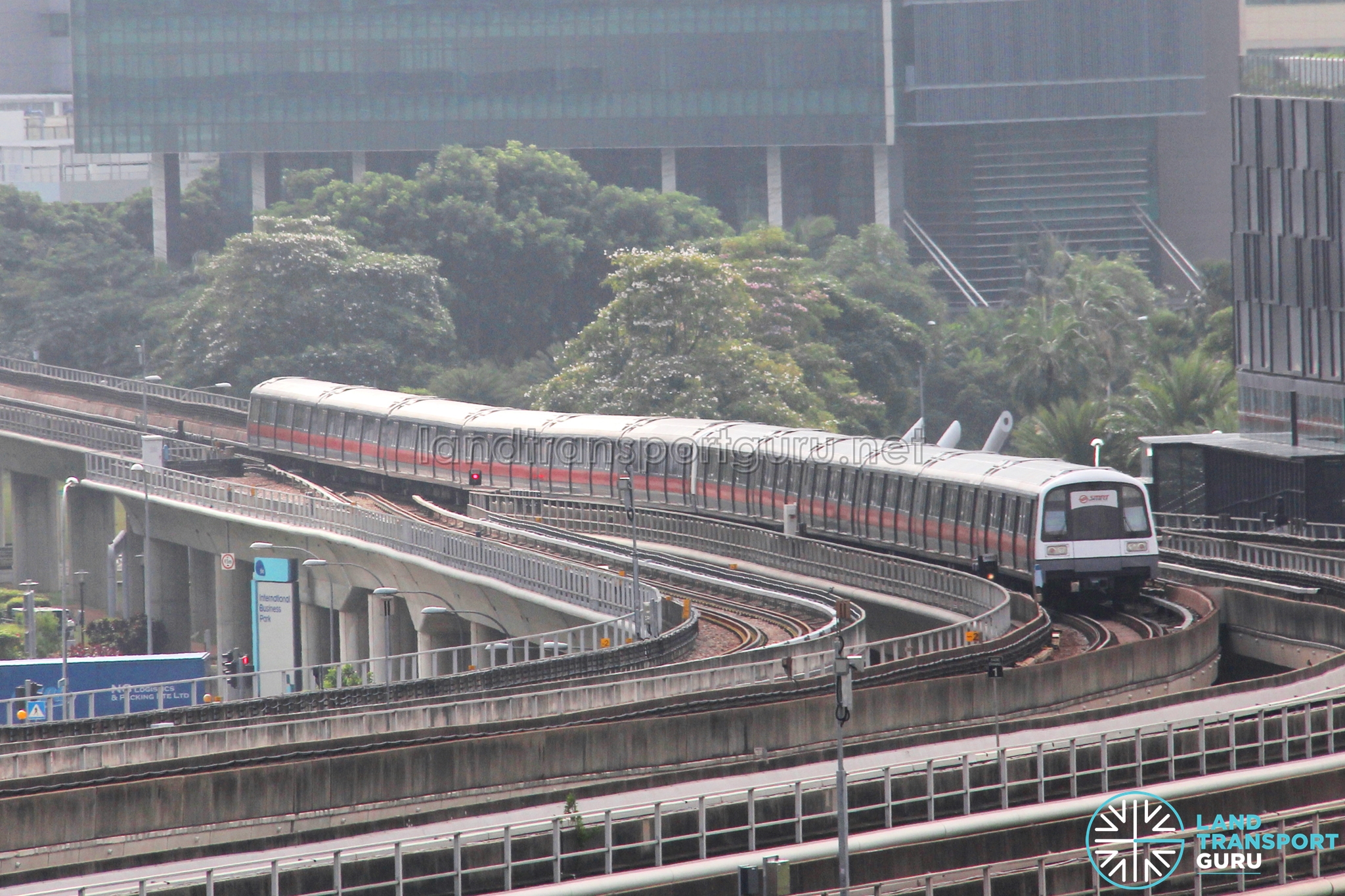
- Power outages and detrainment: minimise the need for track detrainment where feasible; and extend emergency battery provisions (already fitted to newer trains on the NSEWL and upcoming JRL/CRL) into future train procurements, to allow stalled trains to move to the next station.
B. Preparedness through realistic exercises
The Taskforce affirms the value of regular table‑top and ground deployment exercises to simulate disruptions that affect a single line or multiple lines (e.g. Exercise Greyhound since 2012) and recommends incorporating newly proposed measures into future exercises so staff can execute them confidently.
It also encourages greater involvement of volunteer commuters to stress‑test wayfinding guidance and the ability of PTO staff to engage affected commuters during different disruption scenarios.
C. Improve bridging bus activation time
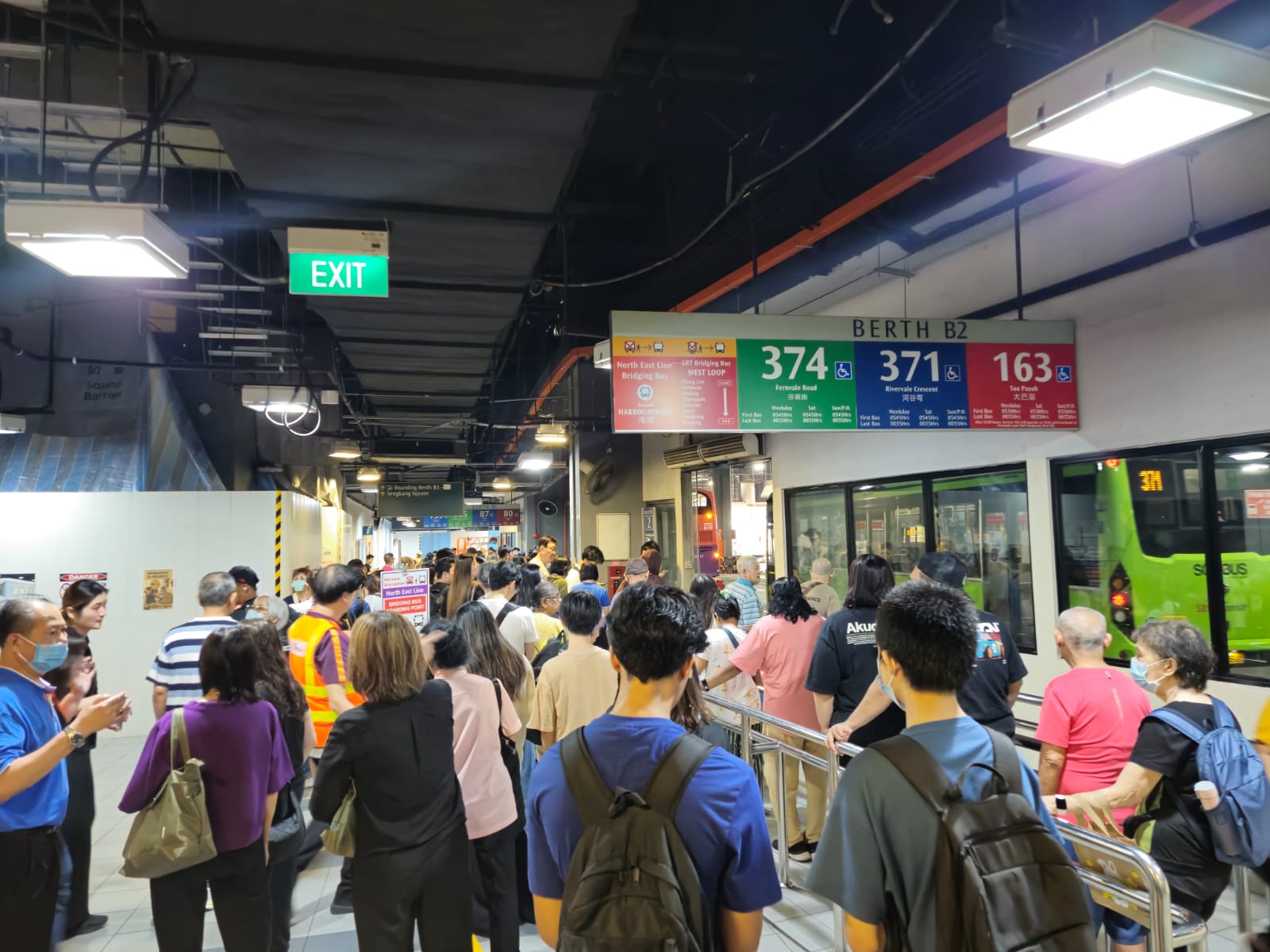
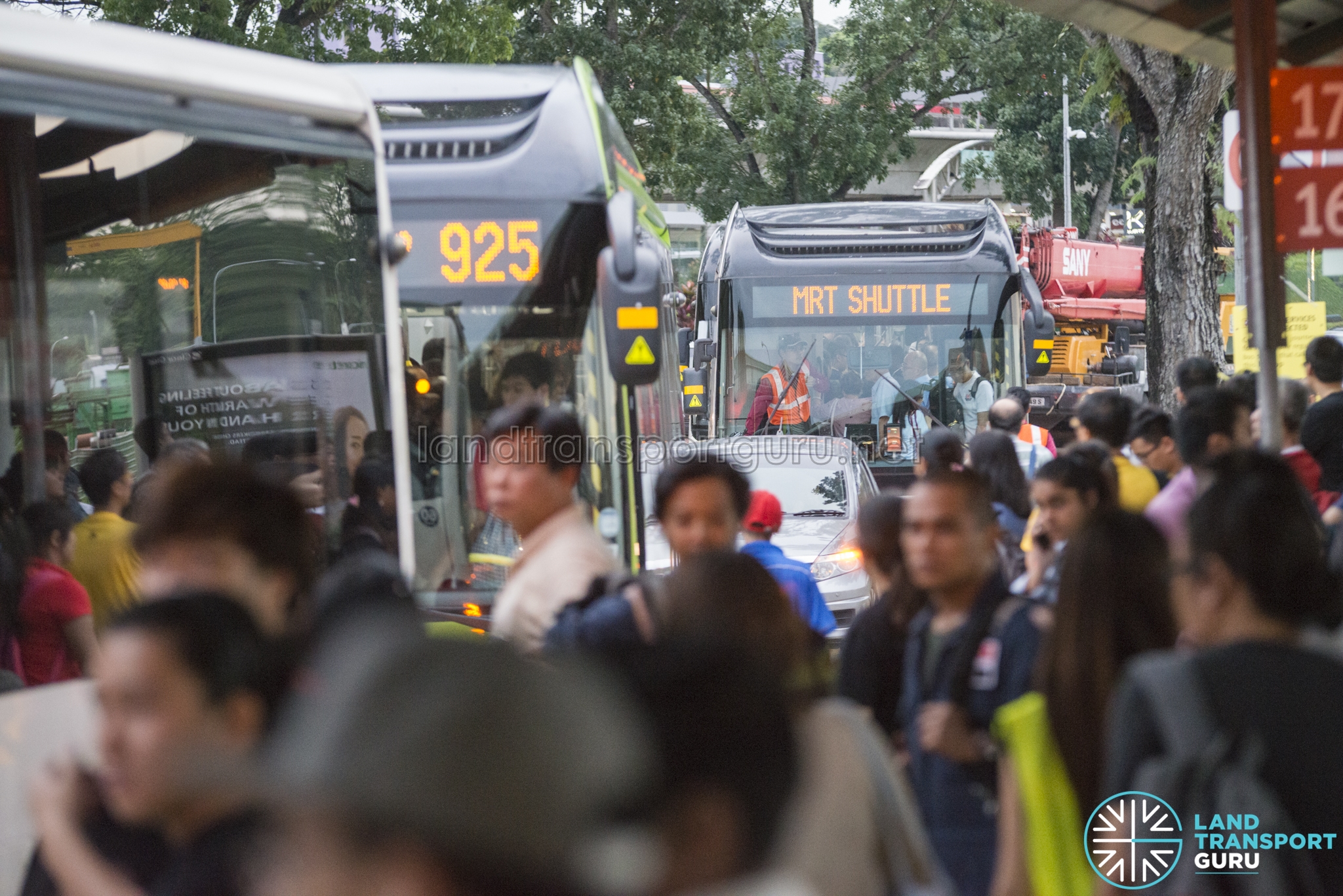
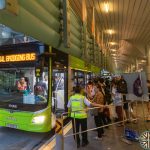
Bridging buses take time to mobilise since buses are redeployed from regular services, resulting in unnecessarily long delays to commuters affected in the initial phase of a disruption.
The Taskforce recommends provisions for standby buses at multiple locations for quicker initial deployment during major disruptions, reducing early‑phase platform crowding and passenger delay.
These recommendations are akin to the Task Force 50 arrangements between 2018 and 2020, where standby buses and drivers were stationed around Singapore in preparation for a train disruption. However, the report made no reference to this.

D. Improve commuter guidance with simpler, more useful information
On the old practices of disseminating disruption information, the Taskforce observed:
- Disruption messages typically used a single worst‑case delay estimate based on the longest affected journey, which was often not representative of most commuters’ actual impact.
- Communications did not distinguish by journey stage (e.g. commuters upstream, already within the affected sector, or deciding whether to start a trip), leading to unnecessary detours or avoidance even when recovery was likely to be quick.
- Messages sometimes included technical fault descriptions (e.g. signalling or power issues) that did not help commuters decide what action to take next.
- Updates were fragmented across operator‑specific channels, mainly social media:
- Information could surface out of sequence in commuters’ feeds, including after service had resumed.
- There was no single, authoritative, network‑wide source showing real‑time status across all MRT and LRT lines.
To address these shortcomings, the Taskforce recommends that LTA:
- Classify disruptions by severity:
- Minor delays (generally <30 minutes): advise commuters that train services remain the most direct option.
- Major delays (generally >30 minutes): actively guide commuters toward alternative MRT lines or free bridging buses
- Tailor guidance to journey context:
- Differentiate advice for upstream commuters, those already in the affected sector, and those yet to begin their journeys to avoid unnecessary crowding and detours.
- Centralise rail service information:
- Provide a single, network‑wide platform showing real‑time operating status and disruption advisories across all lines
- Provide more journey‑specific information:
- Support tools that offer real‑time, personalised journey guidance based on location and destination to improve travel decisions during disruptions.
- Enhancing wayfinding information
- More prominent and clearer signage to guide commuters to bus boarding points
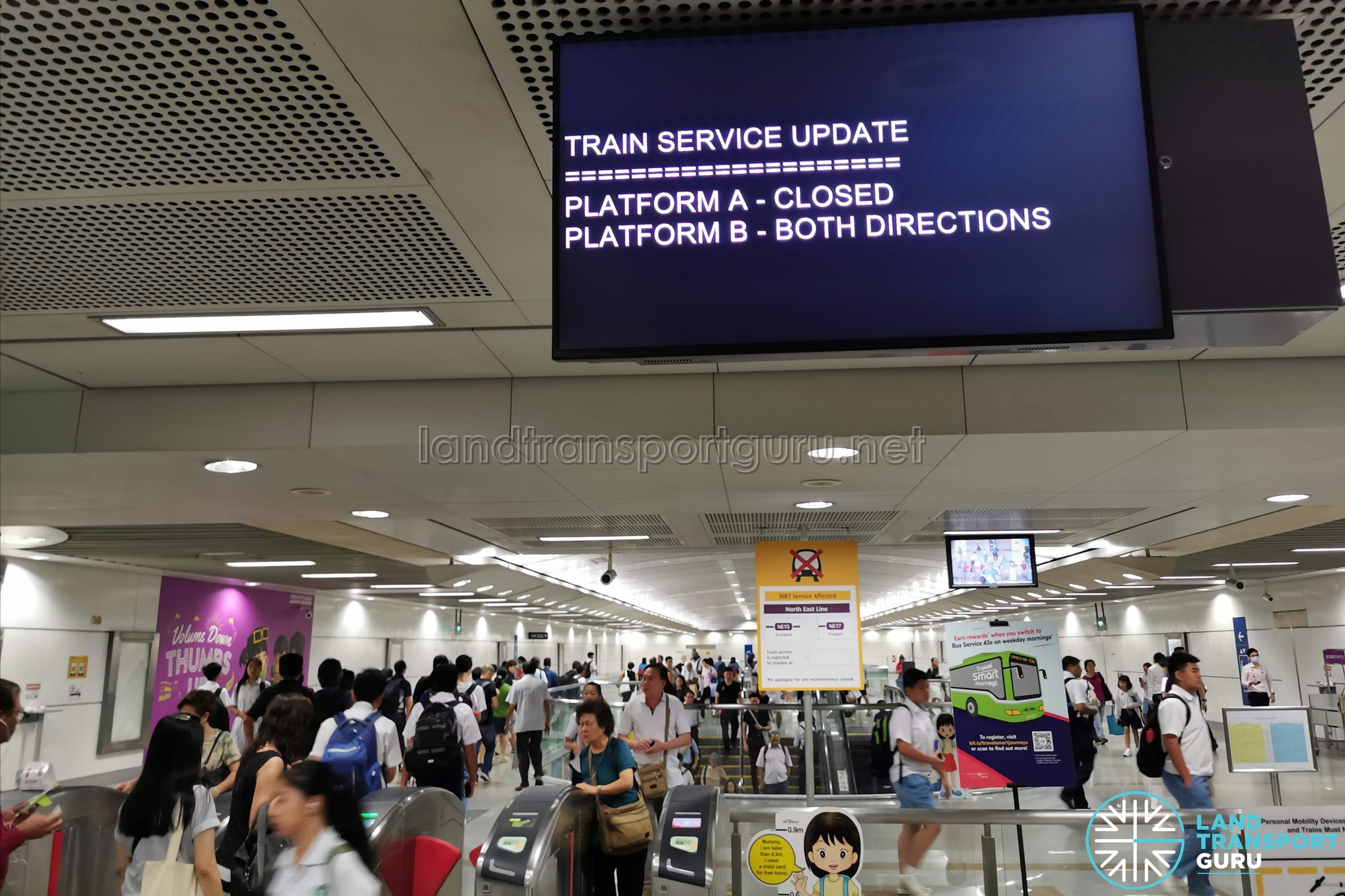
- Providing more digital screens to display incident information and wayfinding guidance
- Engage community groups such as Caring Commuter Champions and People’s Association (PA)’s volunteer networks, as well as interested members of the public, to serve as volunteers to assist vulnerable commuters during disruptions
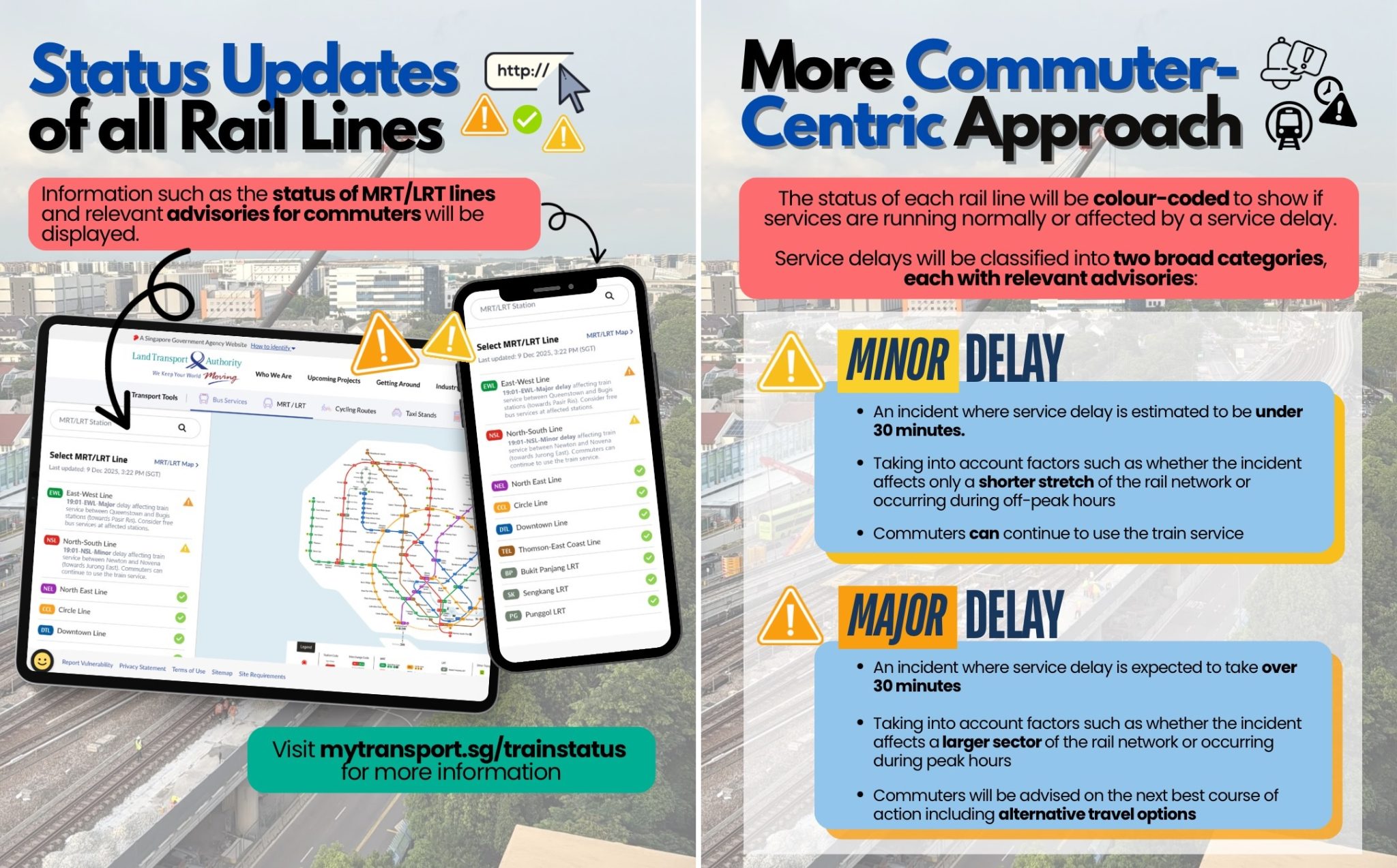
The Taskforce report also acknowledged LTA’s new real-time Rail Status Webpage for rail disruptions that launched on 13 December 2025, which implemented some of the abovementioned recommendations. As part of this shift in communication strategy, since November 2025, LTA and PTOs also no longer informed commuters about train disruptions via official channels, instead limiting this to station information boards and in-train announcements.
Additionally, the report mentions that LTA was also working with Google Maps to enable personalised journey time estimates for commuters caught in a disruption, based on their specific location and destination.
Authorities take action
The Government has begun implementing the recommendations of the task force as of 13 February 2026, in a Joint News Release Issued by the Land Transport Authority, and PTOs SBS Transit and SMRT.
Measures that would be progressively rolled out over the next few years are:
- Accelerating renewal of trains, signalling, and power systems, starting with the NEL power supply in 2026.
- Accepting the need for longer planned MRT service closures to create sufficient engineering time for major upgrades.
- Strengthening backup systems, recovery procedures, spares management, and condition monitoring across the rail network.
Commuters can expect:
- More planned service closures, announced ahead of time, with alternative transport provided.
- Faster recovery efforts during disruptions, though delays will still occur from time to time.
- Clearer and more targeted information during disruptions to help plan alternative routes and journeys.
Full Report:
The Report is published within the Reports section of LTA’s website
Incidents reviewed by the Taskforce
LTA press release Annexe, released 19 Sep 2025:
| S/N | Date | Incident | Status |
| 1 | 1 Jul 2025 | TEL service disruption due to signalling fault affecting Napier to Great World stations (4 stations) | Due to faulty computing unit in the signalling equipment housed in Orchard MRT station. The faulty component has been replaced. |
| 2 | 3 Jul 2025 | BPLRT service disruption due to power fault | A network switch in Bangkit station encountered an intermittent malfunction, resulting in loss of communication to the traction power system. This caused the power supply network to trip for safety reasons. The malfunctioning network switch has been replaced. |
| 3 | 19 Jul 2025 | BPLRT service disruption due to power fault | |
| 4 | 26 Jul 2025 | BPLRT service disruption due to power fault affecting Inner Loop (Service B) | Due to train Current Collector Shoe (CCS) on one vehicle having poor contact with the power rail. The CCS has been realigned. |
| 5 | 6 Aug 2025 | NSEWL service delay due to point fault after EWL Jurong East station (East Bound) | A track point fault caused the start of train services at Jurong East and Kranji stations to be delayed. Faulty cables have been replaced. |
| 6 | 12 Aug 2025 | NEL service disruption due to power fault | A faulty voltage transformer at the Sengkang Depot Intake substation resulted in a double fault, tripping out both primary and secondary protections. The voltage transformer has been replaced. |
| 7 | 12 Aug 2025 | SPLRT service disruption due to power fault | |
| 8 | 15 Aug 2025 | SPLRT service disruption due to power fault | A power cable fault between Farmway and Kupang stations resulted in power outage to SPLRT. Due to the earlier incident on 12 Aug 2025, SPLRT was operating on a single intake source from Sengkang Depot intake substation. The power cable fault resulted in the power outage for the whole network. The power cable has been repaired and all power cables have been checked. |
| 9 | 28 Aug 2025 | DTL service disruption due to point fault affecting Bukit Panjang to Beauty World stations (5 stations) | Due to a mechanical fault in a point machine between Bukit Panjang and Cashew stations (Expo Bound). The mechanical fault has been rectified. |
| 10 | 1 Sep 2025 | CCL service disruption due to train fault affecting Marina Bay to Promenade stations (3 stations) | A train between Marina Bay and Bayfront stations stalled and required a haul out by another train. The fault was a result of cable insulation failure connected to an obstacle detector on the train. The cable has been replaced. |
| 11 | 2 Sep 2025 | NSL service delay due to train fault affecting Woodlands to Yishun stations (5 stations) | Signalling equipment on a train near Canberra station malfunctioned and stalled a train which required a haul out by another train. A faulty connector was replaced. |
| 12 | 13 Sep 2025 | SPLRT (Punggol) service disruption due to signalling fault | A faulty interface component on the signalling system limited the control of trains required for start of service. The faulty component has been replaced. |
| 13 | 14 Sep 2025 | NSL service delay due to train door fault affecting Ang Mo Kio to Newton stations (6 stations) | Due to a train door fault, a train stalled at Toa Payoh station North Bound which required a haul out by another train. The faulty train door component has been replaced. |
| 14 | 16 Sep 2025 | EWL service disruption due to signalling fault affecting Aljunied to Tanah Merah stations (6 stations) | Signalling system lost power arising from a component failure within Uninterruptible Power Supply (UPS) system at Eunos station. The power has been restored. |
| 15 | 17 Sep 2025 | TEL service disruption due to signalling fault | The central signalling servers encountered a fault. This required the servers to be rebooted. During this period, the trains were operated manually, which resulted in additional travelling time. Further investigation is ongoing. |
See also:
- LTA launches new real-time Rail Status Webpage for rail disruptions | Land Transport Guru
- Committee of Supply Debate 2025: Public Transport Offerings | Land Transport Guru
External Links & References:
- LTA | LTA and Rail Operators Establish Rail Reliability Taskforce to Address Service Disruptions [Land Transport Authority | Retrieved 15 Feb 2026]
- LTA | Joint News Release by the Land Transport Authority (LTA), SMRT & SBS Transit – Rail Reliability Taskforce Submits its Recommendations [Land Transport Authority | Retrieved 15 Feb 2026]
- Government to Work with Rail Operators to Implement Recommendations from the Rail Reliability Taskforce [Ministry of Transport | Retrieved 15 Feb 2026]
- LTA and Rail Operators Will Progressively Implement Rail Reliability Taskforce Recommendations to Strengthen Overall Network Reliability [Land Transport Authority | Retrieved 15 Feb 2026]
So after learning the experiences from the turnback siding to the original turning:
1. EWL – from Joo Koon to Boon Lay
2. NSL – from Woodlands to Yishun, OR Yishun to Ang Mo Kio
3. NEL – from Farrer Park to Potong Pasir
4. CCL – from Caldecott to Marymount
5. DTL – from Tampines to Bedok North, OR Beauty World to Sixth Avenue
They will also do their service adjustments too.
I know this sound ironic but it’s time to tender out the EWL,NSL,TEL, CCL and NEL.