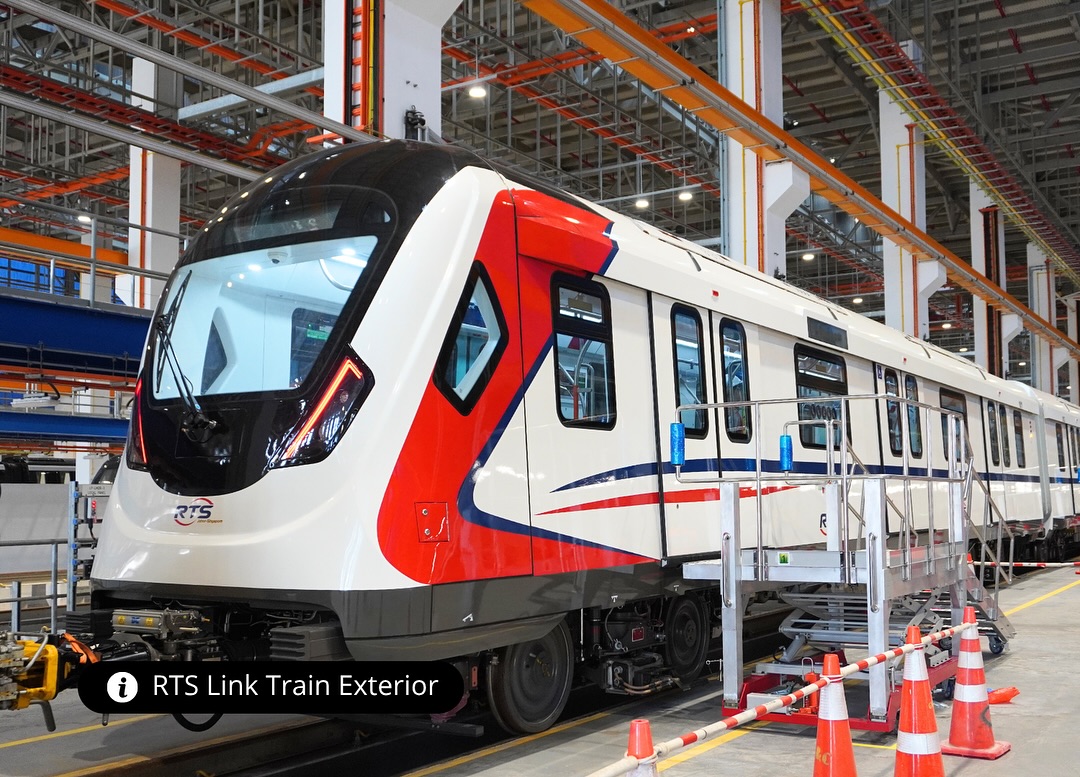
| RTS Link Rolling Stock | |
 |
|
| In service | End 2026 (projected) |
| Manufacturer | CRRC Zhuzhou Locomotive Co Ltd |
| Constructed | TBA |
| Number built | 8 trains (4 cars each) |
| Formation | 4 cars per trainset |
| Operators | RTS Operations Pte Ltd |
| Depot(s) | Wadi Hana (Johor Bahru) |
| Line(s) served | Singapore–Johor Bahru RTS Link |
| Technical Data | |
| Operating speed | 80 km/h |
| Doors | 6 per car |
| Electrification | 750V DC (3rd rail) |
| Track gauge | Standard Gauge (1435mm) |
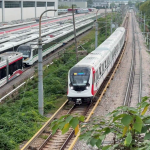
The RTS Link Rolling Stock (final name TBC) is a light rapid transit train manufactured by CRRC Zhuzhou for the Singapore–Johor Bahru RTS Link. These electric multiple unit (EMU) trains are projected to enter service in end-2026 with the opening of the RTS Link.
Eight trains were procured, with each train formed of four train cars. CRRC Zhuzhou Locomotive Co Ltd. was awarded the tender to build these trains in May 2021.
Background
As a medium-capacity metro line (also known as light rapid transit), the rolling stock will be similar to that used on the Ampang and Sri Petaling lines in Kuala Lumpur, and the Jurong Region Line in Singapore. According to technical information released by MRT Corp, each four-car train is 76 m in length and 3.86 m in height. The trains have a normal maximum capacity of 605 passengers and a crush load maximum capacity of 1,069 passengers. Car bodies are made of either lightweight aluminium or stainless steel.
The trains will have stanchions, handrails, and wheelchair spaces (1 per car). Free movement between passenger cars will be possible via walkthrough gangways at all intermediate car ends. Trains will also be driverless, using an Automatic Train Control system, but a manual driving console is also provided at the end of each train.

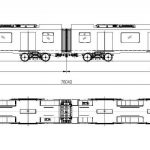
Each train car has three sets of bi-parting doors on each side with an interior emergency release.
Trains will be built to Standard gauge (1,435 mm). Traction power is delivered via a 3rd rail system, with a conductor rail that supplies 750V DC traction power. Trains are limited to a maximum operating speed of 80 km/h.
Other standard features include ventilation and air-conditioning, an in-saloon and cab front CCTV system, passenger emergency communication facilities, smoke detectors, and fire extinguishers.
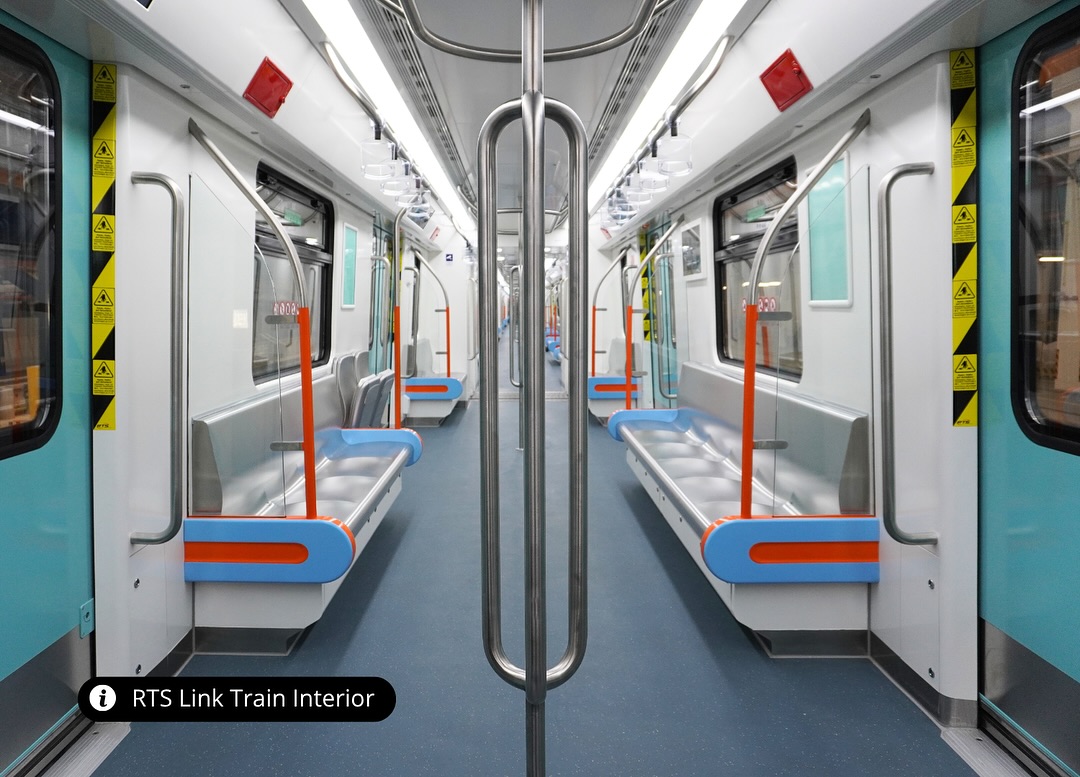
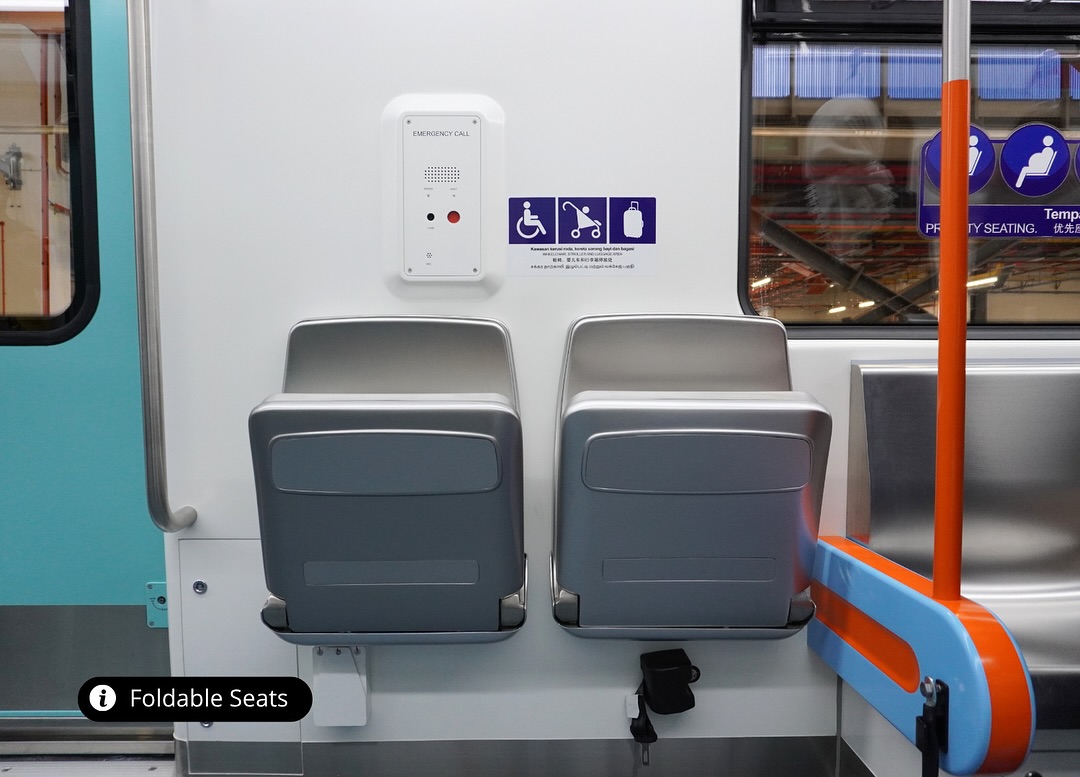
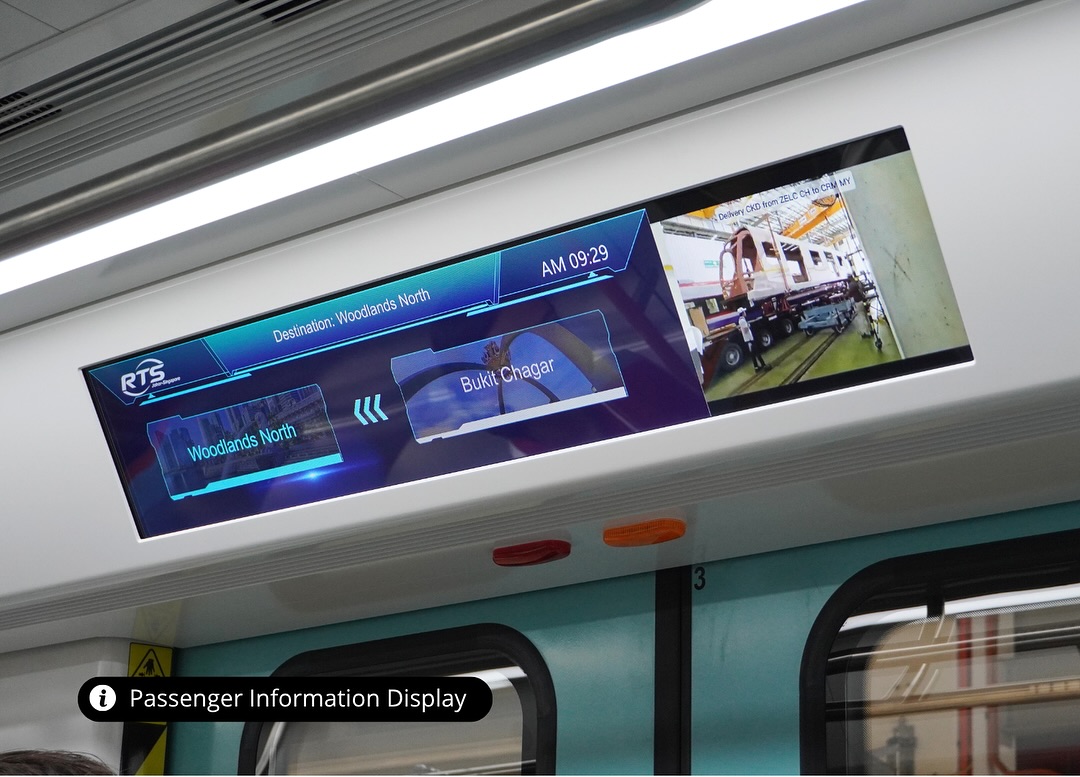
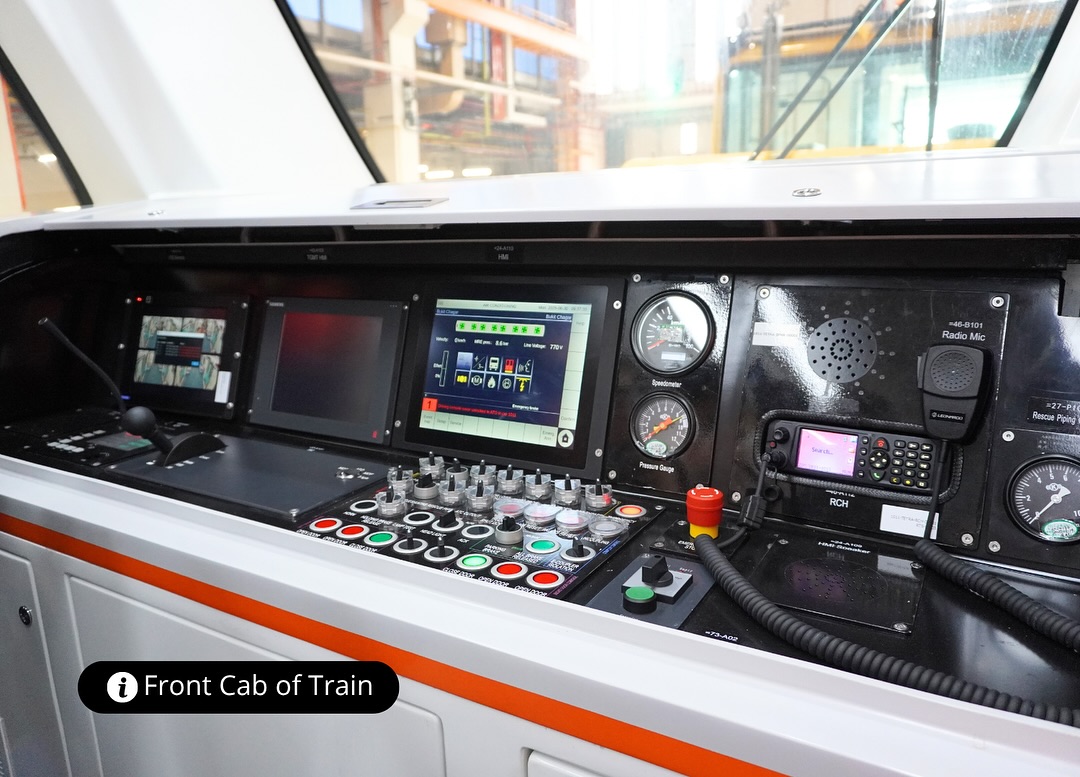
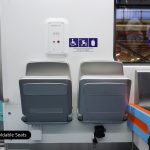
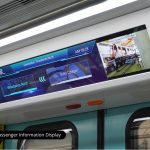
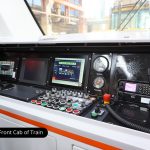
The first train (Train 01) was fully constructed and assembled in China.
Subsequent trains (Trains 02 – 08) are assembled by CRRC Rolling Stock Center (Malaysia) Sdn. Bhd. in Batu Gajah, Perak. The trains are assembled in two batches of 3 trains each.
Train Formation
Every car is identified by a four-digit number ranging from 101x to 108x, where the first two digits are always 10, the third digit being the train number, and the last digit x is carriage identifier.
As such, a sample Train 01 will contain the carriage numbers 1011-1012-1013-1014. Depending on the direction of travel, the sequence may be reversed.
Delivery
In June 2025, the Land Transport Authority unveiled the first of 8 RTS Link Train at the Singapore Rail Test Centre (SRTC). Train 01 arrived in Singapore in April 2025.
On 15 November 2025, Train 02 was delivered to Wadi Hana Depot.
Off-Site System Integration Test
SRTC was used as part of the Off-Site System Integration Test (OSIT) from December 2024. Key milestones included the first train in April 2025 and dynamic testing beginning in July 2025.
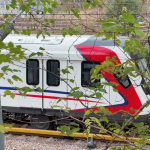
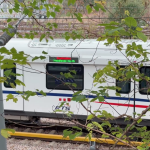
Photos:


External Links & References
- Technical Information – MRT Corp (mymrt.com.my) [Accessed 24 Jan 2021]
- Teamwork at RTS Operations key to reaching project milestone – contracts for systems totalling RM1 billion awarded – RTS Operations Pte Ltd
- 【跨越柔佛 连接新马】轨道交通柔新线在中车株洲电力机车厂动态调试 – bilibili
- Land Transport Authority Facebook Post [Accessed 30 Jun 2025]
- RTSO Facebook Post [Accessed 30 Oct 2025]
- Cross-border RTS Link train rolls in for testing – The Star Malaysia
The RTS Link Rolling Stock serving the JB-SG RTS Link Line will open by either 31 December 2026 or 1 January 2027 according to the RTS Link website. “https://www.mymrt.com.my/projects/rts-link/”
Seen undergoing tests as of Nov 2024, https://www.bilibili.com/video/BV1b9f8YsESE/
Such a small order (8 train sets), confirm will be additional order of either the Malaysia LRT3 rolling stock or the Singapore JRL rolling stock, where both lines are currently under construction. The LRT3 rolling stock is by a China company, whereas the JRL rolling stock is by a Korea company. Due to costs consideration, the answer is quite obvious. Probably the LRT3 rolling stock will be used. Furthermore, the depot is at Malaysia. To deliver the LRT3 rolling stock would be easier than to deliver the JRL rolling stock.
Yes Cost is a factor but i still feel more to be done cos only 4 cars can carry 650pax only max crush is 1065pax if peak hour the customs 5000000pax handling wor the RTS later will go beserk due to overwear and loaded. Maybe the partnership need to think again use what train stock better.
I agree, 4 cars per trainset is not enough. When the platforms are reserved for 6-car trains it will be much better. See how crowded CCL and DTL are…