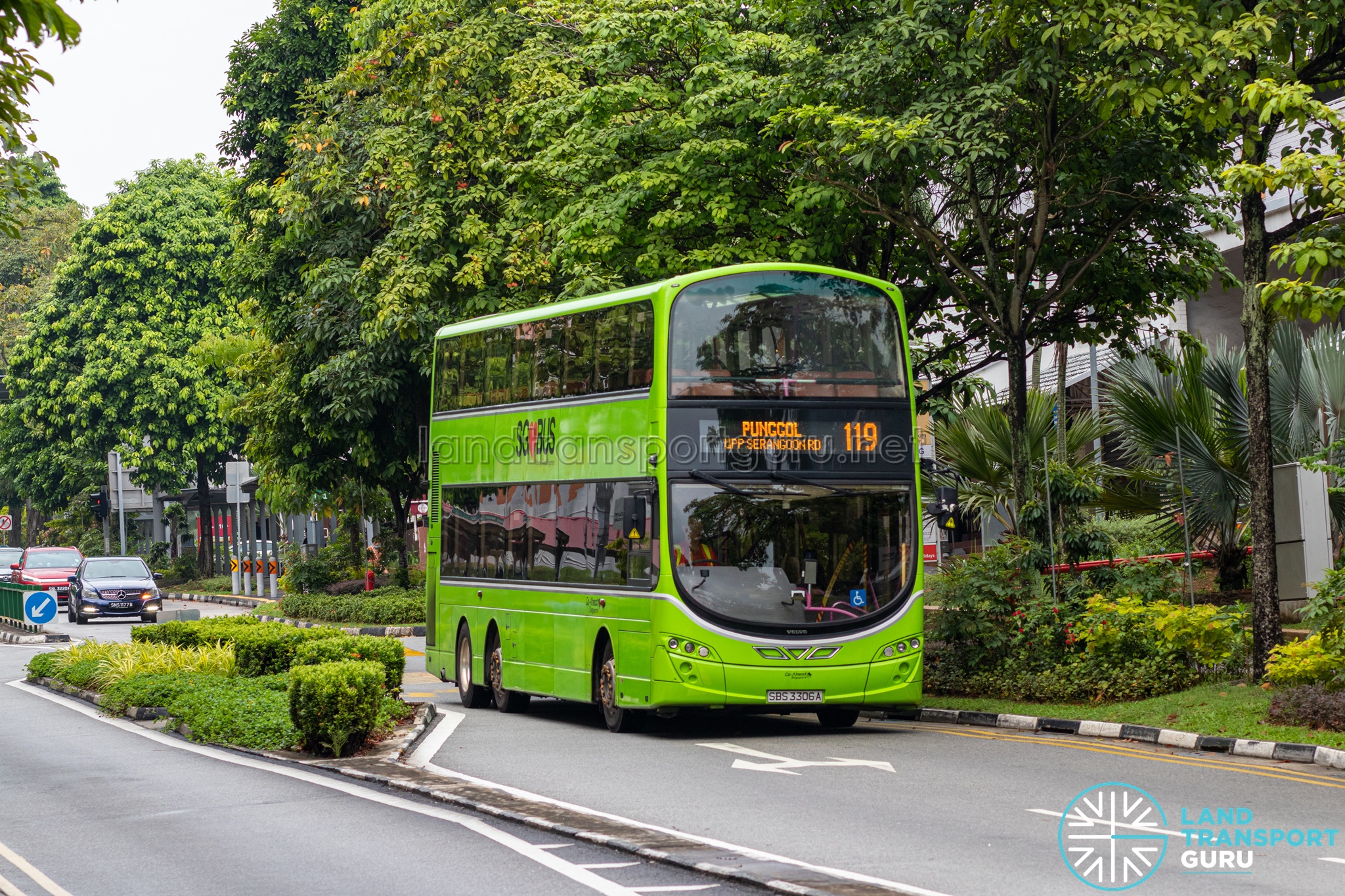
| Volvo B9TL (Wright) | |
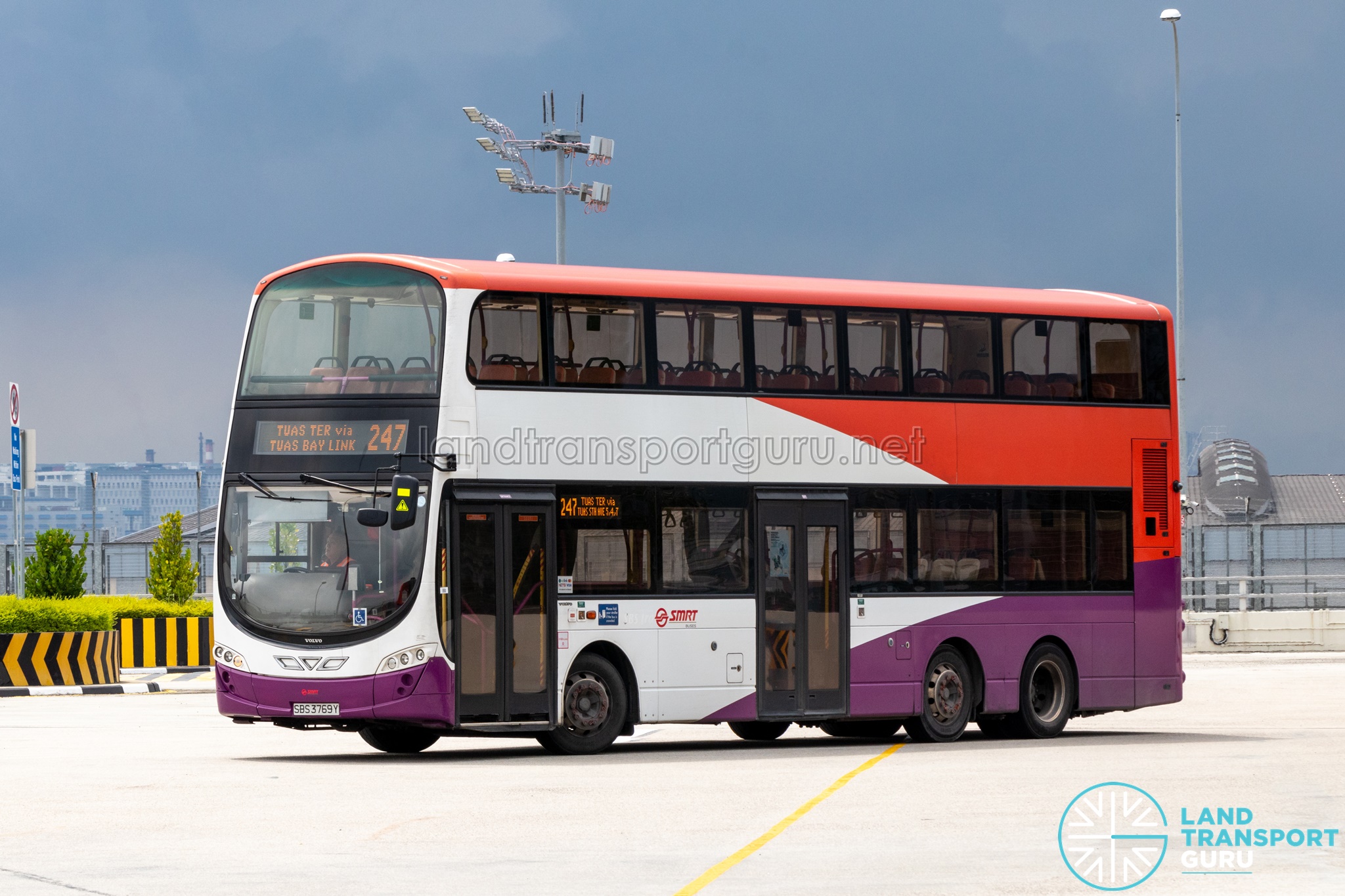 |
|
| Manufacturer | Volvo Buses |
| Bodywork | Wrightbus Limited |
| Years in operation | 2010–Present |
| Operators | SBS Transit SMRT Buses Tower Transit Go-Ahead Singapore |
| Technical Data | |
| Length | 12 metre |
| Engine | Volvo D9B310 EC06B |
| Transmission | ZF EcoLife 6 AP 1410 B Voith DIWA 864.5 ZF EcoLife 6 AP 1403 B |
| Accessibility | Low Entry / Low Floor |
| Emission Standard | Euro V |
Main Article: Volvo B9TL
The Volvo B9TL (Wright) is the most common bus model in Singapore, with over 1,600 units in operation. Operated by all four Public Transport Operators, these buses form a significant portion of the country’s double-decker bus fleet.
Background
Following the introduction of 200 Volvo B9TL (CDGE) buses in 2006, SBS Transit continued the procurement of 3-axle double-decker buses to replace older models such as the Leyland Olympian and Volvo Olympian, and to expand its fleet capacity.
In 2009, SBS Transit awarded Volvo Buses a contract for an initial batch of 150 Volvo B9TL chassis equipped with Euro V engines. These chassis, which are manufactured in Borås, Sweden, were paired with the Wright Eclipse Gemini 2 bodywork manufactured by Wrightbus in Ballymena, Northern Ireland. The body kits were supplied in complete knock-down (CKD) form and assembled locally in Singapore by ComfortDelGro Engineering (CDGE).
The Euro V engines were adopted well ahead of Singapore’s regulatory requirements, which were only mandated for diesel vehicles registered after 1 January 2014. The model’s reliability, fuel efficiency, and modern design led to subsequent procurement orders in 2010, 2012, and 2014, bringing the total number of Wright-bodied Volvo B9TL buses in Singapore to 1,606 units.
Role in BSEP/BCM
The introduction of the Volvo B9TL (Wright) coincided with major changes in Singapore’s public transport framework. During the Bus Service Enhancement Programme (BSEP) in 2012 and the later implementation of the Bus Contracting Model (BCM) in 2016, the Land Transport Authority (LTA) began purchasing buses directly, including the B9TL (Wright).
While SBS Transit’s announcements added up to 1,415 units procured, the total number of buses eventually reached 1,606 units, reflecting both fleet expansion and redistribution needs under the new contracting framework.
Under the BCM, starting in 2016, Wright-bodied Volvo B9TLs were transferred or allocated to other operators besides SBS Transit, such as SMRT Buses, Tower Transit, and Go-Ahead, as part of their respective negotiated or tendered contract packages.
Bodywork Background
All Volvo B9TL (Wright) buses in Singapore are fitted with the Wright Eclipse Gemini 2 bodywork. Manufactured by Wrightbus, this second-generation design was launched in 2008 as a successor to the original Eclipse Gemini introduced in 2001.
The Eclipse Gemini 2 was compatible with both the Volvo B9TL and the Volvo B5LH chassis. The partnership between Volvo and Wrightbus was particularly strong during this period, gaining significant orders from markets such as the United Kingdom, Hong Kong, and Singapore.
Procurement Overview
The Volvo B9TL (Wright) is the most common bus model in Singapore. Its rounded front and contemporary styling have made it a recognisable feature of the city’s bus network.
The buses were introduced in four main batches, each with minor variations in specification and interior layout. Differences will be elaborated on in their respective sections.
| Batch | Specs | Units | Description | Remarks |
| 1 | 150 buses Low Entry ZF Ecolife |
150 | SBS7500D – SBS7686B (with unused registration numbers) |
Low Entry |
| 2 | 300 buses Low Entry / Low Floor Voith DIWA |
30 | SBS7700T – SBS7729L | Low Entry |
| 240 | SBS3000G – SBS3238M, SBS3269Z | Low Floor | ||
| 30 | SBS3300R – SBS3329J | Low Floor Purchased under BSEP |
||
| 3 | 565 buses Low Floor Voith DIWA |
446 | SBS3240E – SBS3268B, SBS3270T – SBS3299L, SBS3600A – SBS3986L | Ownership of SBS3968P, SBS3970P, SBS3973Z, SBS3975T – SBS3986L transferred to LTA before full transition to Bus Contracting Model |
| 119 | SBS3330D – SBS3448Z | Purchased under BSEP | ||
| 4 | 415 buses Low Floor ZF Ecolife |
23 | SBS1Z – SBS23K | Ownership transferred to LTA prior to full transition to Bus Contracting Model |
| 71 | SBS3449X – SBS3482Z, SBS3487K – SBS3523P | Purchased under BSEP | ||
| 321 | SG5176G – SG5185E SG5300P – SG5610U |
Ownership transferred to LTA prior to registration Registered under Bus Contracting Model |
||
| 176 Buses Low Floor ZF Ecolife |
176 | SG5000E – SG5175J | Additional order purchased under Bus Contracting Model |
Construction and Assembly
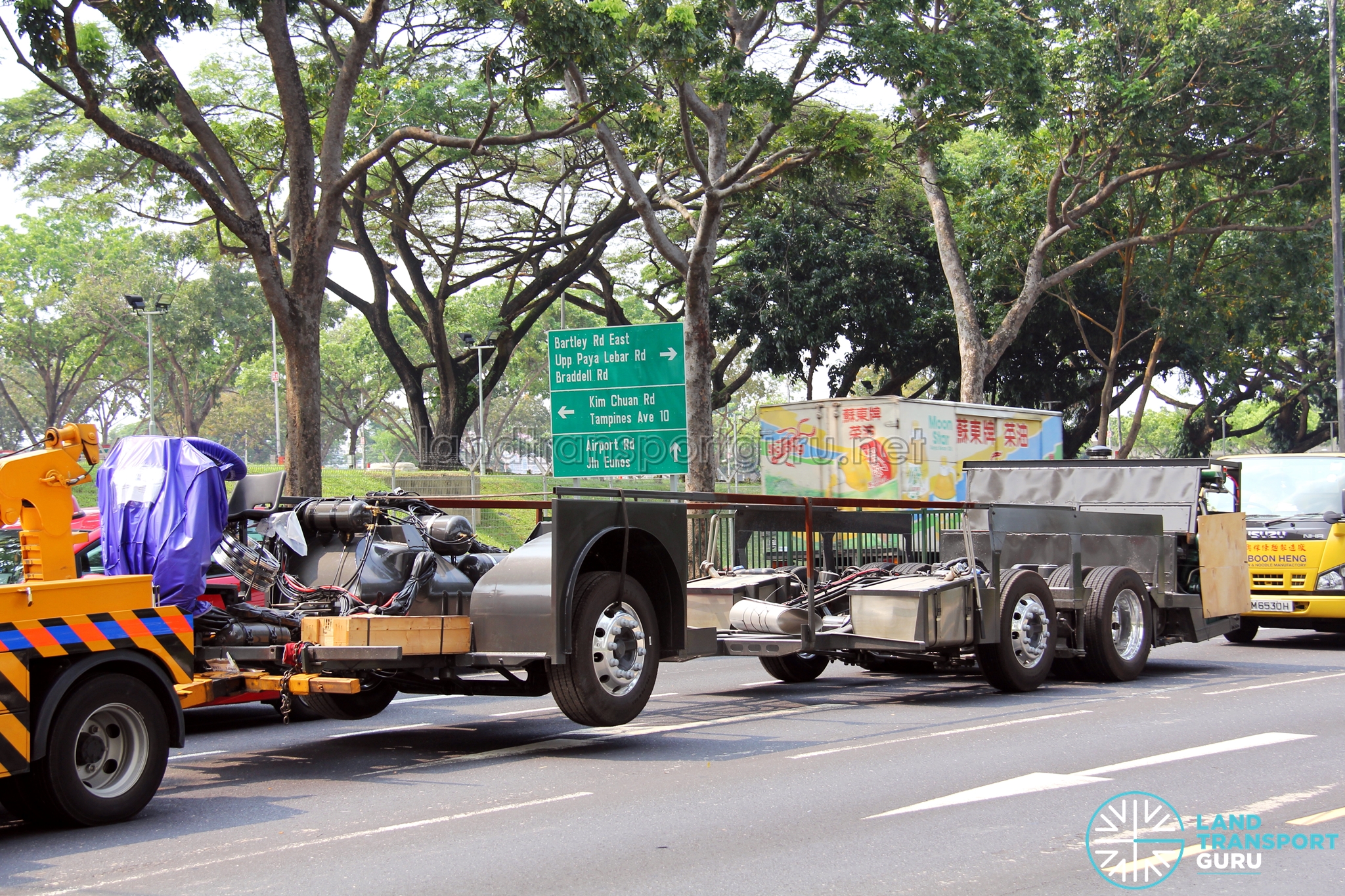
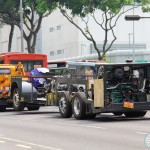
As with the earlier Volvo B9TL (CDGE) buses, SBS Transit assembled the Wright-bodied B9TL units locally. Volvo bus chassis from Sweden, and Wrightbus complete knock-down (CKD) body kits from Northern Ireland, were shipped to Singapore and assembled by ComfortDelGro Engineering (CDGE) at its Hougang Bus Depot assembly facility.
Each bus underwent final assembly, testing, and certification in Singapore before being registered and deployed on service.

Technical Specifications
Technical specifications of Volvo B9TL (Wright) buses are detailed here, separated by procurement batch:
| Batch 1 | Batch 2A | Batch 2B | Batch 3 | Batch 4 | |
| Registrations | SBS7500D – SBS7686B | SBS7700T – SBS7729L |
SBS3000G – SBS3238M SBS3269Z SBS3300R – SBS3329J |
SBS3240E – SBS3268B; SBS3270T – SBS3299L SBS3330D – SBS3448Z SBS3600A – SBS3986L |
SBS1Z – SBS23K; SBS3449X – SBS3482Z; SBS3487K – SBS3523P; SG5000E – SG5185E; SG5300P – SG5610U |
| Quantity | 150 | 30 | 270 | 565 | 591 |
| Registered | 13 Sep 2010 – 26 Aug 2011 | 21 Sep 2011 – 28 Dec 2012 | 30 Jan 2013 – 18 Jun 2015 | 3 Aug 2015 – 27 Dec 2017 | |
| Technical Specifications | |||||
| Engine | Volvo D9B310 EC06B engine, Euro V-compliant, 9,364 cc Power/torque rating of 310 hp (228 kW) @ 1900 rpm / 1400 Nm @ 1100 – 1500 rpm |
||||
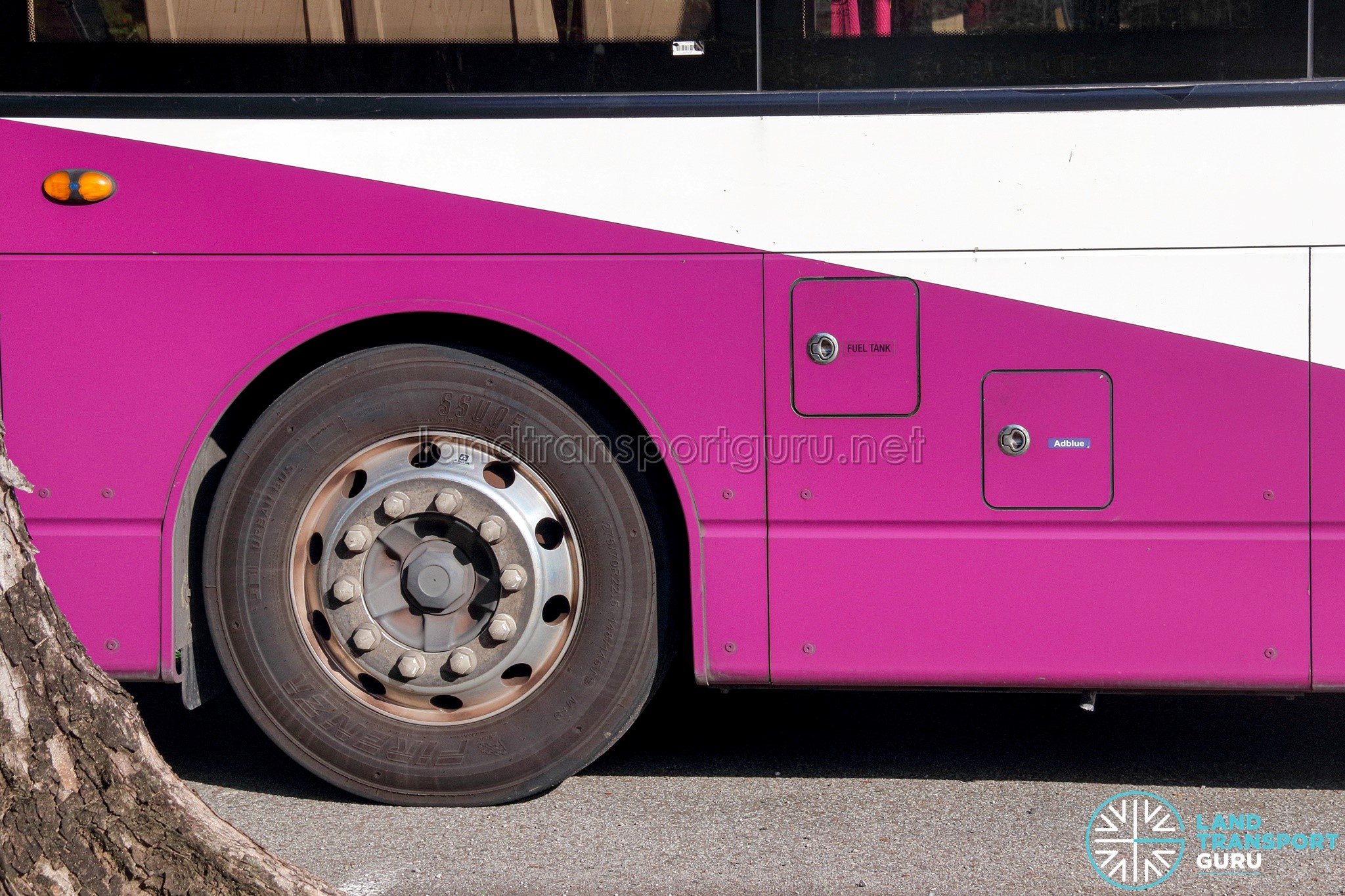
| Emissions control | Euro V compliant Selective Catalytic Reduction (SCR) technology; requires diesel exhaust fluids such as AdBlue. |
||||
| Transmission | ZF EcoLife 6 AP 1410 B | Voith DIWA 864.5 | ZF EcoLife 6 AP 1403 B | ||
| Entry | Low Entry | Low Floor | |||
| Capacity | Seating (Upper deck): 55 Seating (Lower deck): 27 Standing: 49 Total: 131 (With 1 Wheelchair bay) |
Seating (Upper deck): 55 Seating (Lower deck): 27 Standing: 51 Total: 133 (With 1 Wheelchair bay) |
U55 + L27 + S53 Total: 135 (With 1 Wheelchair bay) |
||
| Electronic Display Signage (EDS) | Hanover | LECIP | LECIP & Hanover | LECIP | |
| Air-con model | Eberspächer Sütrak R 488 | Denso | |||
In this table, Batch 2 buses are separated by interior configuration. While the first 30 units were built as low-entry buses, the remaining 270 buses would be low-floor buses. (see also: Low-Floor vs Low-Entry Buses | Land Transport Guru)
Features common to all Volvo B9TL Wright buses are:
- Volvo Electronic Braking System (EBS5), Anti-Lock Braking System (ABS) and Traction Control System (TCS)
- Brakes engage when doors are open, throttle interlock prevents bus movement with doors open
- Electronically-controlled air suspension
- All buses retrofitted with an additional cooling fan at the bottom left of the engine cover
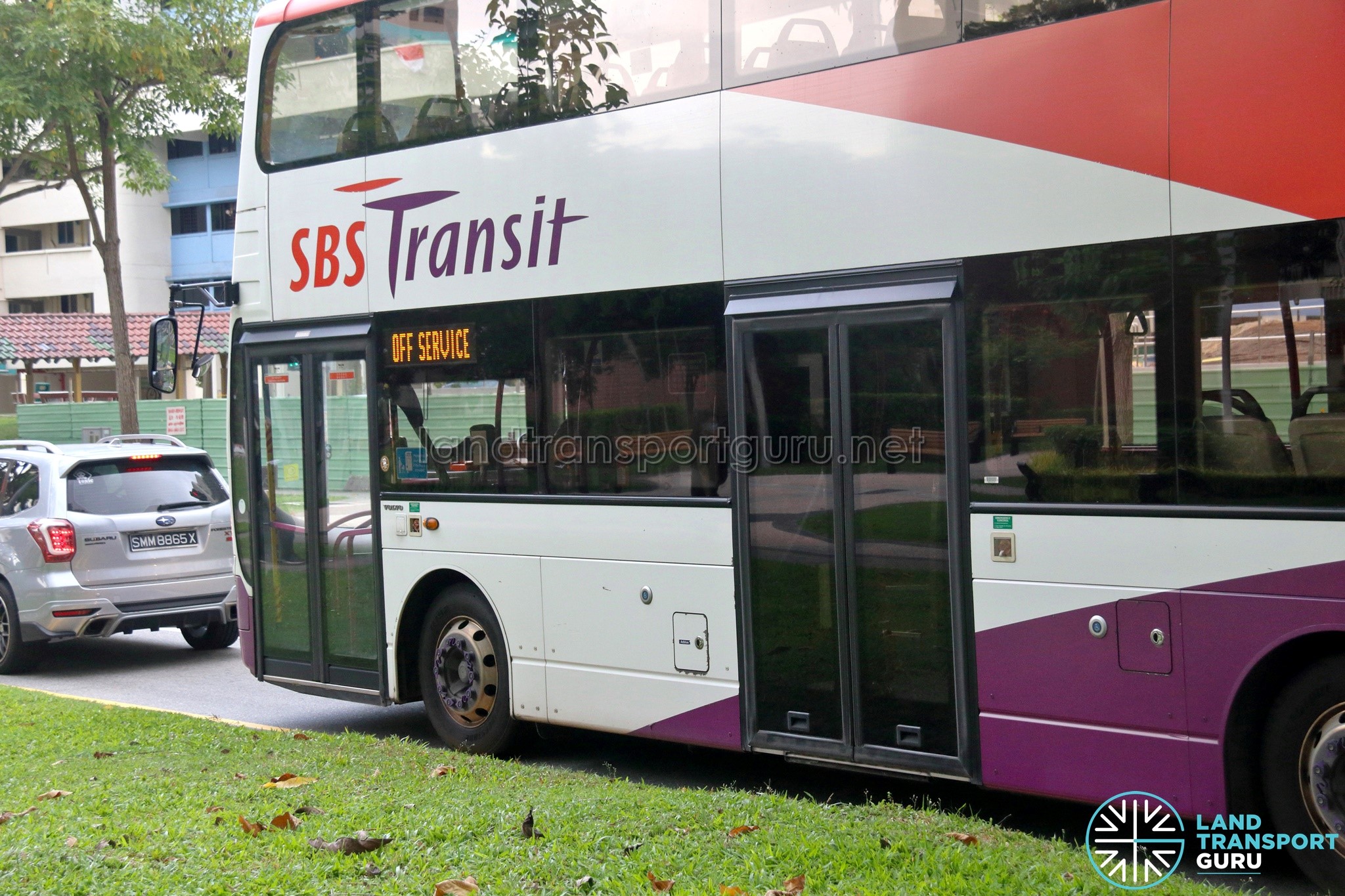
- SMC Transit plug doors (only SBS3921Z equipped with Ventura sliding plug doors)
Batch Variants
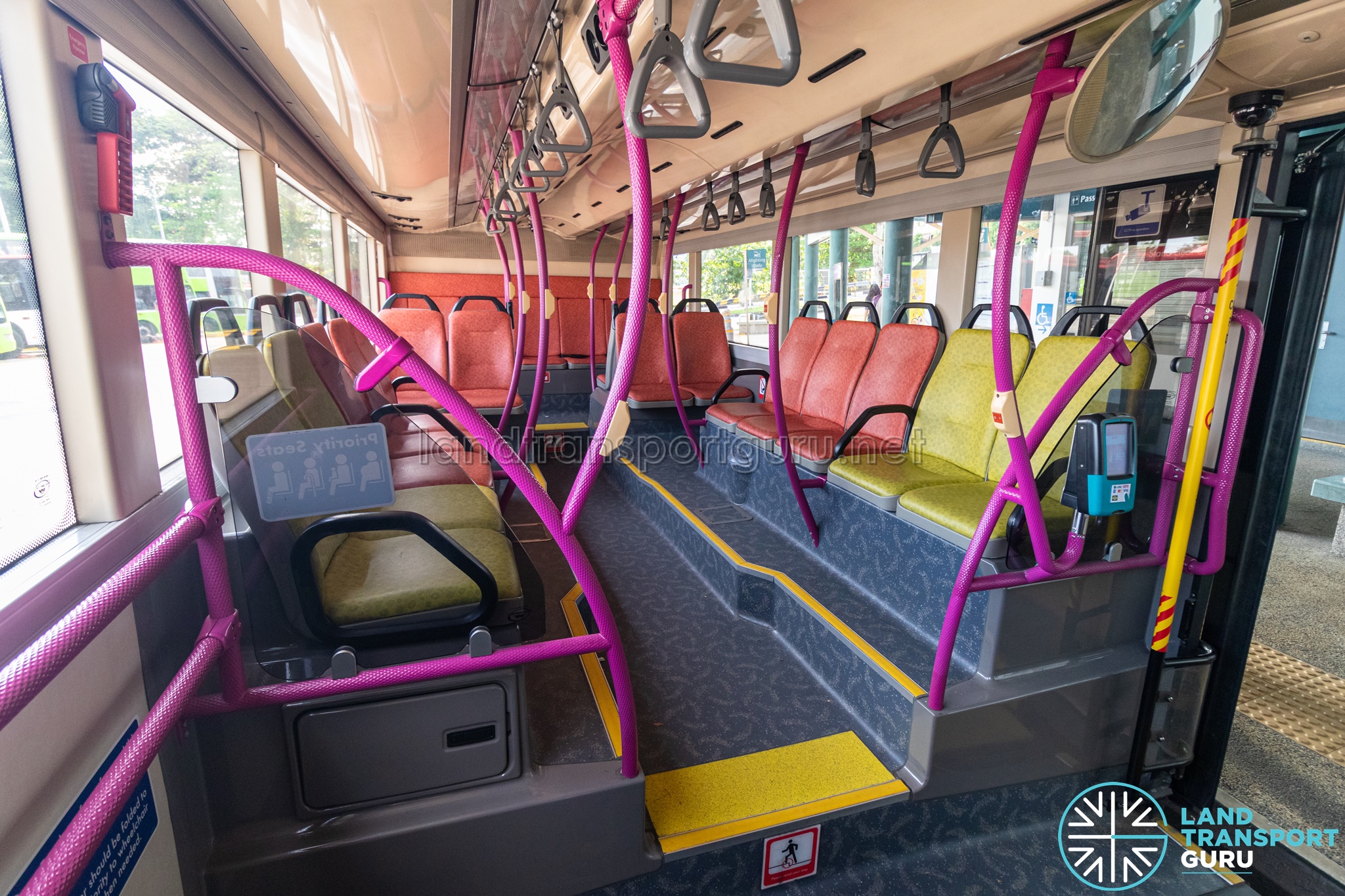
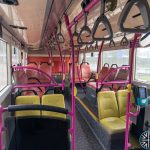
- Batch 1 & 2A – Low Entry configuration
These buses feature step-free access only between the entry and exit doors. A single step leads to the rear seating area, which comprises a mix of forward, reverse, and aisle-facing seats. - Batch 2B & 3 – Full Low Floor configuration
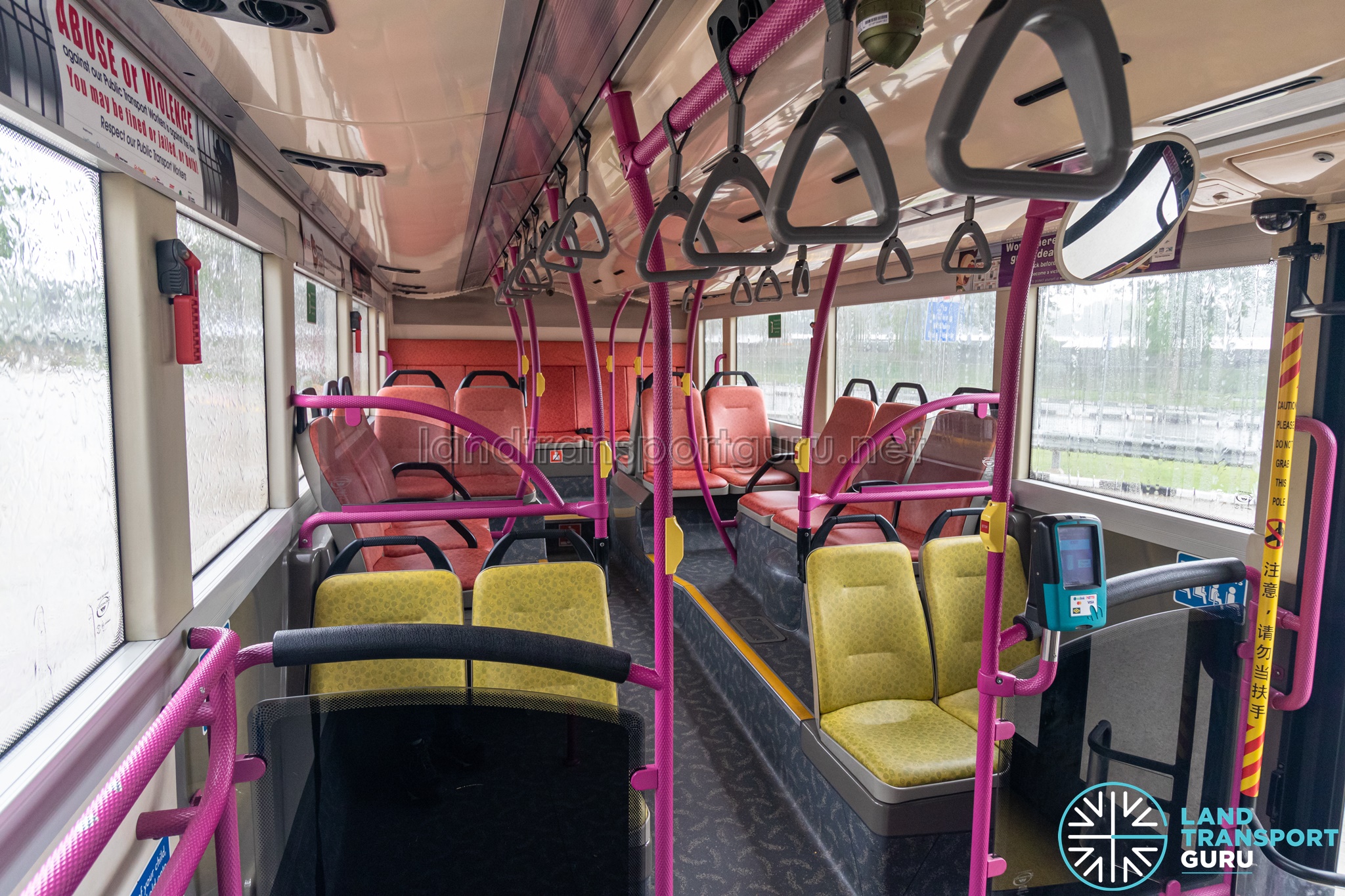
These variants provide fully step-free access across the lower deck, including to the last row of seats. The layout replaces two pairs of side-facing seats with forward-facing ones to improve accessibility and passenger comfort. - Batch 4 – Full Low Floor configuration
The final batch retains the full low-floor layout while introducing straight staircases with rectangular landings instead of curved stairs. The side-facing priority seats between the entry and exit doors are also fitted with headrests.
Procurement Details – By Batch
Volvo B9TL Wright – Batch 1 (SBS7500D – SBS7686B)
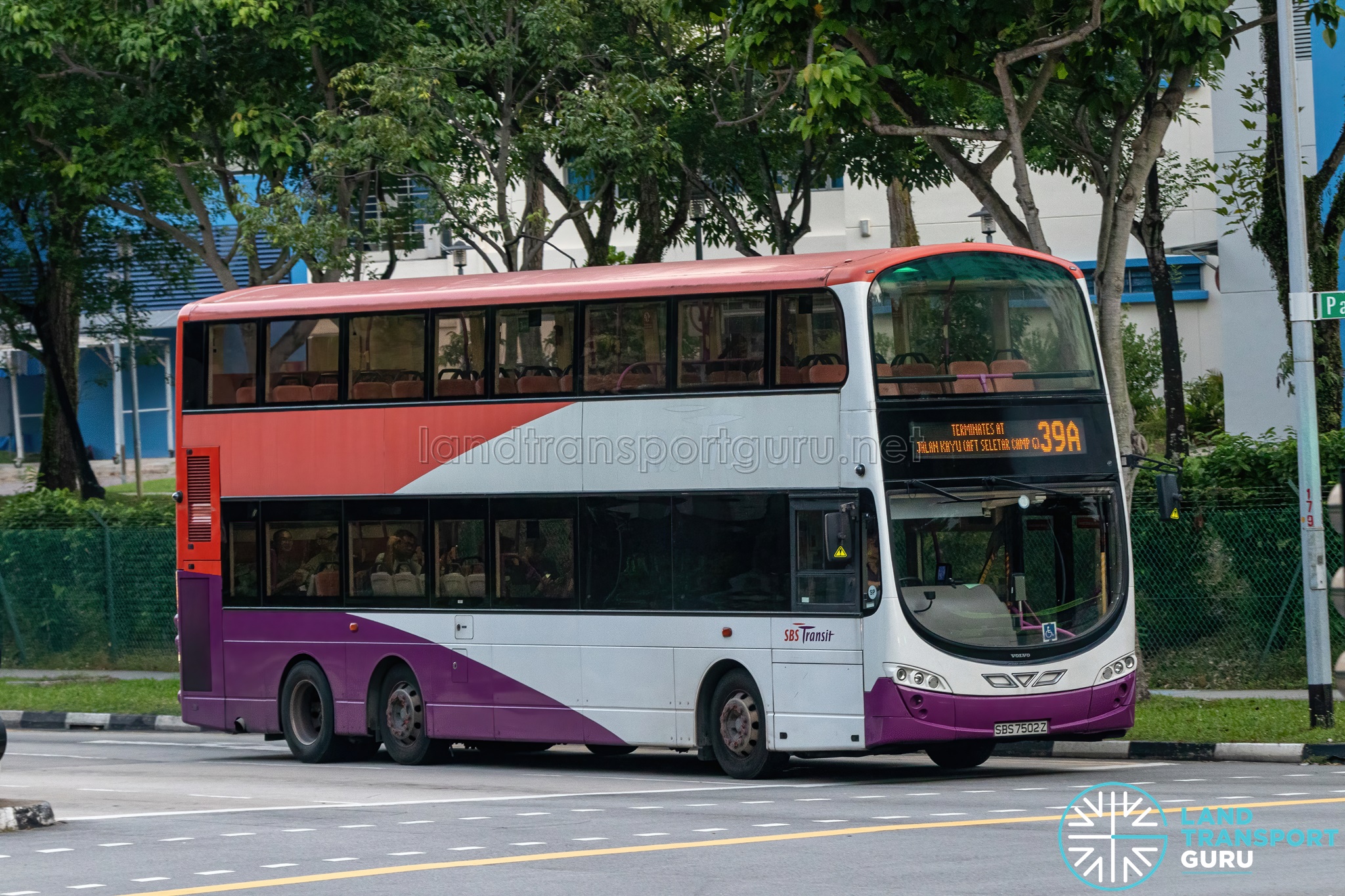
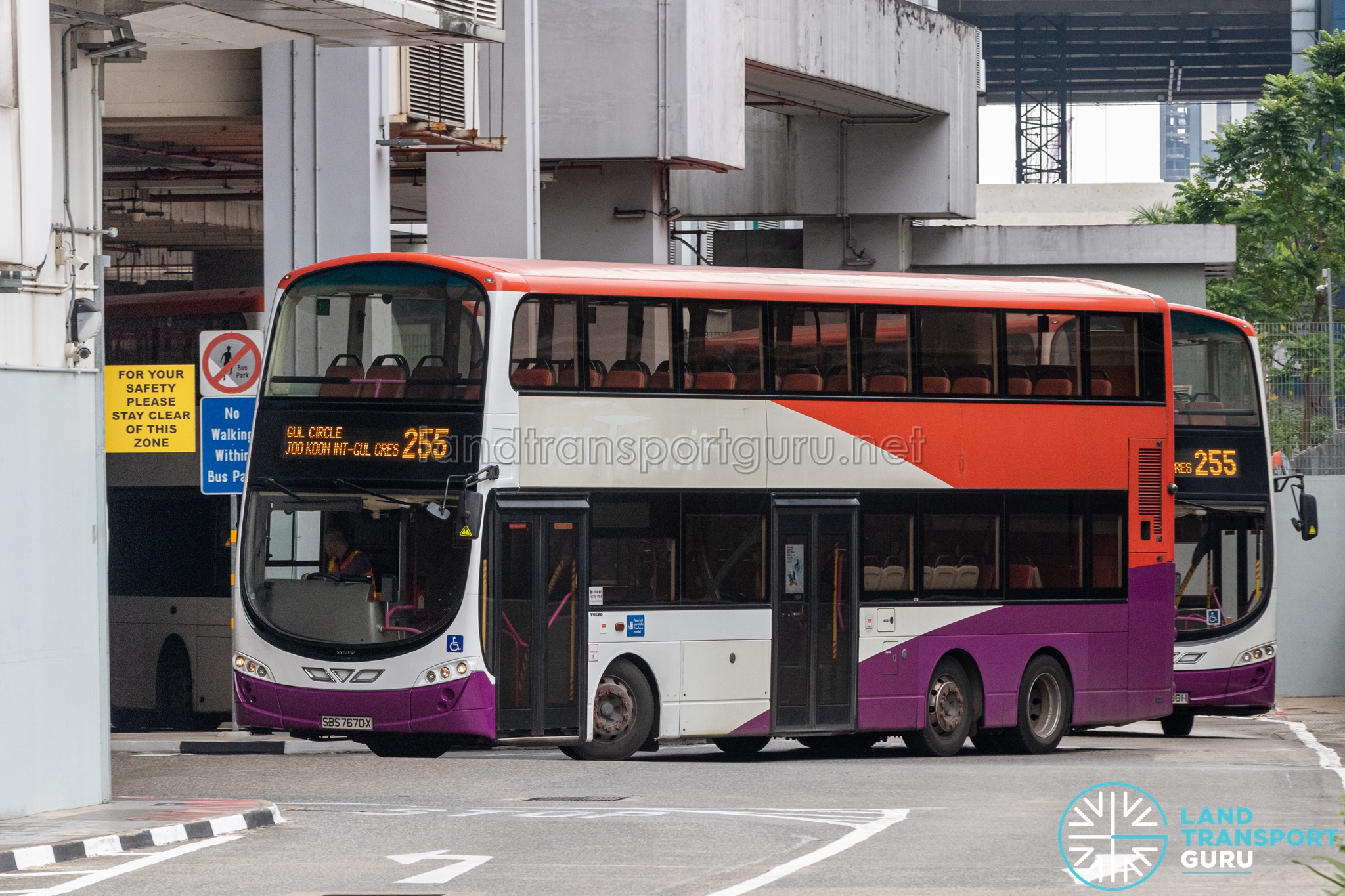
In August 2009, SBS Transit ordered 150 Volvo B9TL (Euro V) chassis under an S$87 million fleet renewal programme. This marked the company’s second major purchase of the B9TL model, following an earlier order of 200 Euro III units in 2006.
The new buses were equipped with the Volvo D9B310 engine meeting Euro V emission standards, paired with Wright Eclipse Gemini II (WEG2) bodywork from Wrightbus.
Volvo and SBS Transit maintained a long-standing relationship dating back to 1981, with over 1,700 buses delivered prior to this order. The B9TL Wright had also seen extensive use in the United Kingdom and Hong Kong, with a good reputation for reliability.
Prototype Unit (SBS7500D)
The prototype, SBS7500D, was assembled by Wrightbus in Northern Ireland and delivered to Singapore as a completely built-up (CBU) unit. It served as a reference model for the local assembly of other units.
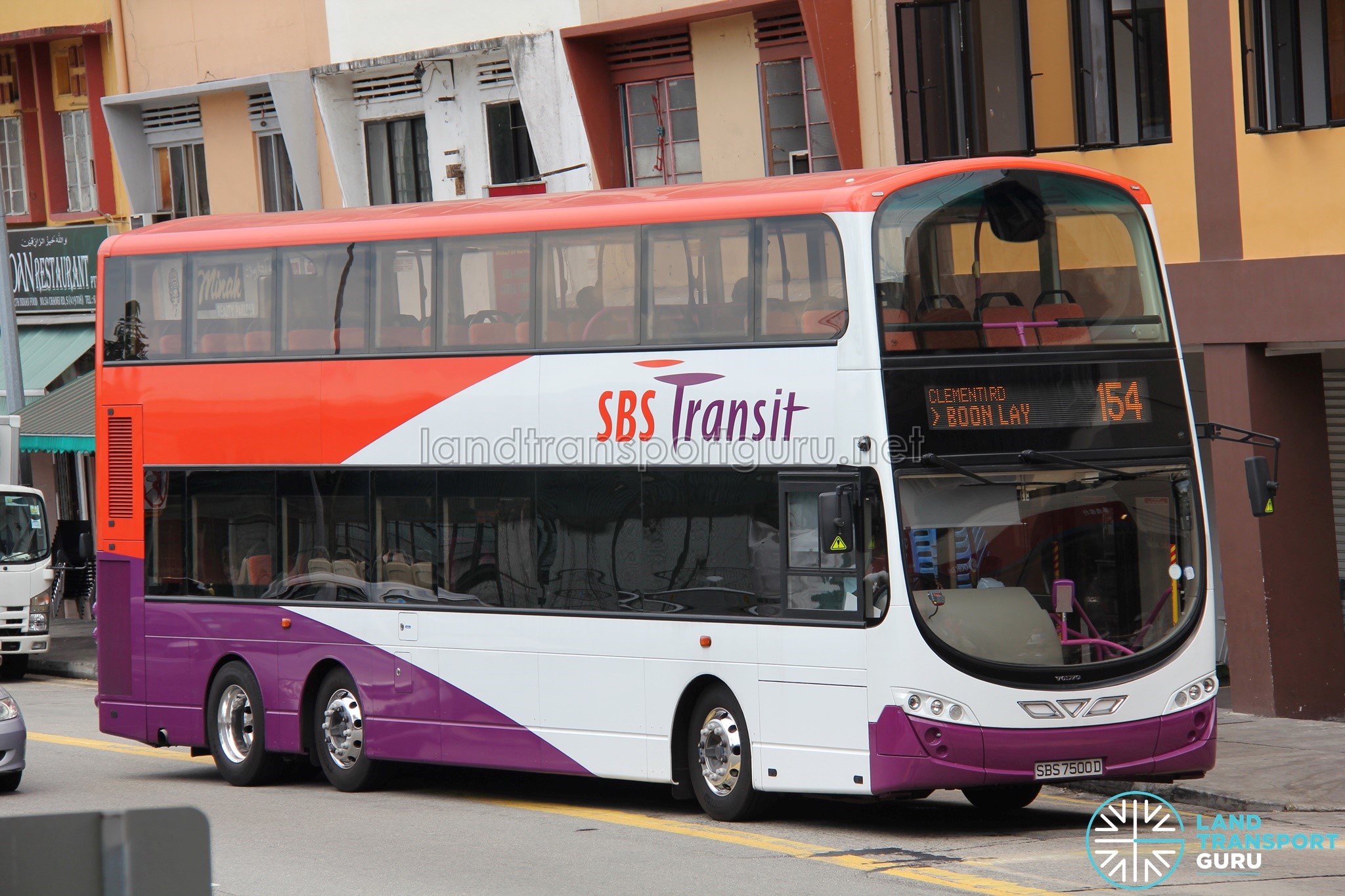

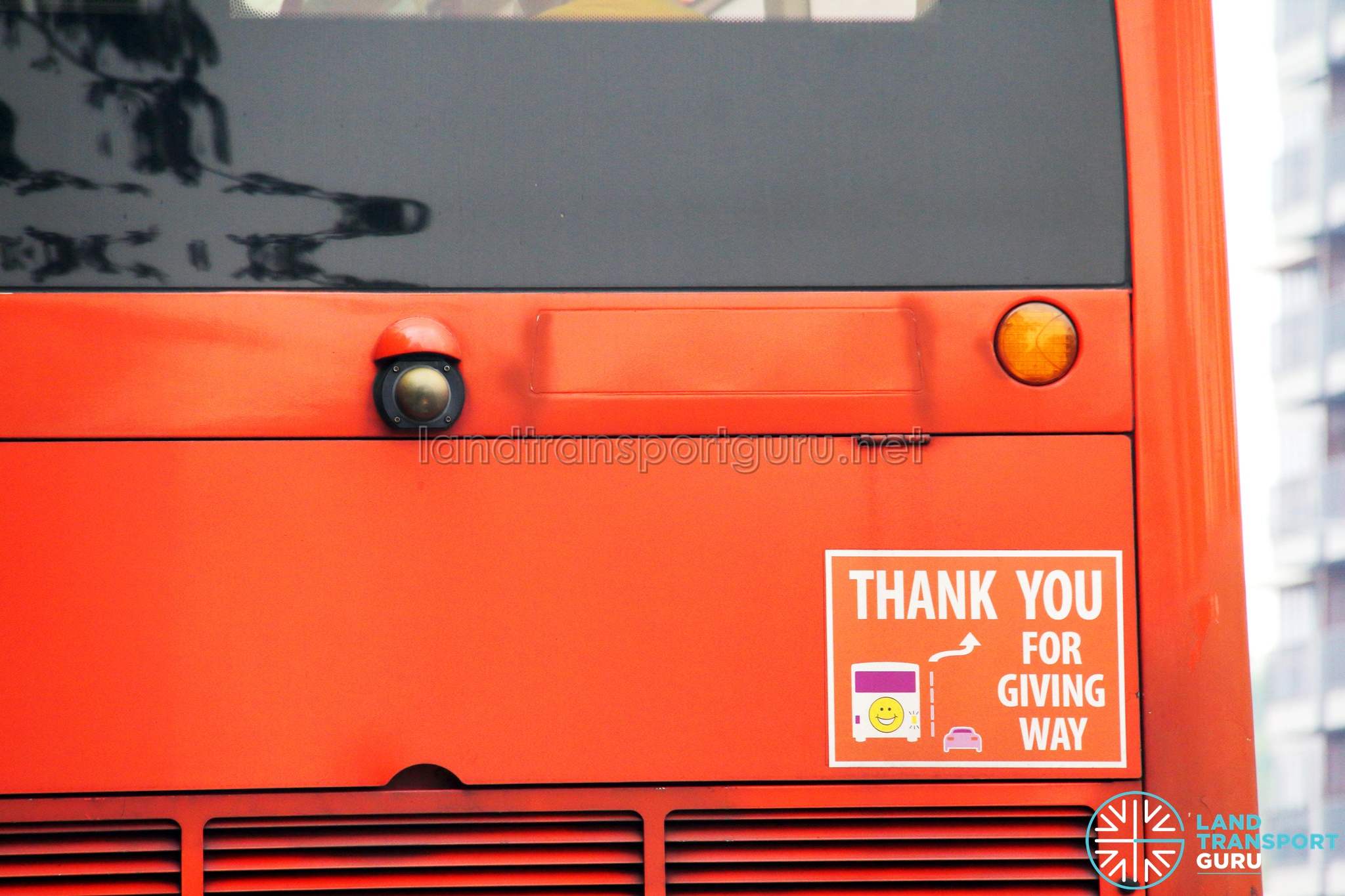
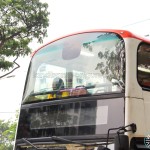
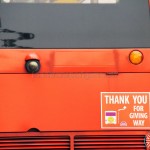
Minor design carryovers from Hong Kong specifications included tree guards (removed before entering revenue service), a rear number plate recess (later covered up), and an opaque sticker on the upper deck windscreen, where a TV screen would be installed on Hong Kong buses (removed sometime in late 2017). The prototype also featured plain grey flooring, while locally assembled units have blue-grey flooring with repeating crescent patterns.
Production Batch (SBS7501B – SBS7686B)
The remaining 149 buses were locally assembled by ComfortDelGro Engineering (CDGE) at the Hougang Depot bus assembly facility. These buses were built with a low-entry layout, providing step-free access between the entrance and exit doors, with a single step to the rear seating area.
They were equipped with ZF EcoLife 6-speed automatic transmissions and had a licensed capacity of 131 passengers (55 upper deck seats, 27 lower deck seats, and 49 standing spaces, including one wheelchair bay).
All buses were registered between 13 September 2010 and 26 August 2011, under the range SBS7500D – SBS7686B, skipping registration numbers containing the digit “4”.
Volvo B9TL Wright – Batch 2
(SBS7700T – SBS7729L; SBS3000G – SBS3238M; SBS3269Z; SBS3300R – SBS3329J)
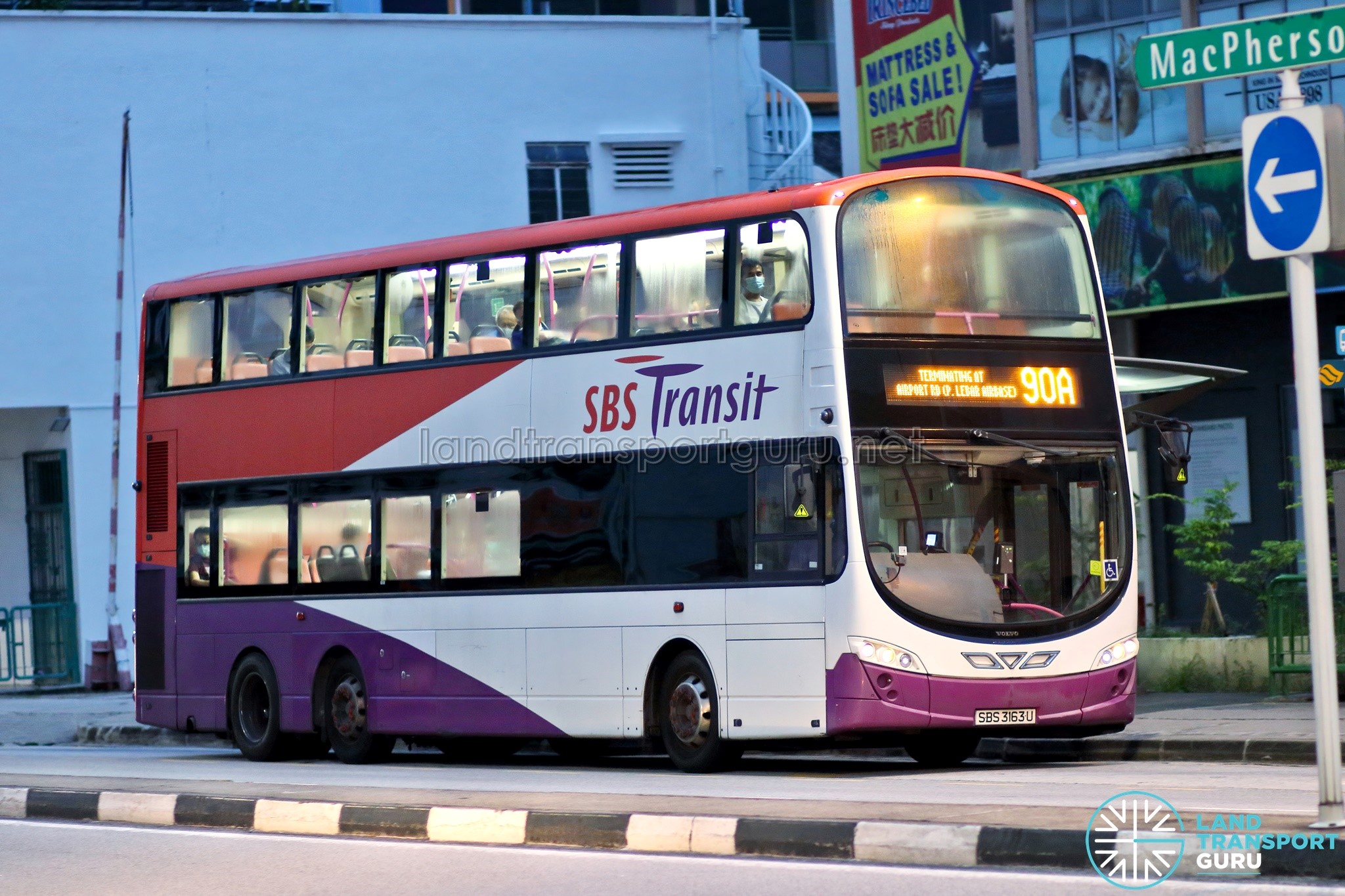
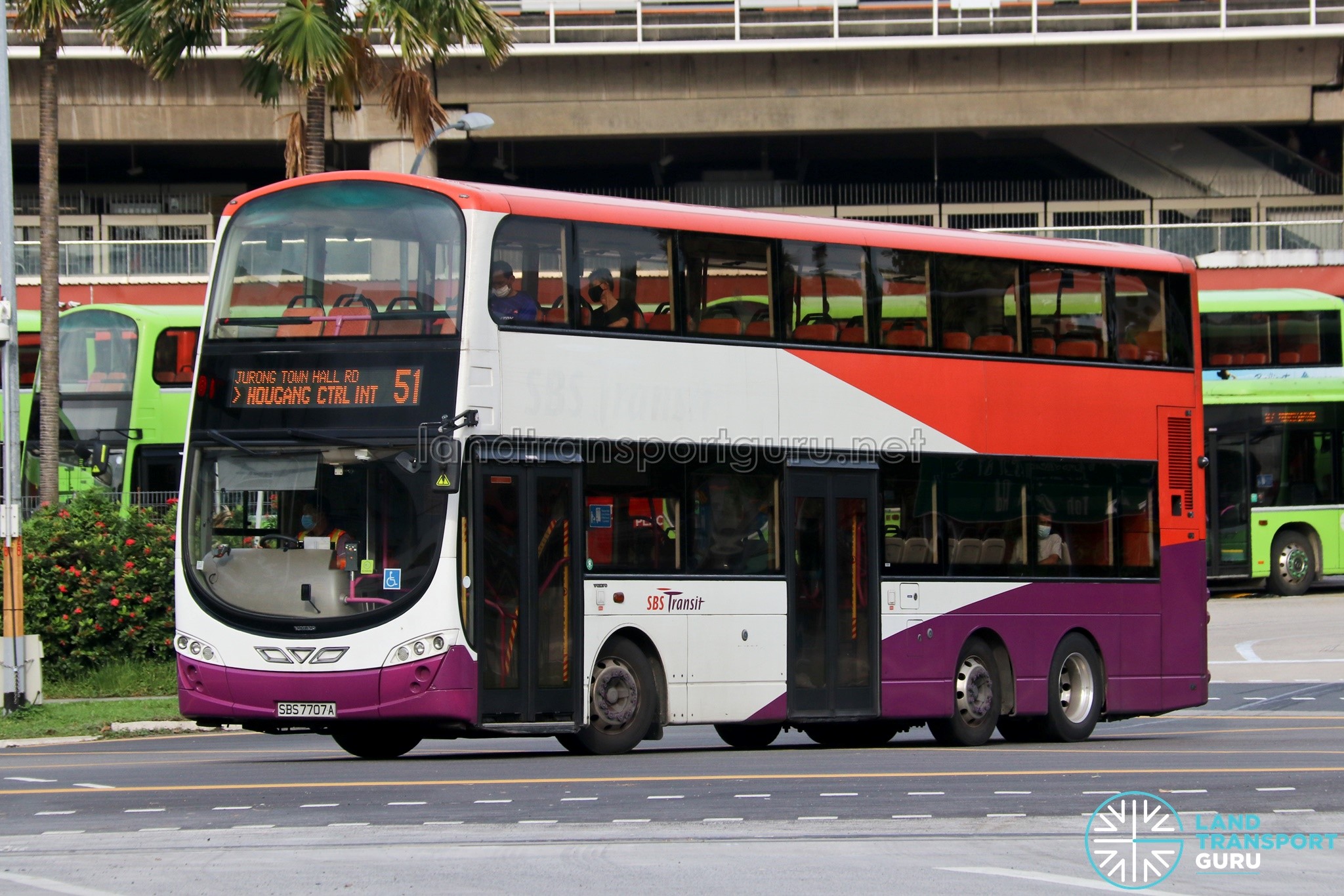
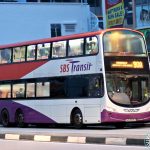
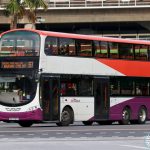
In September 2010, SBS Transit ordered an additional 300 Volvo B9TL Wright buses as part of an S$268 million combined purchase for 600 buses that also included 300 Mercedes-Benz Citaro single-deck buses.
Batch 2 was delivered in two configurations — low-entry and fully low-floor. The first 30 buses retained the low-entry layout similar to Batch 1, while the remaining 270 were built with a fully low-floor design to improve accessibility. SBS Transit also opted for a four-speed Voith DIWA transmission, replacing the six-speed ZF EcoLife units used previously.
Batch 2A – Low-Entry (SBS7700T – SBS7729L)
The first 30 buses retained the same interior layout and passenger capacity as Batch 1, featuring a raised rear section on the lower deck. They were registered between 21 September 2011 and 30 December 2011.
Batch 2B – Low-Floor (SBS3000G – SBS3238M; SBS3269Z; SBS3300R – SBS3329J)
The subsequent 270 buses introduced a fully low-floor layout, offering step-free access from entrance to rear seats. Four aisle-facing seats were replaced with two pairs of forward-facing seats located behind the exit door. These buses were equipped with LECIP Electronic Display Systems (EDS) instead of Hanover units and registered between 22 November 2011 and 28 December 2012.
30 of these buses were diverted to the newly-launched Bus Service Enhancement Programme (BSEP).
- Main fleet (SBS Transit): SBS7700T – SBS7729L; SBS3000G – SBS3238M; SBS3269Z (270 buses)
- BSEP allocation: SBS3300R – SBS3329J (30 buses)
Their licensed capacity for Batch 2B buses is 133 passengers (55 upper deck seats, 27 lower deck seats, 51 standing spaces, and one wheelchair bay); an increase of two passengers over the Batch 1/2A.
Volvo B9TL Wright – Batch 3
(SBS3240E – SBS3268B; SBS3270T – SBS3299L; SBS3330D – SBS3448Z; SBS3600A – SBS3986L)
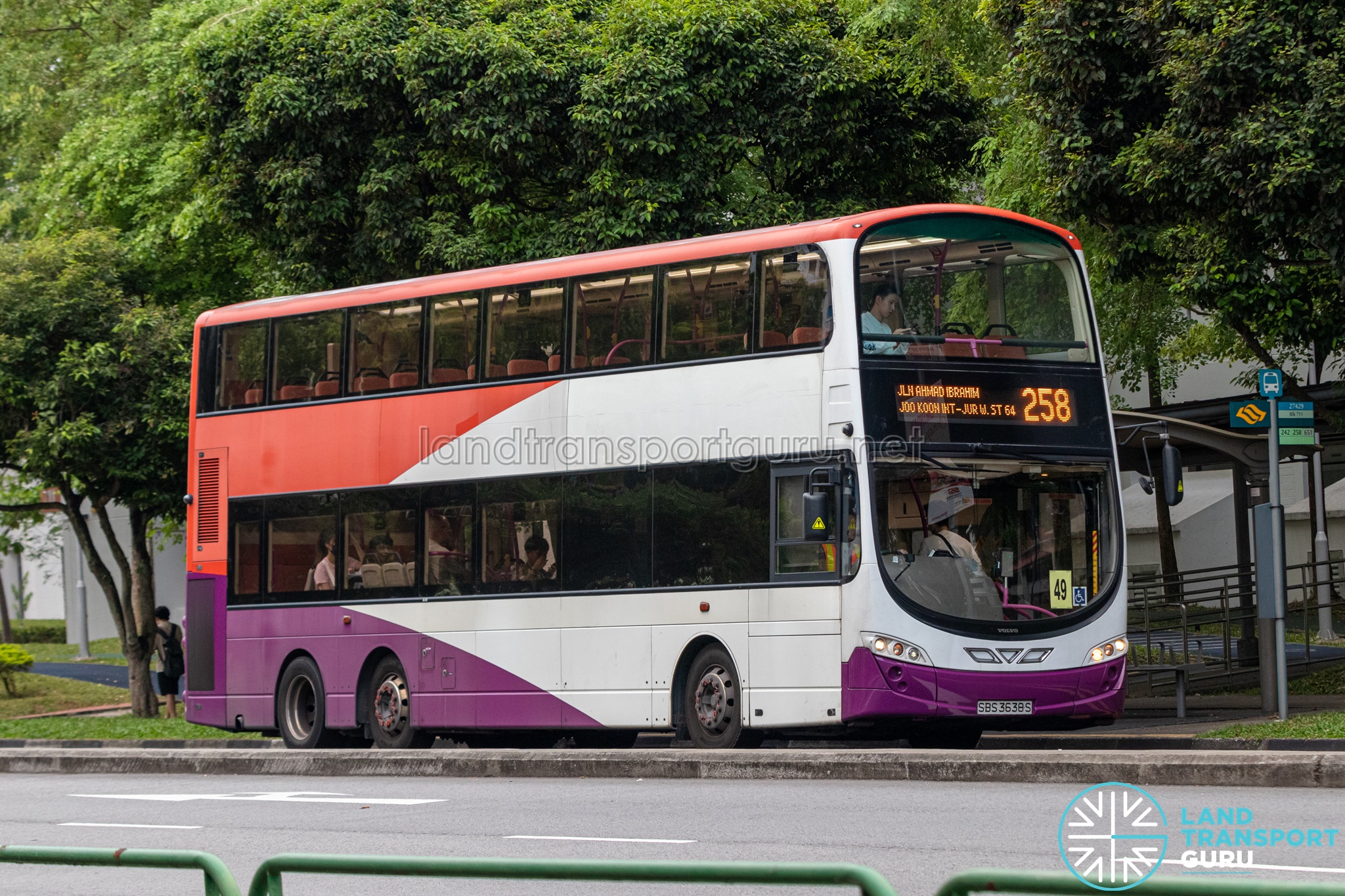
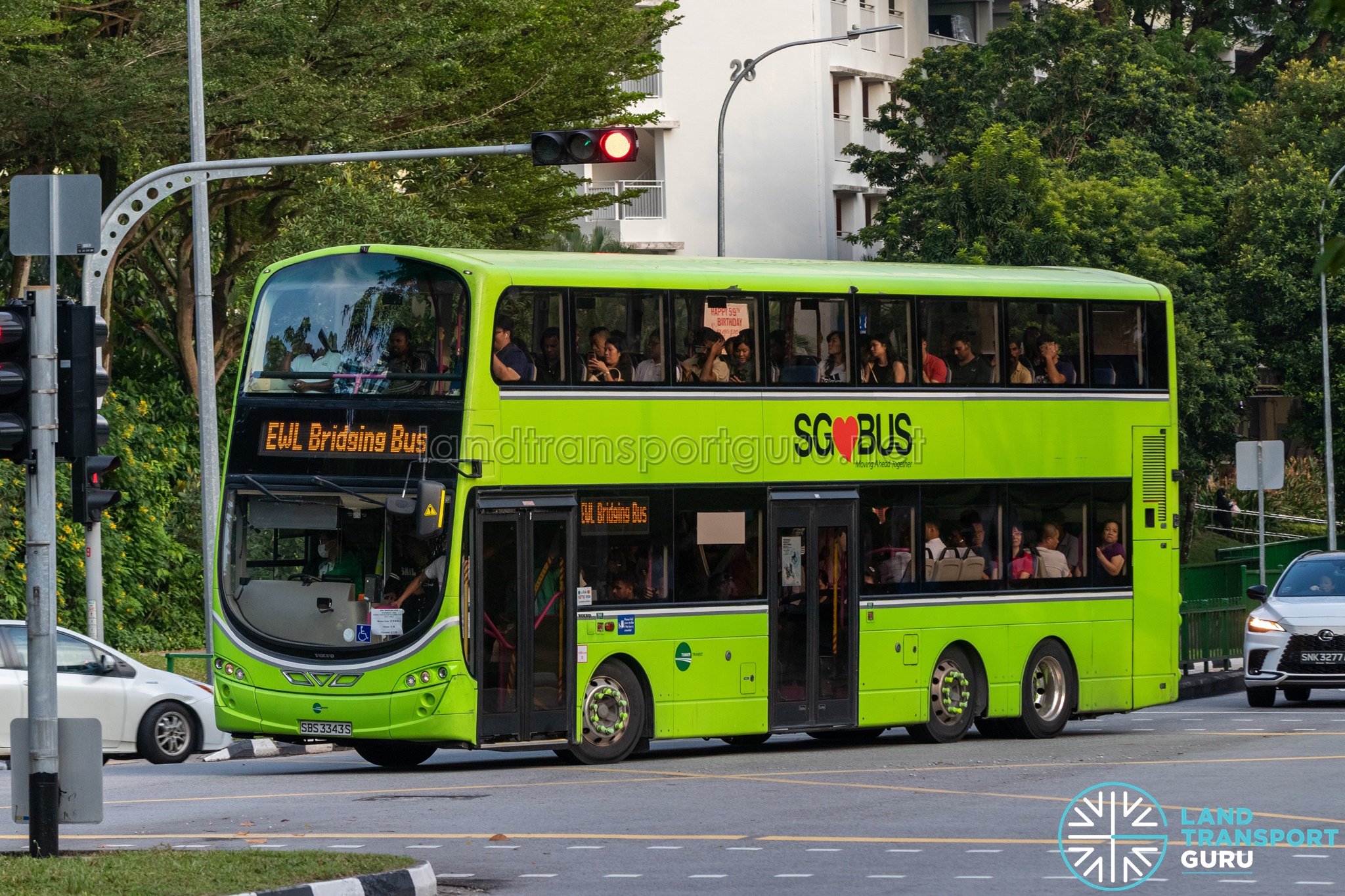
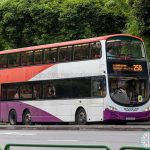
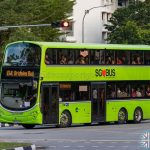
In July 2012, SBS Transit announced a further order for 550 Volvo B9TL Wright buses, valued at part of an S$433 million purchase for 1,000 buses, that also included 450 Mercedes-Benz Citaros. The total number of Batch 3 units later increased to 565 buses, comprising 446 SBS Transit units and 119 units diverted to the Bus Service Enhancement Programme (BSEP).
Batch 3 buses were registered between 30 January 2013 and 18 June 2015.
- Main fleet (SBS Transit): SBS3240E – SBS3268B; SBS3270T – SBS3299L; SBS3600A – SBS3986L (446 units)
- BSEP allocation: SBS3330D – SBS3448Z (119 units)
The 33xx to 35xx registration numbers were skipped and possibly reserved for registration of BSEP buses. SBS3269Z was also skipped, as it was a Batch 2B bus.
Technical Features
Batch 3 buses retained the same low-floor layout and Voith DIWA transmission as Batch 2B, with a licensed capacity of 133 passengers. A mix of LECIP and Hanover EDS units was used—later buses were predominantly fitted with Hanover displays.
Notable units include SBS3971D, the 1,000th Volvo B9TL Wright delivered to SBS Transit, and SBS3921Z, which is fitted with Ventura entry/exit doors. Front doors are still conventional double-leaf doors, but the rear doors are sliding plug doors, replacing the swinging plug doors supplied by SMC Transit.
Later registered units in this batch that were fitted with Hanover EDS units are SBS3761T – SBS3986L, and SBS3385X – SBS3448Z. The remaining have LECIP EDS units.
30 buses in this batch were registered with a slightly larger engine displacement, at 9368 cc versus the normal 9364 cc, as reflected in LTA records. These buses are SBS3240E – SBS3259C & SBS3330D – SBS3339E. The reason for this change is not unknown.
Some buses were later purchased by the Land Transport Authority (LTA) at book value as part of the transition to the Bus Contracting Model (BCM). These were SBS3968P, SBS3970P, SBS3973Z, and SBS3975T – SBS3986L.
Volvo B9TL Wright – Batch 4
(SBS1Z – SBS23K; SBS3449X – SBS3482Z; SBS3487K – SBS3523P; SG5000E – SG5185E; SG5300P – SG5610U)
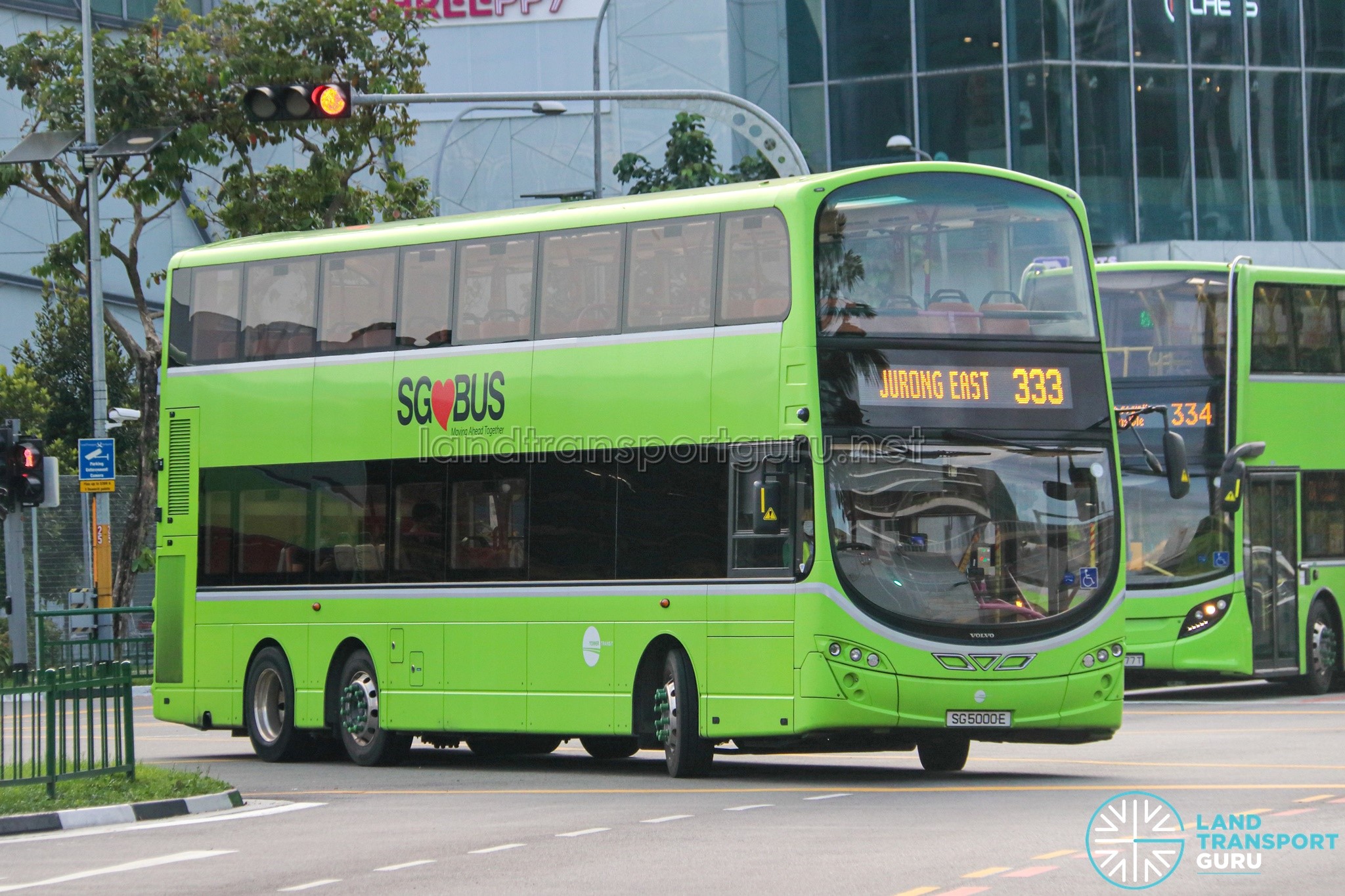
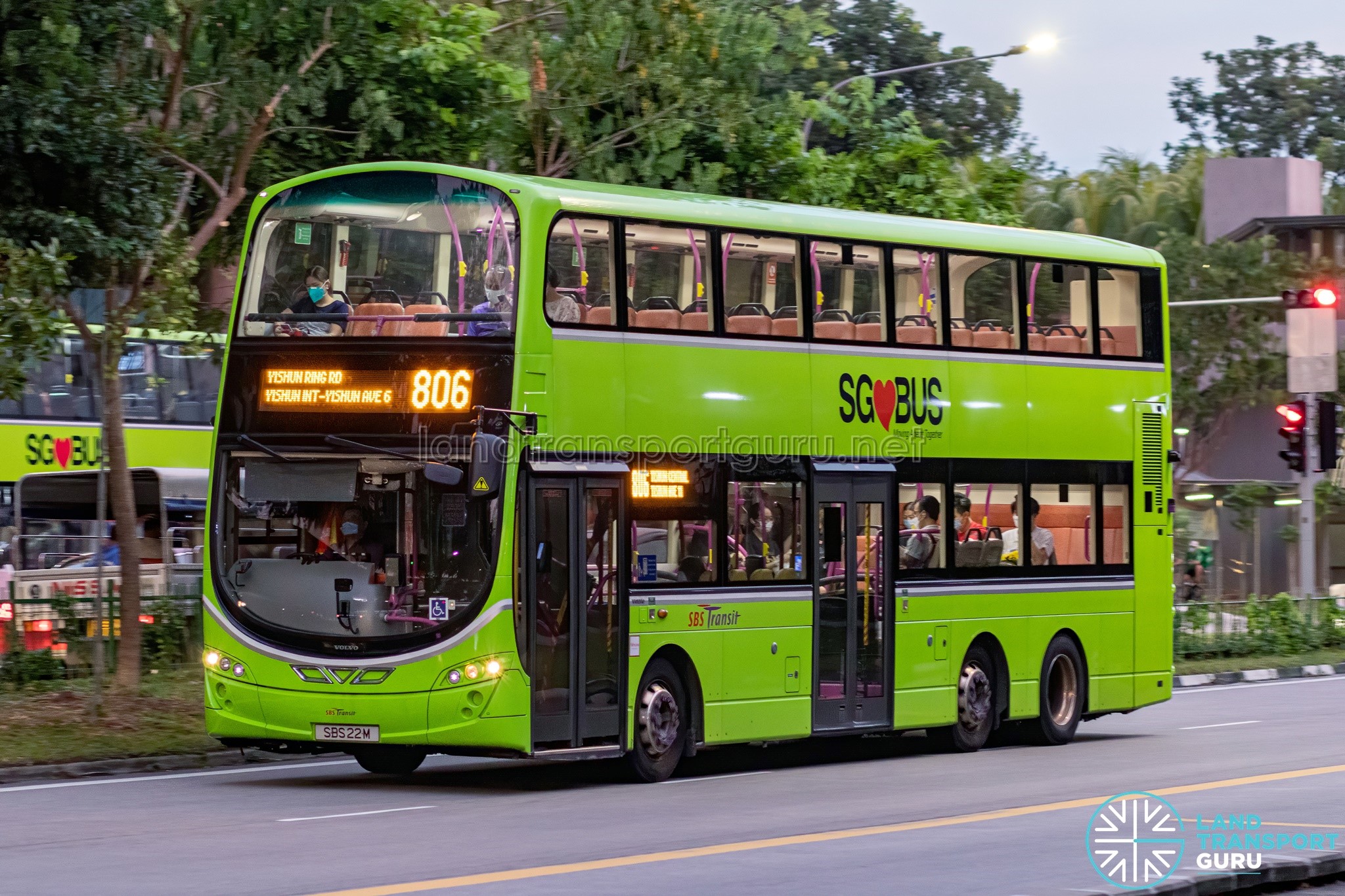
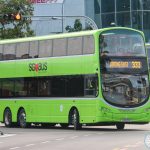
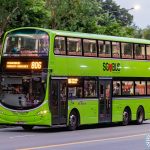
In July 2014, SBS Transit placed orders worth S$311 million for 415 Volvo B9TL (Wright) double-deckers and 250 Mercedes-Benz Citaro buses. Of these, 296 B9TLs were government-funded under the BSEP.
Midway through deliveries, the LTA bought out SBS Transit’s contract for the remaining buses yet to be delivered, transitioning them to Government ownership as part of the Bus Contracting Model (BCM). It also bought an additional 176 buses to further expand the BCM bus pool, increasing the total number of Batch 4 units to 591 buses.
Batch 4 buses were registered between 3 August 2015 to 27 December 2017, under several number series:
- SBS Transit-owned: SBS1Z – SBS23K (23 units)
- BSEP allocation: SBS3449X – SBS3523P (71 units)
- BCM allocation: SG5000E – SG5185E, SG5300P – SG5610U (497 units)
All 23 SBS Transit-owned buses (SBS1Z – SBS23K) were later transferred to LTA ownership at book value, ahead of the full BCM implementation.
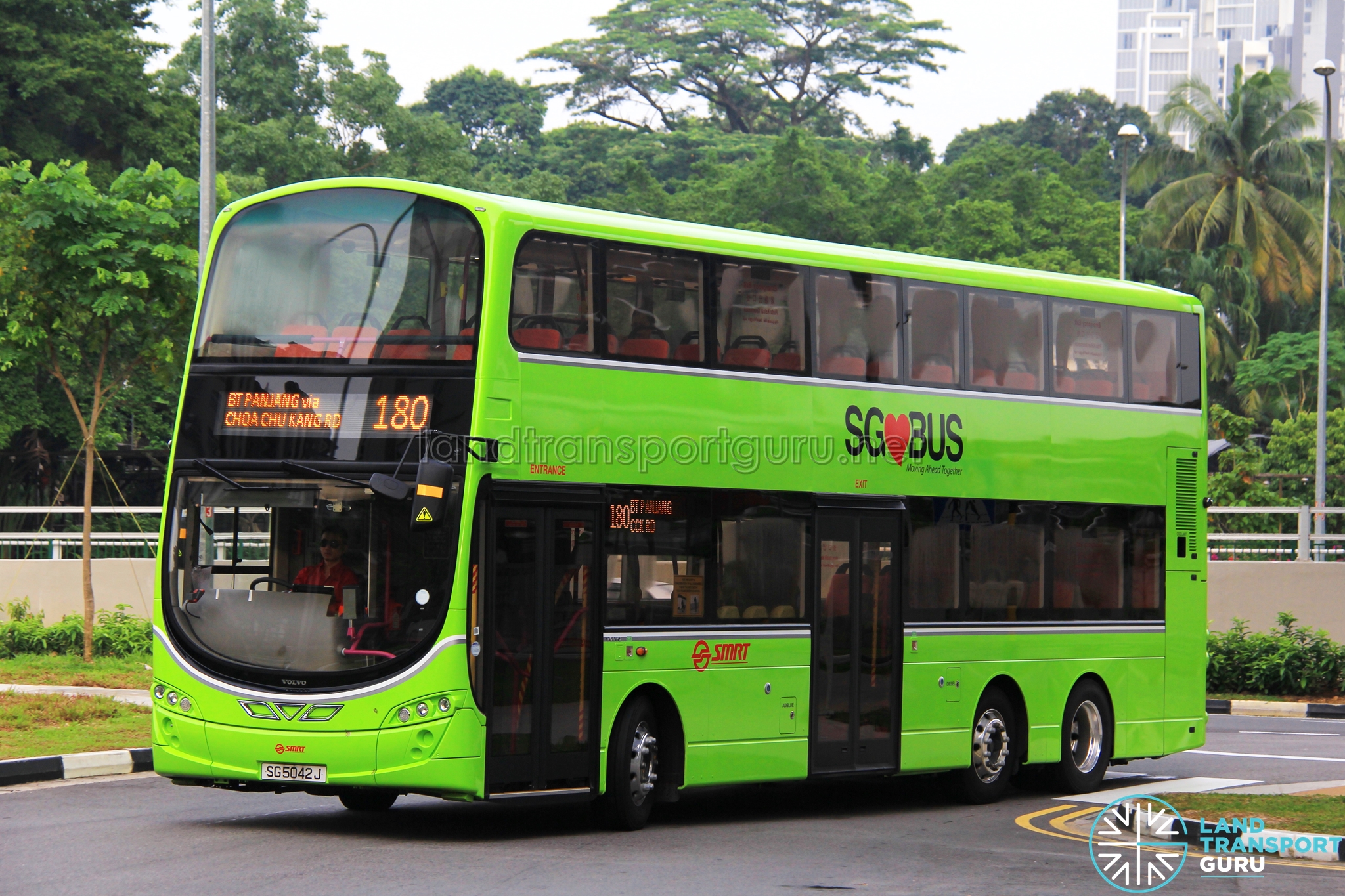
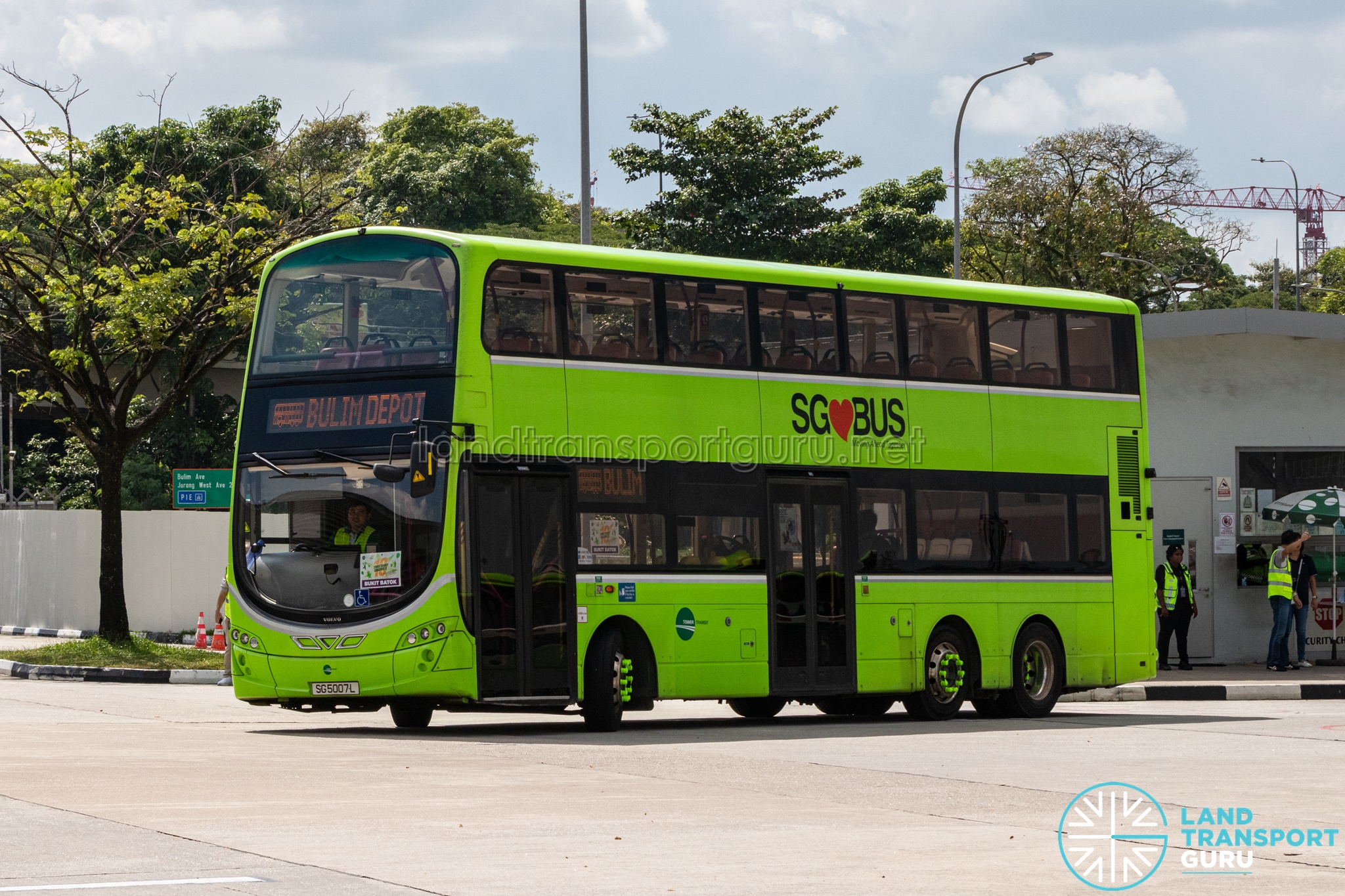
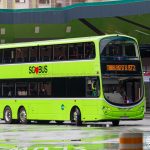
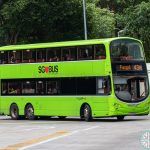
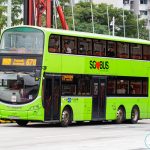
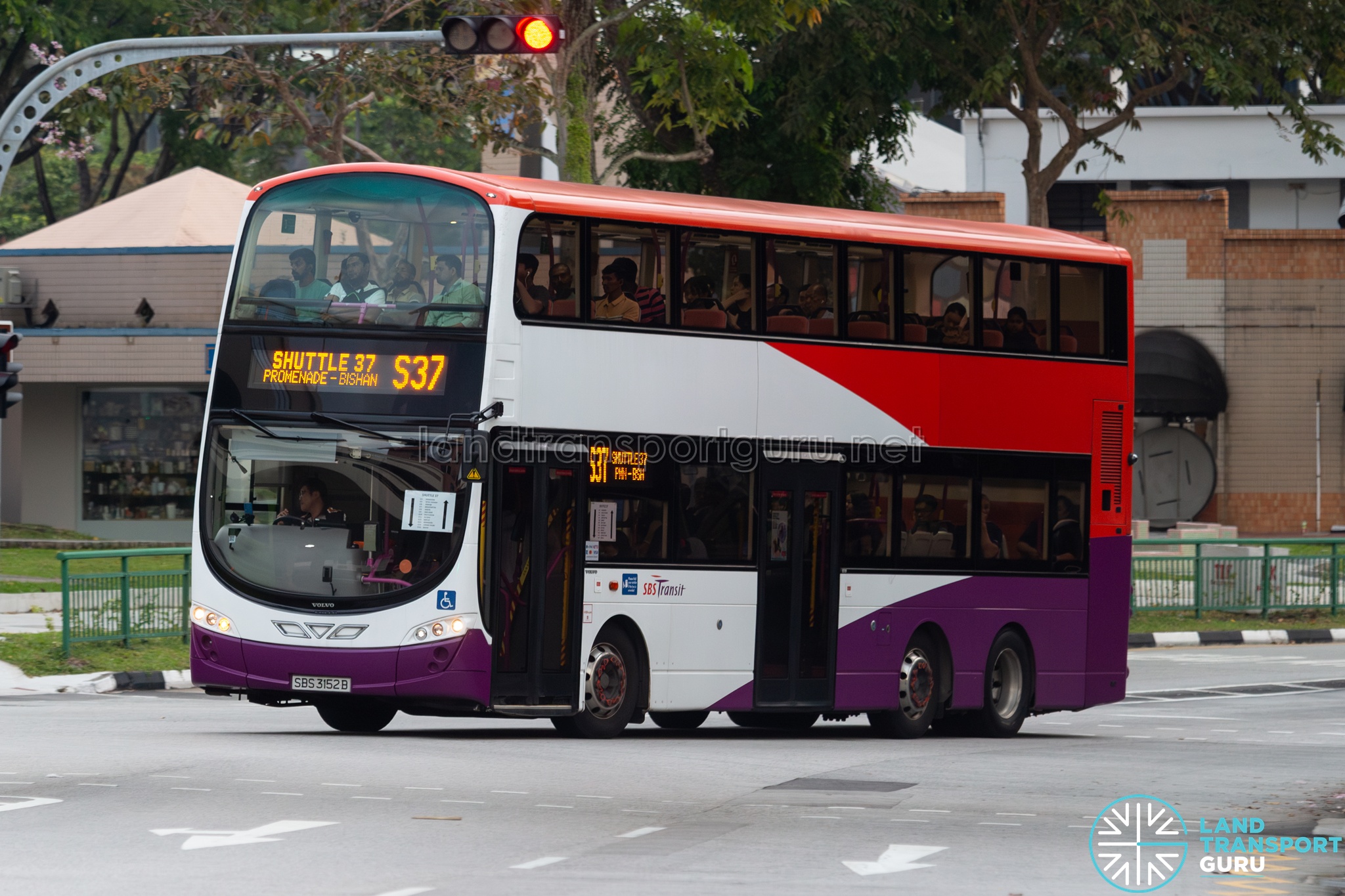
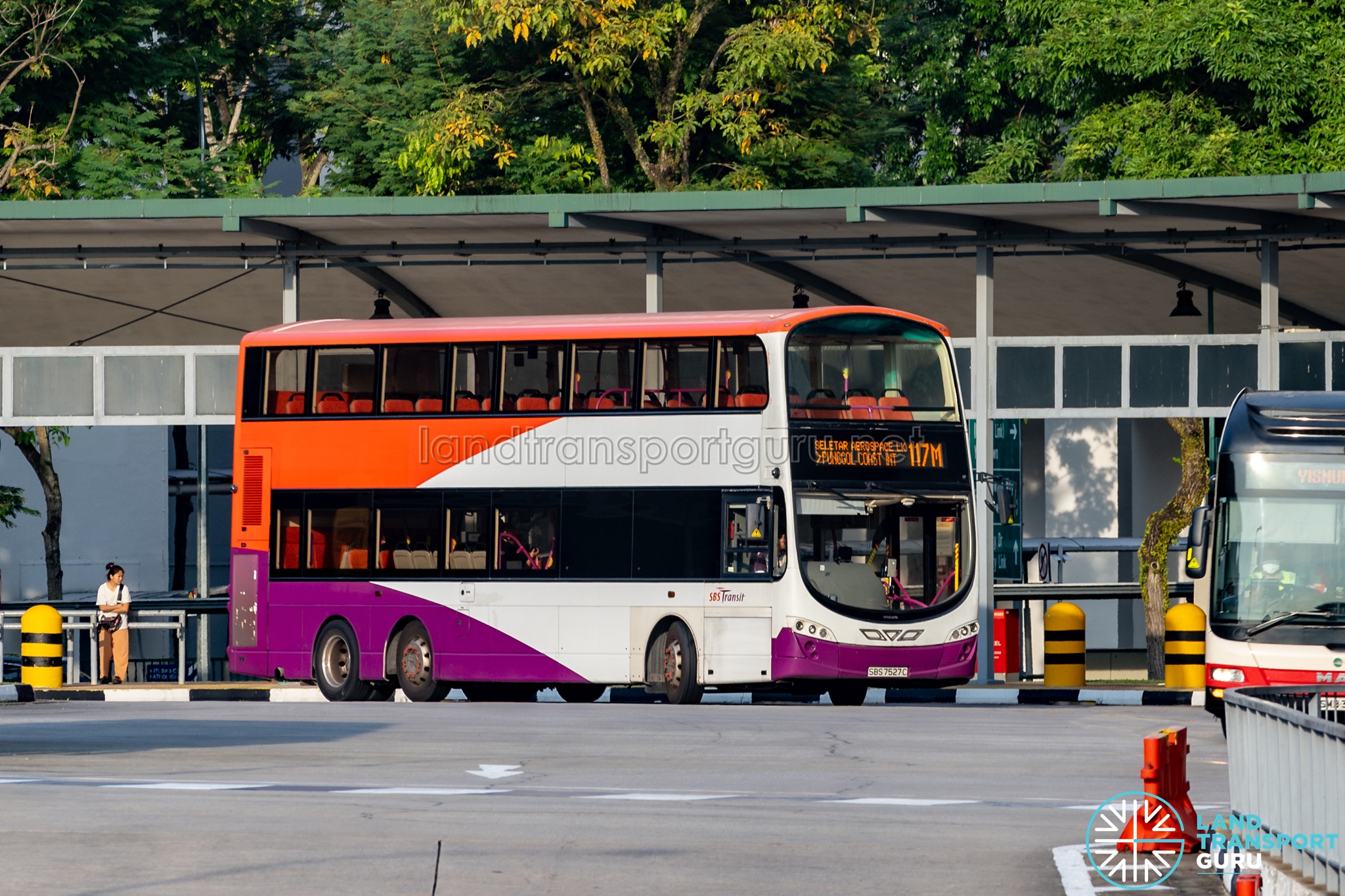
After Lush Green was selected as the preferred colour for Singapore buses in March 2016, later buses in this batch would be delivered in Lush Green livery, in place of SBS Transit’s white, purple and red livery.
Technical Features
Batch 4 buses incorporated design and powertrain updates, reintroducing the ZF EcoLife 6-speed automatic transmission found in Batch 1 units. The gearbox (model 6 AP 1403 B) provided improved torque handling, and an angled drive configuration allowed for transverse engine installation in the B9TL.
Internally, the lower deck adopted a straight staircase with two landings in place of the continuous curved design used previously; a design feature adopted earlier by Hong Kong units. Side-facing priority seats were fitted with headrests, and the upper deck EDS housing was made slimmer. All buses used Hanover EDS units.
Volvo B9TL Wright– BSEP Buses
The Bus Service Enhancement Programme (BSEP), launched in 2012, was a government initiative to improve public bus services through the purchase of additional buses, enabling new routes and increasing the frequency of existing ones. During the implementation of BSEP, a portion of Volvo B9TL Wright buses from Batches 2, 3, and 4 were diverted to the BSEP.
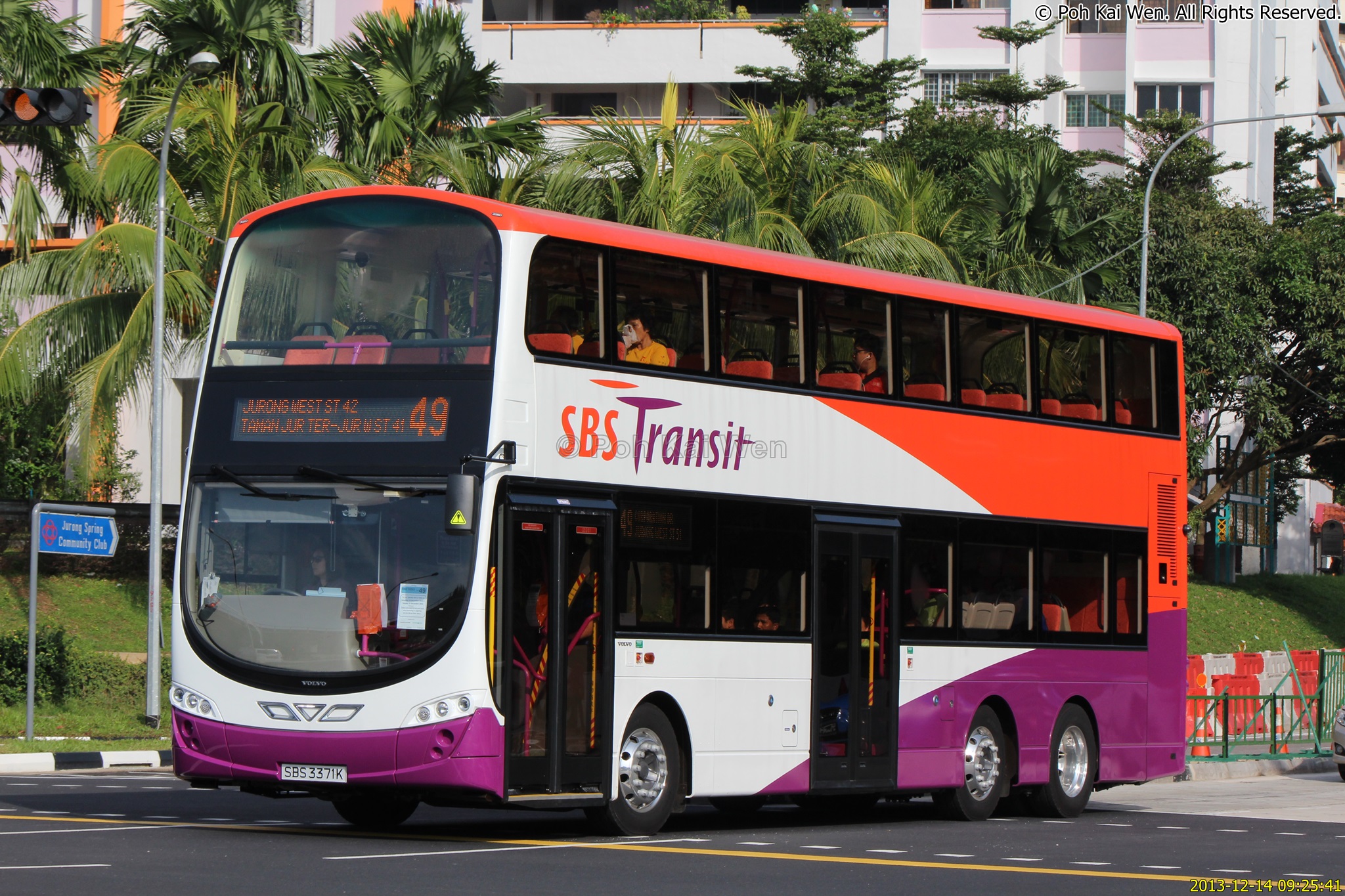
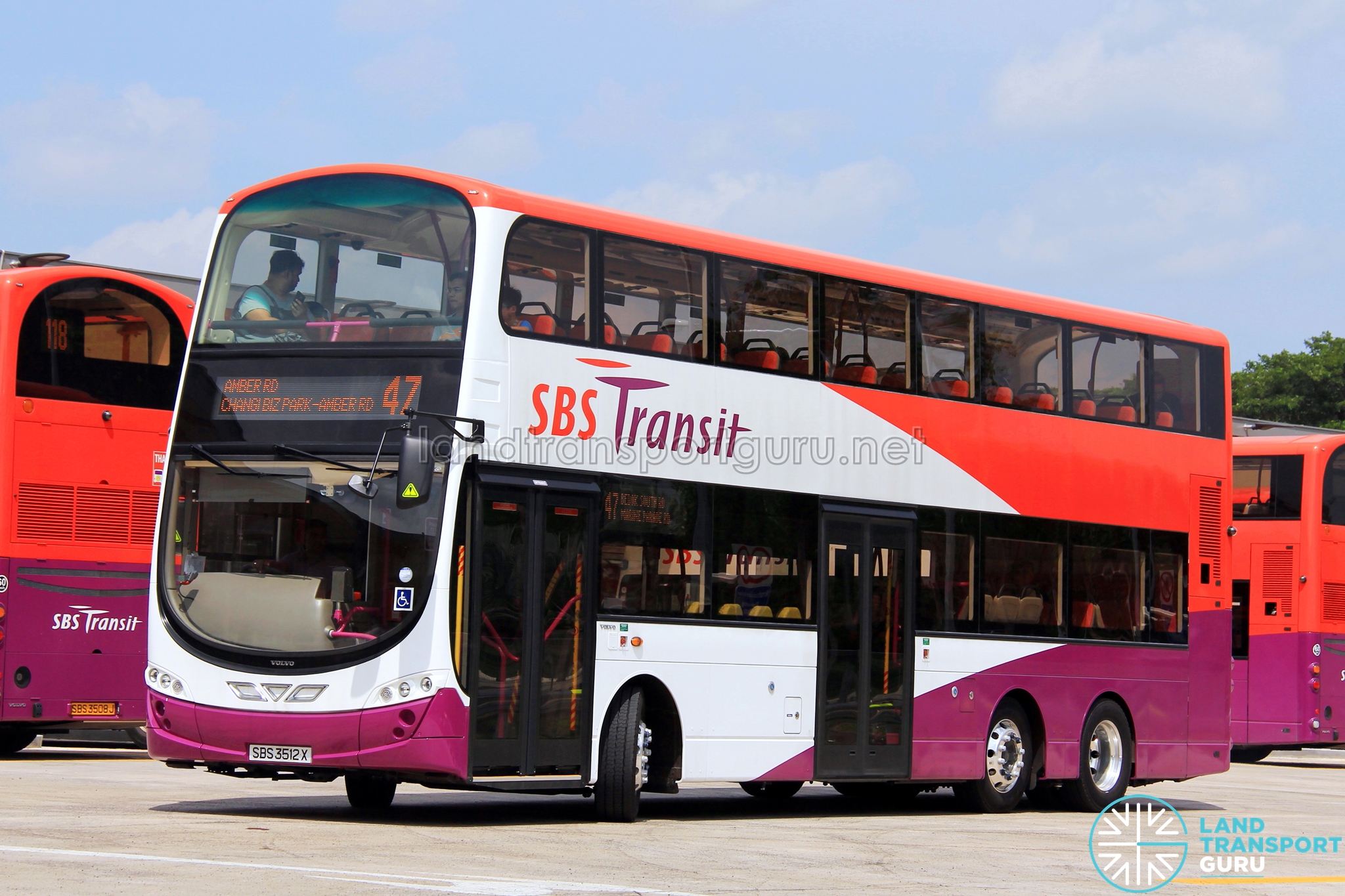
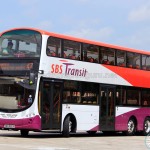
The BSEP-registered Volvo B9TL Wright buses were technically identical to their corresponding production batches, sharing the same Euro V engine, chassis, and Wright Eclipse Gemini II bodywork. Initially, BSEP buses were subject to operational restrictions — such as prohibition of commercial advertising and deployment only on designated BSEP routes — though these rules were later relaxed.
These 220 BSEP-allocated buses were registered within the range SBS3300R – SBS3523P:
| Original Batch | Units | Registration Dates | Registration Numbers |
| Batch 2 | 30 | 13 Sep 2012 – 3 Dec 2012 | SBS3300R – SBS3329J |
| Batch 3 | 119 | 1 Feb 2013 – 18 Jun 2015 | SBS3330D – SBS3448Z |
| Batch 4 | 71 | 3 Aug 2015 – 1 Dec 2015 | SBS3449X – SBS3482Z, SBS3487K – SBS3523P |
Deliveries concluded in end-2015, after which subsequent buses were registered directly under the BCM.
Volvo B9TL Wright– BCM Buses
Further reading: Transitioning of buses to BCM and BCM Transfer of Buses
As part of Singapore’s transition to the Bus Contracting Model (BCM), between 2014 and 2016, the Land Transport Authority (LTA) began purchasing buses directly from operators such as SBS Transit and SMRT Buses. These vehicles were subsequently leased to the public transport operators (PTOs) awarded contracts for the various bus route packages.
The initial phase of the BCM made use of buses originally procured under the BCEP. Although these buses were built to SBS Transit specifications, they were owned by the Government and later leased to other Public Transport Operators (PTOs), namely SMRT Buses, Tower Transit Singapore (TTS) and Go-Ahead Singapore (GAS), under the BCM framework.
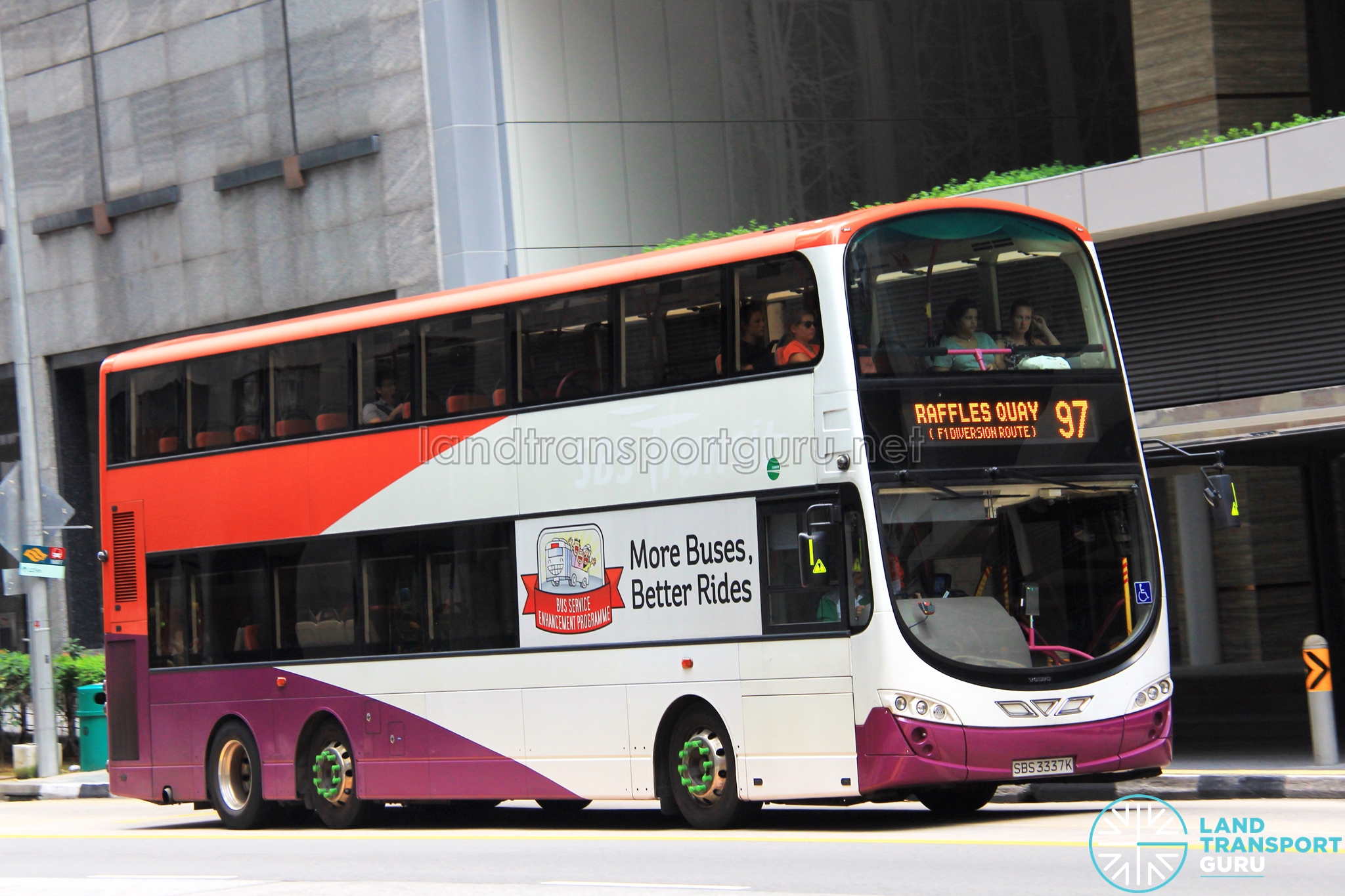

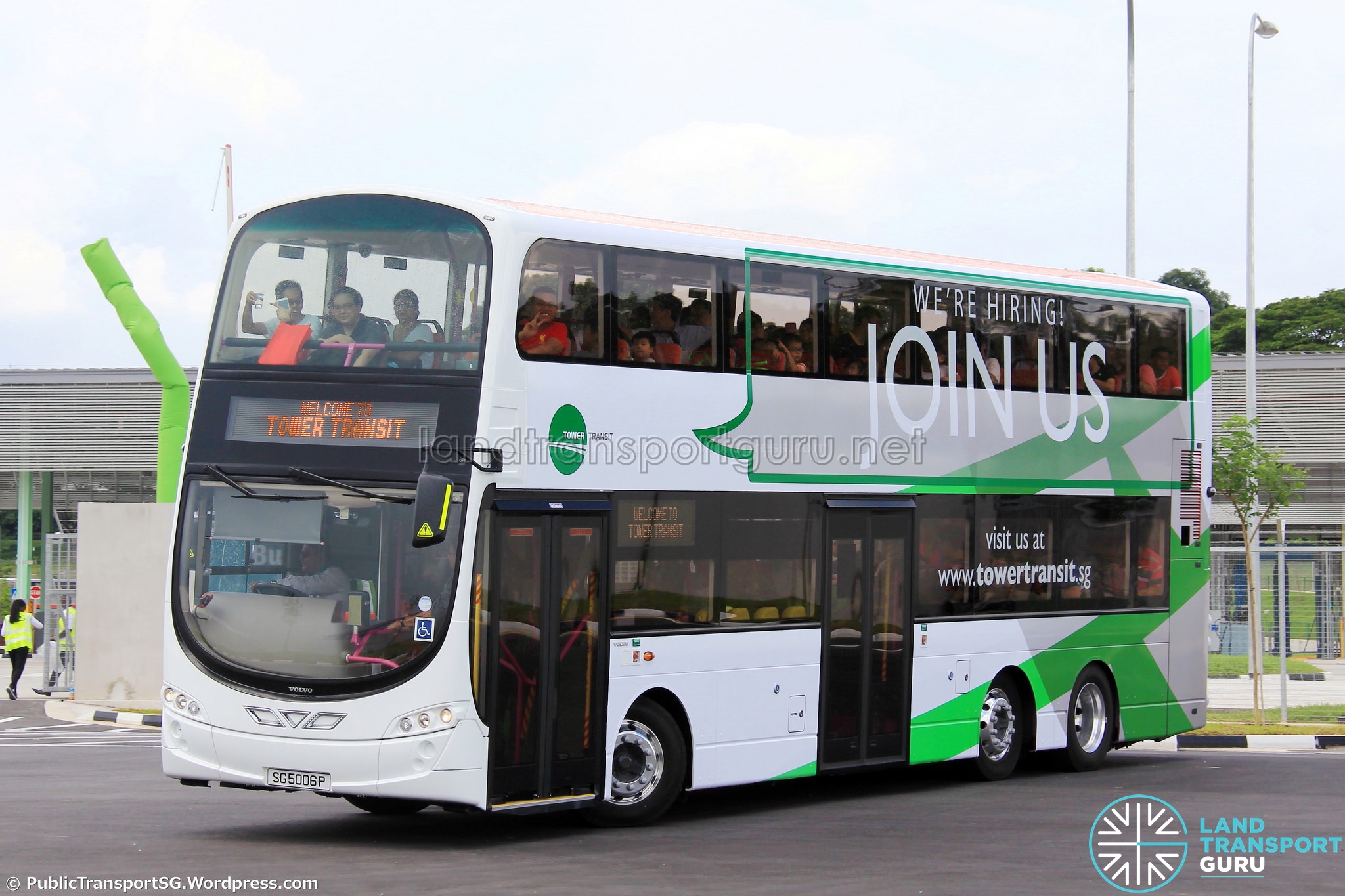


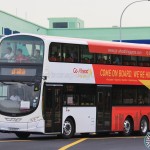
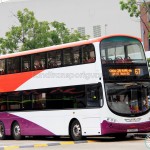
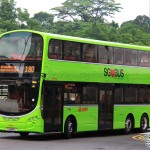
In 2015, the LTA announced plans to assume SBS Transit’s existing bus procurement contracts valued at S$164 million, covering 346 new buses scheduled for delivery between 2016 and 2017 (comprising 246 Volvo B9TL + 100 Mercedes-Benz Citaro). In addition, LTA directly acquired 50 buses worth approximately S$23 million, which were delivered to SBS Transit between June and December 2015 (comprising 38 Volvo B9TL + 12 Mercedes-Benz Citaro).
As part of this transition, newly delivered Volvo B9TL (Wright) buses registered under the BCM scheme began with registration numbers SG5000E onwards. Buses that had already been registered would keep their SBS-prefixed registrations.
| Original Batch | Units | Registration Dates | Registration Numbers |
| Batch 3 | 15 | 2 Jun 2015 – 18 Jun 2015 | SBS3968P, SBS3970P, SBS3973Z, and SBS3975T – SBS3986L |
| Batch 4 | 23 | 13 Aug 2015 – 30 Dec 2015 | SBS1Z – SBS23K |
| Batch 4 | 176+ 321 |
27 Nov 2015 – 27 Dec 2017 | SG5000E – SG5185E SG5300P – SG5610U |
LTA would eventually further expand the BCM bus pool by purchasing an additional 176 Volvo B9TL (Wright) buses identical to SBS Transit Batch 4 specifications.
Although publicly announced procurements add up to 246 + 38 = 284 Volvo B9TL buses, the exact breakdown of buses by registration number is not known, owing to a lack of clear distinction between Government-owned buses procured under the BSEP or BCM (and are presumed based on their registration number series), or if additional operator-owned buses were procured without public announcement (likewise, the additional 176 Batch 4 buses was not announced by LTA).
This distinction would be further blurred following the full industry transition to BCM effective 1 September 2016, wherein LTA opted to lease all operator-owned buses from SBST/SMRT until the end of their statutory lifespans. This allowed LTA the flexibility to redeploy operator-owned buses to BCM tendered package operators regardless of ownership. For example, several Batch 1 and 2 Volvo B9TL buses were leased to SMRT Buses as part of the Jurong West Bus Package, despite these buses being under SBS Transit ownership.
Refurbishment:
See also: LTA Mid-Life Refurbishment of Buses
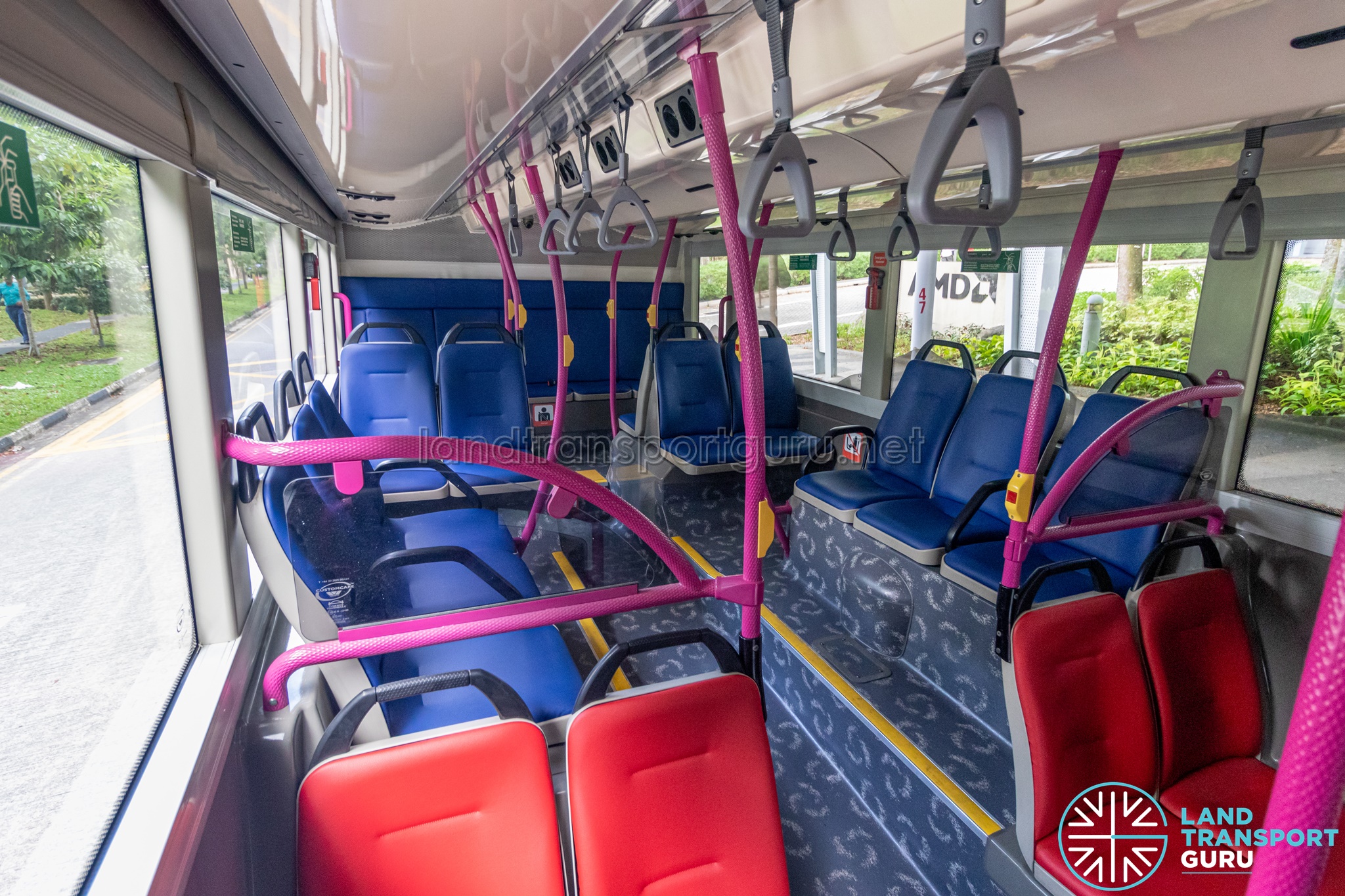
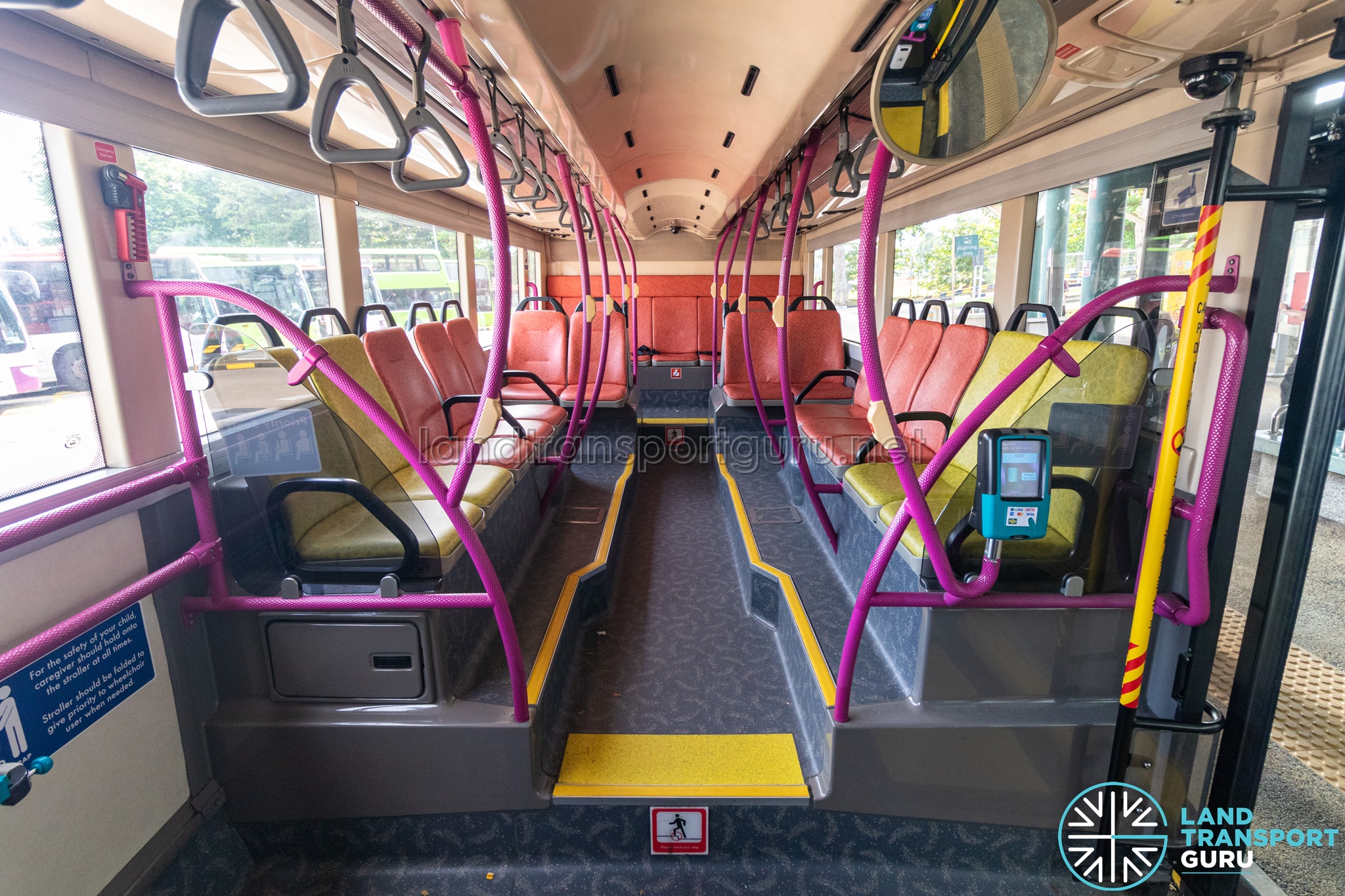
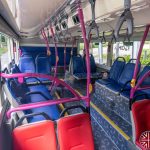
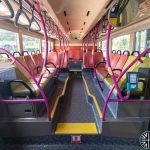
On 22 June 2023, the Land Transport Authority (LTA) issued a tender for the refurbishment of approximately 630 public buses, marking the first large-scale refurbishment since the introduction of the BCM. The tender was awarded on 26 March 2024 to ComfortDelGro Engineering Pte. Ltd. at a contract value of around S$4.8 million. Under the awarded scope, a total of 265 double-deck buses—comprising Volvo B9TL and Alexander Dennis Enviro500 units—were scheduled for refurbishment.
The refurbishment works included the replacement of passenger seats, floor coverings, window and windshield sealants, as well as components of the door system. Work took place between 2024—2025, involving Batch 2 and Batch 3 Volvo B9TL buses owned by the LTA, and formerly procured under the BSEP, totalling 30 + 119 = 149 buses.
Concurrently in 2024, SBS Transit initiated a separate refurbishment programme for the Volvo B9TL buses under its ownership, starting with Batch 1 units. The refurbishment scope was largely similar to that of the LTA-led programme. While the total number of buses refurbished and associated costs were not disclosed, buses were observed undergoing refurbishment work at Wah Sheng Motor Supply Co. (Pte.) Ltd. facilities.
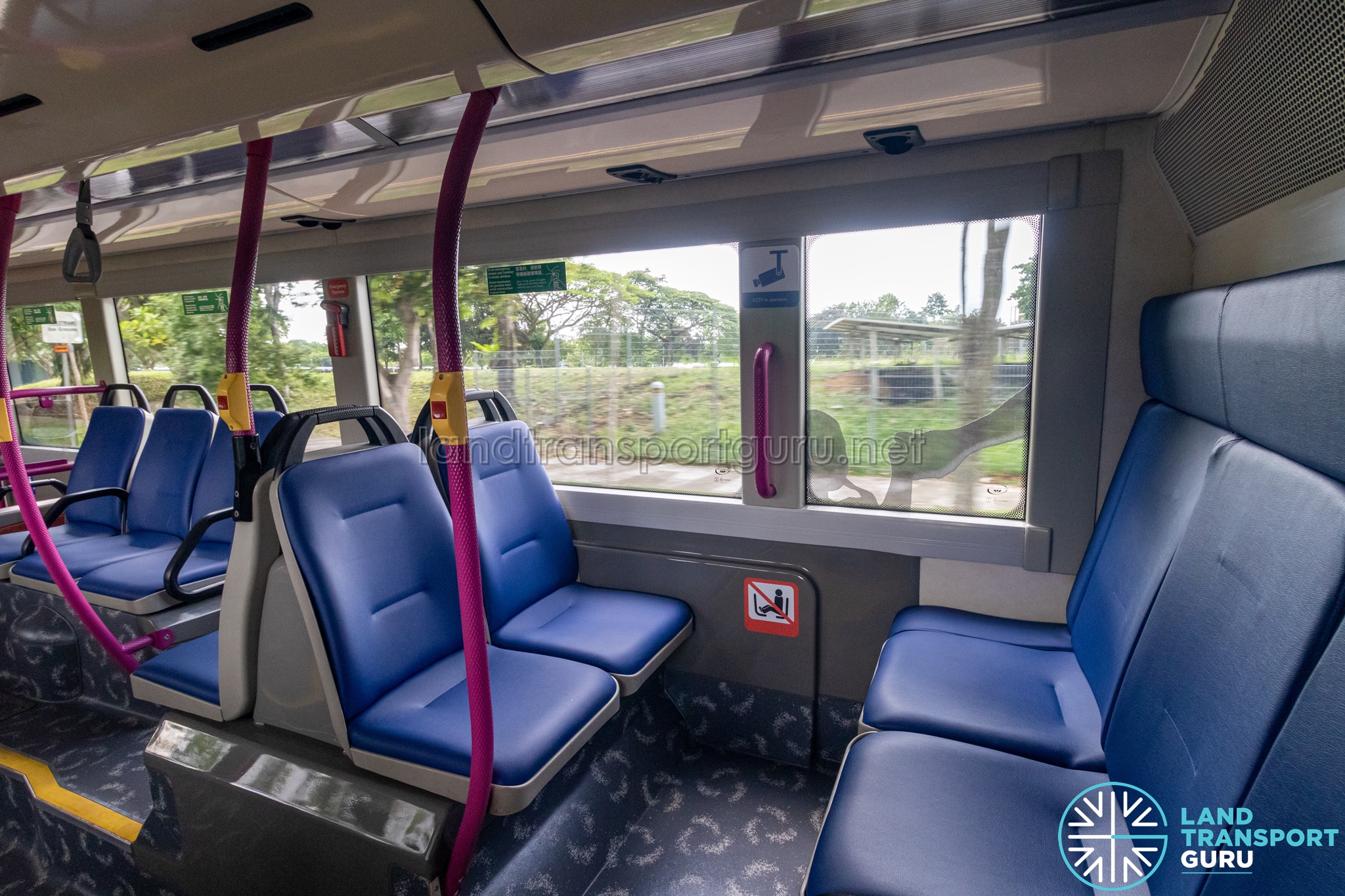
A key visual difference between the two refurbishment programmes lies in the seat upholstery colour scheme. SBS Transit retained its existing yellow and red seat covers for priority and regular seats, respectively, while the LTA refurbishment adopted the standardised red-and-blue colour scheme used across the BCM bus fleet.
Interior:
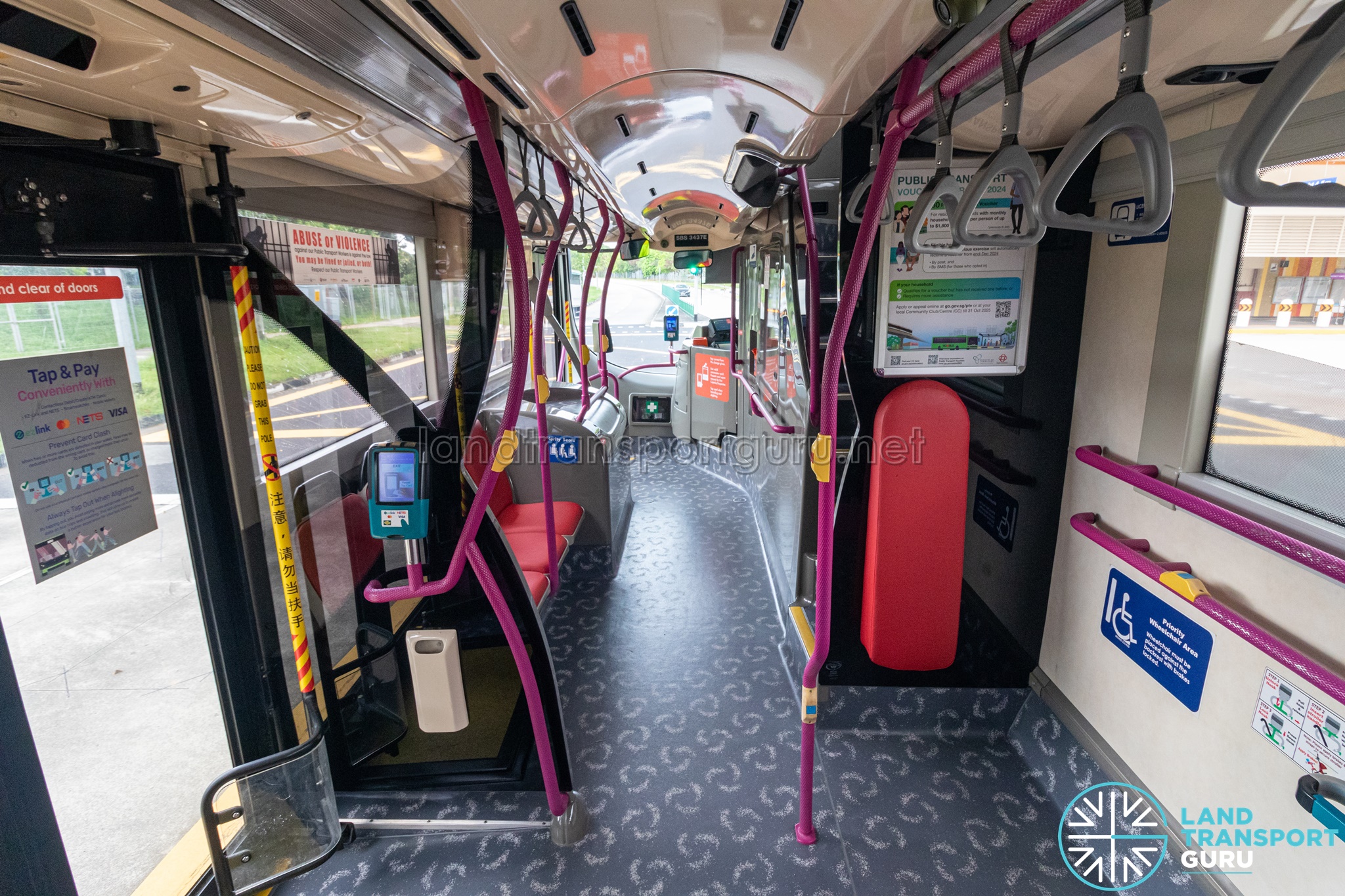
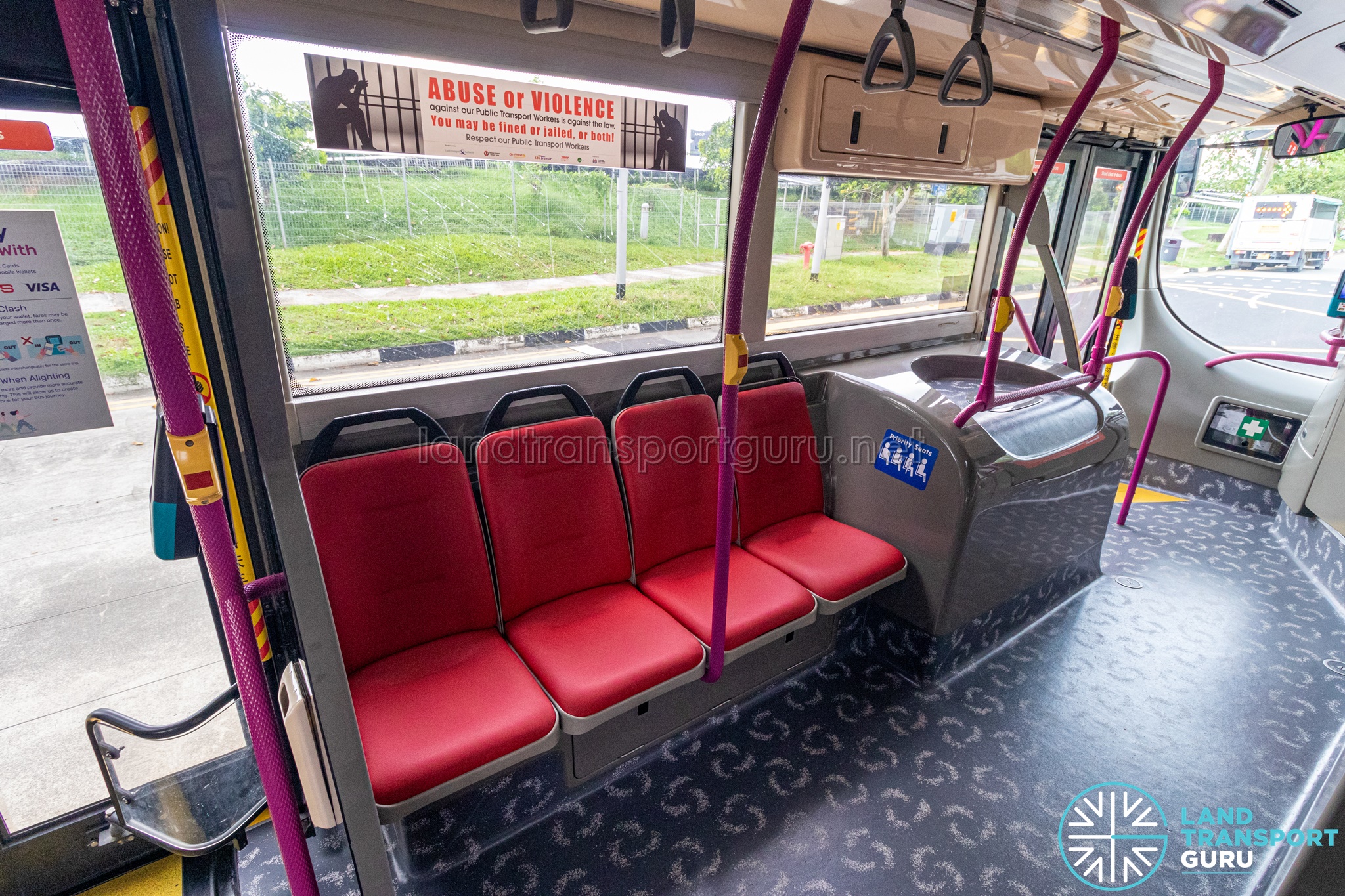
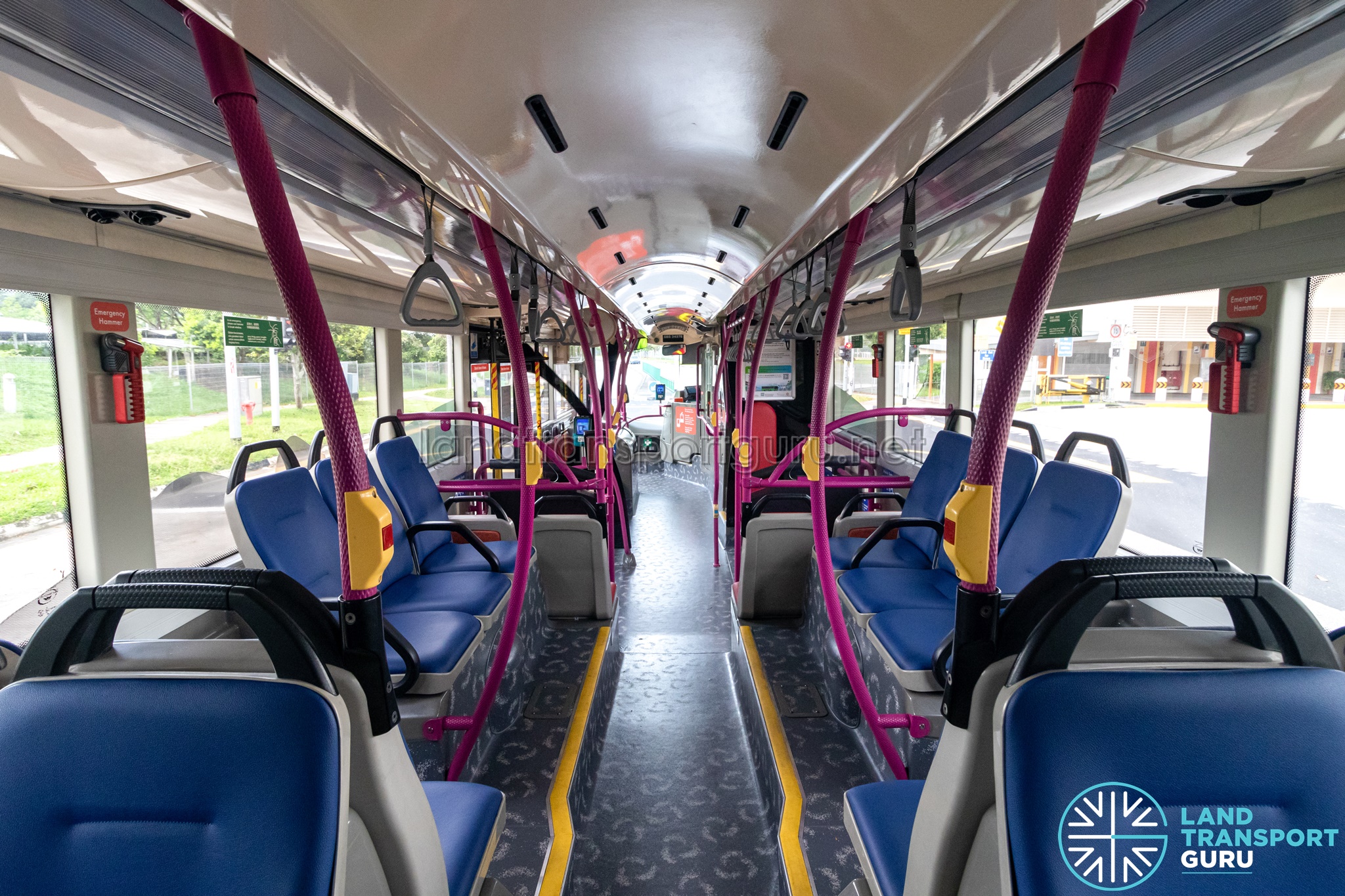
Interior coverage in this article features Batch 2B buses, which are representative of the majority of Volvo B9TL buses. Differences between these buses will be pointed out.
Lower Deck
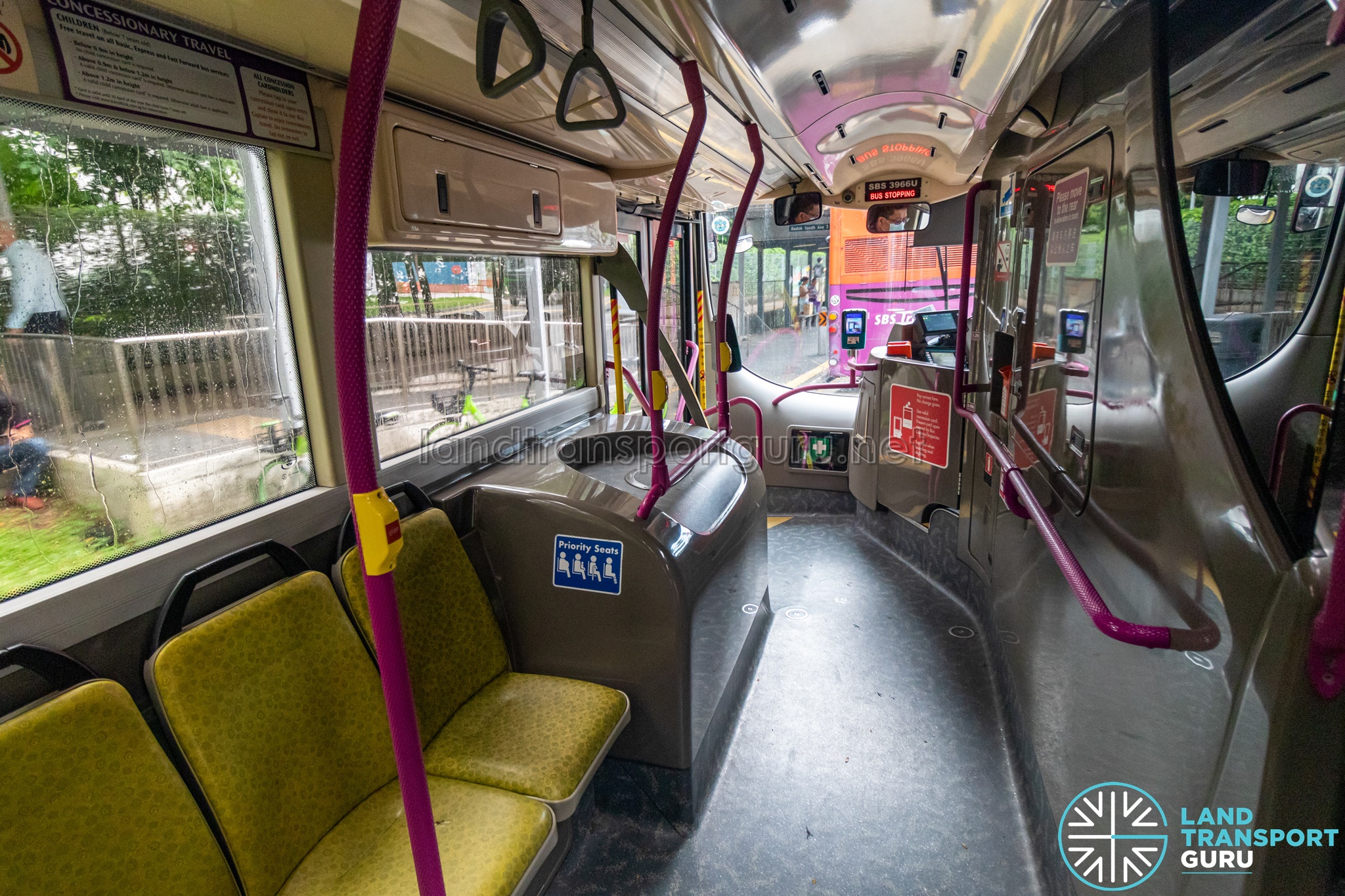
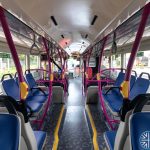
The lower deck of the bus features 27 permanent seats. Being a low-floor bus, the bus offers step-free access across the entire lower deck. A staircase behind the driver’s cab connects the lower and upper decks.
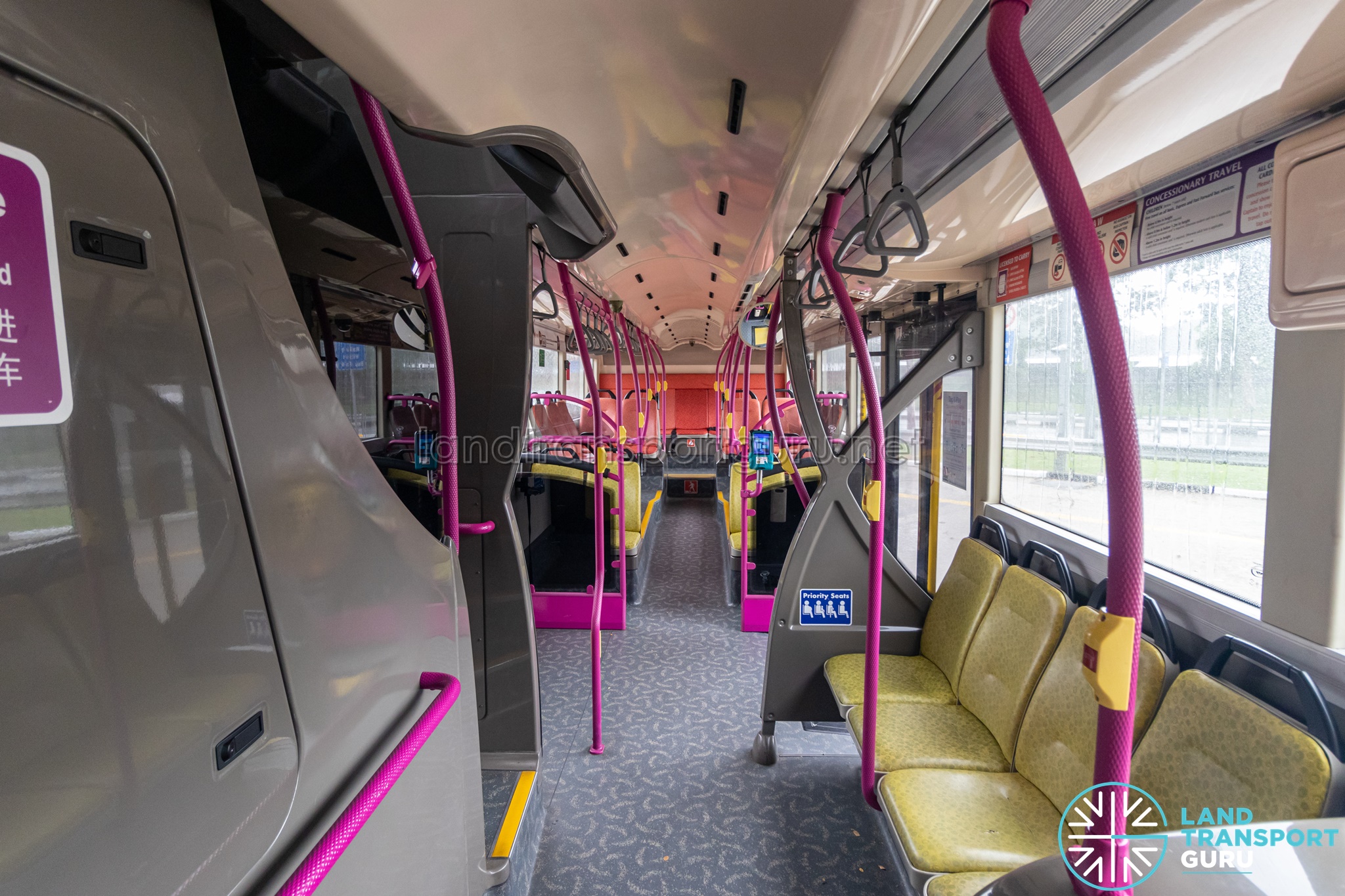
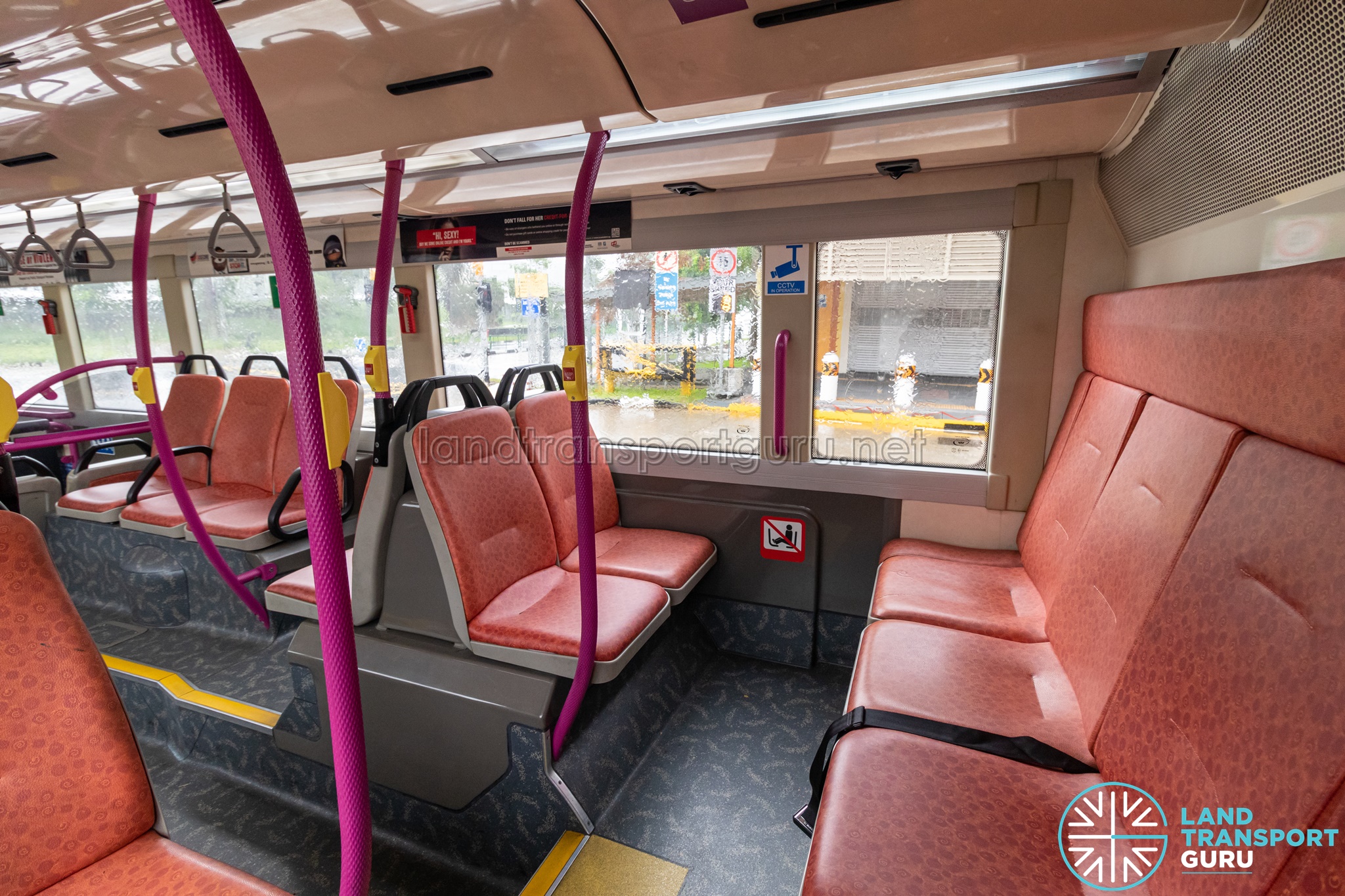
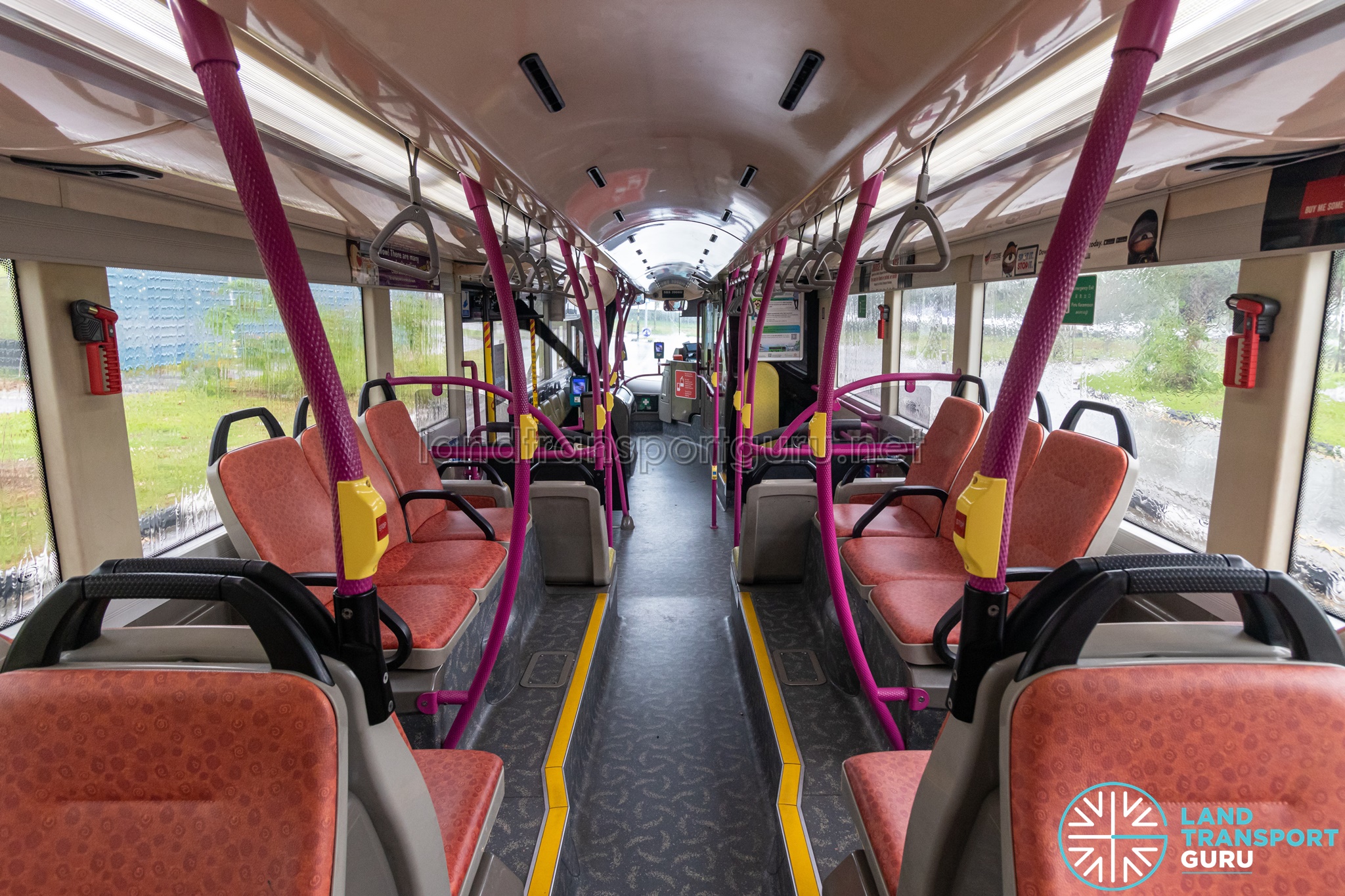
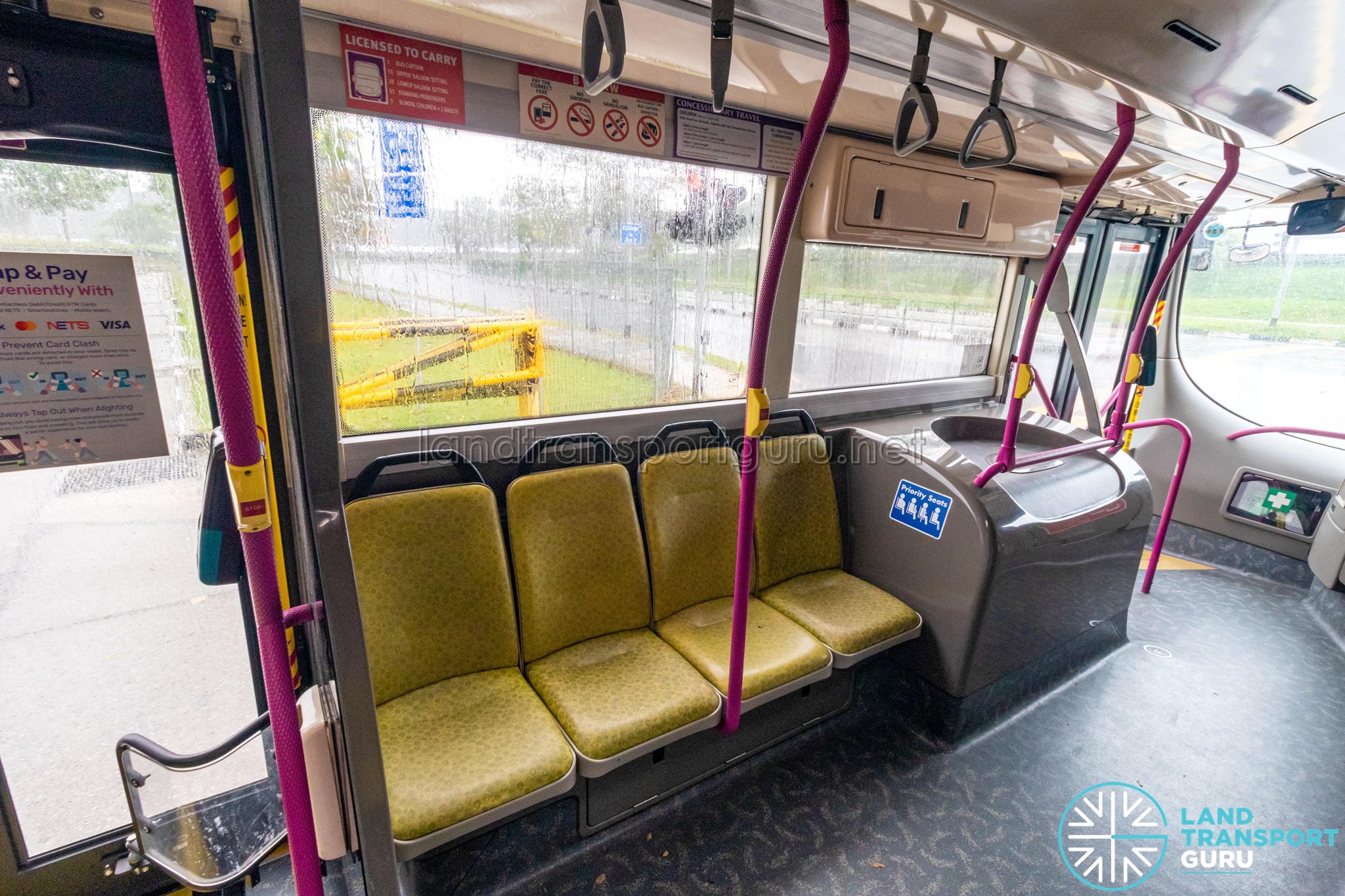
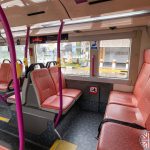
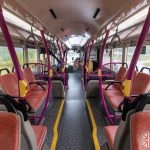
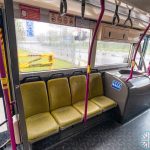
A row of side-facing priority seats can be found between the entrance and exit doors.
Towards the rear, a mix of front-, rear- and side-facing seats is used. Apart from the first row of seats behind the exit door (which are also designated priority seats), all other seats are mounted one step above aisle level.
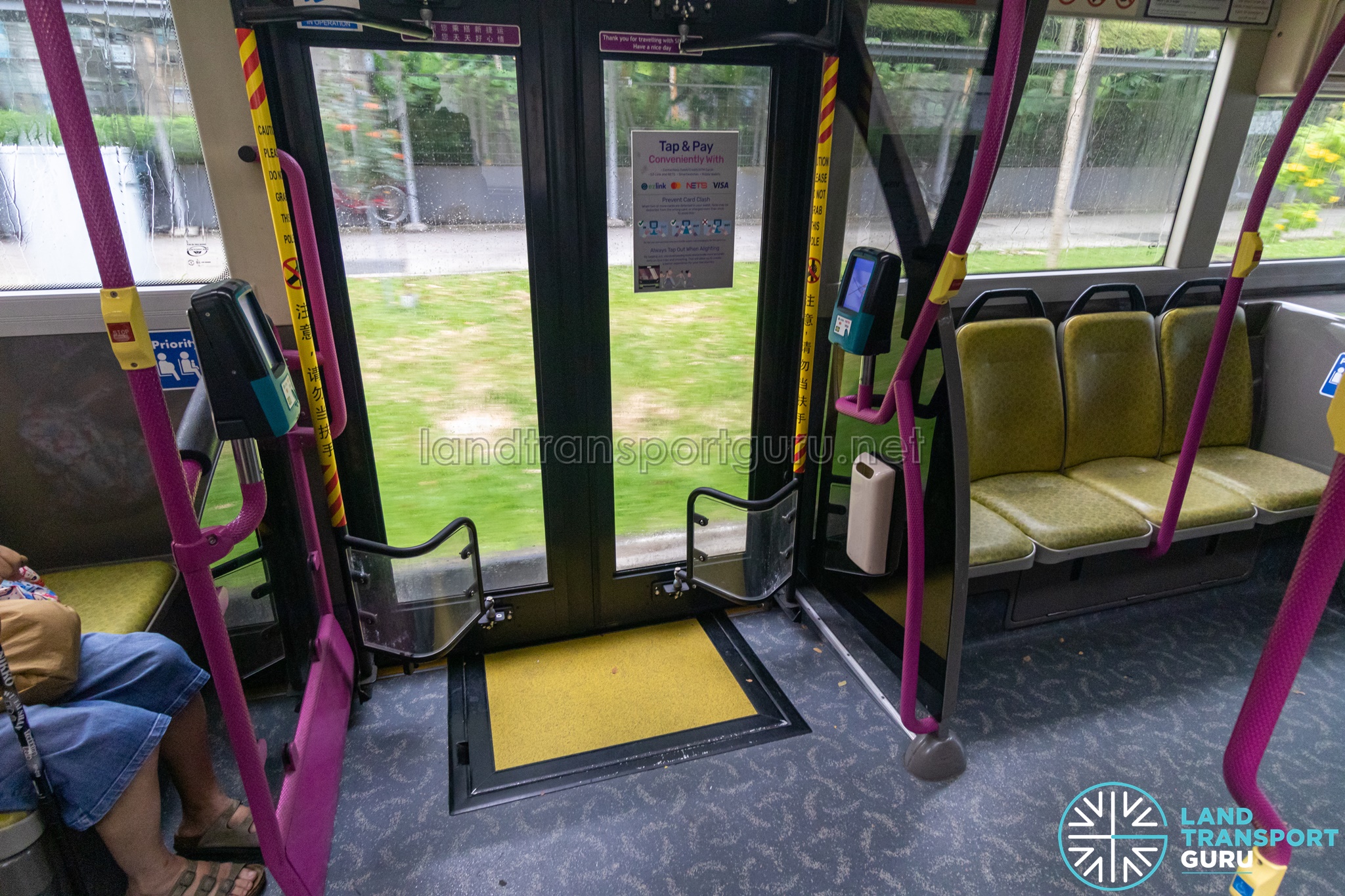
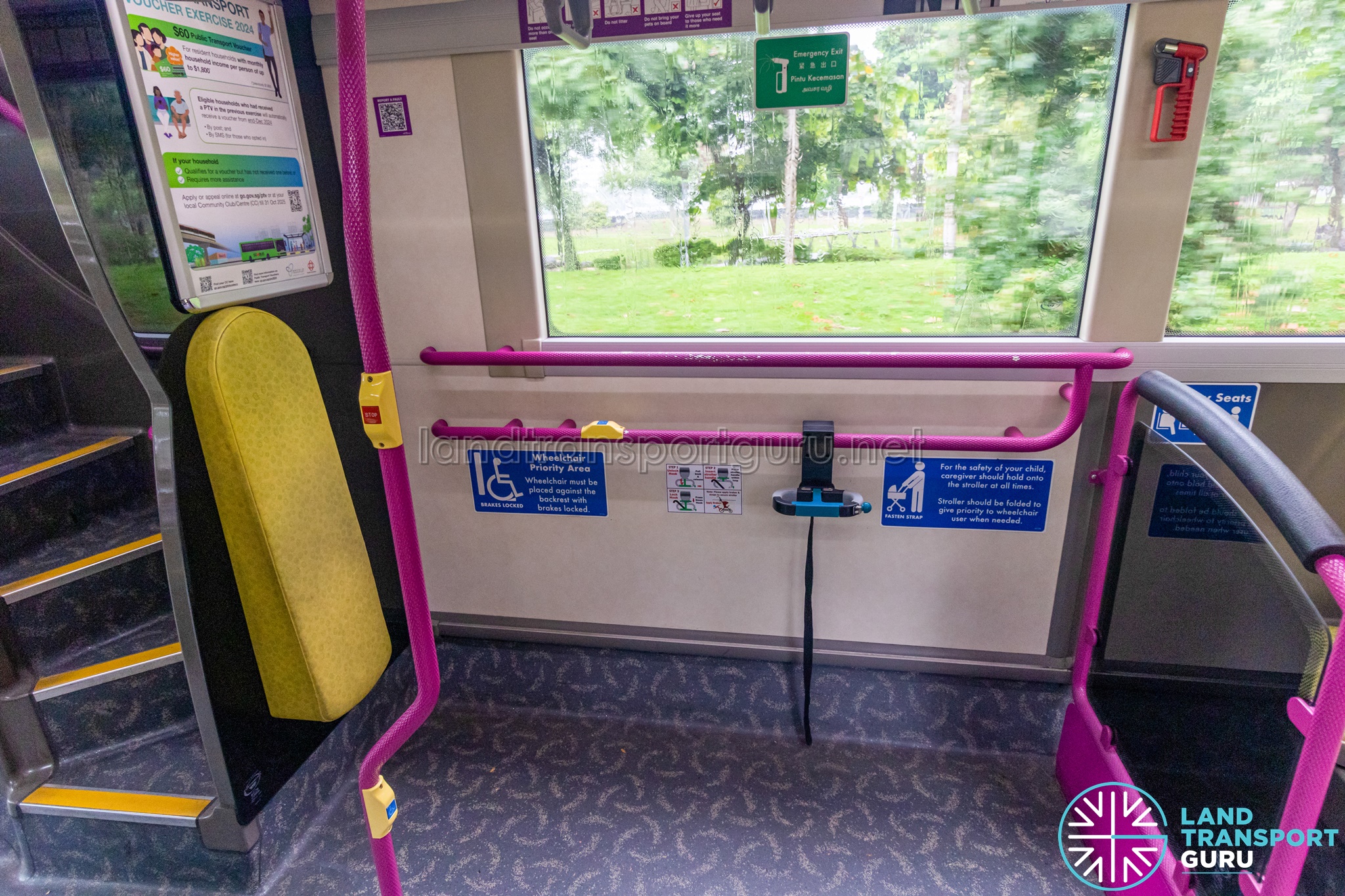
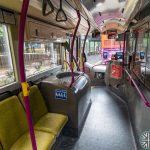
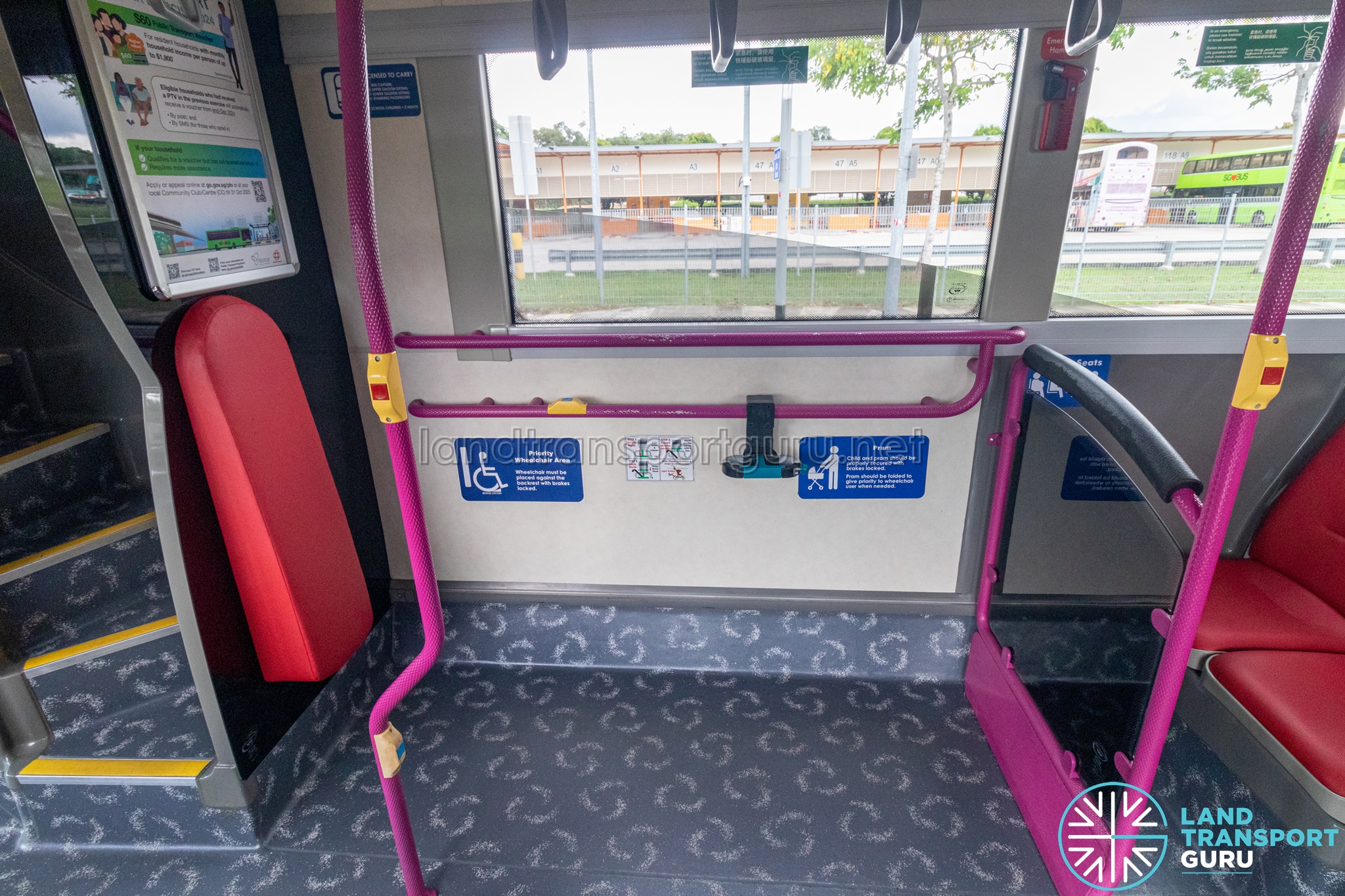
A wheelchair bay is located behind the staircase and opposite the exit door, which accommodates one passenger in a wheelchair and doubles up as a standing bay when not in use. Wheelchair accessibility is offered via a manual ramp installed at the exit door.
Low entry layout
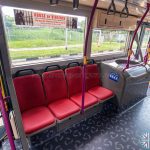
A minority of the Volvo B9TL (Wright) fleet features a low-entry layout instead of the low-floor layout. This can be found on 180 buses (150 Batch 1 and 30 Batch 2A buses), representing the earliest batches of Volvo B9TL (Wright) buses to enter service. Step-free access is offered between the entrance and exit doors, with a single step to the rear seating area.
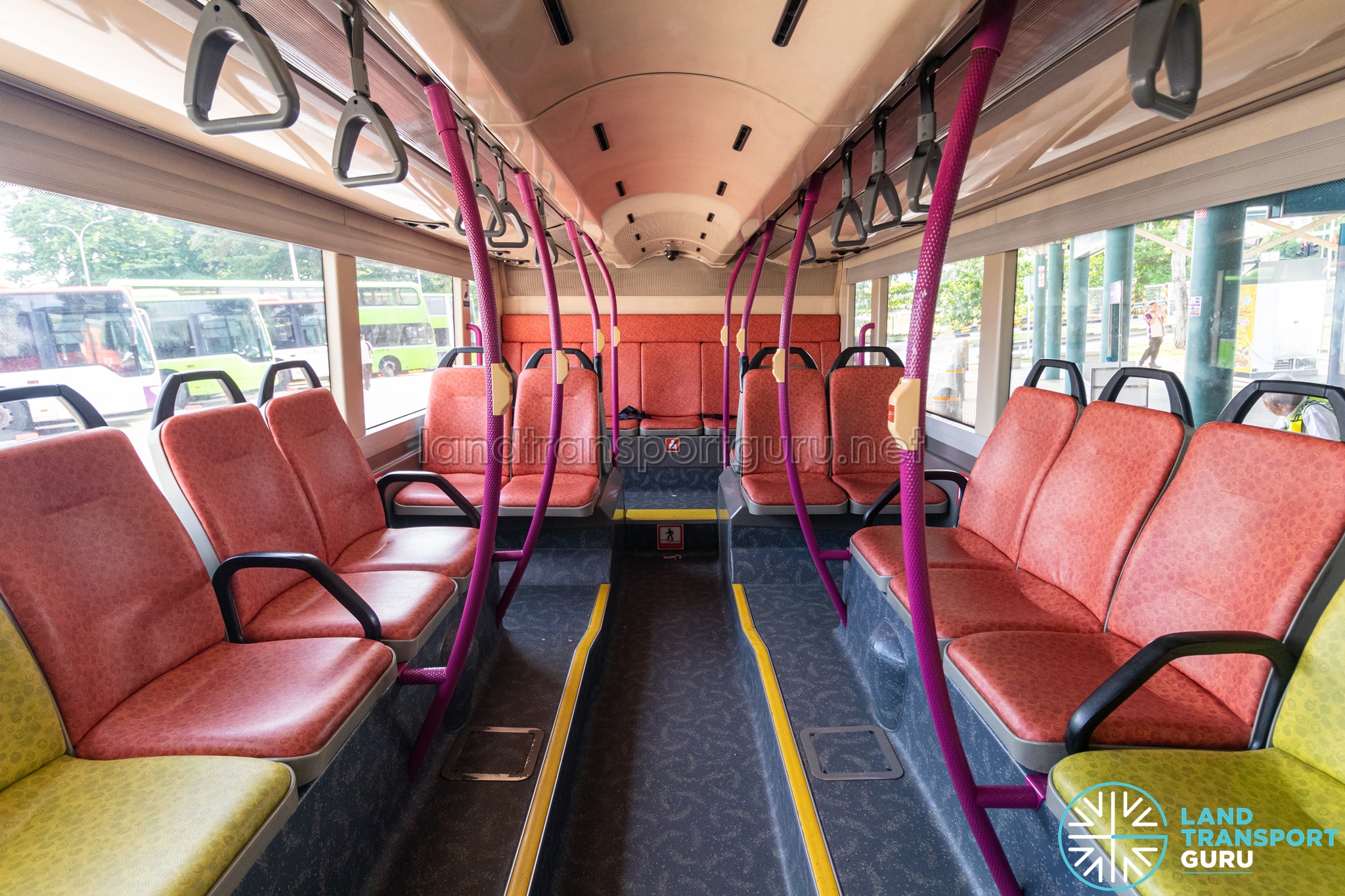
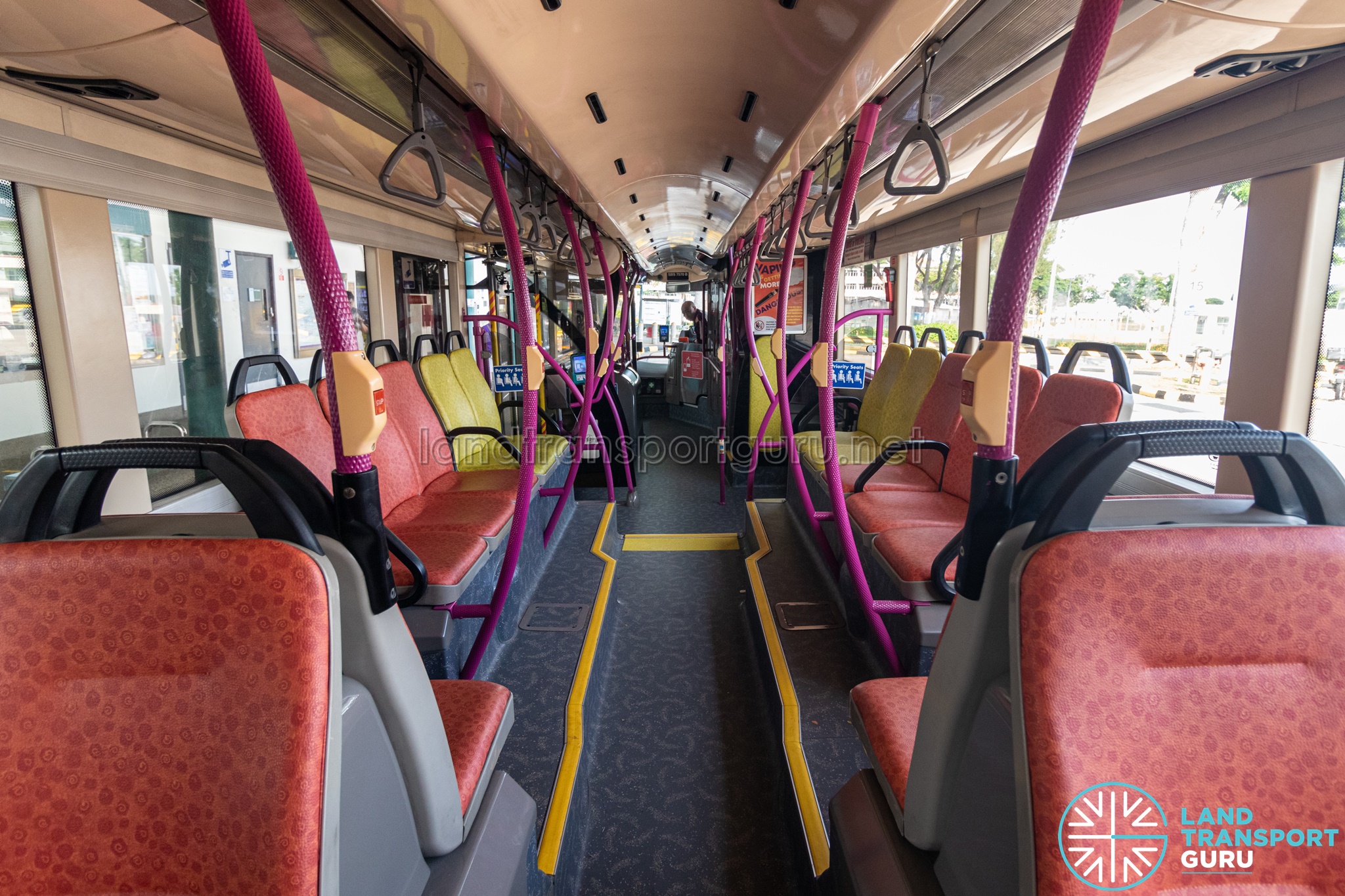
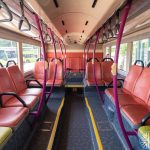
These photos were taken post-refurbishment; unrefurbished buses use the same red seat fabrics for all seats behind the rear exit doors. Refurbished buses designate four additional seats nearest to the exit door as priority seats; these have yellow seat fabrics identical to the front priority seats.
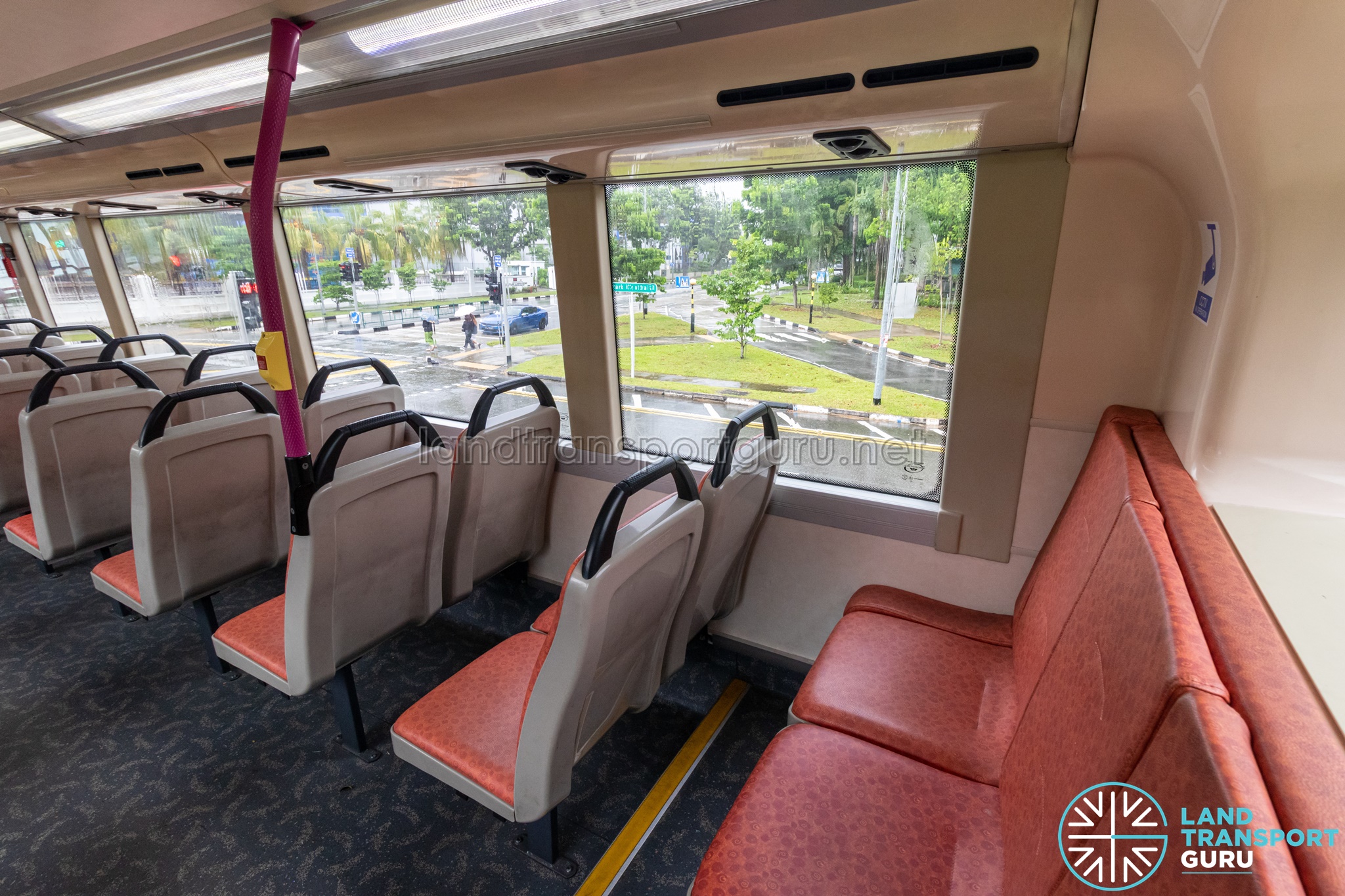
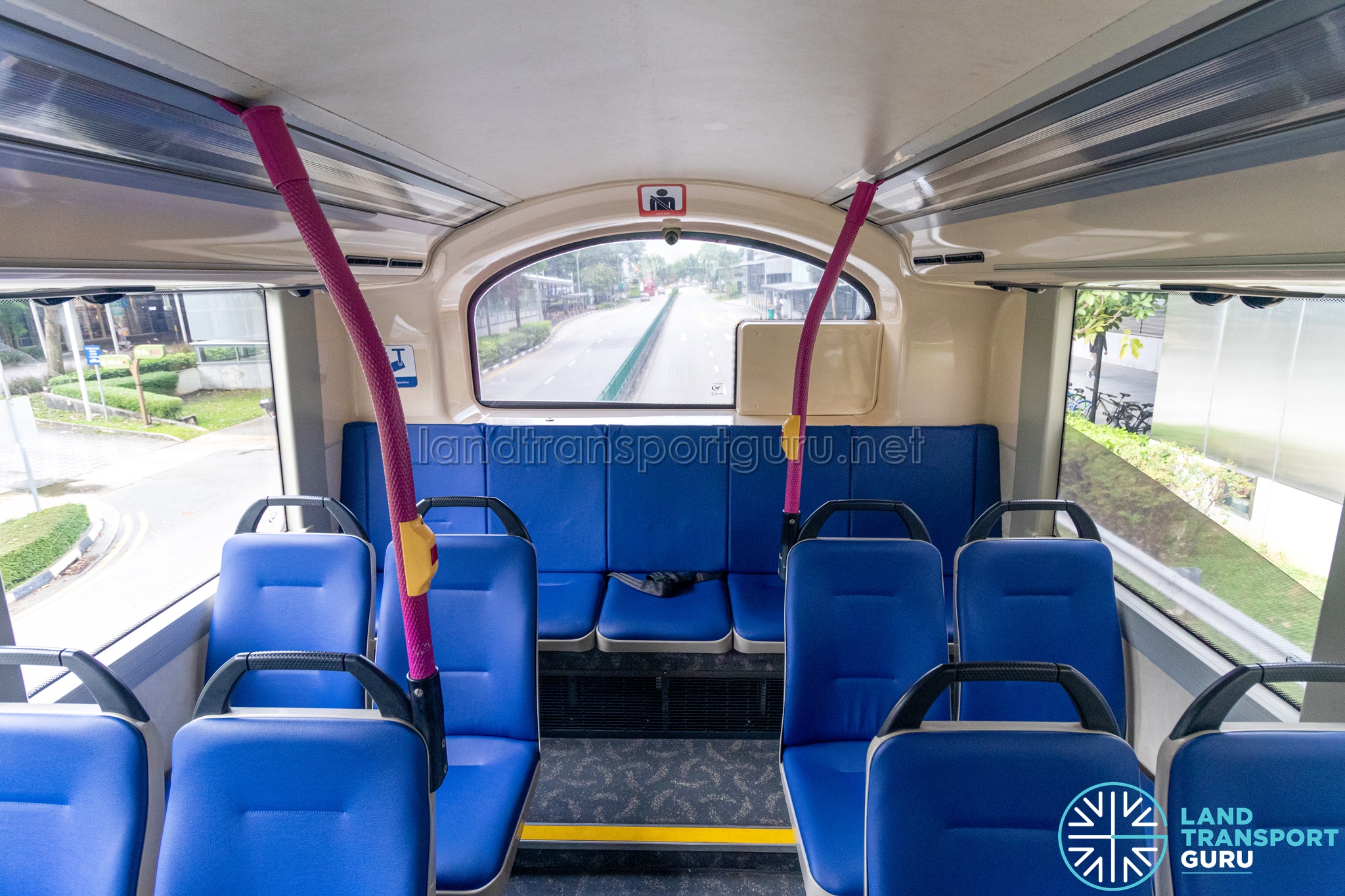
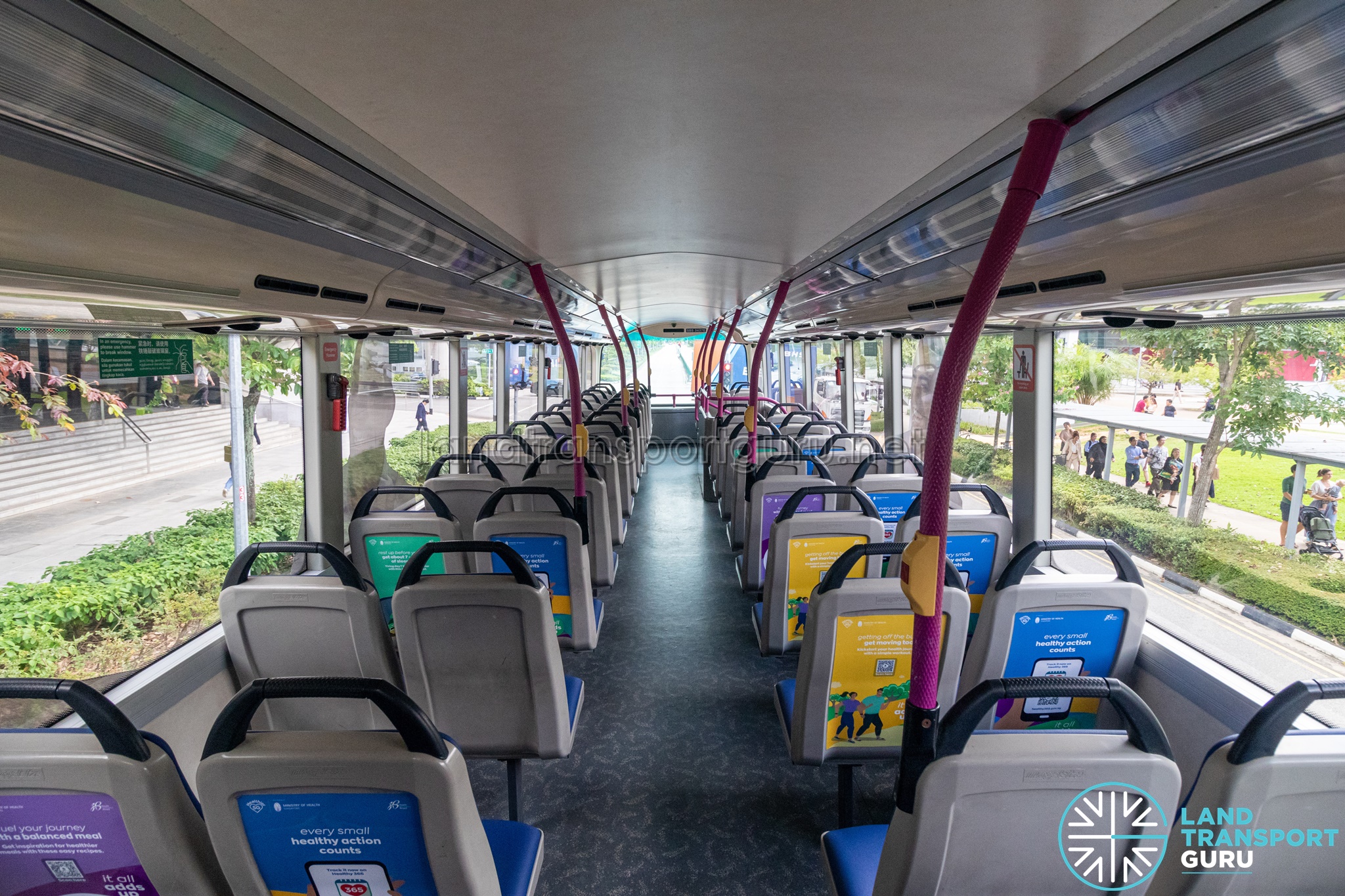
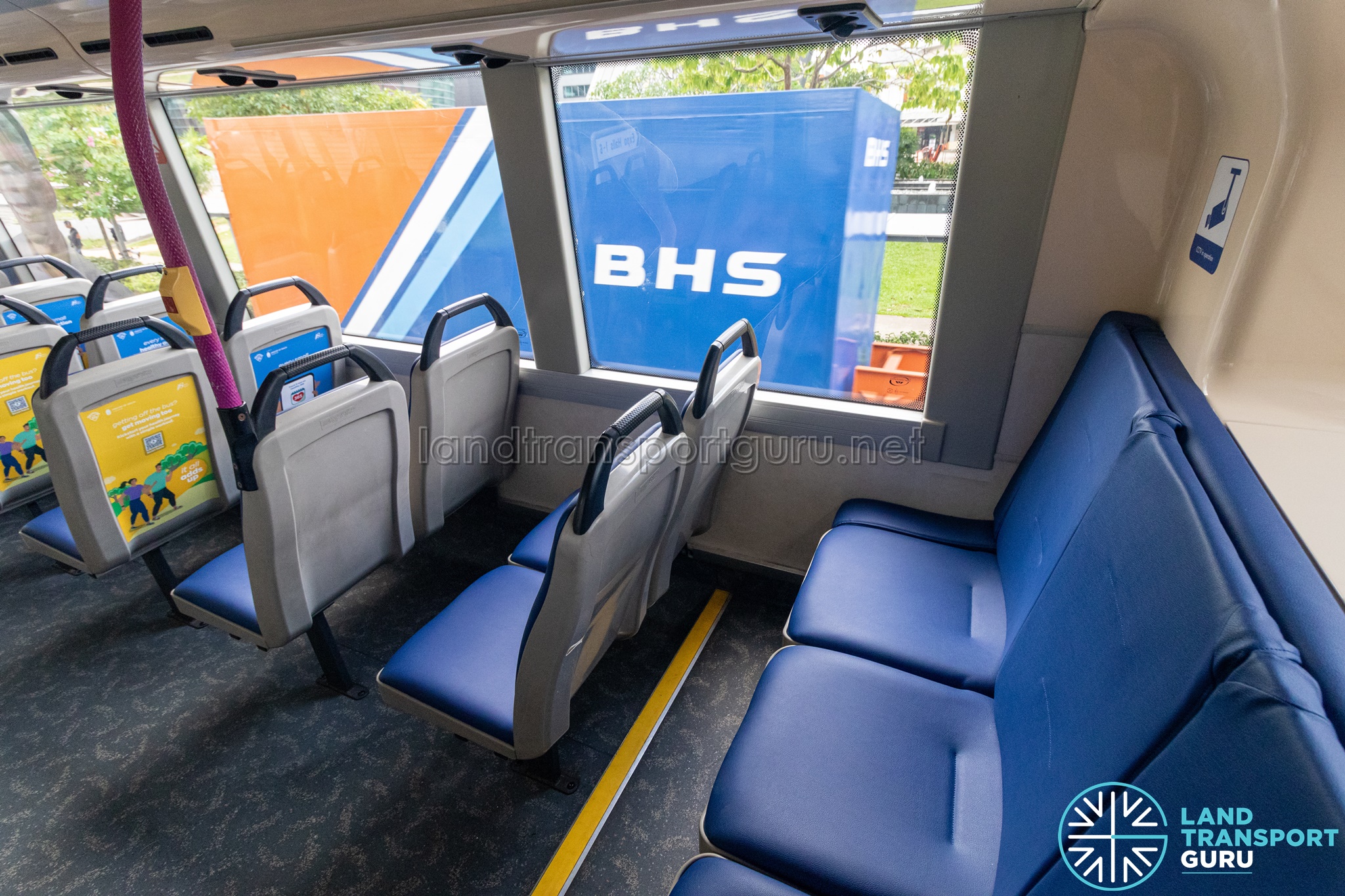
Upper Deck
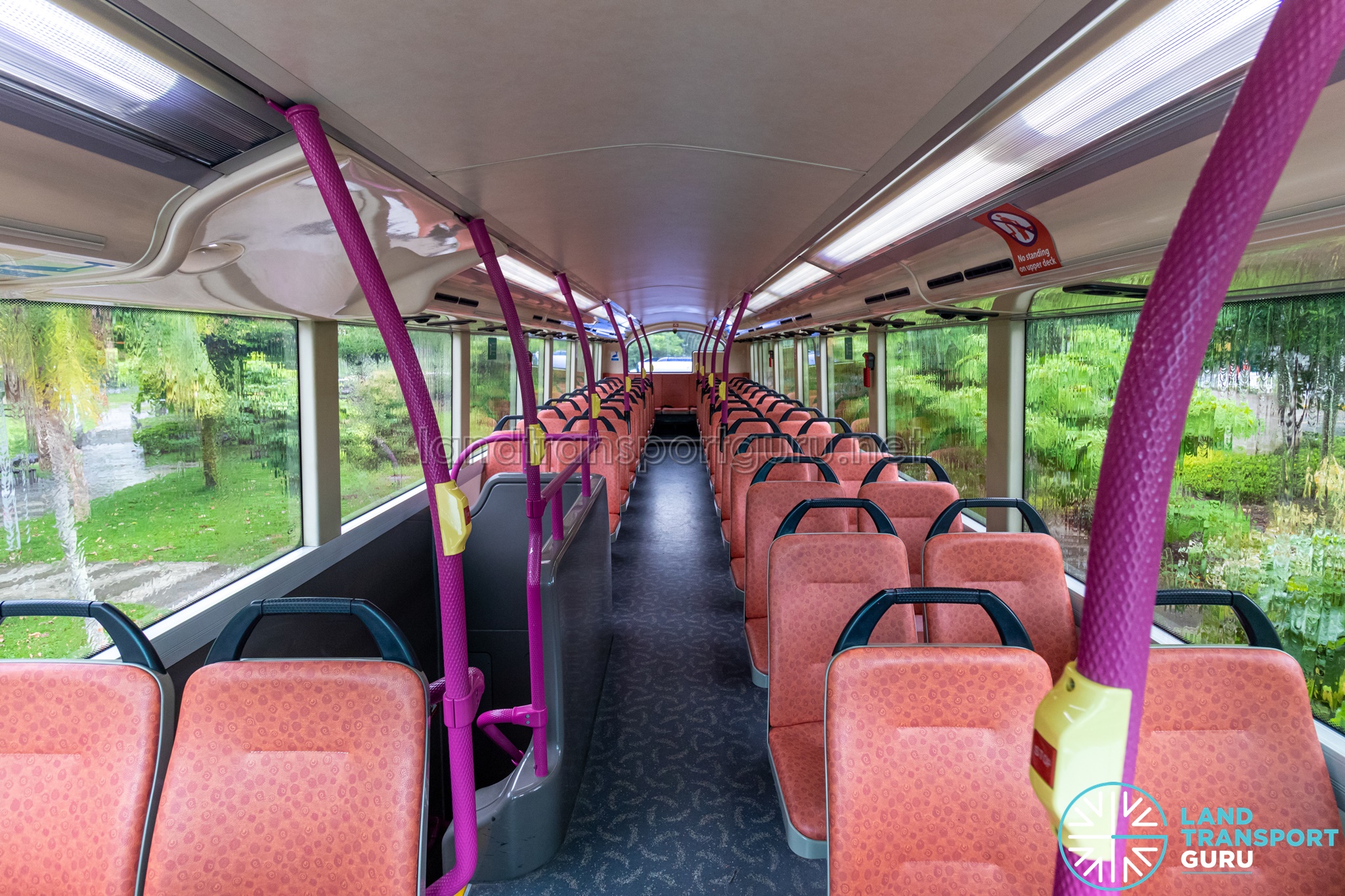
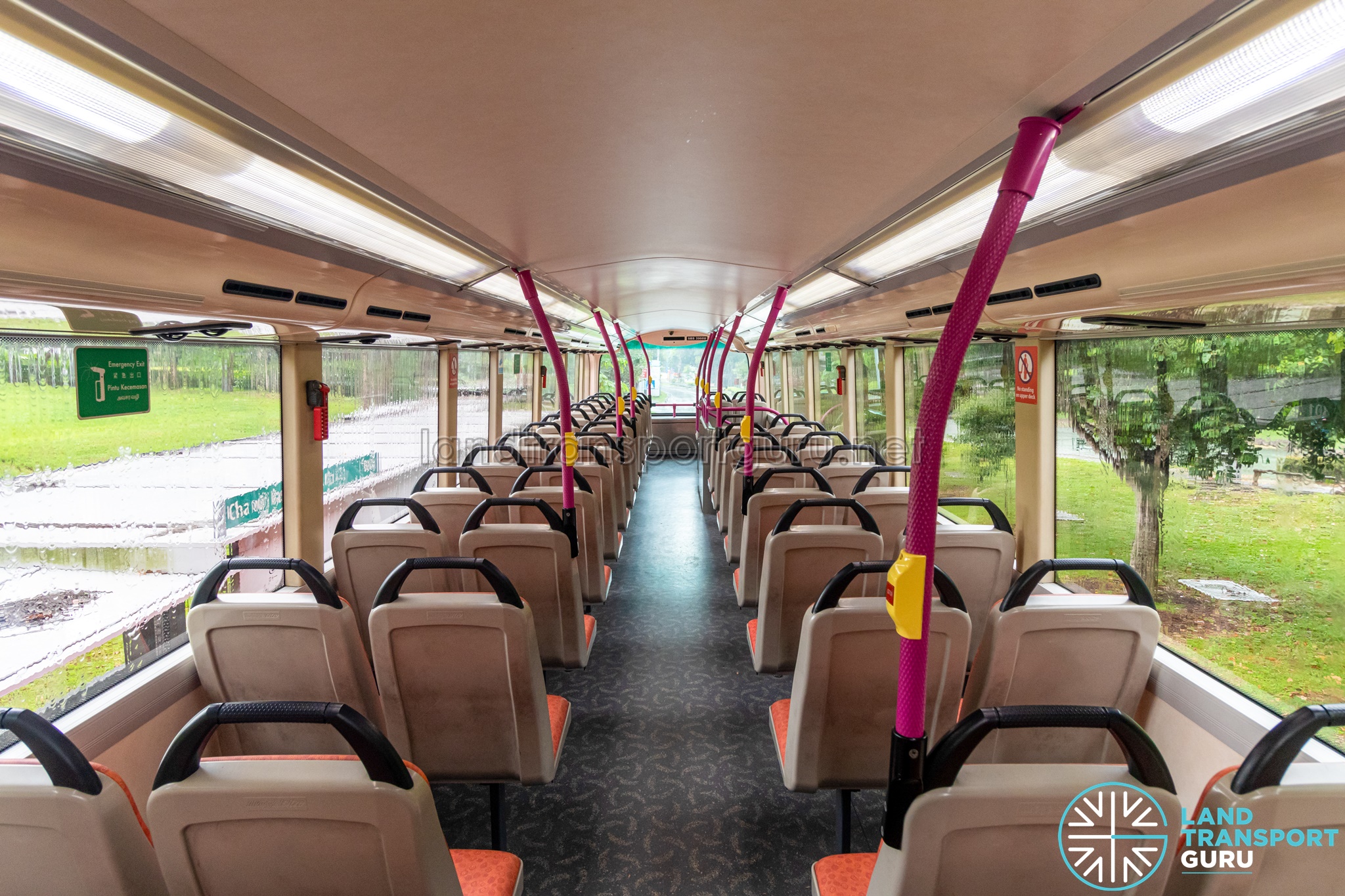
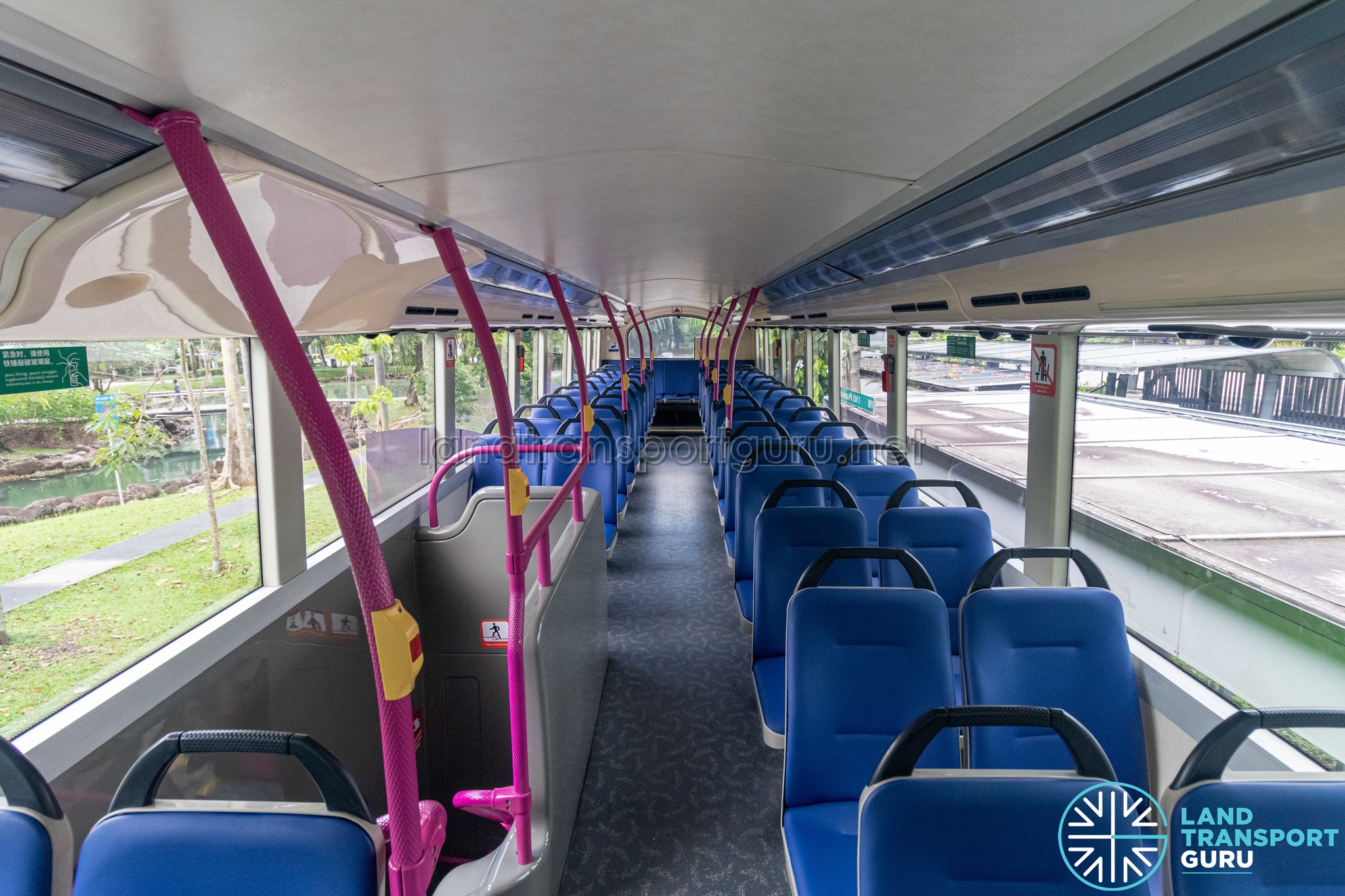
The upper deck of the bus is laid out in conventional 2+2 seating, with a central aisle running the length of the bus. All batch variants feature 55 seats on the upper deck.
Staircase
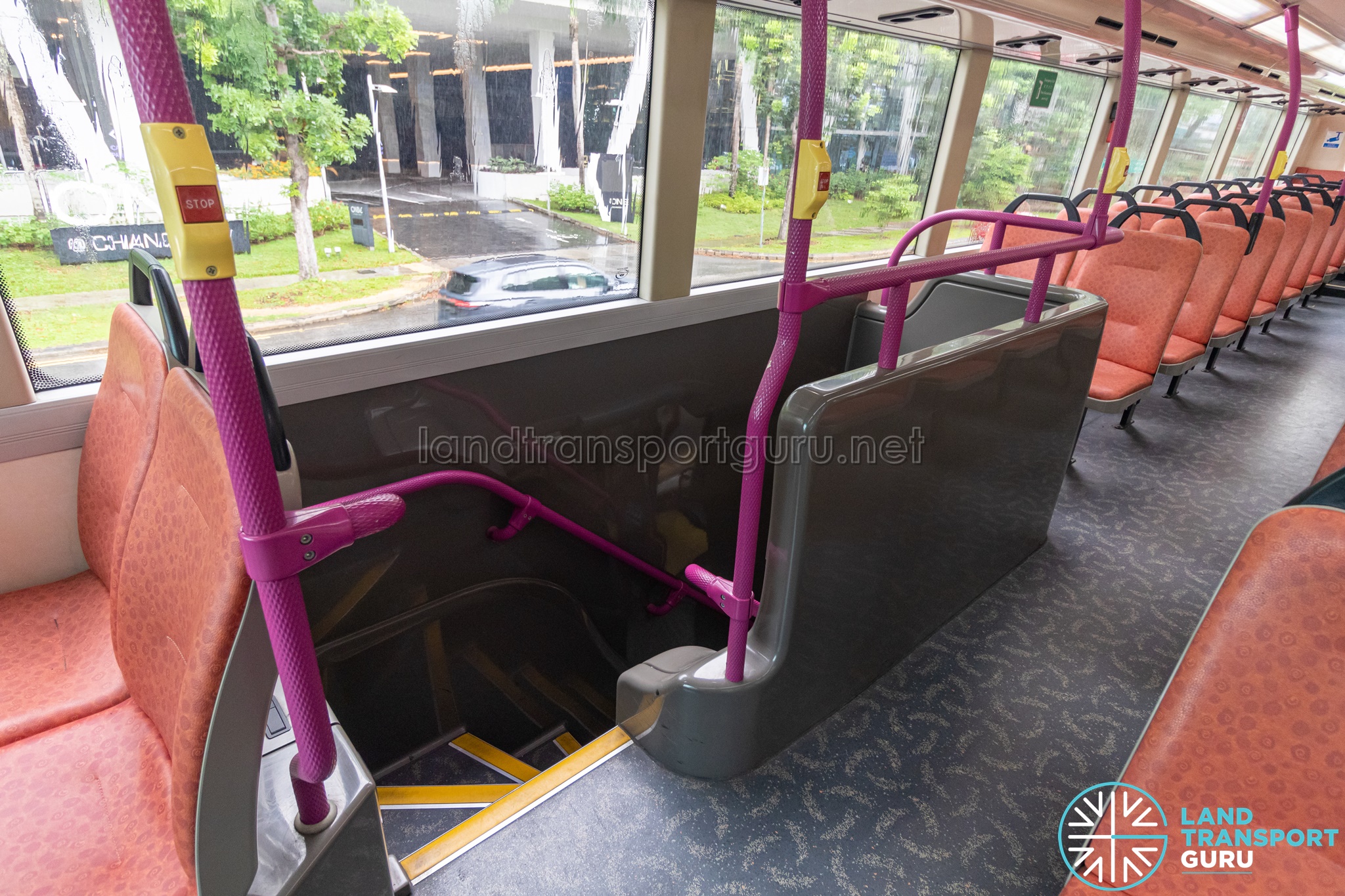
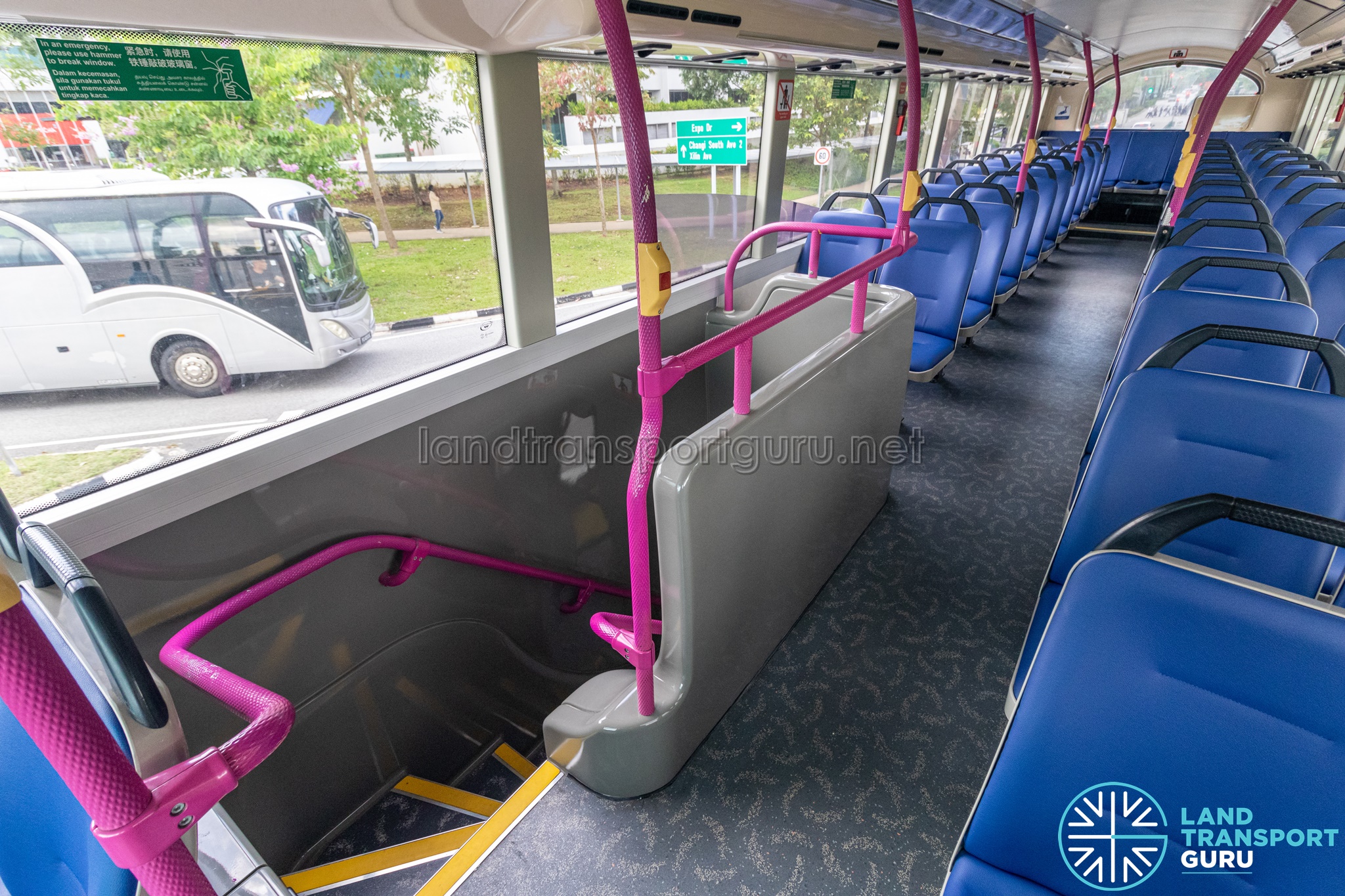
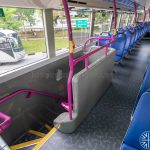
The staircase allows for passenger movement between the lower and upper decks of the bus. A seat counter (LCD number display) on the lower deck displays the number of available seats on the upper deck.
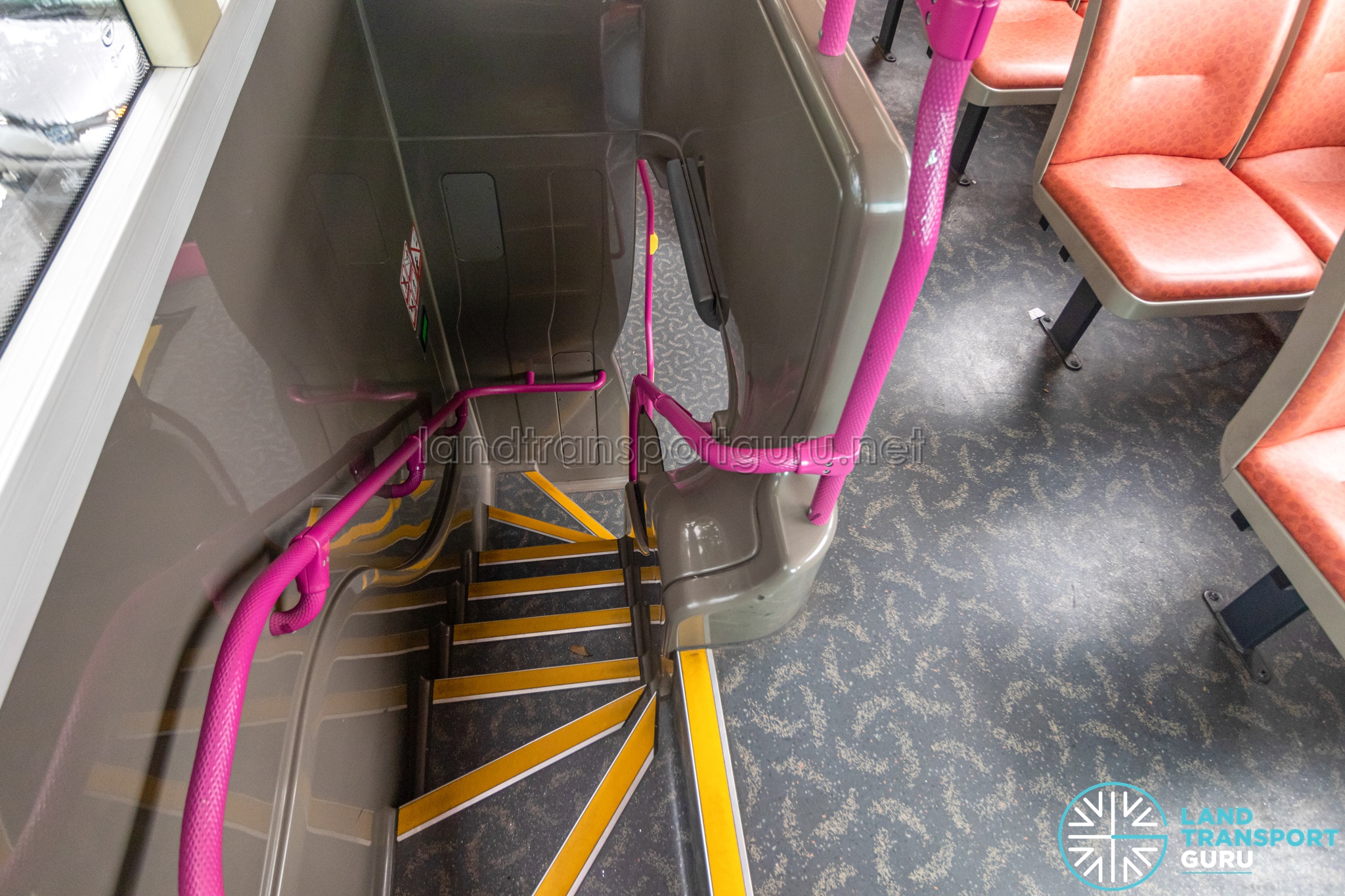
Batch 4 buses have a ‘straight staircase’ with two rectangular staircase landings, in place of the continuous curved design used on earlier batches.
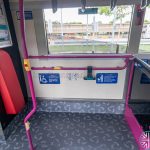
Refurbished Bus Interior
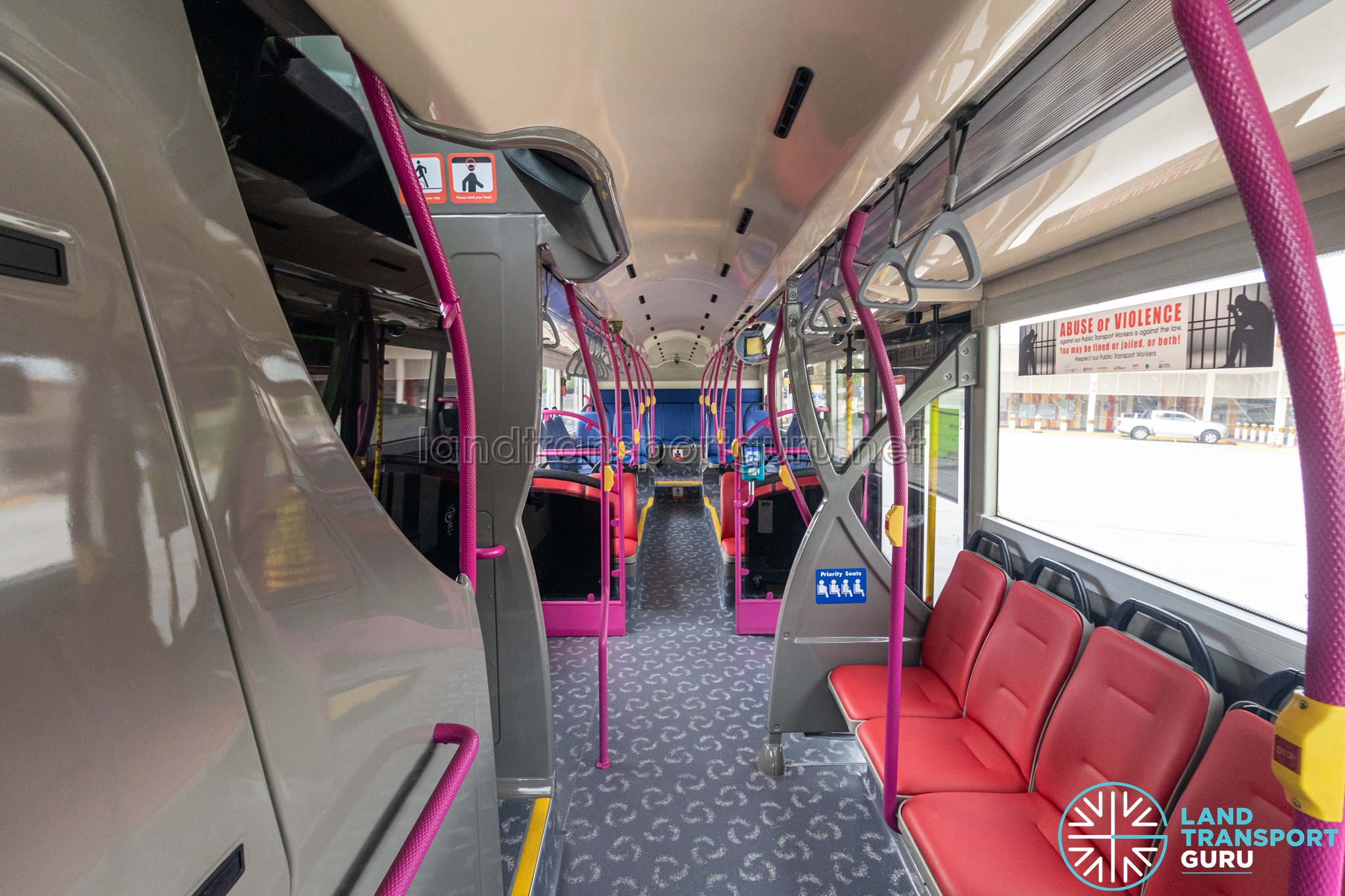
Refurbished buses differ only in aesthetics; interior layout remains the same.
Lower Deck
Upper Deck
Advanced Driver Assistance Systems (ADAS)
Individual public transport operators have retrofitted Advanced Driver Assistance Systems on their own buses, such as:
- Mobileye 560 / 630 on SBS Transit buses
- TNT Surveillance T-FA Front & T-SA side alert cameras on SMRT, Tower Transit and Go-Ahead buses
- TNT Surveillance 360° Surround View Camera System on Tower Transit buses
- TNT Surveillance T-DA Driver Alert System on SMRT Buses
Gallery:
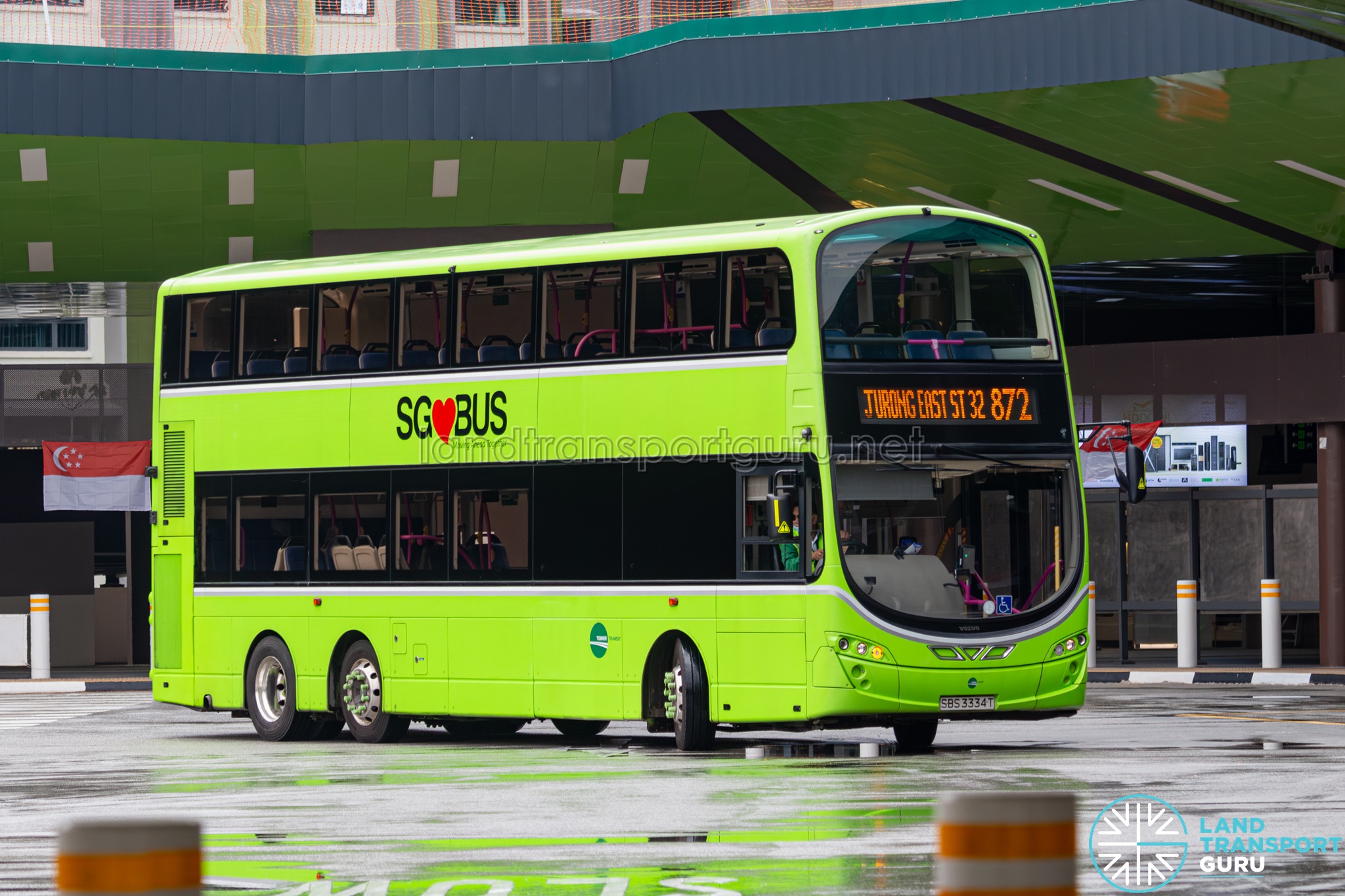
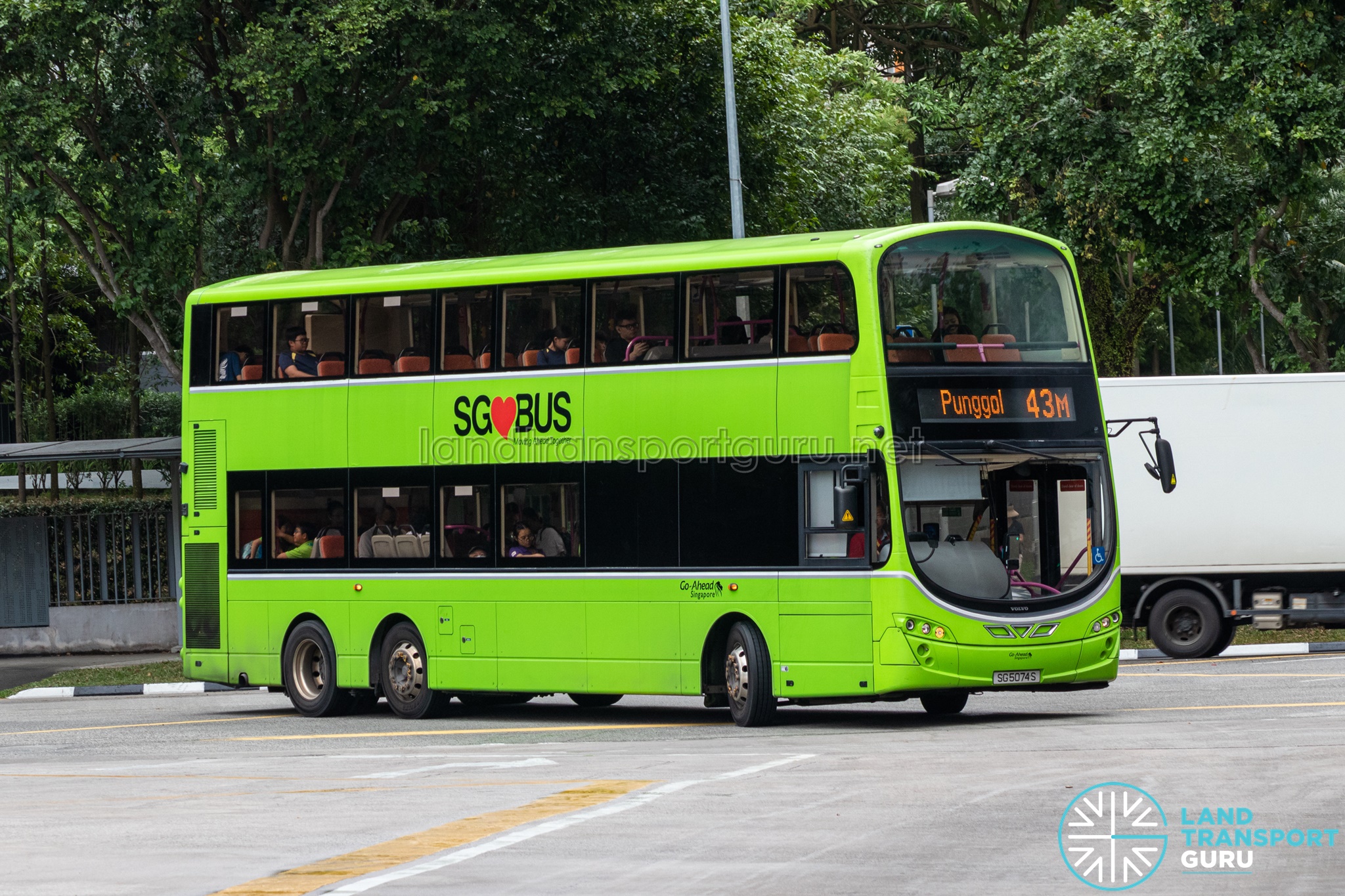
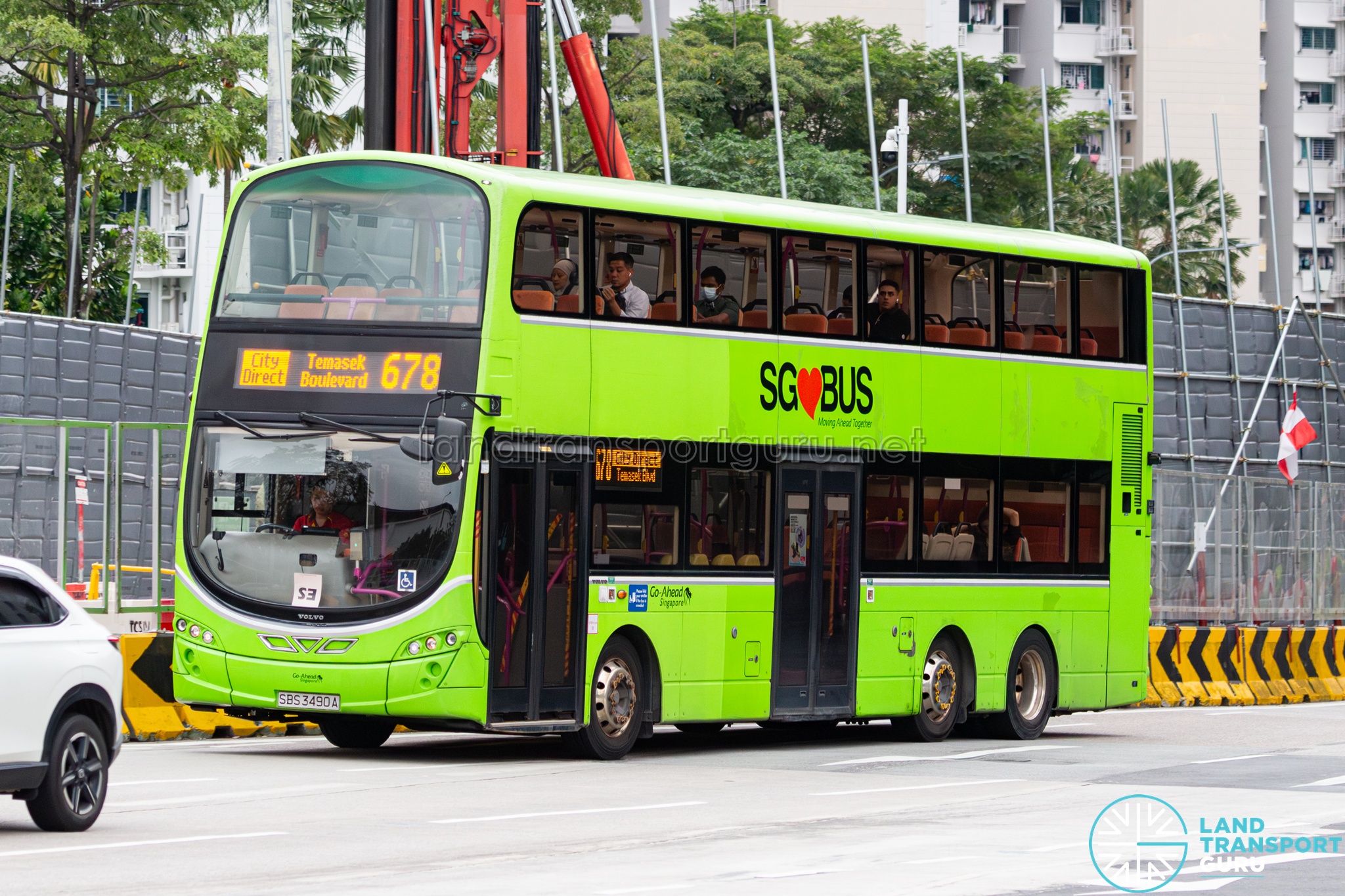
Bus Exteriors (Lush Green Livery):
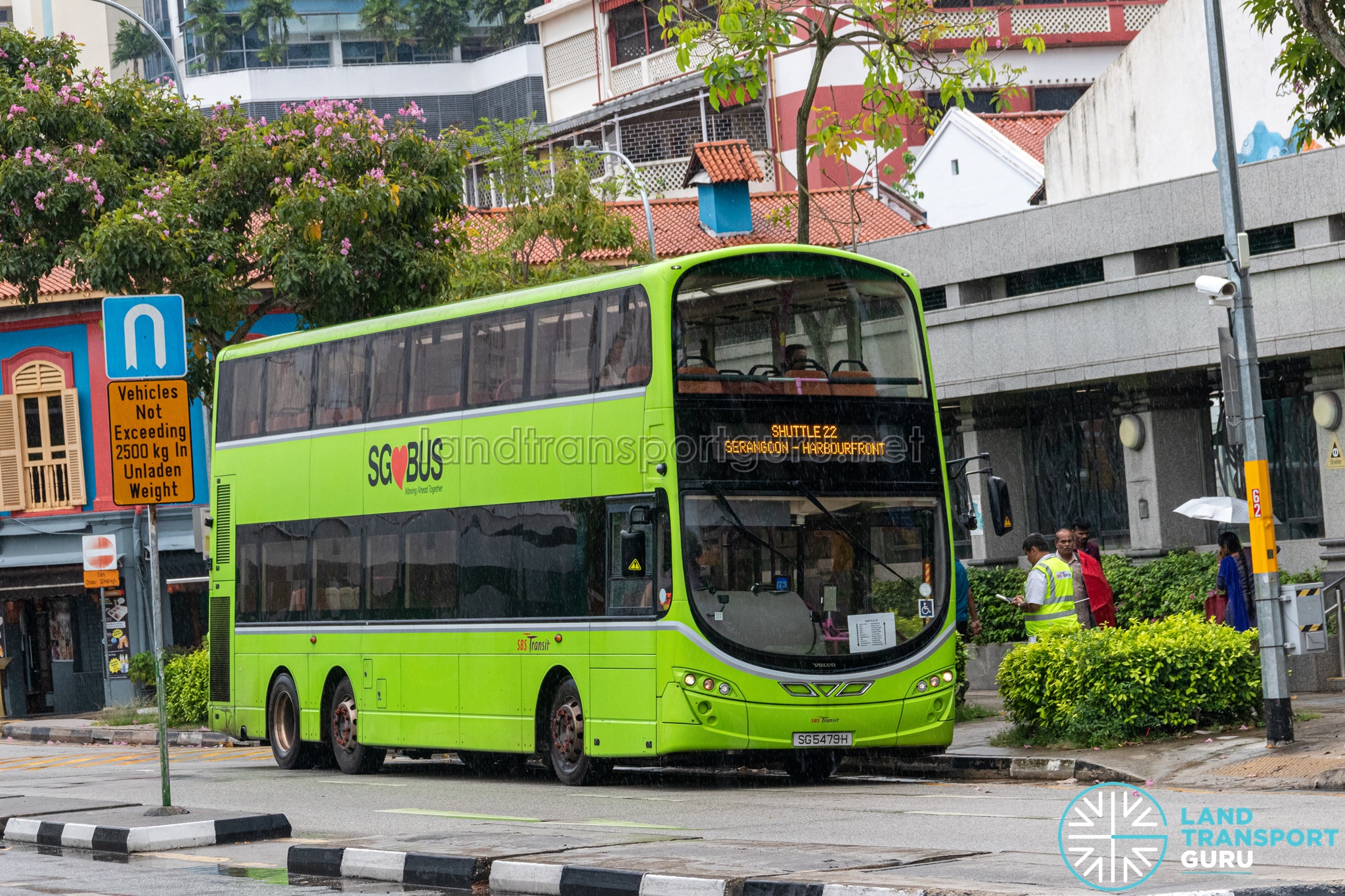
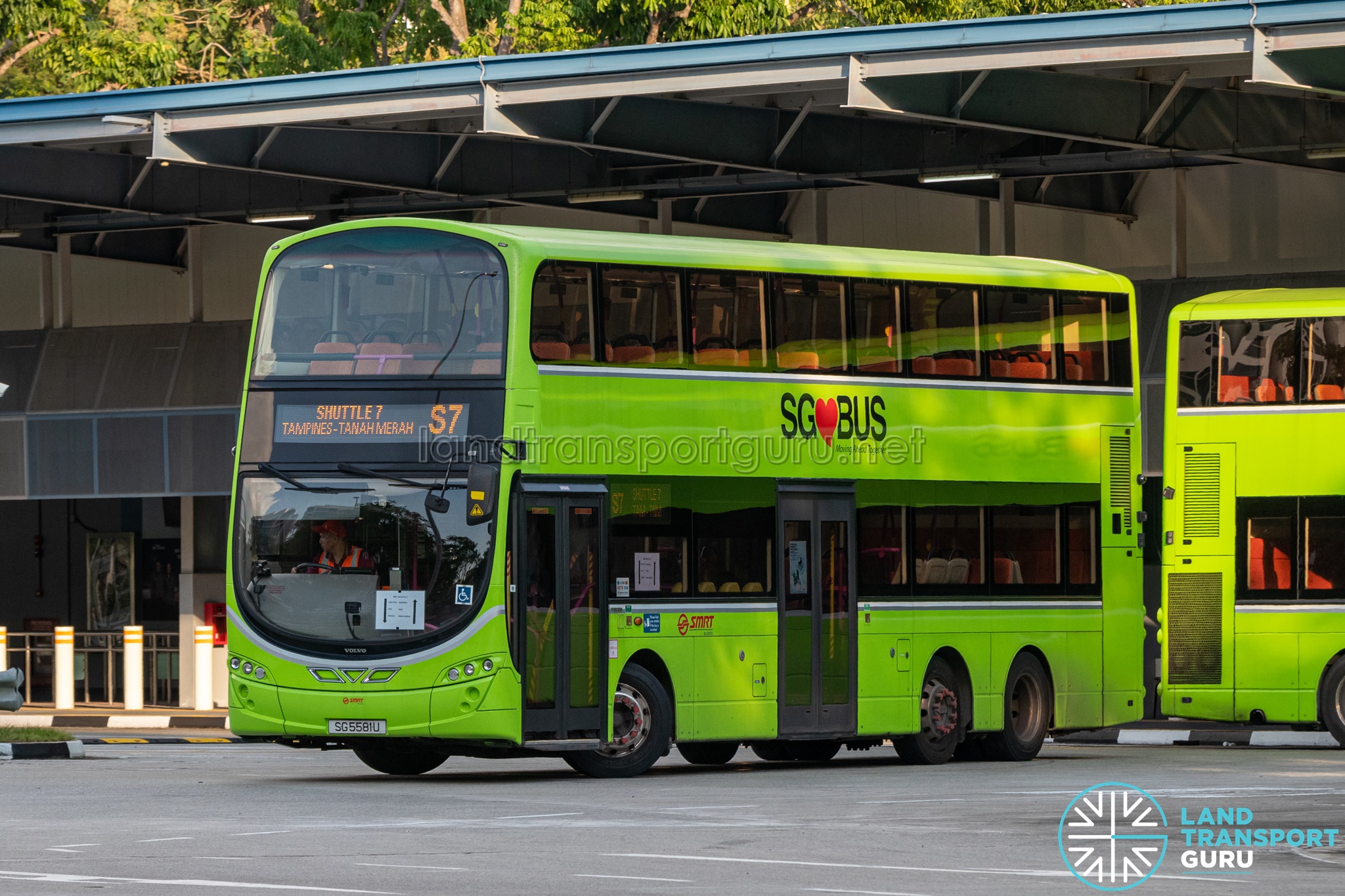
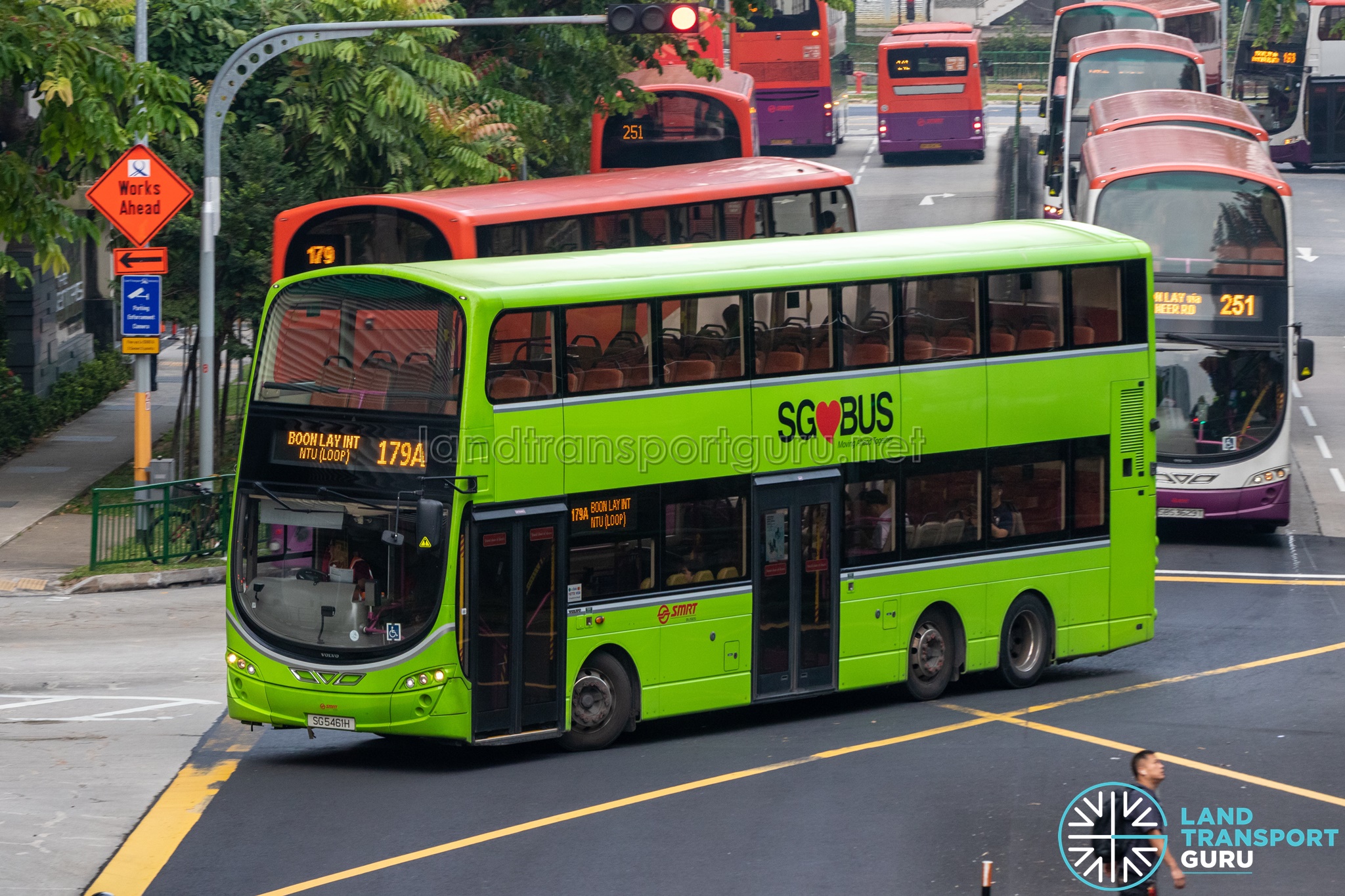

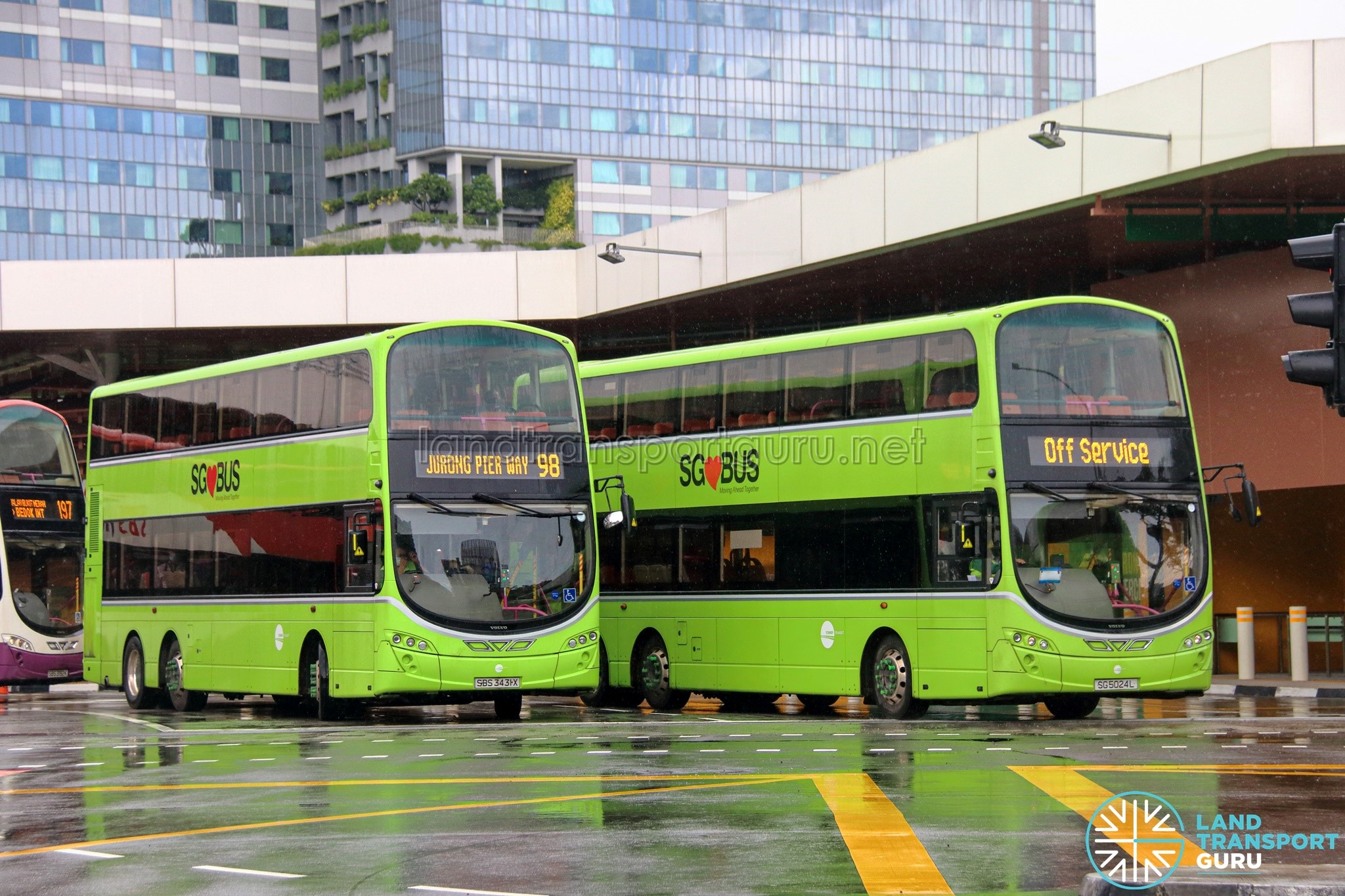
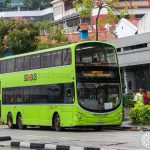
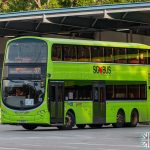
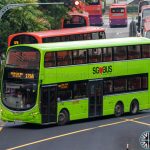
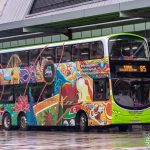
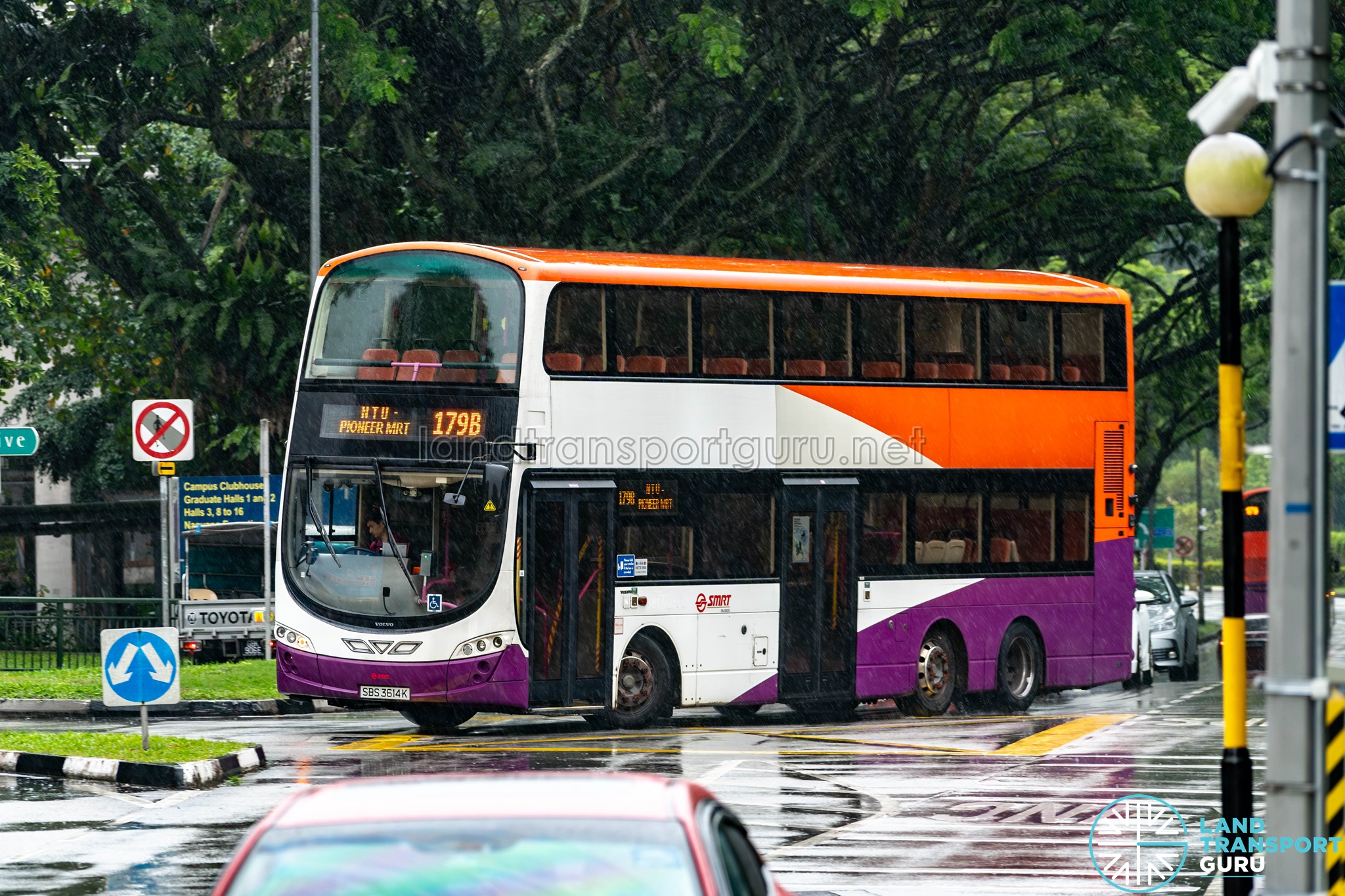
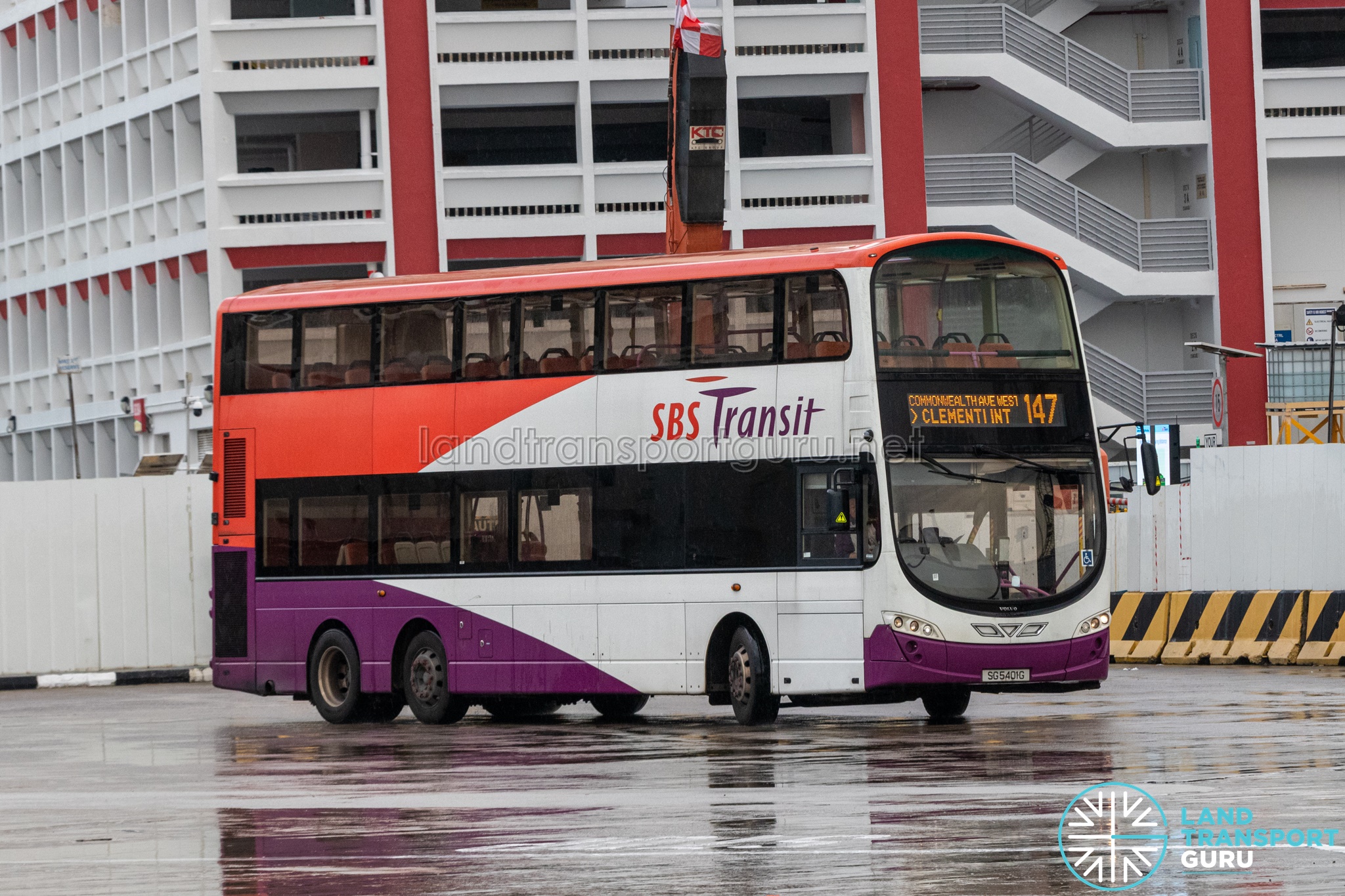
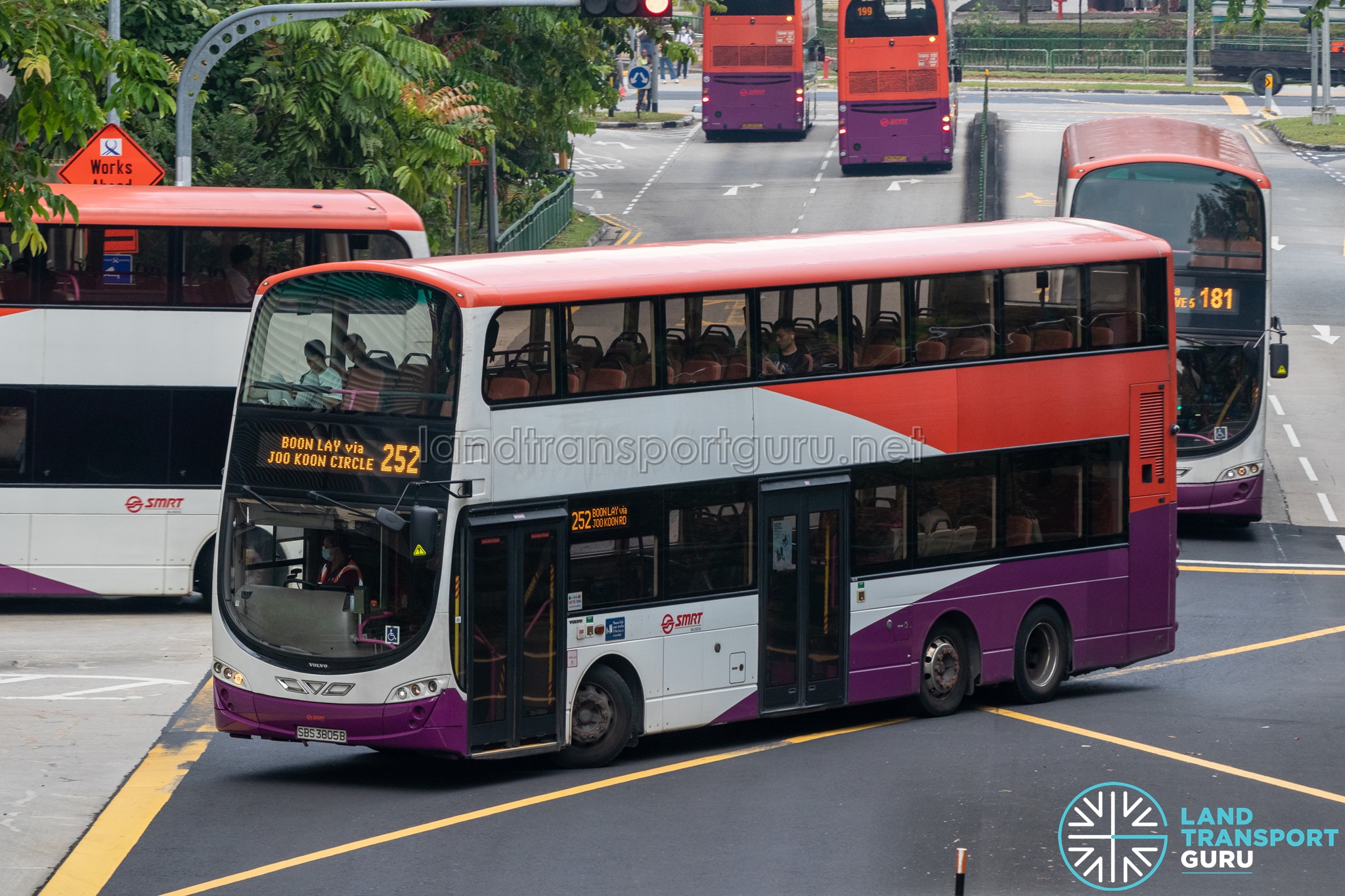
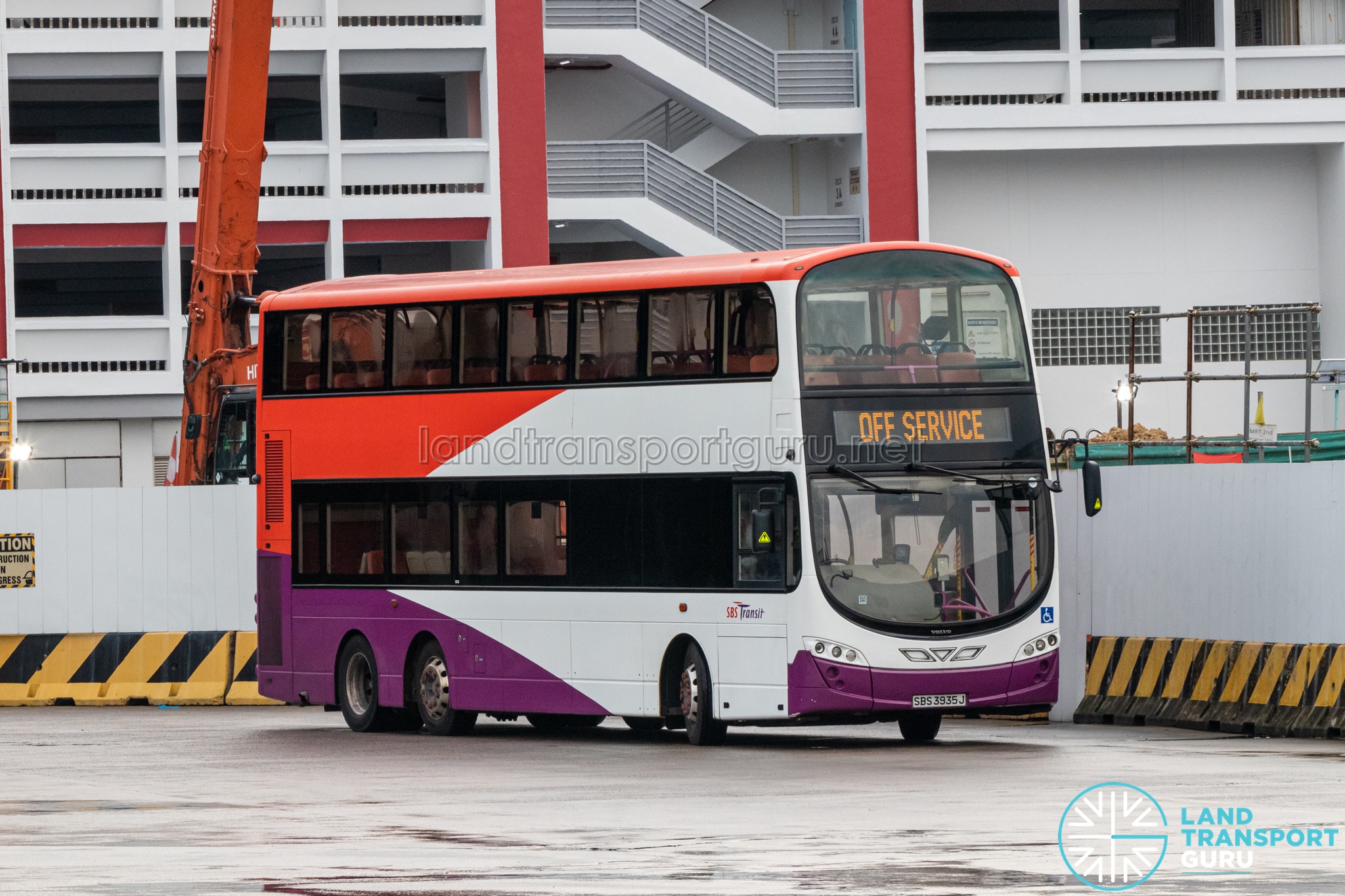
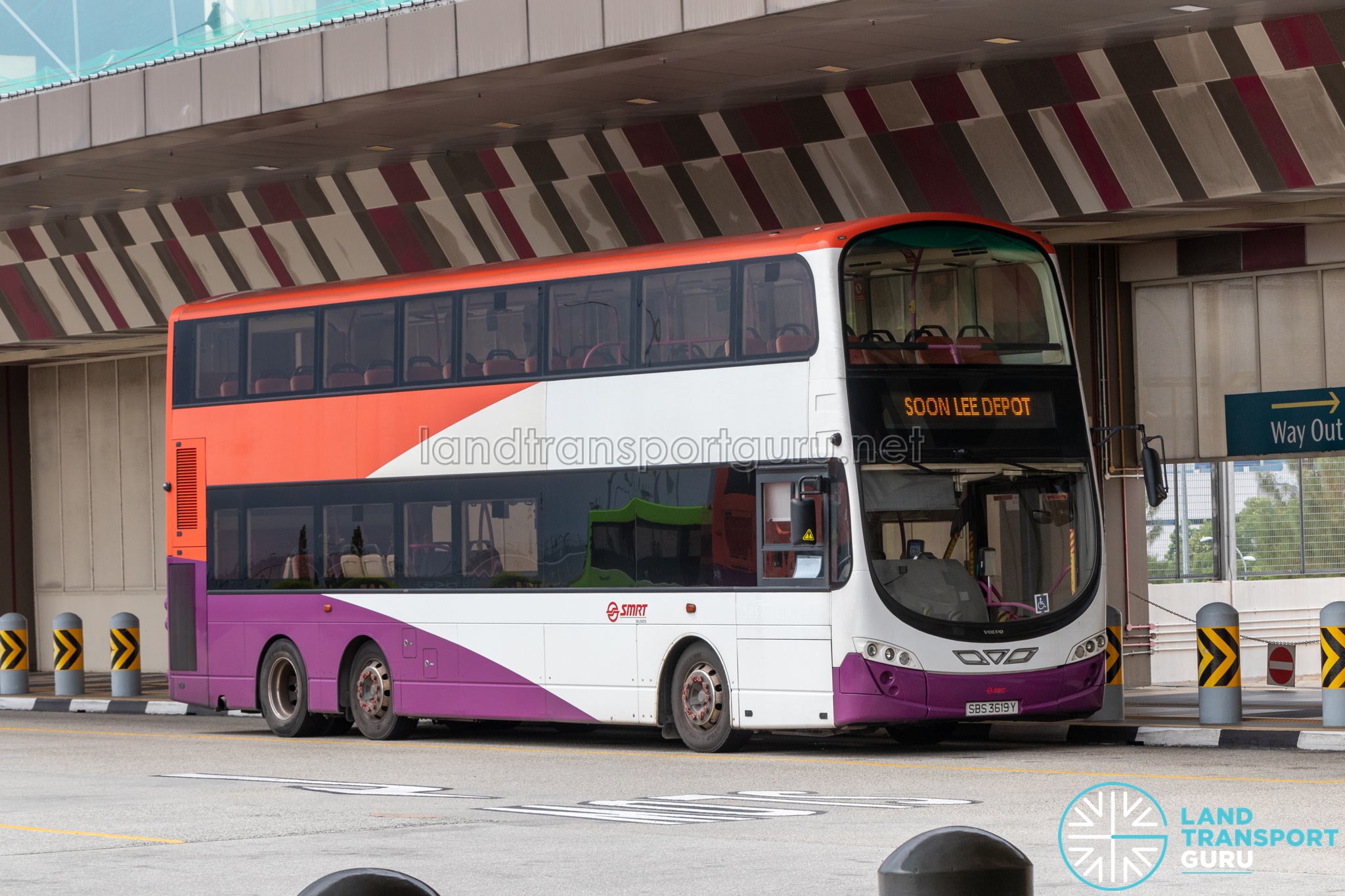
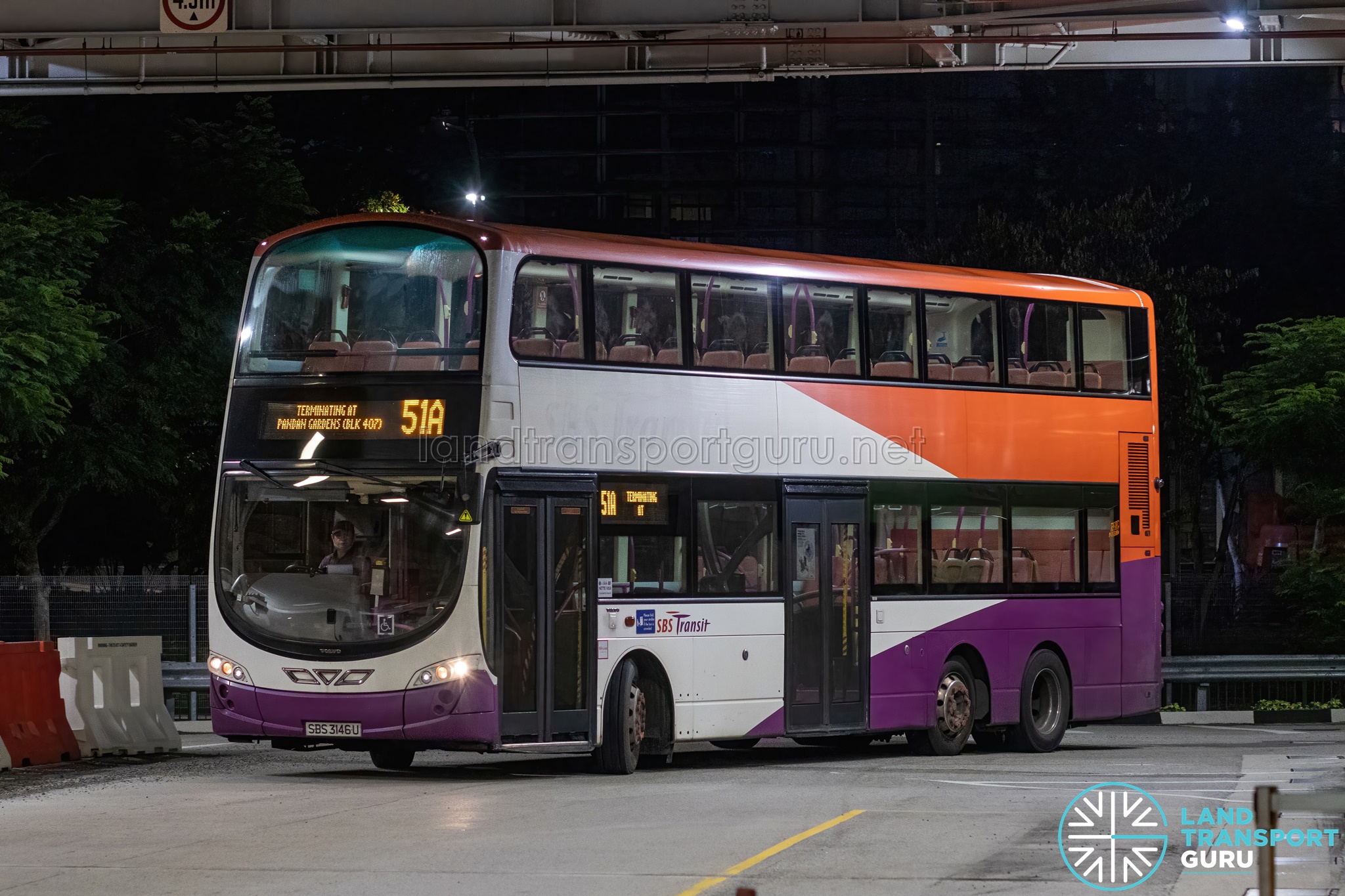
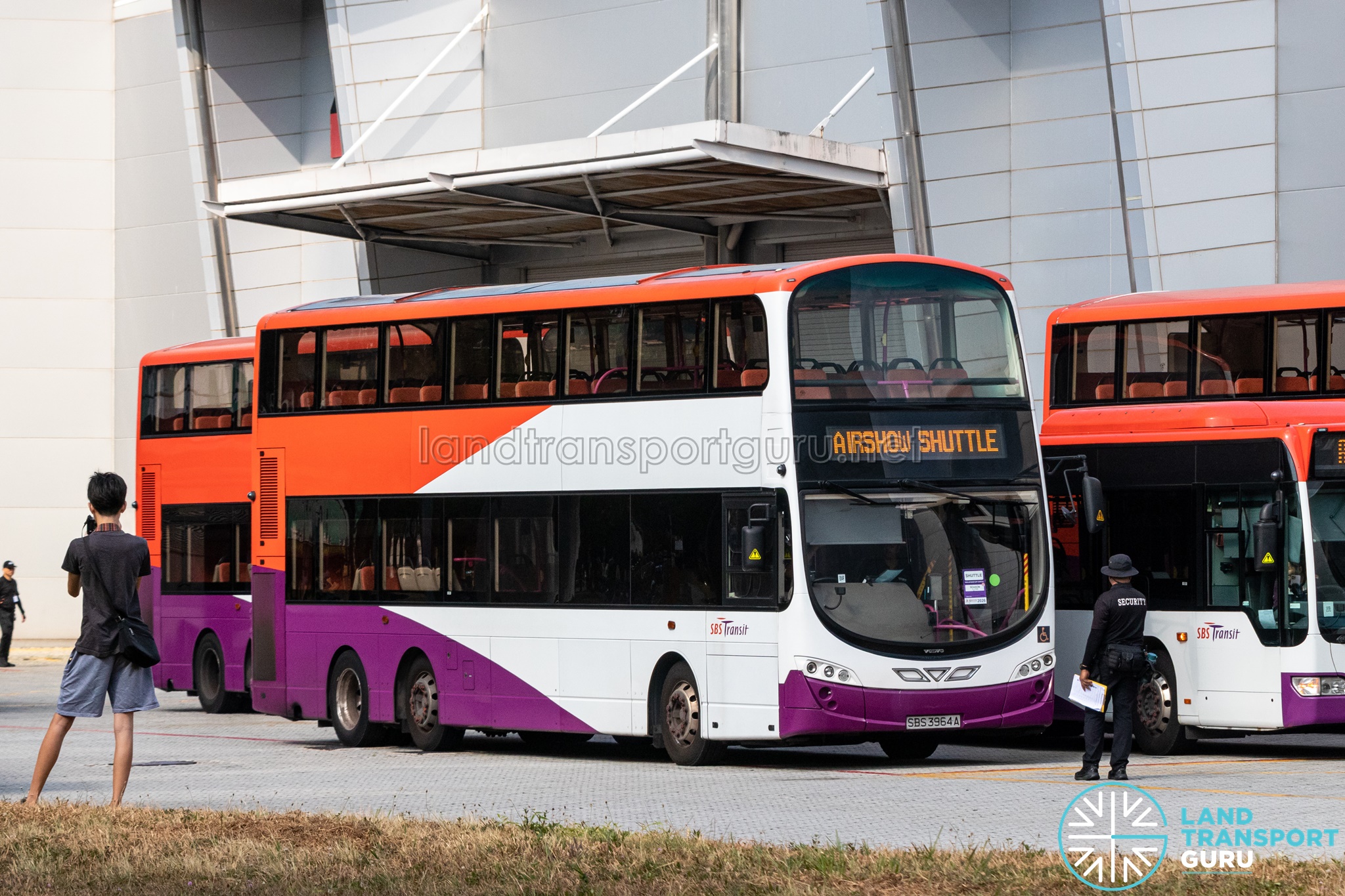
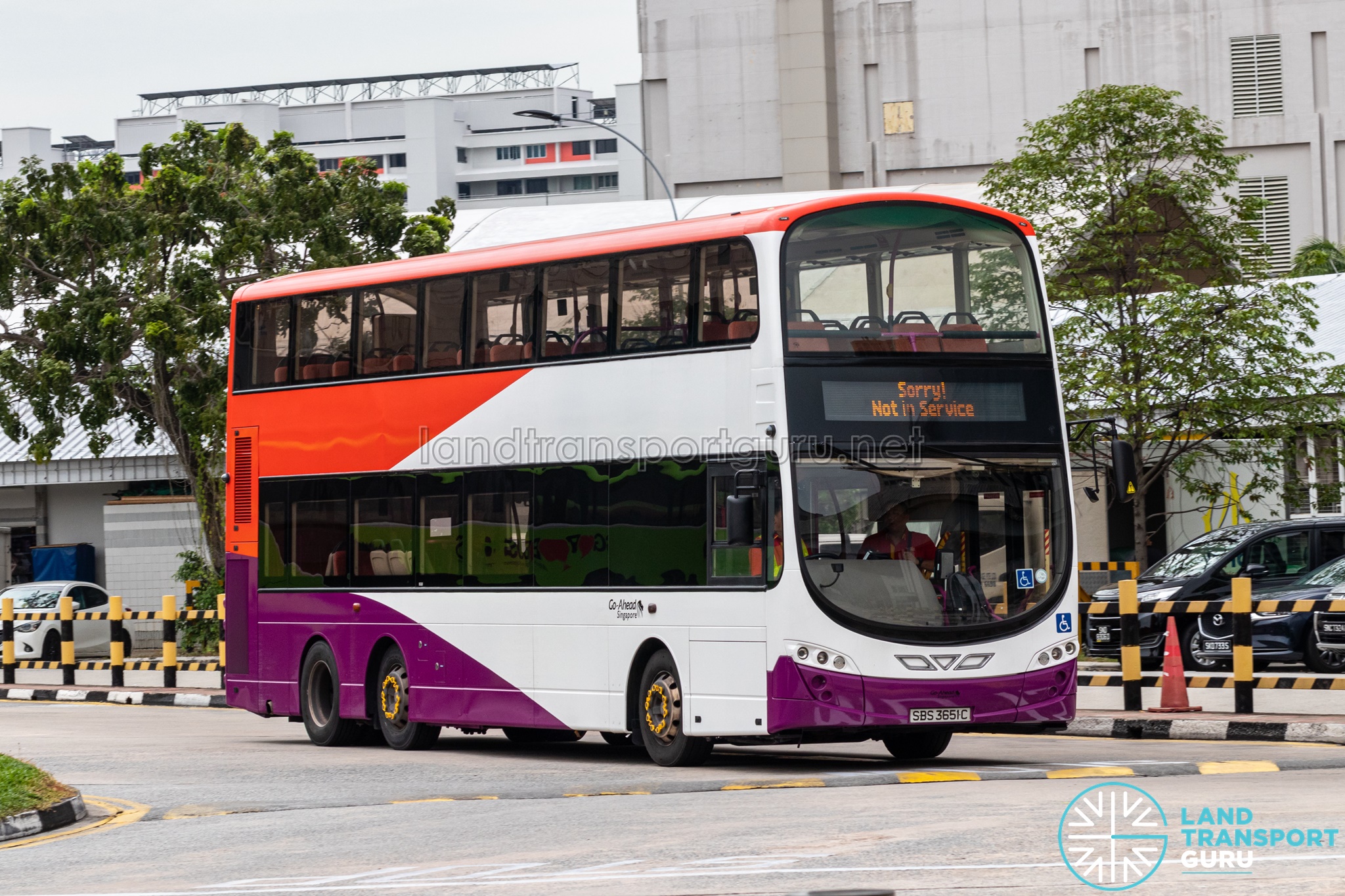
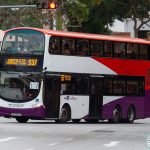
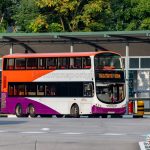
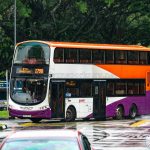
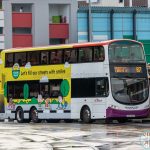
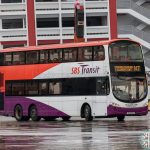
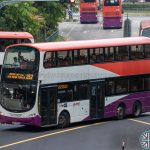
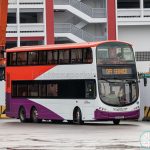
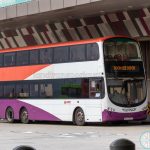
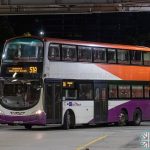
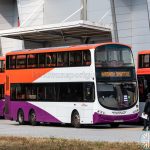
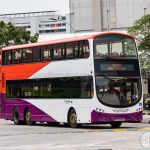
Bus Exteriors (SBS Transit Livery):

External Links & References:
- 2009 (150 buses):
- 2010 (300 buses):
- 2012 (550 buses):
- 2014 (415 buses):
Back to Volvo B9TL
Back to Bus Models
Back to Bus Articles
But the Volvo buses also known as the B9TL looks a little old
Mandai is the only depot that doesn’t intake any B9TL and Citaro.