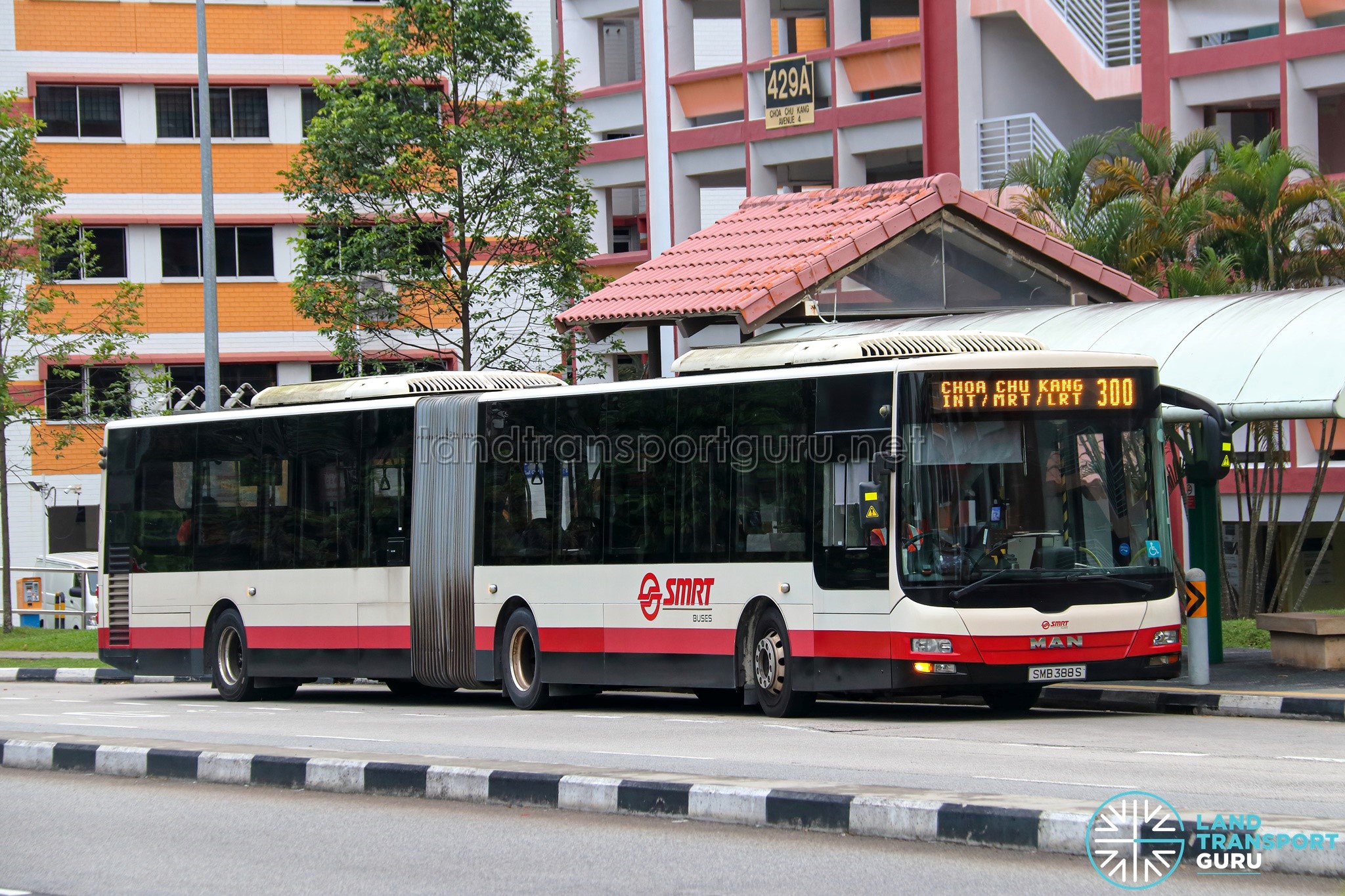
Articulated buses, commonly known as bendy buses, are extended-length vehicles comprising two sections connected by a flexible joint. These buses measure approximately 18 metres in length, compared to the 12 to 12.5 metres of standard single- and double-deck public buses in Singapore.
At their operational peak in the 2000s and early 2010s, more than 300 articulated buses were in service with Trans-Island Bus Services (TIBS) and later SMRT Buses. Based at depots in Woodlands, Ang Mo Kio, and Kranji, they were a frequent sight in Singapore’s northern regions.
As of 2025, only 40 articulated buses remain in service, out of a total public bus fleet of around 5,800 vehicles. The MAN A24 model is currently the only type of articulated bus operating in Singapore.
Operators
As of November 2025, 40 MAN A24 articulated buses in Singapore are distributed among three public bus operators:
| Operator | No. of Buses | Registration | BCM Route Package |
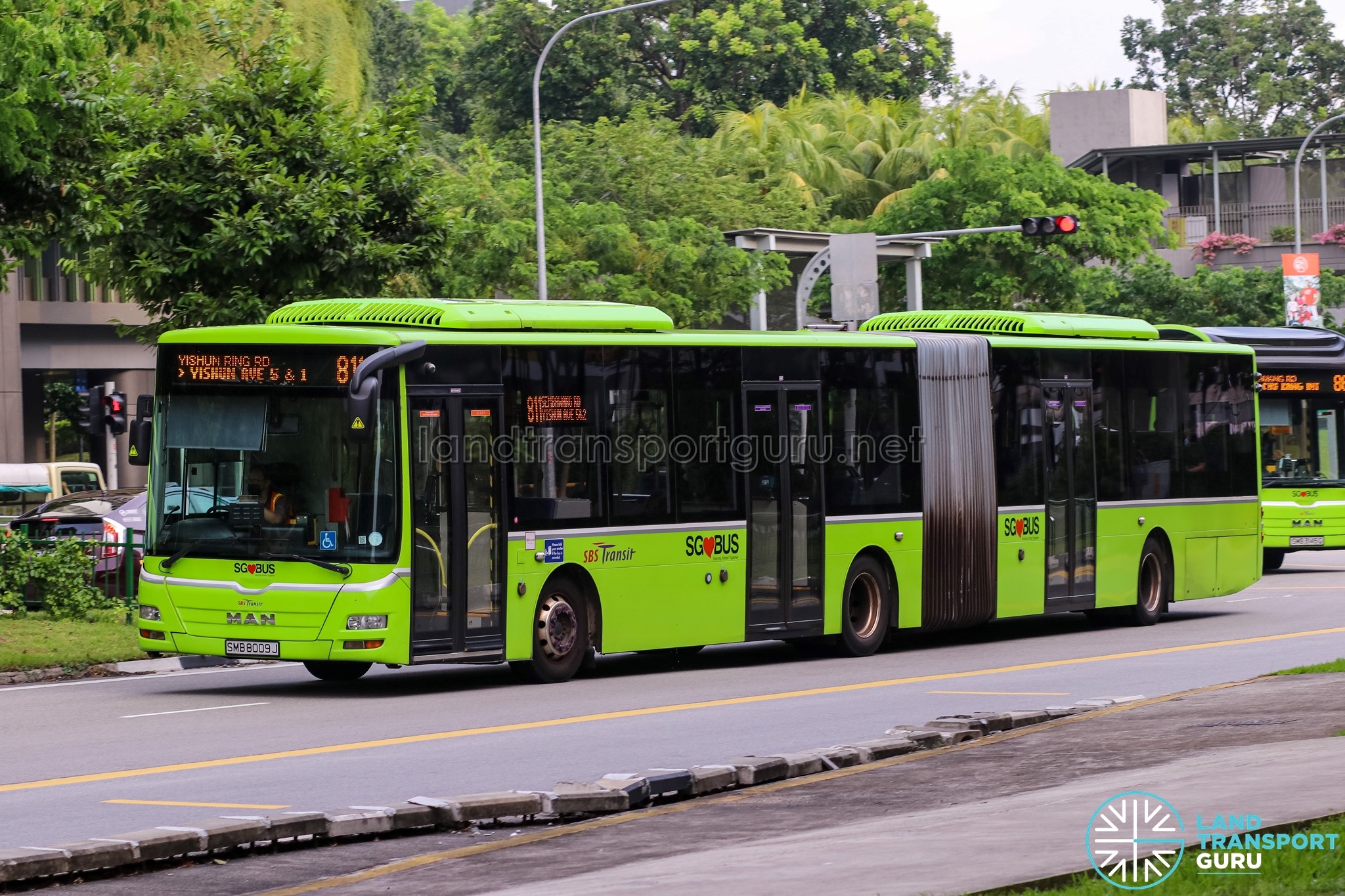
| SBS Transit | 10 | SMB8001E – SMB8010D | Seletar |
| SMRT Buses | 23 | SMB388S, SMB8011B – SMB8014T, SMB8016M – SMB8024P, SMB8026J – SMB8029B, SMB8032R – SMB8035H & SMB8039Y | Choa Chu Kang–Bukit Panjang Woodlands |
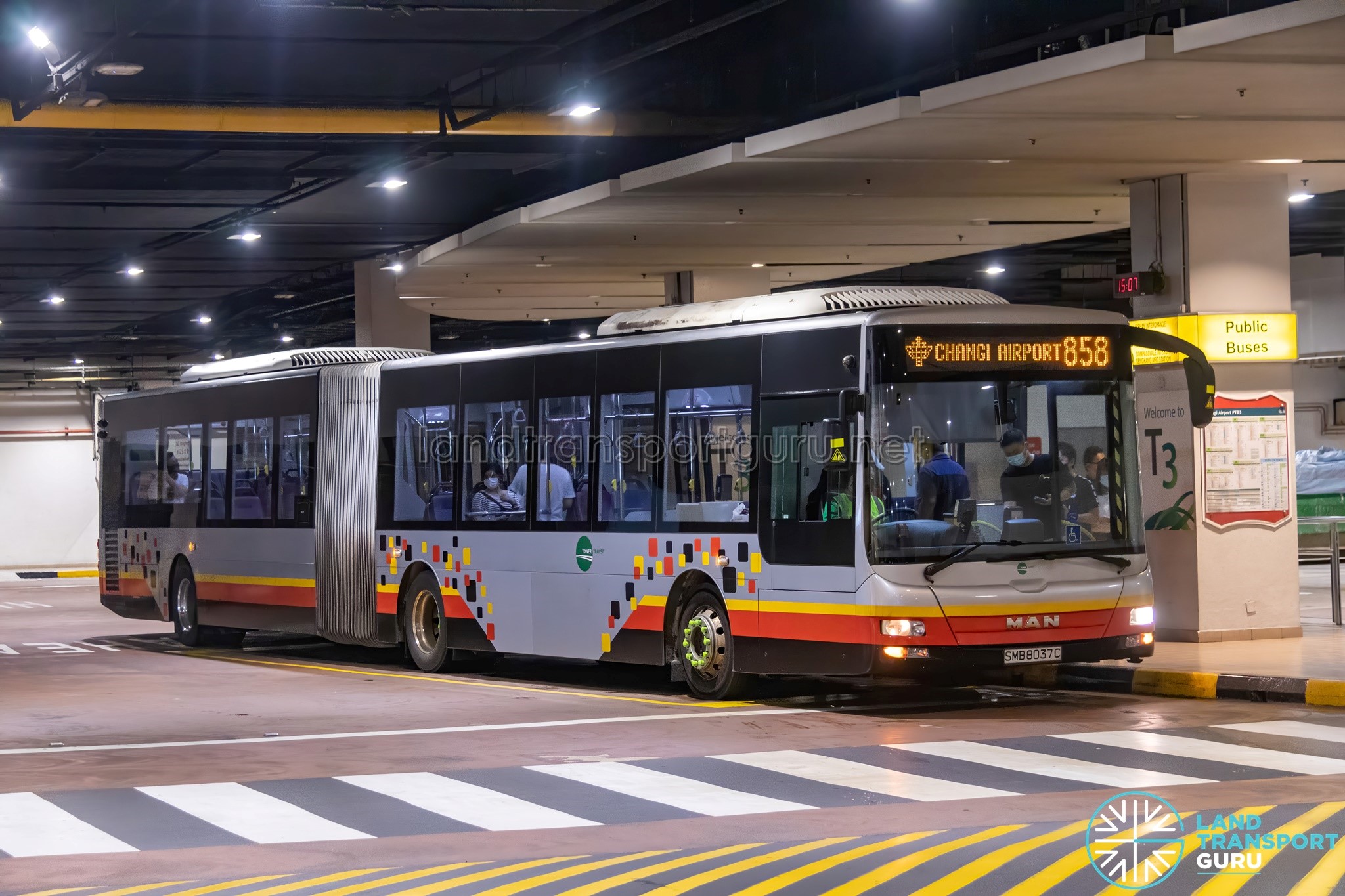
| Tower Transit | 7 | SMB8015R, SMB8025L, SMB8030X, SMB8031T & SMB8036E – SMB8038A | Sembawang–Yishun |
Historical Background
Trans-Island Bus Service
Articulated buses were first introduced in Singapore by Trans-Island Bus Services (TIBS) in 1996. The company procured a total of 315 Mercedes-Benz O405G buses with four different bodywork designs, which entered service between 1996 and 2004.
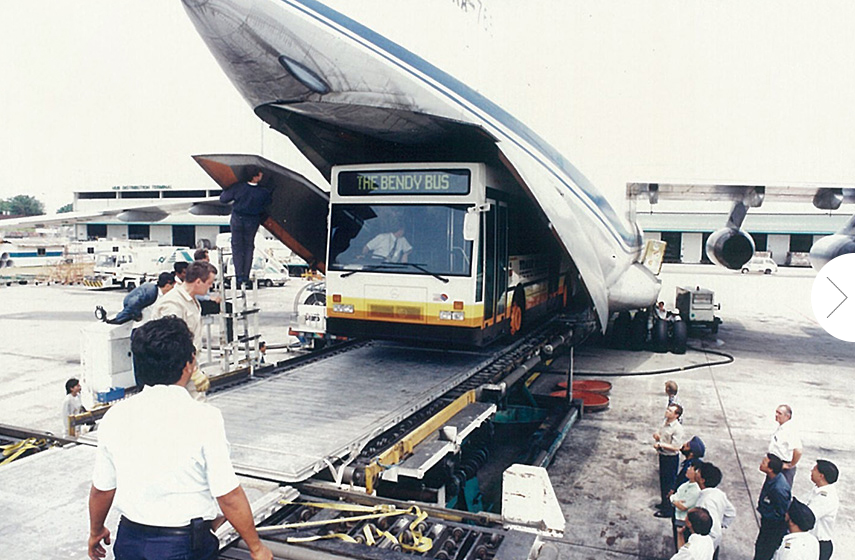
The first unit, TIB838H, was assembled by Spanish bodybuilder Hispano Carrocera, and flown from Hamburg to Singapore by cargo aircraft, arriving on 13 March 1996. It began service on Bus Service 171 on 16 March 1996.
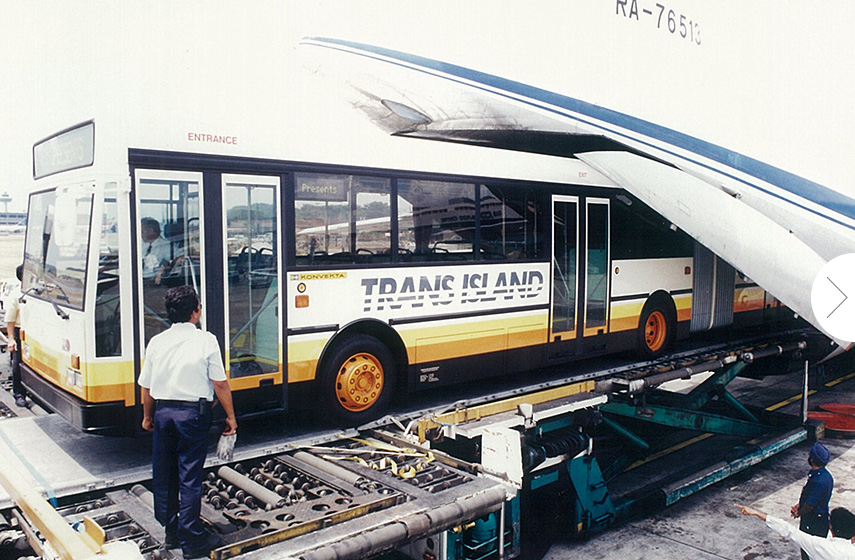
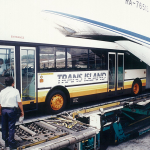
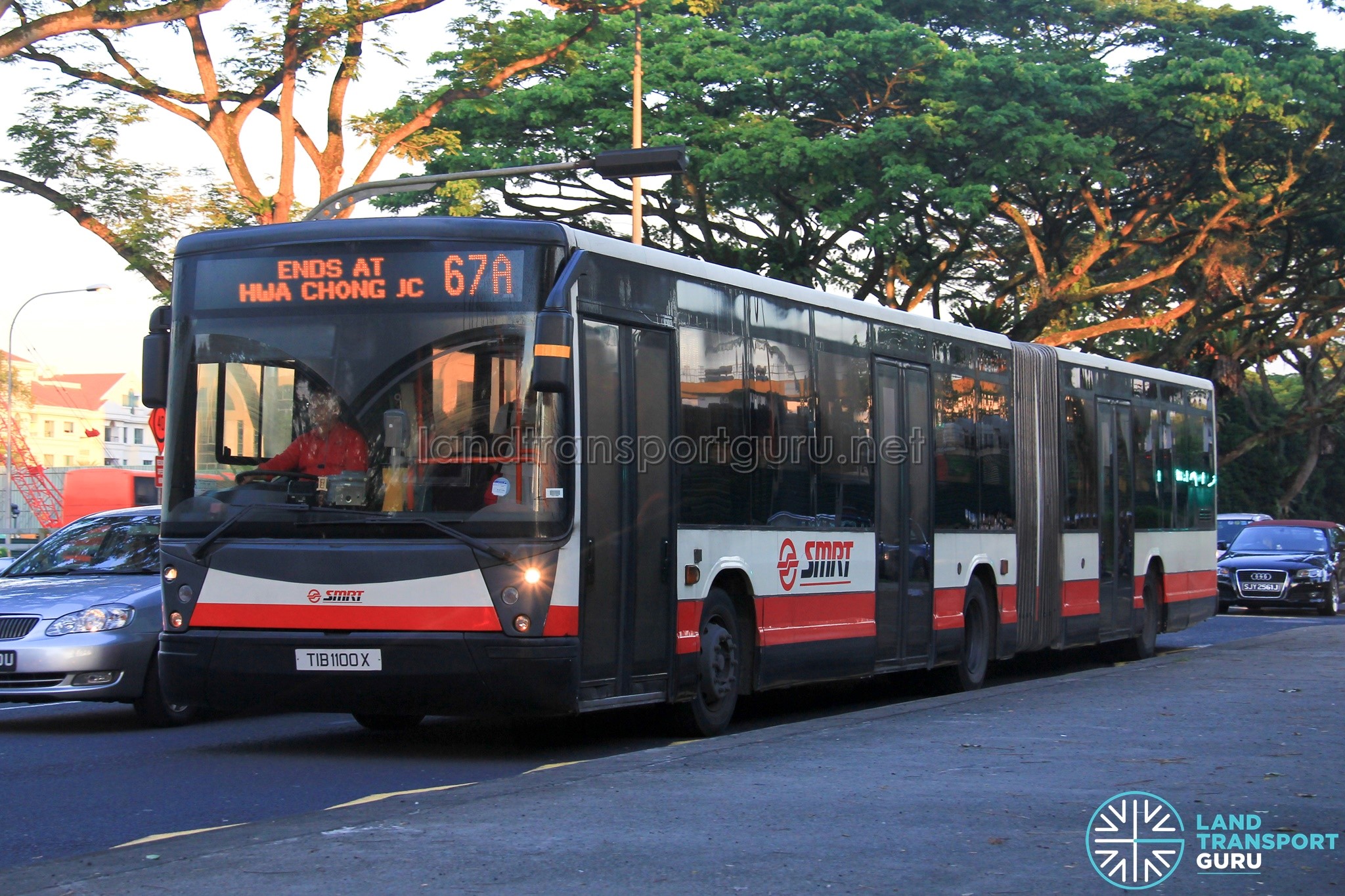
Of the four bodywork types, three were designed by Hispano Carrocera (Hispano MkI, MkII, and Habit), while the remaining type was built by Volgren of Australia.
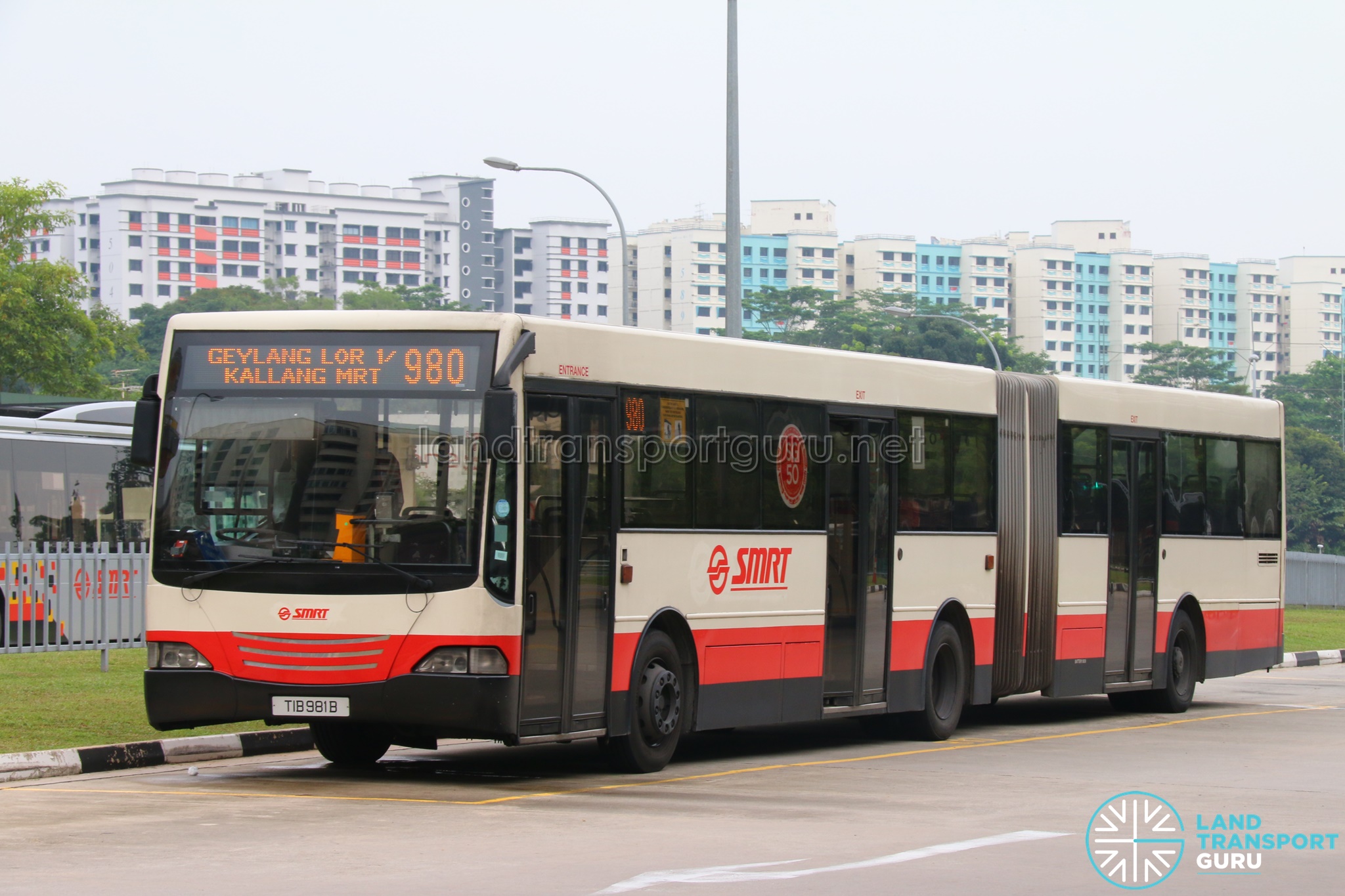
The Hispano Habit variant was the most numerous, with 208 units produced. The Habit bodywork design was styled by Pininfarina, an Italian design firm known for its automotive work.
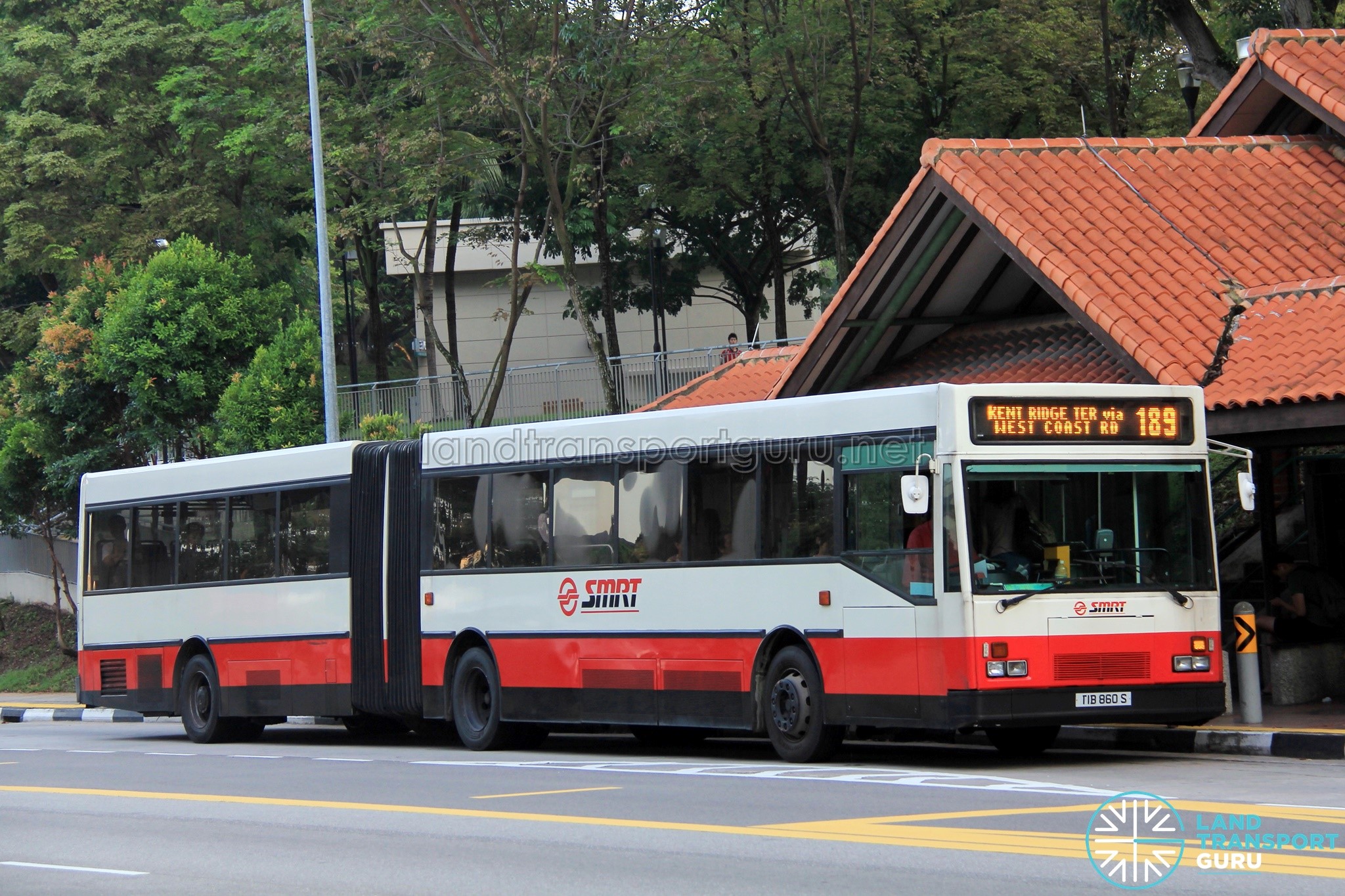

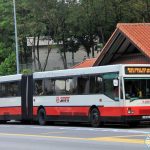
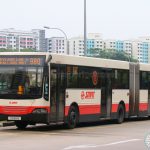
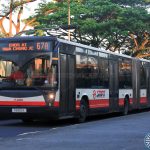
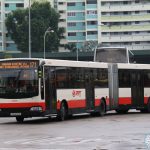
- Mercedes-Benz O405G (Hispano Mark II) | Land Transport Guru
- Mercedes-Benz O405G (Hispano Habit) | Land Transport Guru
- Mercedes-Benz O405G (Volgren) | Land Transport Guru
The final day of revenue service for the Mercedes-Benz O405G fleet was 30 November 2020, operating on Services 169, 903, and 912M. These buses were retired several months early, owing to the authorities’ goals of having a 100% wheelchair-accessible bus fleet by 2020. As such, O405G buses were also the last non-wheelchair-accessible public buses to operate in Singapore.
Singapore Bus Services
Singapore Bus Services (SBS), now known as SBS Transit, conducted trials with articulated buses during the 1990s. Two units were tested: a Volvo B10MA Mark IV (SBS998Y) and a Mercedes-Benz O405G (SBS999U). These buses entered passenger service in 1996 and 1997 respectively, operating on routes such as Services 18, 195, and 290.
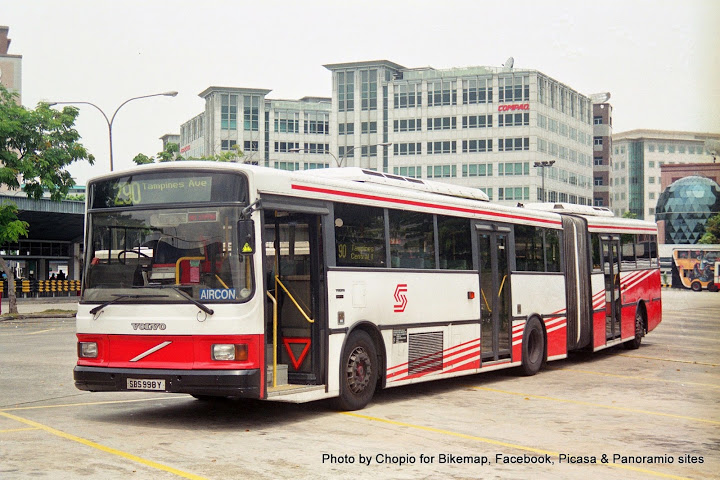
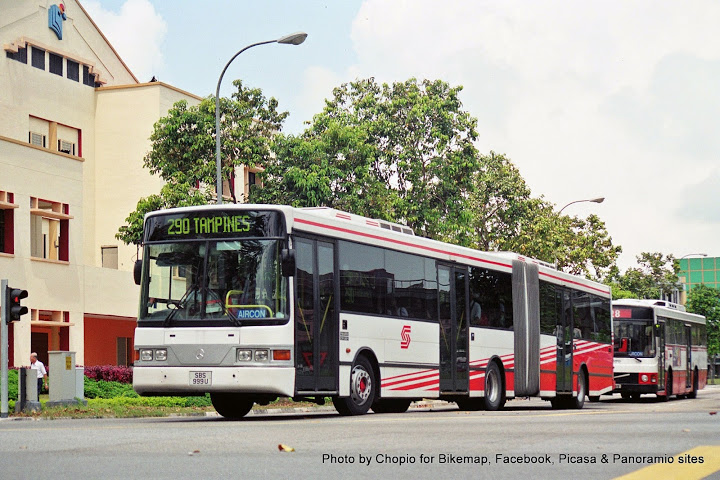
Both trial units were withdrawn and exported overseas in 2006, marking the end of SBS Transit’s experiments with articulated buses.
SMRT Buses
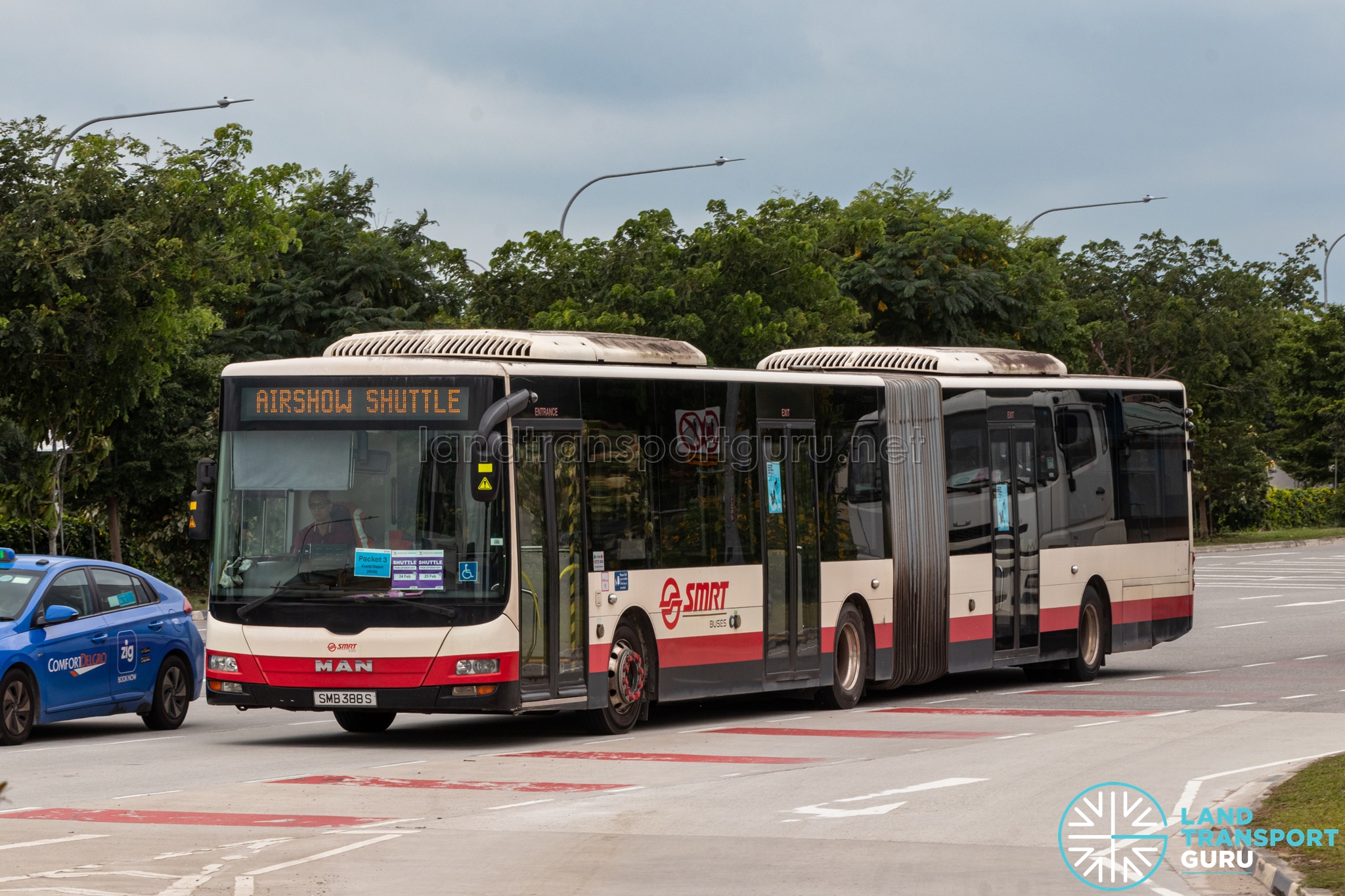
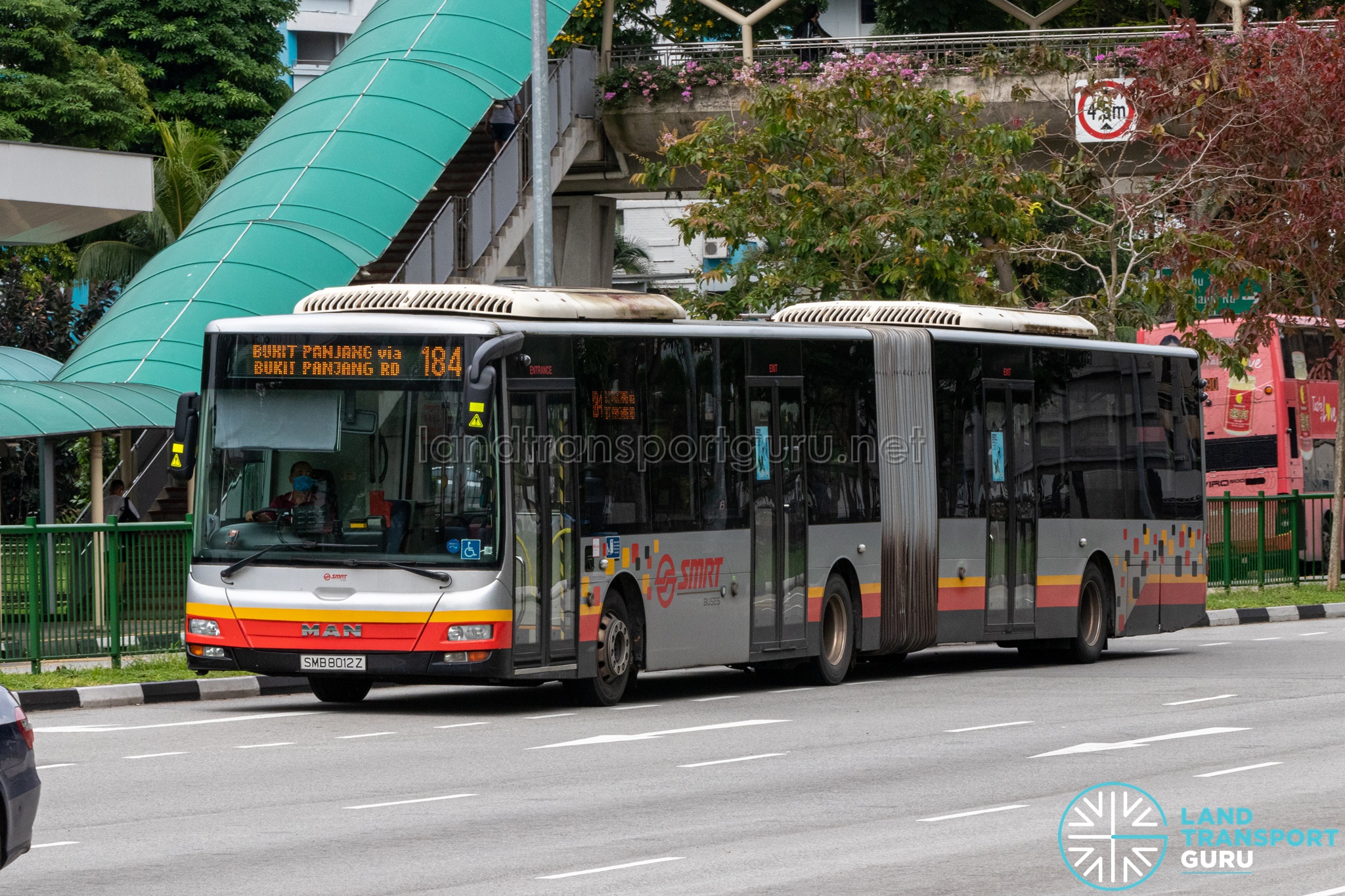
When SMRT Buses succeeded TIBS in 2004, it inherited the entire Mercedes-Benz O405G fleet. As these buses approached the end of their operational lifespan, SMRT introduced 40 MAN A24 articulated buses as direct replacements for the early O405G (Hispano MkI) models.
A demonstrator unit (SMB388S) entered service in 2013, followed by an additional 39 production units (SMB8001E – SMB8039Y) in 2015. These buses are low-floor and wheelchair-accessible, making them Singapore’s only low-floor articulated models.
Bus Contracting Model era
Under the Bus Contracting Model (BCM), buses are owned by the Land Transport Authority (LTA) and leased to public transport operators through competitive tenders.
- SBS Transit began operating MAN A24 buses under the Seletar Bus Package in March 2018, mainly on Yishun feeder routes.
- Tower Transit introduced MAN A24 buses in September 2021 under the Sembawang–Yishun Bus Package, primarily on Service 858.
- Several of these buses have since been repainted into the LTA’s Lush Green livery.
During this period, LTA did not procure additional articulated buses, opting instead for double-deck buses to replace the retiring O405G units.
Training requirements
Operating articulated buses requires additional driver training due to their longer length and articulation mechanism.
According to SMRT Buses, which operates 23 MAN A24 buses, it requires its drivers to complete a five-day training programme. This course covers vehicle handling and parking manoeuvres specific to articulated bus operation. [Link]
Advantages and Disadvantages
Articulated buses offer several operational advantages over double-deck buses. Their continuous low-floor design and multiple doors enable faster boarding and alighting, as well as easier passenger movement around the bus interior. These features make articulated buses ideal for routes with frequent stops or high passenger turnover, such as feeder bus services.
In addition, the absence of staircases eliminates the risk of passenger injuries related to climbing or descending stairs. Articulated buses can also access areas with height restrictions, such as Changi Airport‘s basement levels, which are inaccessible to double-deck buses.
However, articulated buses also present several disadvantages. At approximately 18 metres in length, they occupy more road space than the standard ~12-metre single- or double-deck bus. This requires that bus depots, interchanges, and bus stops be designed or modified to accommodate their larger size.
Drivers also need special training to operate these buses, which are more challenging to manoeuvre, thus restricting their deployment flexibility.
LTA Policy and Fleet Decisions
When the Land Transport Authority (LTA) assumed responsibility for bus procurement under the Bus Contracting Model (BCM), it opted to replace retiring articulated buses with double-deck buses. This policy decision resulted in a gradual reduction of articulated buses in Singapore’s public transport fleet, leaving only a small number of units originally procured by SMRT Buses.
According to LTA, both bus types can carry a similar number of passengers. However, articulated buses require more space on roads and at stops, making them less suitable for Singapore’s dense urban environment. Double-deck buses were also described as more cost-effective due to their simpler mechanical design and lower maintenance requirements.
Future Infrastructure and Provisions
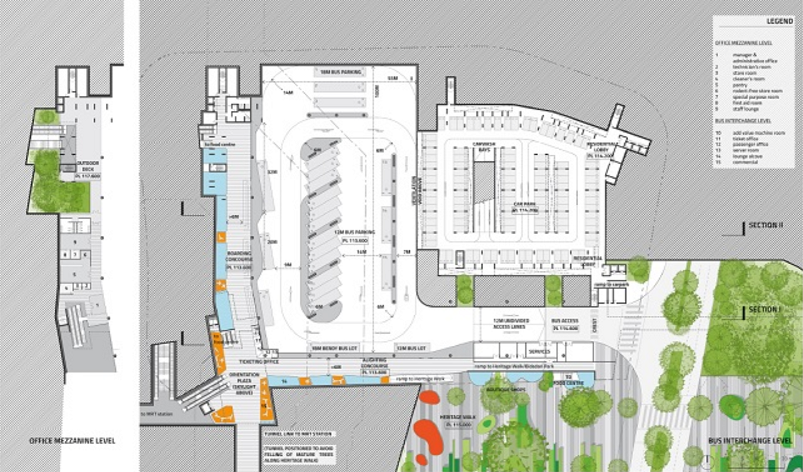
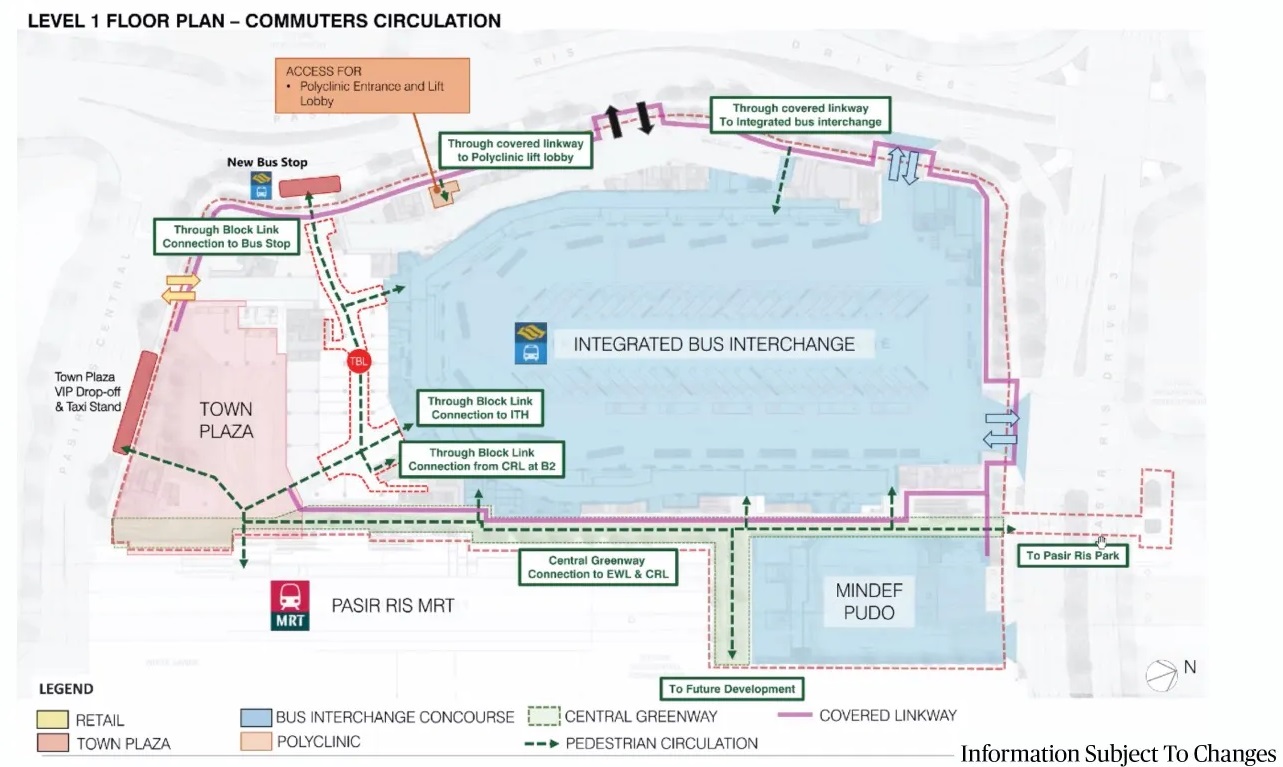
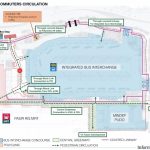
Although the current fleet of articulated buses remains small, recent and upcoming infrastructure developments have included provisions for such buses. Newly opened Integrated Transport Hubs (ITHs), such as those at Woodleigh and Pasir Ris, feature bus parking lots and boarding berths designed to accommodate 18-metre articulated buses.

In September 2025, the LTA announced plans for a new multi-storey bus depot in Ang Mo Kio, scheduled for completion in 2030. The facility is designed to house up to 50 articulated buses, indicating continued infrastructure readiness for potential future procurement of bendy buses.
In July 2026, LTA announced that it was assessing the feasibility of a Bus Rapid Transit system for Tuas South. Such systems also use articulated vehicles for their high capacity and quick boarding and alighting characteristics.
Live bendy Tracker
Bendy Buses are operating on the following services today:
See Also:
External Links & References:
- Riding into history: Singapore’s last bendy buses on the road – CNA [Accessed 1 Nov 2025]
Gali Batu should be limit to just 8 bendy that is for 301 302(3 units) 180 184 (4 units) with 1 as spare.
Woodlands remain 10 unless LTA decide to include 858 inside the package. 858(6 units), 900(1 unit), 903(1 unit), 911(2 units), 912(1 unit), 912A(1 unit), 912B(1 unit), 913(2 units) with 1 spare.
Sembawang-Yishun remain 10 with 801(1 unit), 804(2 units), 806(2 units), 807(2 units), 811(2 units) and 1 for spare.. 3 doors DD can supplement 807, 811 and 812.
6 units can give to SBST especially Sengkang-Hougang for 27(5 units) and 1 spare thus can reduce 2 buses.
For articulate buses I hope LTA just buy MAN NLC18E, Yutong U18 and Mercedes-Benz Citaro G…. Enough of BYD please..
For now 27 and 34 need a few bendy buses
BYD 30 units
Mercedes-Benz 30 units
MAN 40 units
All spread across 4 operators for supplements
Isn’t it only the BYD B18, Yutong U18 & MAN NLC 18E? Didn’t hear anything about Mercedes Benz bendy procurement
Just suggesting