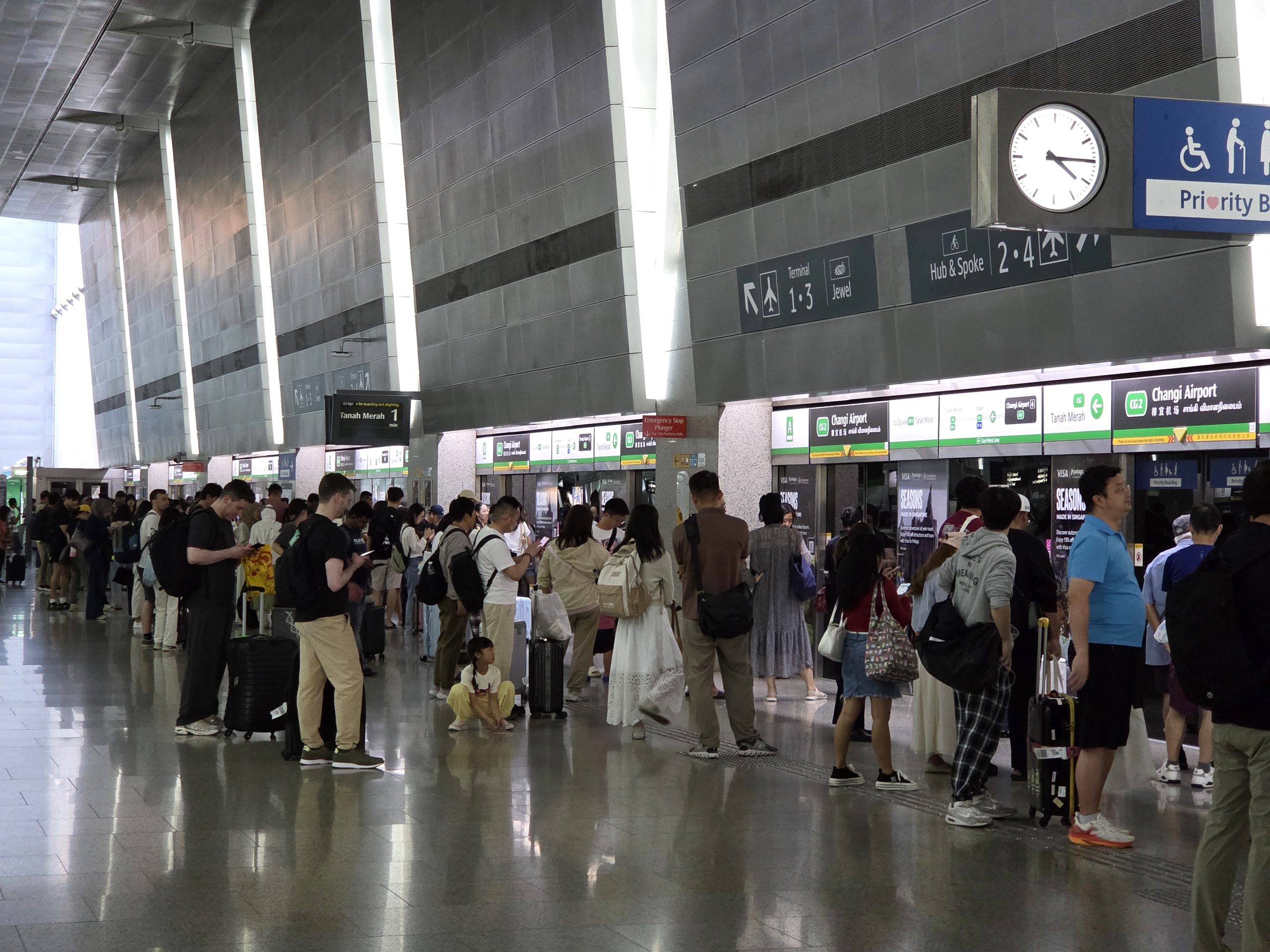
Tanah Merah was expanded with a new track to improve connectivity to Changi Airport — announced in 2014, expected by 2024. But in 2019, the Airport branch was hijacked by a TEL takeover plan, pushing improvements to the 2030s at earliest. The conversion promises direct city-to-airport train service, but hides costly station reconstruction, prolonged outright closures, and other complexities that have received little scrutiny. Did the answers need to be this complicated — and without transparency, how would we ever know?
This is a guest article by @transporttakes.you
Main points / TL;DR
- In 2014, LTA announced that Tanah Merah station would expand from 3 to 4 tracks, to support more frequent trains on the Airport branch from 2024.
- But when the expansion works finally finished in 2025, one track was immediately mothballed.
- The plan was actually shifted in 2019 — TEL would eventually absorb the Airport branch.
- Higher Airport branch frequencies may not materialise until TEL takes over in the 2030s.
- TEL conversion may take longer than expected, as Changi Airport station needs to be substantially fit to 5-door/car TEL trains.
- It’s also not clear how the 2-platform TEL layout at Tanah Merah will make transfers convenient.
- Is it worth converting the Airport branch to TEL, or did we delay a simpler improvement — more frequent Changi Airport trains — and worsen things in the short term, for a complex, expensive project whose trade-offs remain unclear?
- How can we find out the answers?
A dream deferred
In 2014, LTA promised¹ more frequent trains on the Airport branch (the shuttle between Tanah Merah and Changi Airport) from 2024, with the construction of a fourth track and new platforms² at Tanah Merah station. Previously, with only one track at Tanah Merah, the Airport branch could only run 7-minute peak and 12-minute offpeak frequencies, as trains entering must wait for the previous train to depart.
With two tracks for the airport branch, Airport trains could run more frequently. The work started in 2016, and finished in 2025. But Tanah Merah still uses only three tracks despite having four. And Airport branch frequencies have not improved at all.
- ¹ Wayback Machine
- ² There are various definitions of a platform. Tanah Merah’s final state has three separate areas to wait for trains, but six distinct sets of doors where passengers can board from which are named A through F. This article will mainly refer to tracks, to avoid confusion.
The state of Tanah Merah since 2025
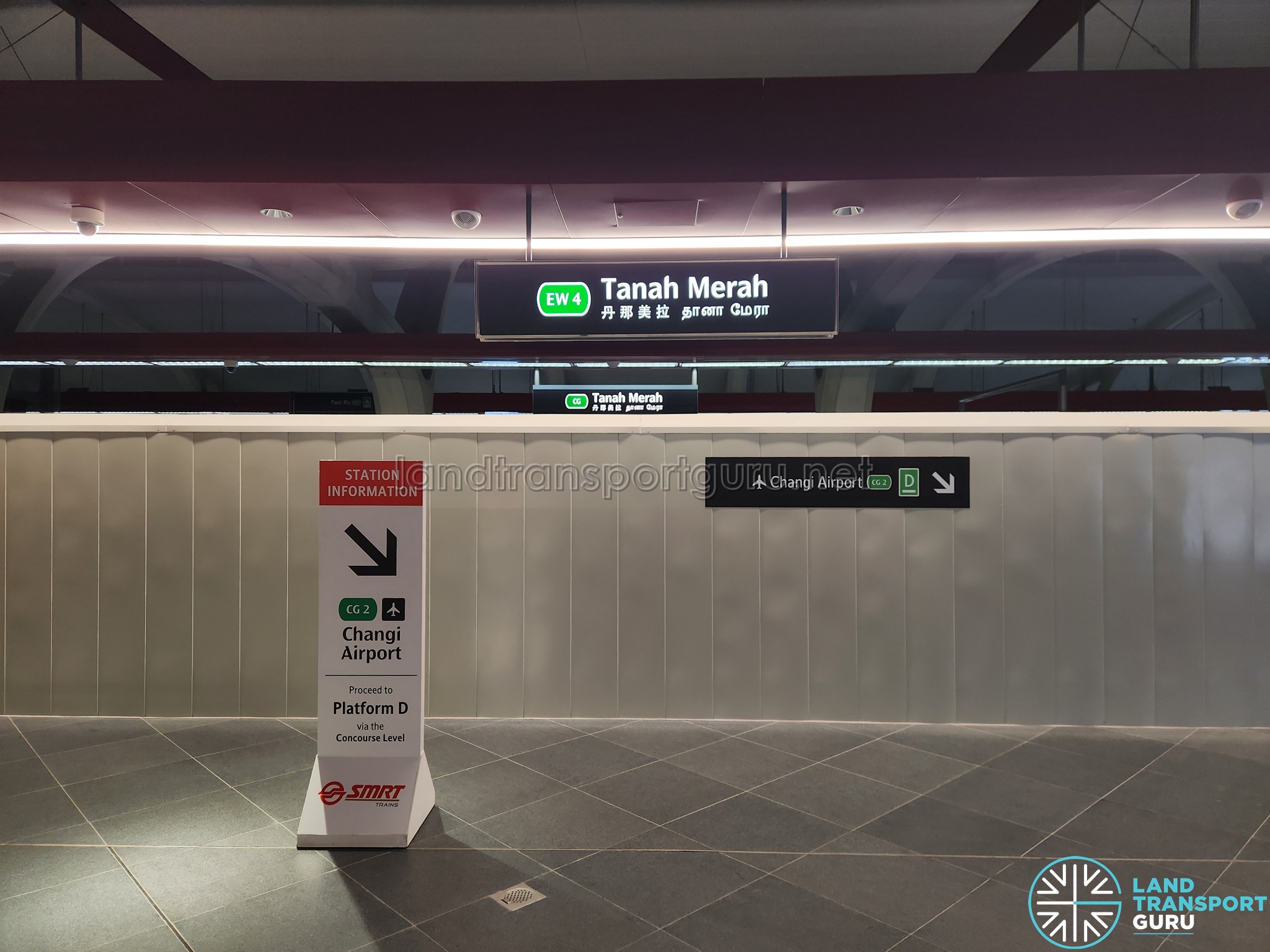
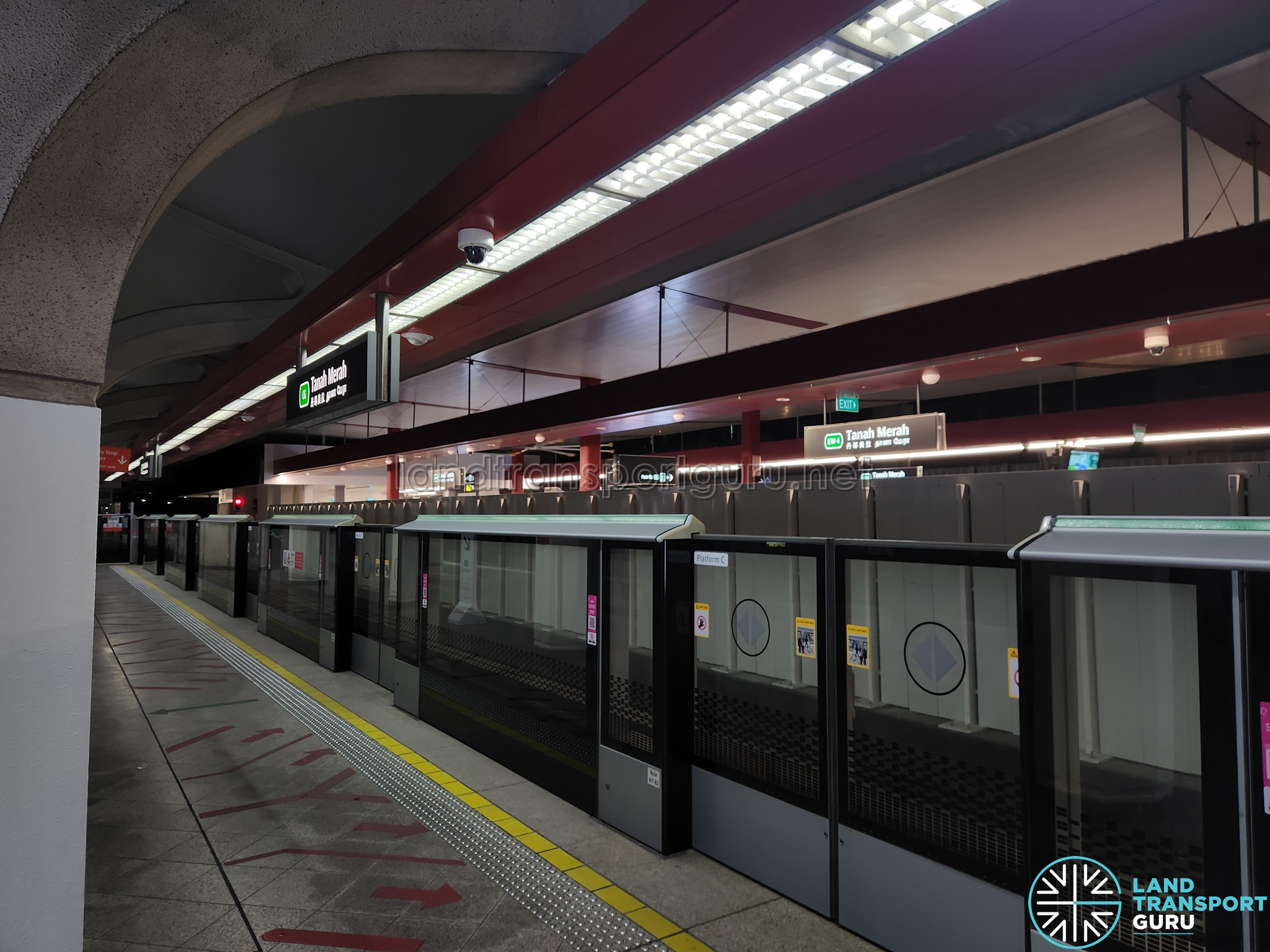
The latest track at Tanah Merah became the new eastbound EWL track. But the former eastbound track did not become a second Airport branch track as planned — it was instead boarded up and disused.
The new layout is worse — previously, EWL passengers to or from either direction could enjoy a cross-platform transfer to the Airport branch. Now, those transferring to or from eastbound trains (towards Pasir Ris) must go down and up. And 7-12 minute frequency remains.
So what’s the second Airport track waiting for?
The TEL Takeover
In 2019 (3 years after work started at Tanah Merah), the Land Transport Masterplan 2040 was released. In it, the stretch from Tanah Merah to Changi Airport would be absorbed into the Thomson-East Coast Line as TELe, allowing direct airport MRT access from the city.
This sounds good, but conversion from one line to another is not simple. Signalling, communications and other equipment must be replaced, likely involving partial or full closures of the Airport branch.
With conversion work starting in 2025 after (not before) the completion of the new Tanah Merah track, it looks like the two-platform benefit of more frequent trains from Tanah Merah to Changi Airport might only be felt when full TEL conversion completes in the 2030s — much later than the 2024 that was promised to us.
Unaddressed issue 1: Changi Airport
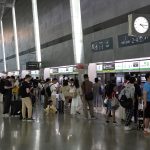
There’s one big problem with converting Changi Airport station (Terminal 1–3) in particular. EWL trains have four doors per car, while TEL trains have five doors per car.
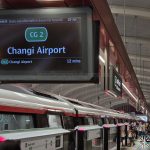
Take a look at Changi Airport’s platform screen doors and pillars. Do you see the issue? Did LTA?
The station will likely need major reconstruction to accommodate the doors of TEL trains². It’s not clear if there can even be any train service at Changi Airport during the rebuild. This raises the question of whether conversion is worth the costs of rebuilding the station and prolonged service reduction or suspension.
¹ In case you can’t see it, the pillars are placed to go between the train doors. So if TEL trains run through these platforms, some of the doors will be obstructed by walls.
² The alternative to rebuilding is to not open the obstructed doors — which would need longer dwell time and cause confusion and disruption to passengers with luggage catching a flight.
Unaddressed issue 2: Tanah Merah
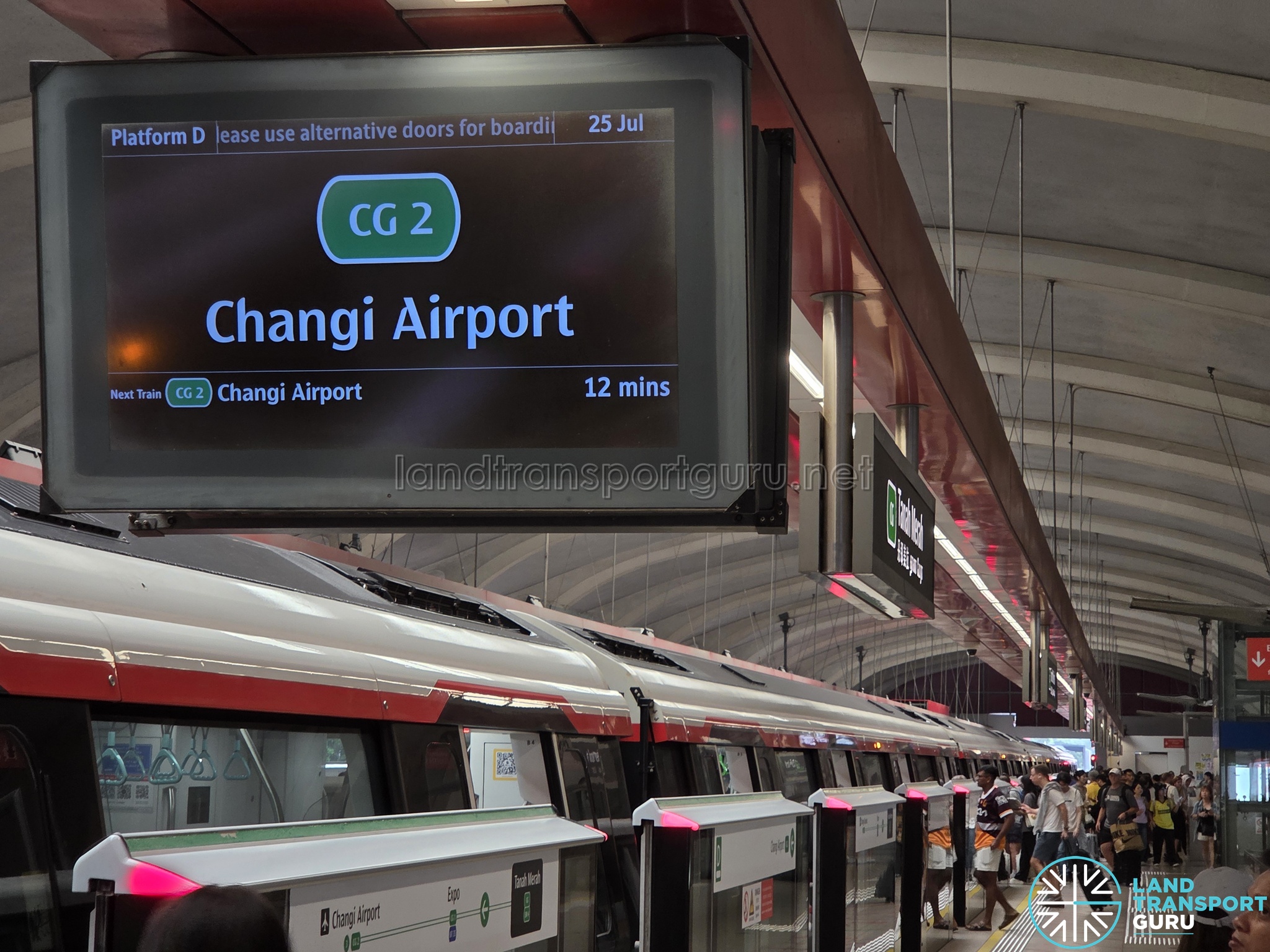
Another question lies in the layout of Tanah Merah itself. With both middle tracks designated just as “Airport” (CA), how will cross-platform transfer with EWL work?
If one Airport track is fixed for boarding and the other for alighting, some passengers will still need to go down and up again, but you’ll know if you’re one of them — everyone can know with certainty which transfers are doable cross-platform and which are not.
But if Airport trains can depart from either track, that certainty disappears. Passengers cannot rely on cross-platform interchange patterns any more. Many will default to the middle island — so anyone from either direction of the EWL not wanting to risk missing the Airport train will change floors twice.
The problem is we won’t know what’s the case until all the tracks open — and it looks like that’ll only happen after they’ve sorted out Changi Airport station.
Unaddressed issue 3: Conversion worth it?
Even after conversion, direct “city centre” access is limited. TEL makes a huge detour before Sungei Bedok, and there’s no interchange until Marina Bay. Most passengers from T1–3, whether residents or visitors, would probably avoid the detour past T5. The EWL and DTL reach more residences of local travellers or airport staff, and get tourists to hotels in Bencoolen, Lavender, Bugis or City Hall faster. Either way, transfers at Tanah Merah or Expo beat long Marina Bay/Outram Park walks.
Granted, the TEL can get tourists directly to Gardens by the Bay, but how many tourists are going there straight from the airport?
Furthermore, replacing EWL trains with TEL trains could reduce capacity from 6- to 4-car trains, potentially negating the benefit of higher frequencies. 4-car TEL trains may be overwhelmed by the crowds seen today.
What could have been done?
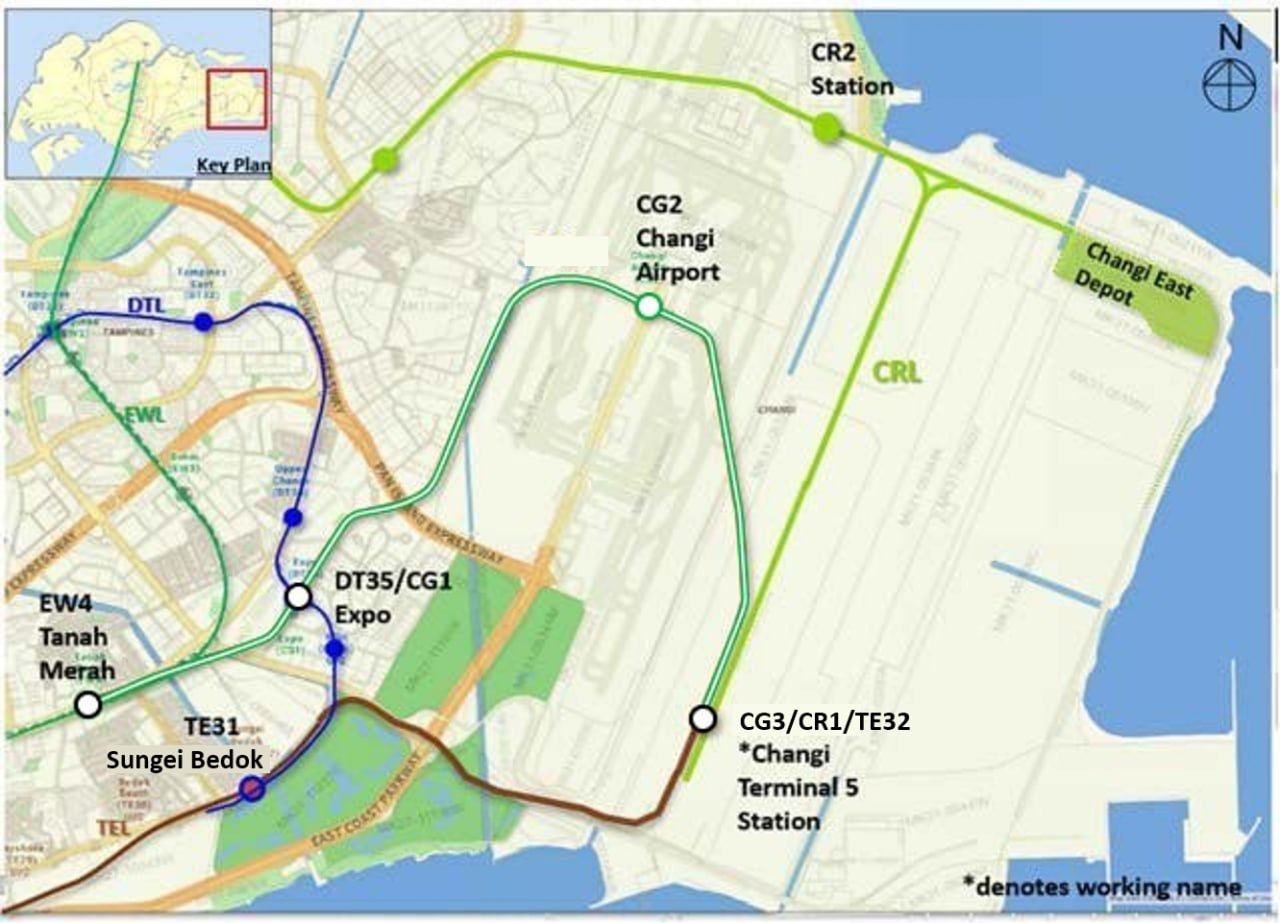
What if the Airport branch remained a short shuttle, but simply extended to Terminal 5 to meet the TEL there?
Terminal 5 and the upcoming Changi East Urban District are undeveloped fresh land, expected to be destinations in themselves for residents and tourists. The T5 Station could have been a 3-way interchange between an extended EWL Airport branch, CRL and TEL, designed with cross-platform transfers for maximum convenience of passengers passing through it in most directions.
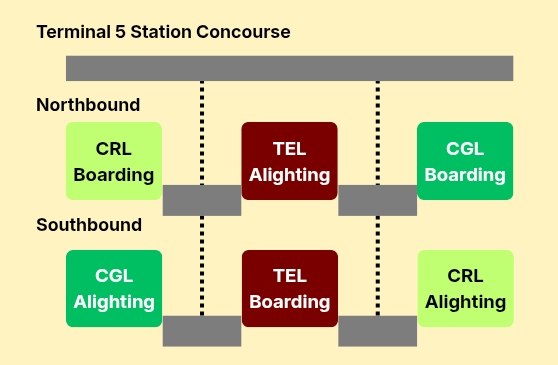
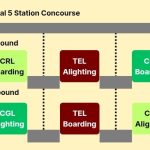
We wouldn’t need to rebuild Changi Airport (T1–3) station, or resignal the whole Airport branch. And with the Airport line remaining a short shuttle, when either TEL or EWL get disrupted, it can still bring passengers to the unaffected line or to the DTL. But without clear information, we don’t know why this wasn’t chosen.
What do we do now?
Realistically, it’s not clear if we can stop the TEL conversion of the Airport branch. The contracts have been awarded and work has started.
But we as passengers deserve the right to know. To know how Changi Airport’s pillar problem will be solved, and if it can be done without prolonged periods of zero Airport train service. To know whether predictable cross-platform interchange will be possible at Tanah Merah, making things easier for those rushing with luggage. And to know why this conversion was picked over alternatives that could yield more benefit sooner.
And we deserve the right to feedback. Maybe some of us have better solutions than what the LTA was going with. Maybe we can inform which of LTA’s assumptions about the project benefits may not hold, and which do.
But we cannot feedback without knowing. That’s why we need a Freedom of Information Act (FOIA) — legislation giving us the right to request information from the government. This isn’t just about accountability and fault-finding — it’s giving us the foundation we need to contribute to a civic discourse as stakeholders.
In conclusion
There are many, many unanswered questions about the decision to convert the Changi Airport branch line to part of the Thomson-East Coast Line.
It’s not clear if the benefits of the conversion outweigh the costs. The benefits appear sketchy, while the costs appear huge.
One cost we already see is the postponement of frequent train services to Changi Airport, from 2024/2025 to an unspecified 2030s date.
Other potential costs include prolonged closures of Changi Airport (T1–3) station, rebuilding of the station pillars, and missed opportunities to optimise cross-platform transfers at Tanah Merah.
But without better information from LTA, we still don’t know why this call was made.
We, as stakeholders, deserve better information on how these decisions are being made, such as through a Freedom of Information Act.
This is a guest article by @transporttakes.you
We should put it as long term plan, tanah merah (airport branch) will be 24 years old. Yes with the converting will be inconvenience especially with upcoming T5. But thinking as long term planning we should change with updated signal and modern platform screen door of course TEL train is already equip with better space for luggage etc. Once RTS is opened we expected more people will using TEL and with the TELe it will be convenience for everyone. As we know some “people” just lazy to change line and instead prefer a straight line although it will take extra 15 – 20 mins. So i believe the LTA know what they doing as we like to complain but when new line completed or need some changes we will praised. So trust the process and end of the day we will benefit it.
what if the TEL simply extended to end at Changi Airport and interchange with the EWL there. Cuz likely more passengers will use T1-4 than T5, so Changi Airport can be the TEL terminus
Someone pointed out that the platform pillars at Changi Airport MRT station are structural, which means they can’t simply be moved or removed.
That got me thinking, so I looked into it a bit more. An East West Line (EWL) train is about 138 metres long, whereas a Thomson-East Coast Line (TEL) train is only 93 metres long. Since the TEL trains are much shorter, they could simply stop at a different point along the platform so that the train doors line up between the structural pillars. The platform screen doors could then be moved to match the new stopping position.
If that’s the case, there’d be no need to alter the structural pillars at all, which would make the conversion a lot simpler. The main work would just be replacing the signalling system and repositioning the platform screen doors at both Expo and Changi Airport stations.
So, thanks to the person who pointed out that the pillars are structural. It actually helped me think of another possible solution. As the platforms were originally built for the much longer EWL trains, there should be more than enough spare platform length to accommodate the shorter TEL trains stopping further along the platform.
It’s also worth mentioning that, apart from the difference in length, the EWL and TEL trains are the same width and height. So there shouldn’t be any major clearance issues either.
Overall, the modification work doesn’t actually seem that complicated. As I’ve mentioned before, merging the two lines into a single continuous line would also reduce the amount of land needed for railway infrastructure, which is a big advantage for a land-scarce country like Singapore.
The problem is that the door spacing is different, so even if you stop the train differently, the problem of some doors being blocked will not go away. Also if you adjust the stopping position, you might get more train doors not facing the pillar, but don’t forget platform screen doors also need somewhere to open towards (e.g. if the door is just right next to the pillar, the doorway is not blocked but the platform screen door has nowhere to slide into).
I think the airport shuttle line is perfectly fine. why fix a active line when it is not broken? the terminal 1 to 3 can access the shuttle line to ewl and to city area. I think the tel extension to changi Airport should be in terminal 4 instead of the airport shuttle line due to limited access to city area and the rest of the terminals which I can suggest of extending the changi airport lrt line from terminal 2 to terminal 4 and the tel extension. plus the tel goes to terminal 5 station will be much easier and cost savings.
Ur suggestion of getting the actual terminus point for all 3 lines at terminal 5 is quite valid.
But end day, I am pretty sure LTA already made feasible studies, research and analysis before proceeding to make such decisions on conversion.
As for the pillar part, well as long as it isnt a load bearing structural pillar, its fine.
The problem with CGA’s pillars is that *IT IS STRUCTURAL*. I have no clue how LTA’s top “engineers” are going to figure that part out
if they made such studies of alternatives, why not show them? that would eliminate a lot of the debate and confusion about what tradeoffs we’re being asked to accept, which on the face of it look expensive and inefficient.
this is our money as taxpayers. don’t we deserve to have some quality rather than this blind “trust us” mentality?
Merging into one single line means that can save one island platform space and the overrun track space.
It can be easily explained that this option is the lowest cost, therefore accountable to tax payers money.
Whoa I have an impersonator. hmmm
regardless, I disagree with “myself”, the modification works is just as costly as turning CG2 into an interchange. imo the two lines don’t even have to connect, it’s not unheard of for people to have to transfer terminals in other airport to access the train shuttles, I mean even T1 and T4 do that now.