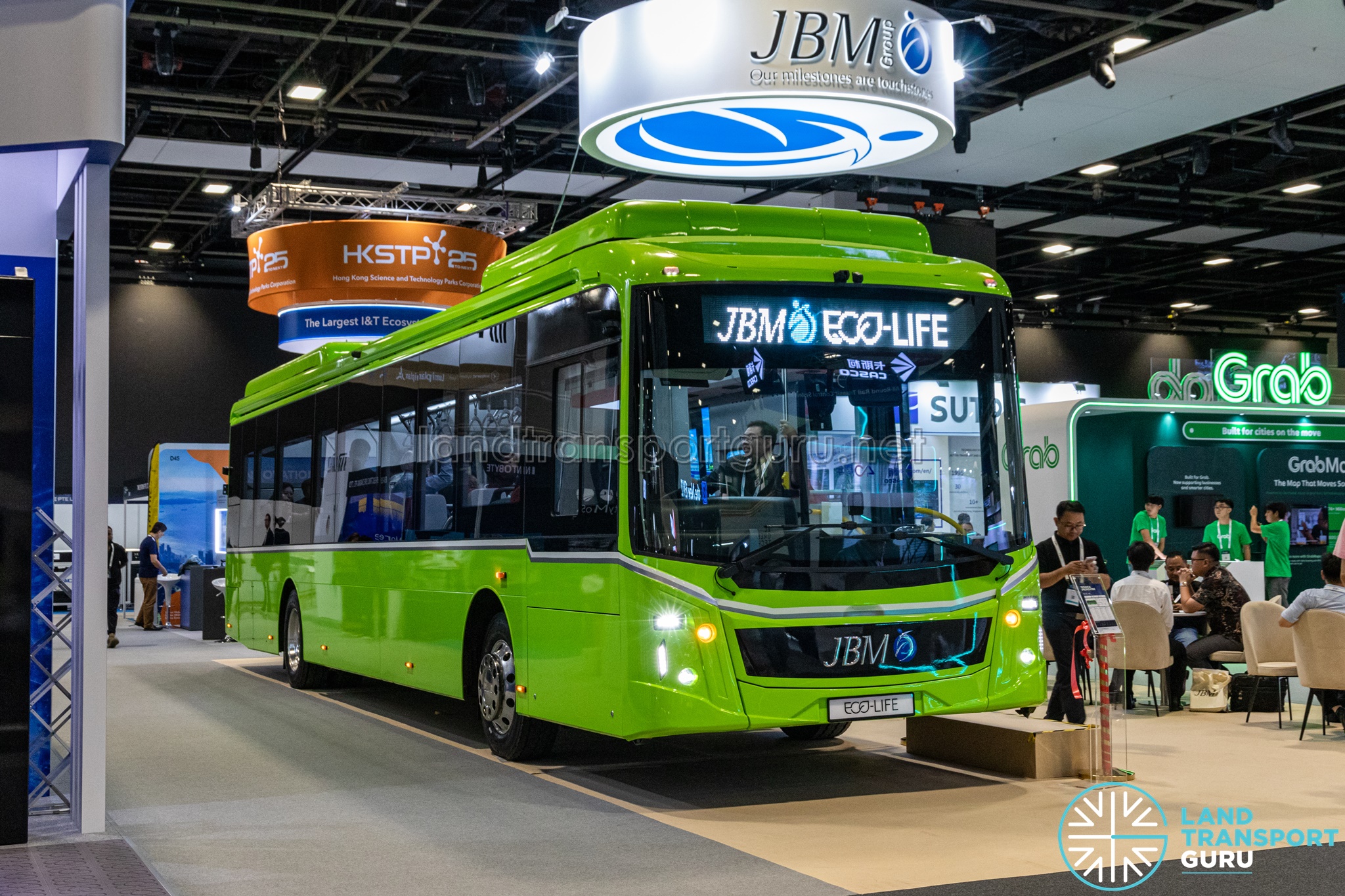
The JBM ECOLIFE e12 is a low-floor, electric single-deck bus built by Indian bus manufacturer JBM Electric Vehicles, part of the Indian conglomerate JBM Group.
The bus made its Singapore debut on 4 November 2026, at the Singapore Urban Mobility Week (SUMW) 2026 trade show. The bus exhibited at the event featured bodywork by Malaysian bus bodybuilder Gemilang Coachwork (GML).
Platform
The JBM ECOLIFE electric bus was introduced to the European market at the UITP Summit in Hamburg, Germany, in June 2025. A subsequent iteration of this left-hand-drive design, marketed as the JBM ECOLIFE e12, was exhibited at Busworld Europe in Brussels, Belgium, in October 2025.
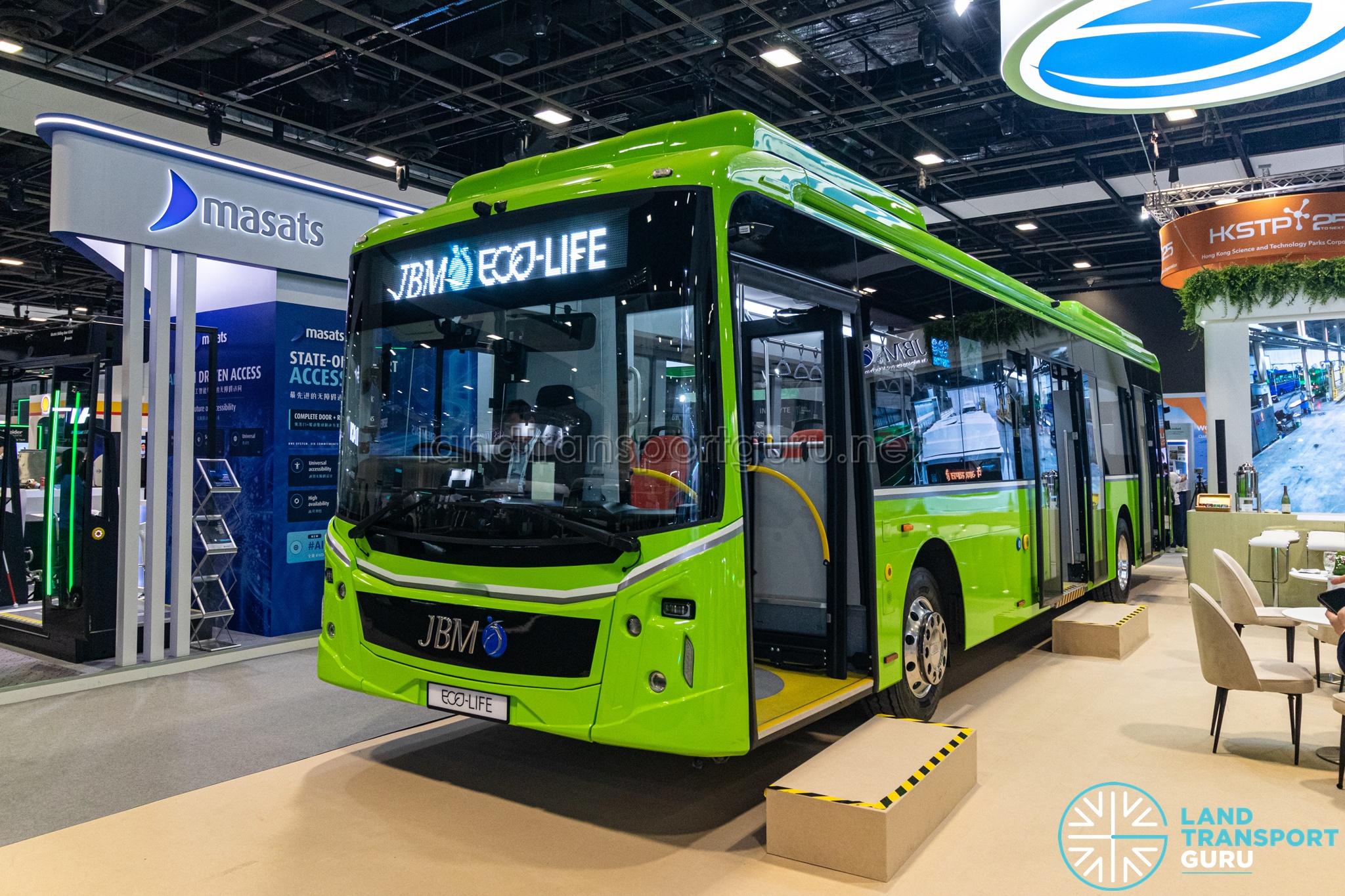
A right-hand-drive version of the bus was launched on 4 November 2026 at the Singapore Urban Mobility Week (SUMW) 2026, held at Suntec Singapore Convention & Exhibition Centre. Built to Singapore’s requirements, it features a three-door layout along with a suite of driver assistance features.
JBM Electric Vehicles International Pte Ltd is the first Indian manufacturer to launch an electric bus in Singapore, and alongside the ECOLIFE e12’s launch, it also established its Asia-Pacific regional headquarters in Singapore. The company previously participated in the Land Transport Authority’s (LTA) Contract PT602 tender for 660 electric buses in 2025. The company was not shortlisted for the tender, with the six contracts subsequently awarded to other suppliers in December 2025.
Specifications (SUMW 2026 exhibition bus)
| JBM ECOLIFE e12 – SUMW 2026 Specifications |
|
| Dimensions | 11.99m (L) x 2.55m (W) x 3.209m (H) |
| Weights | Kerb Weight: 14,000 kg Gross Vehicle Weight: 19,000 kg |
| Tyres | 270/70 R22.5 |
| Drivetrain | Dana TM4 SUMO MD HV2200-6P Continuous Power: 189 kW Peak Power: 250 kW |
| Battery | “Gen III High Voltage Batteries” (Capacity 525 kWh) Range 320 km |
| Bodywork | Gemilang Coachworks Aluminum Structure |
| Air-Con | Eberspächer Eberspächer E-Control aircon controller |
| EDS | LECIP Electronic Display Sign (EDS) Full-colour LED Matrix |
| PIDS | LECIP Passenger Information Display System (PIDS) Interior-facing LCD screen and exterior-facing LCD screen + LED Full Colour Text Display |
| Doors | Masats • Front 2-leaf inward gliding door (1200 mm) • Middle 2-leaf plug sliding door (1200 mm) • Rear 2-leaf plug sliding door (900 mm) |
| Passenger Capacity | 28 Seated + 54 Standing = 82 Passengers Not including 2 foldable seats, 2 wheelchair bays |
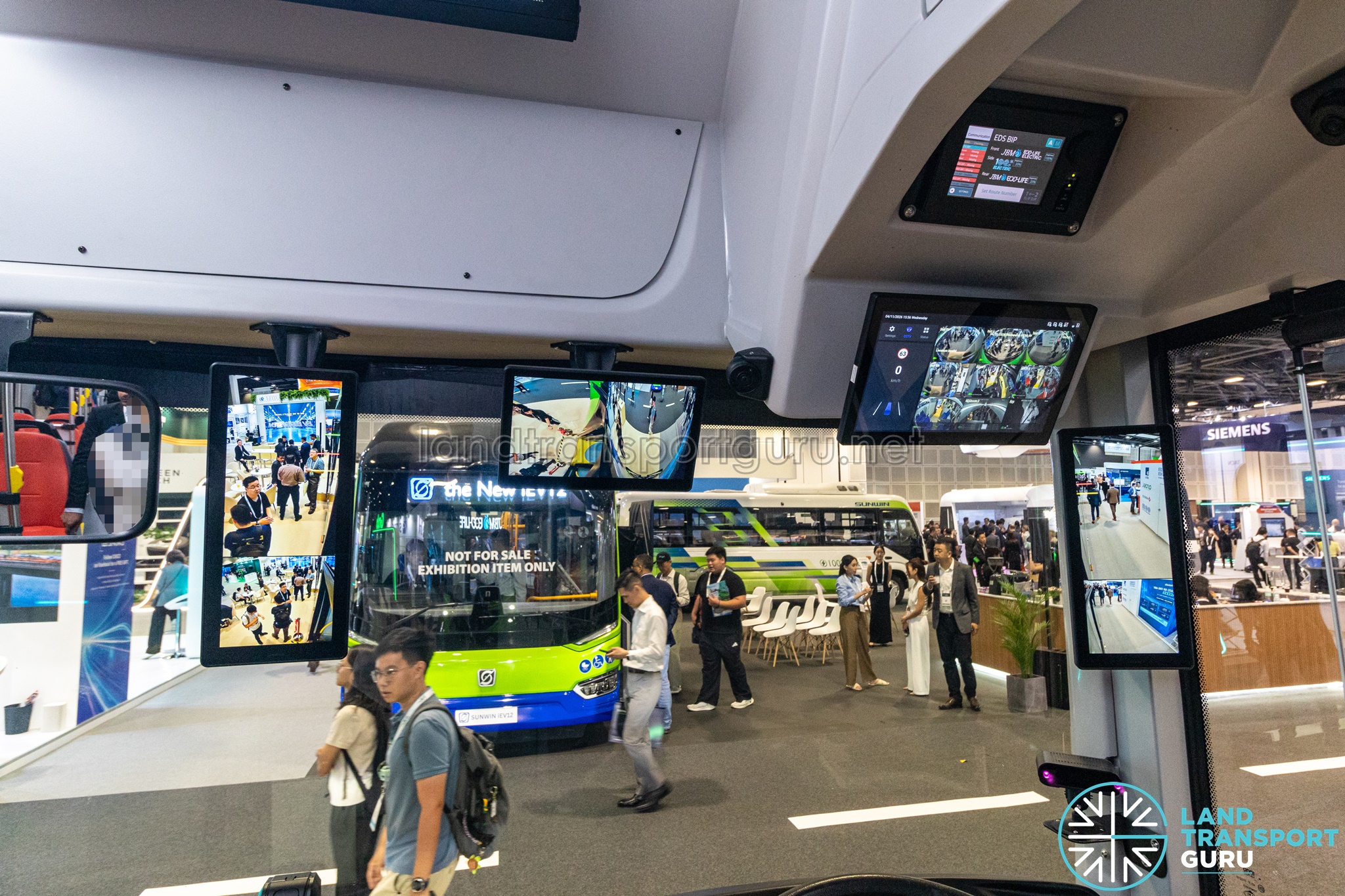
| Driver Assistance | TNT Surveillance – Integrated Display Screen – T-CMS831 Camera mirror system – Forward collision warning system & lane departure warning (T-FA Front Alert Camera) – Side collision warning system (T-SA Side Alert Cameras) – Anti-Fatigue system (T-DA Driver Alert Camera) – Surround view camera system (T-A.I. 360°) |
| Other Specifications | • Vogel Industrie Century Seats • Xinder EWR-TD03 2-in-1 Wheelchair Ramp • 2x DC CCS2 Charging Ports; Rated 300A |
Model Overview & Exterior
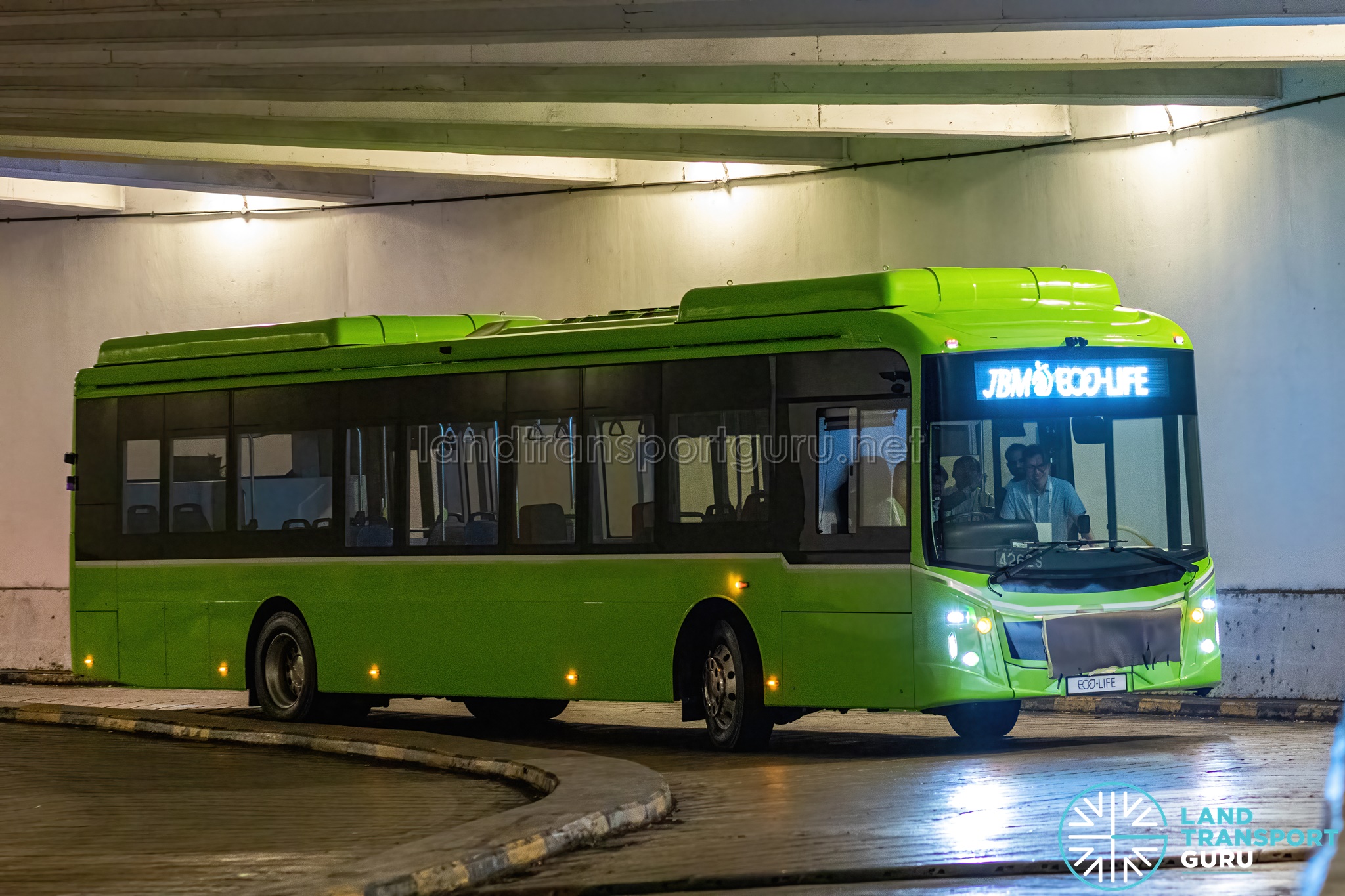
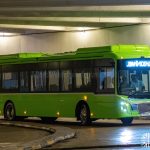
The bodywork design of the JBM ECOLIFE e12 shares similarities with the three-door CRRC C12 electric bus (SG4006X), which also features bodywork by Gemilang Coachwork (GML), particularly in the styling of its front and rear body panels.
Much of the roof space is occupied by battery packs and the air-conditioning unit, giving the bus a relatively extensive rooftop equipment arrangement.
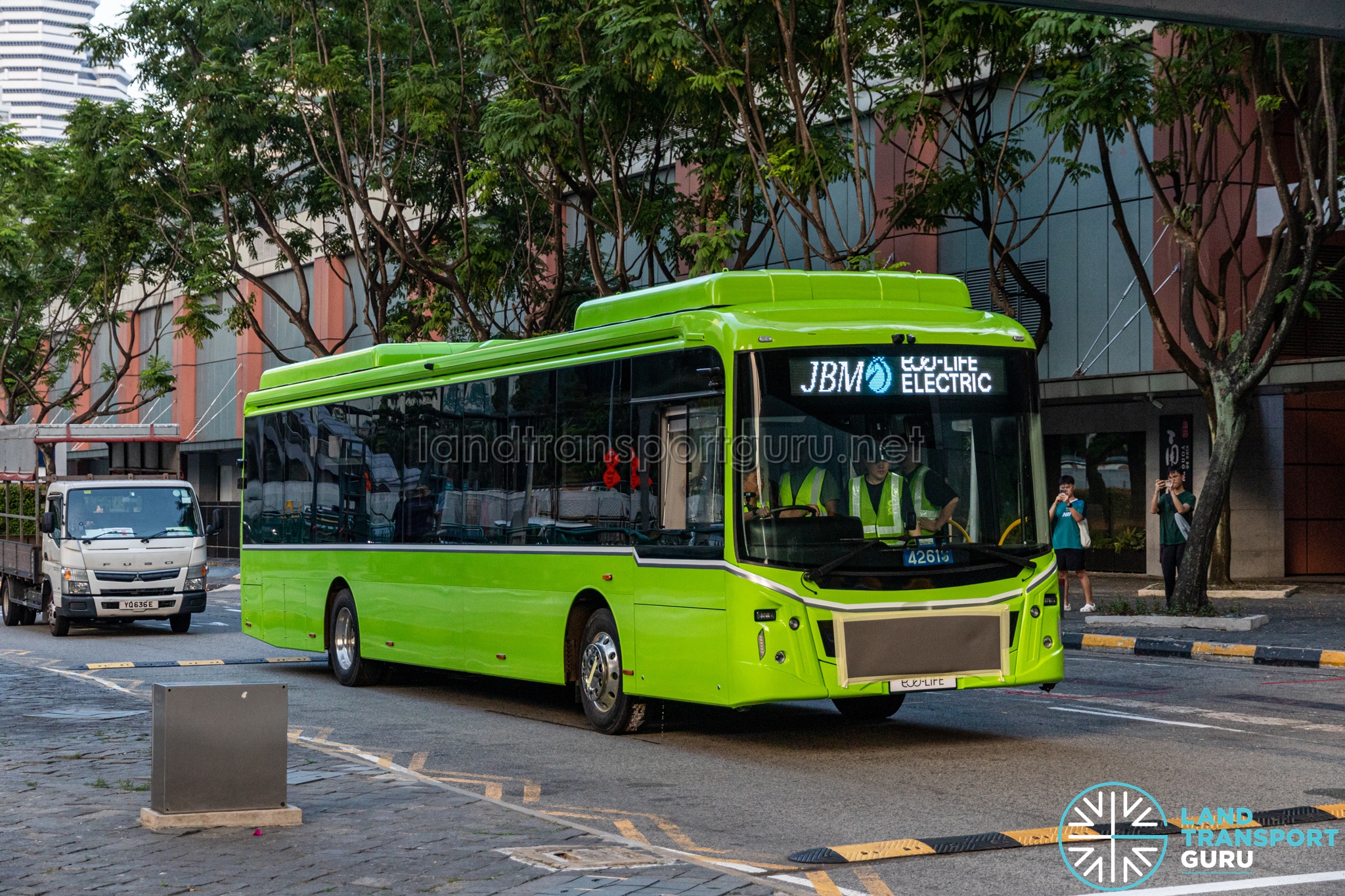
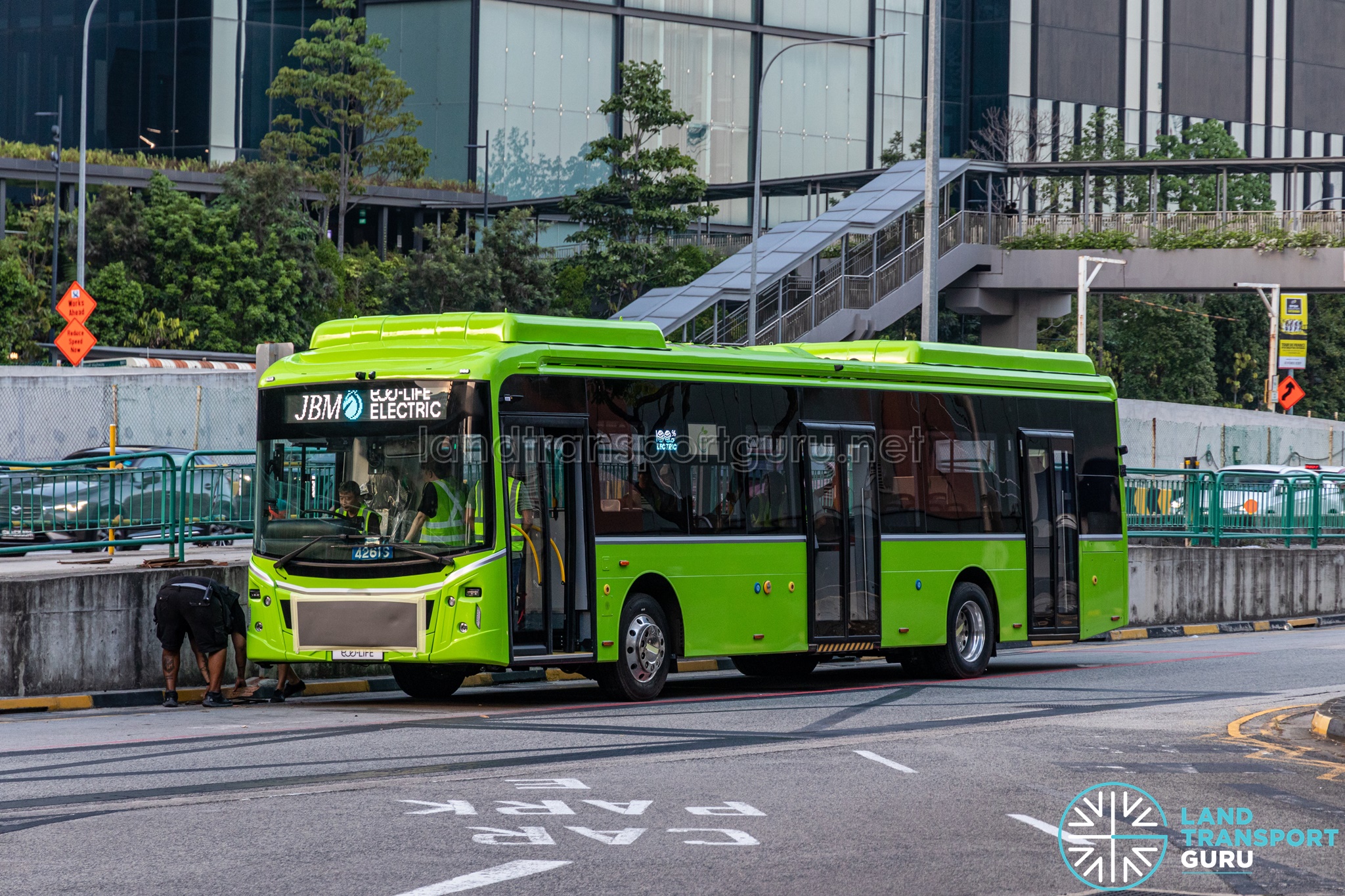
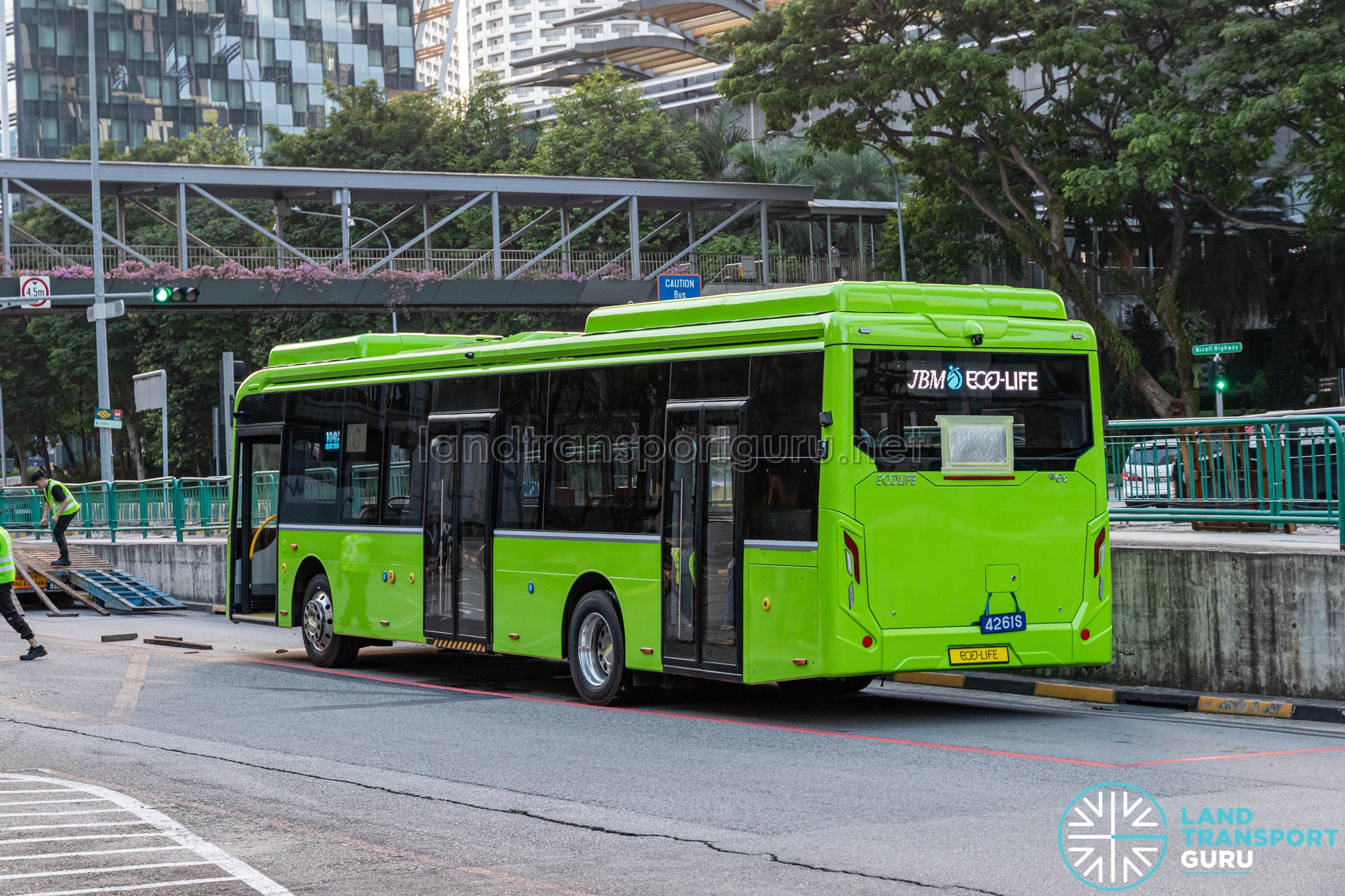
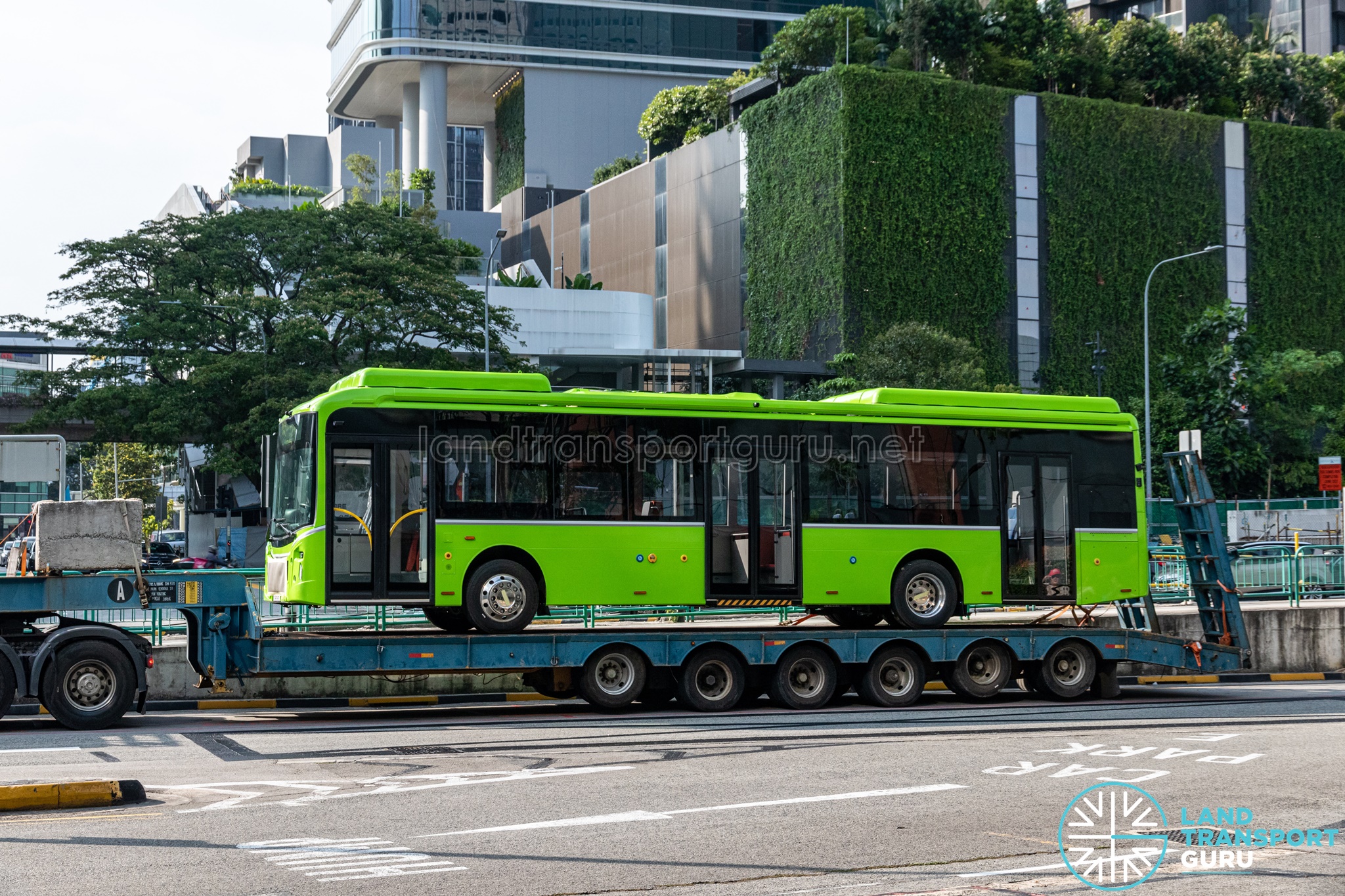
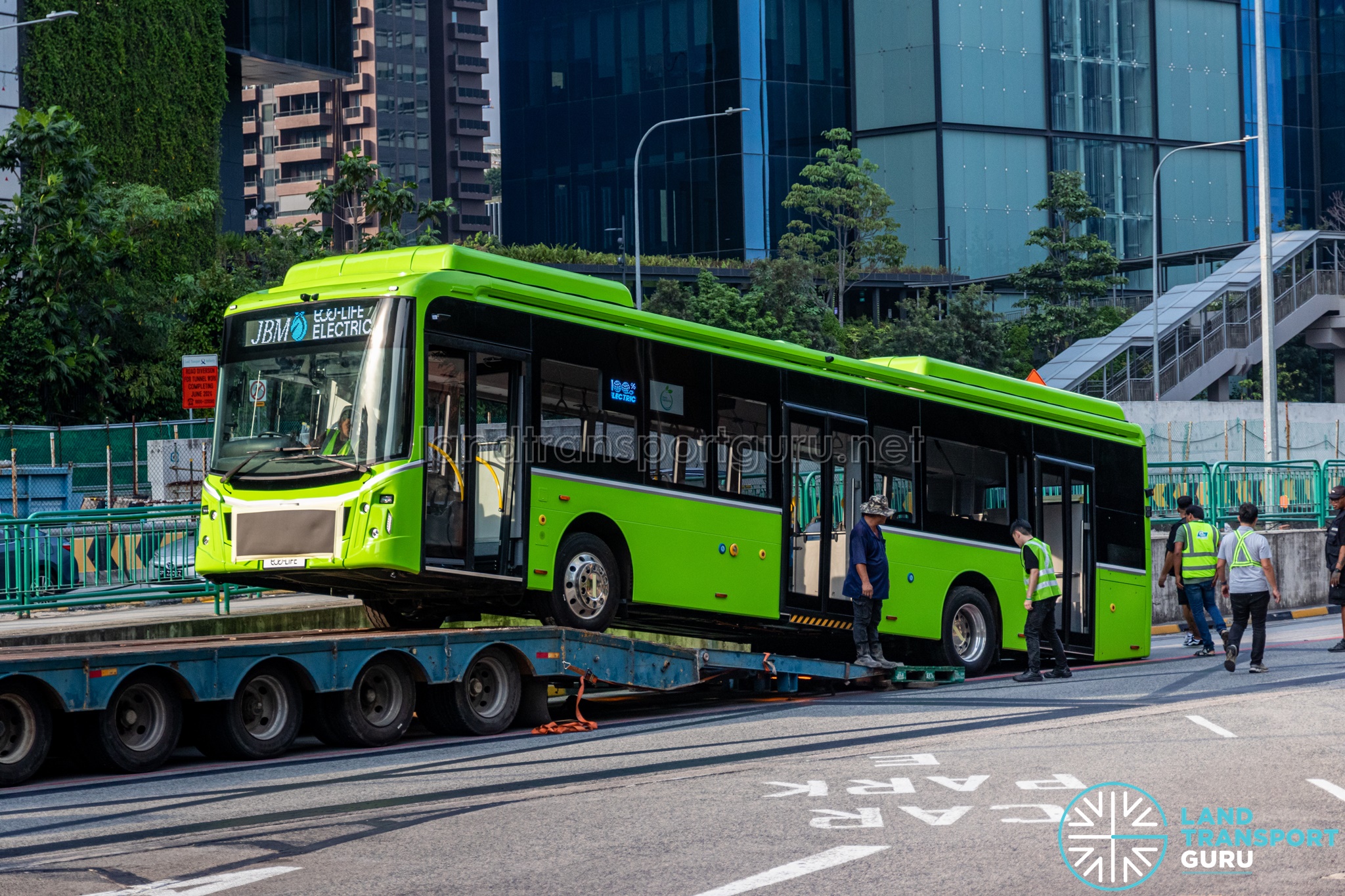
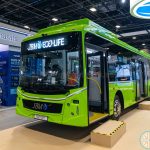
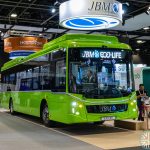
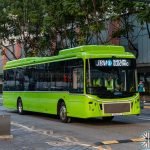
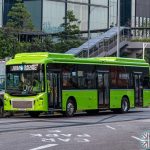
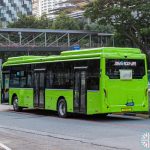
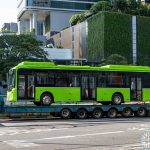
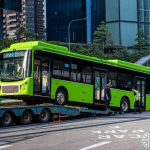
Finally, these buses also use camera mirror systems as standard, hence the absence of the usual wing mirrors.
Interior
The JBM ECOLIFE e12 features a full-low-floor interior with three passenger doors, including a rearmost door positioned behind the rear axle. This layout facilitates passenger movement throughout the bus, with step-free access along the main passenger aisle.
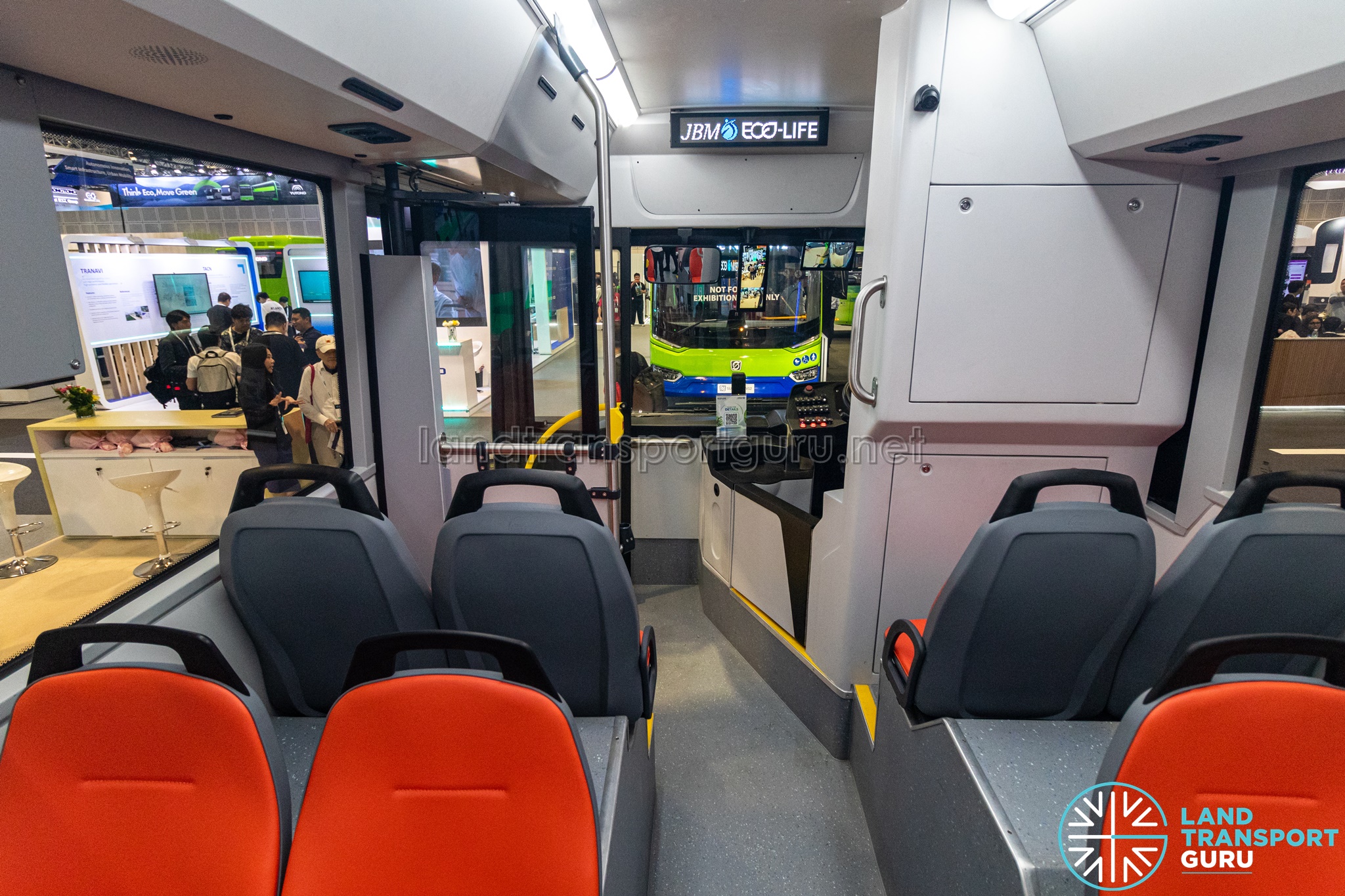
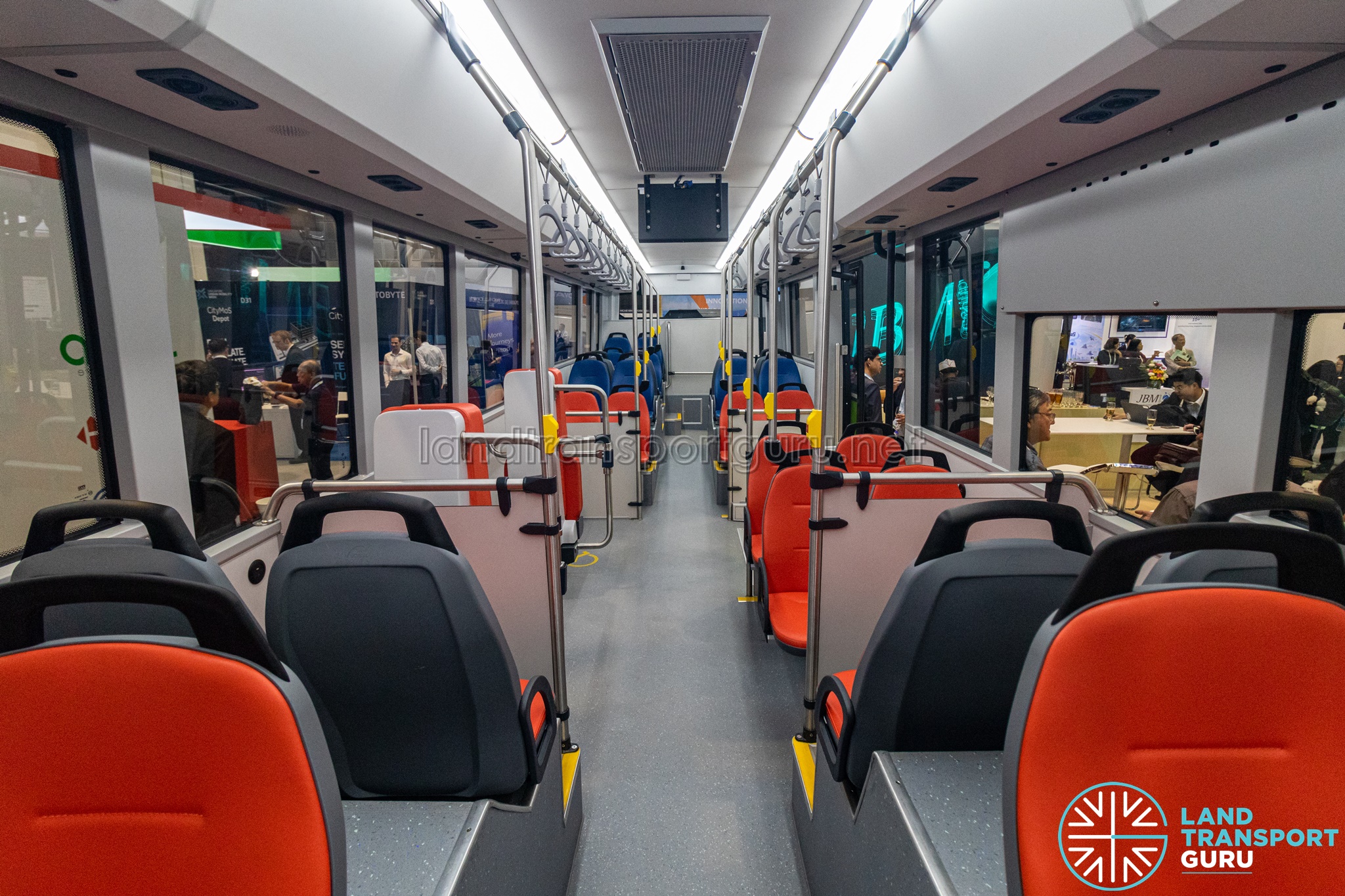
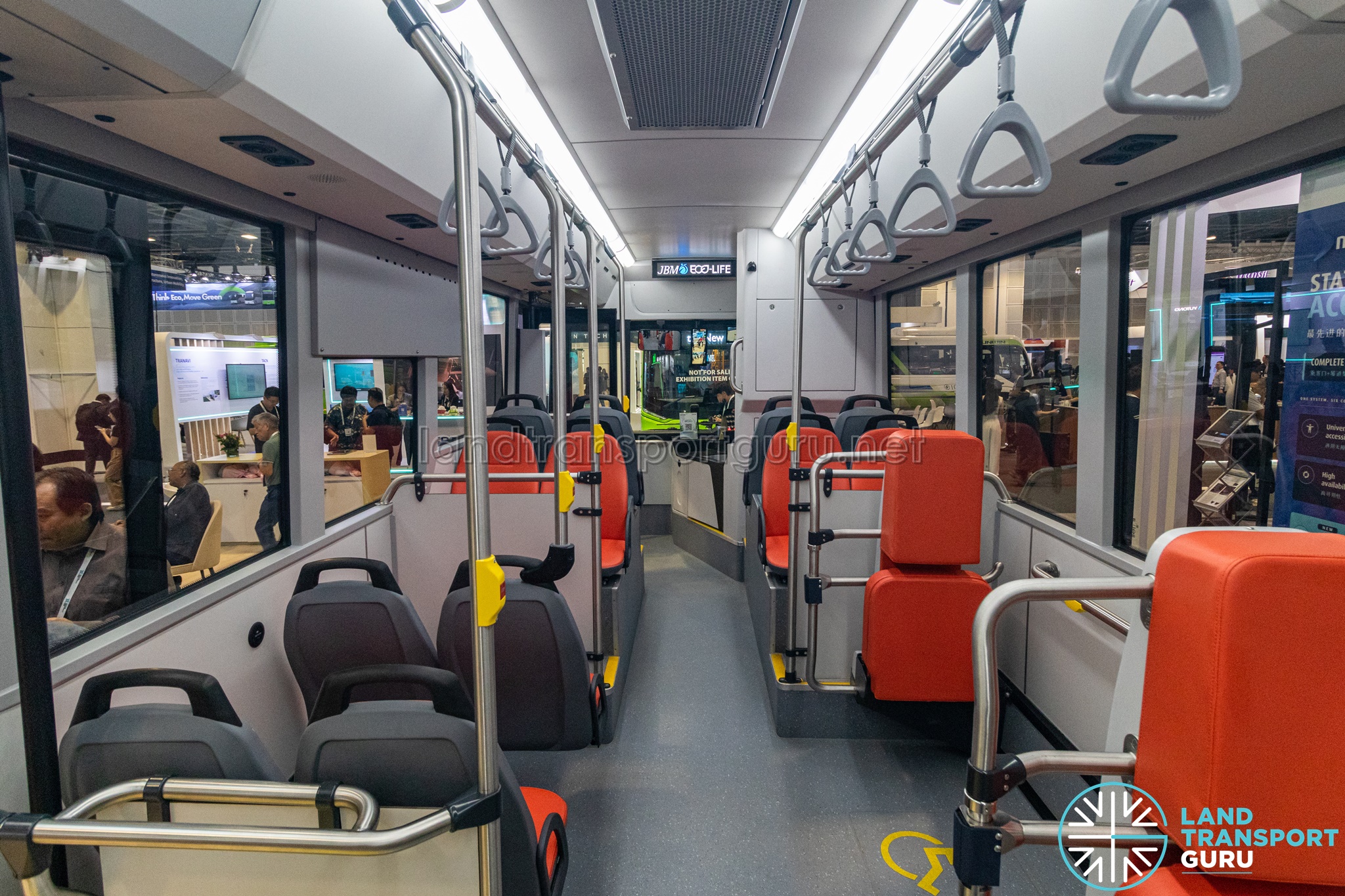
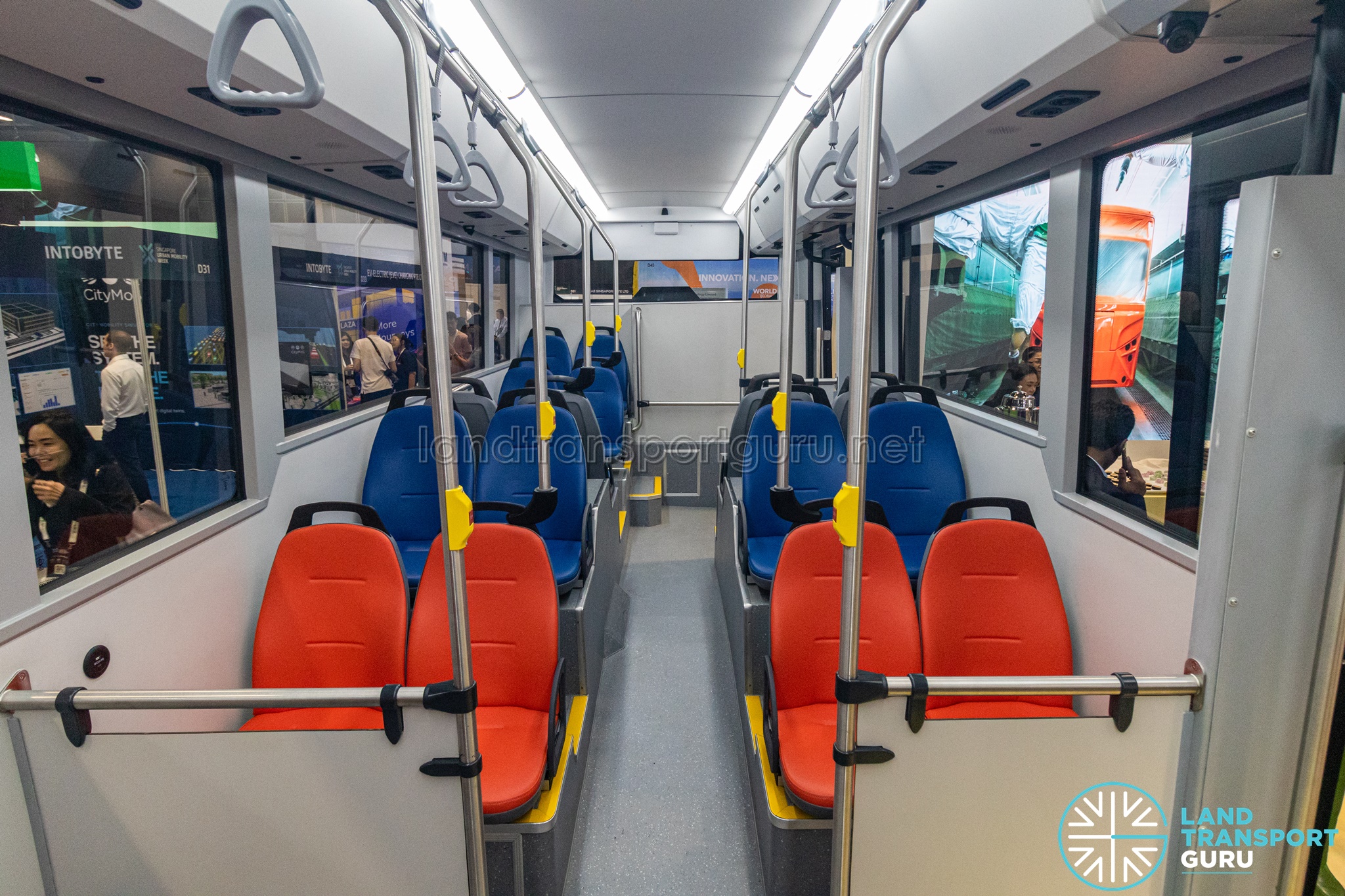
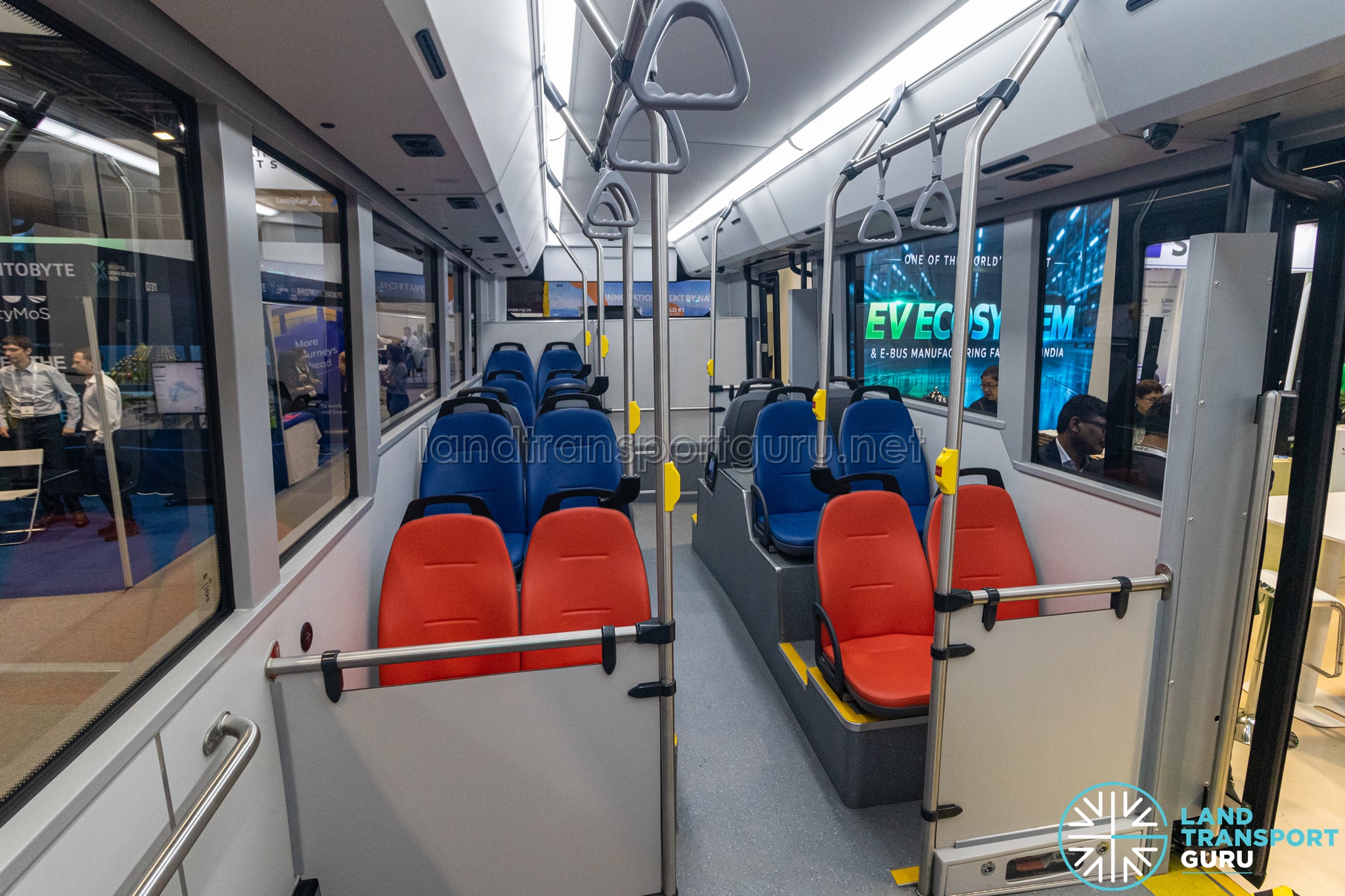
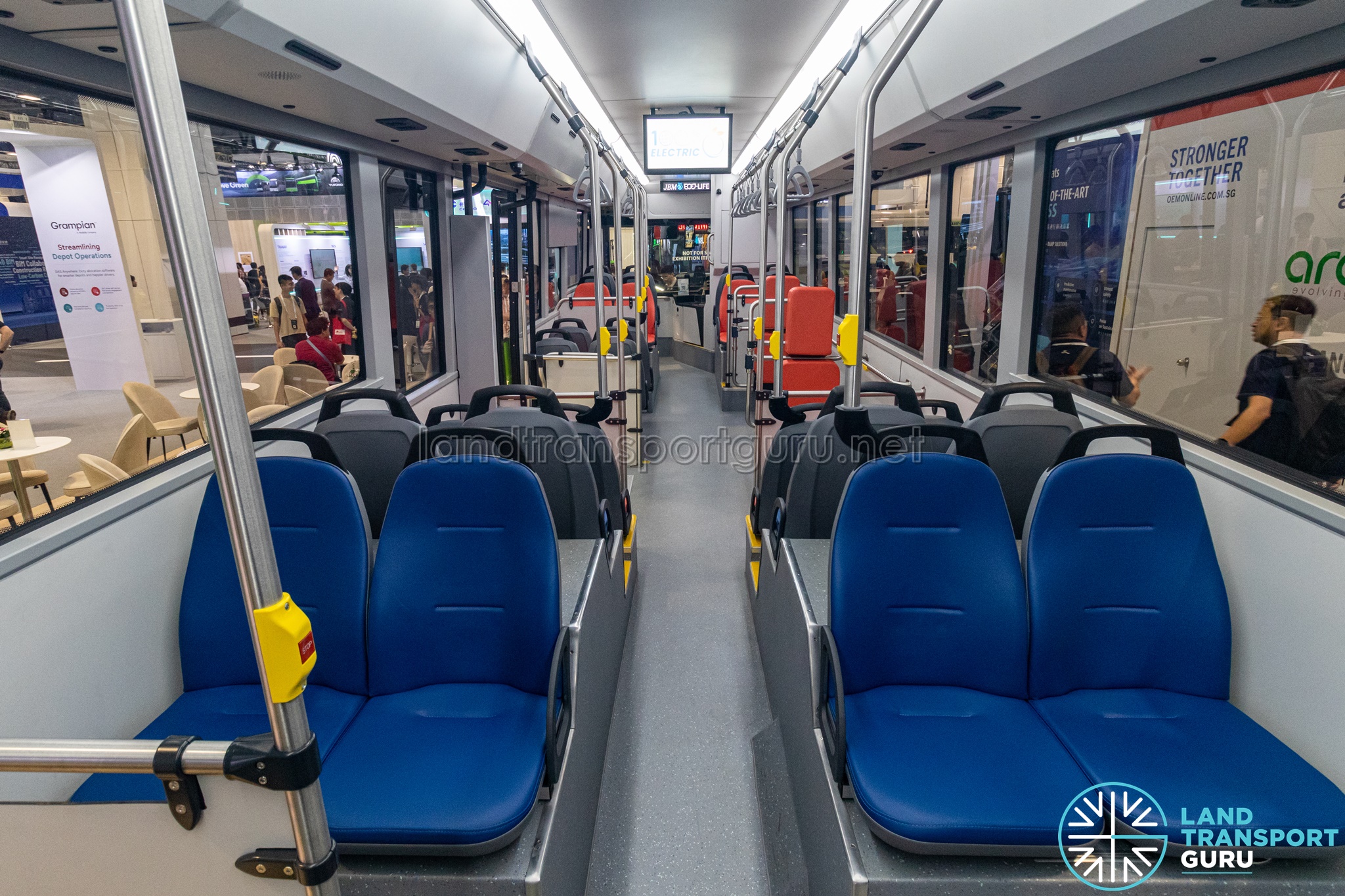
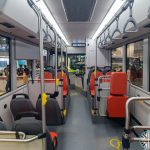
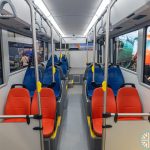
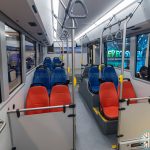
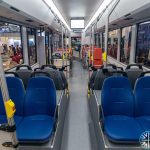
Seats are upholstered in blue for general use (12 seats) and maroon for priority seating (16 seats). All seats ahead of the middle door, along with the first row of seats immediately behind it, are designated as priority seats.
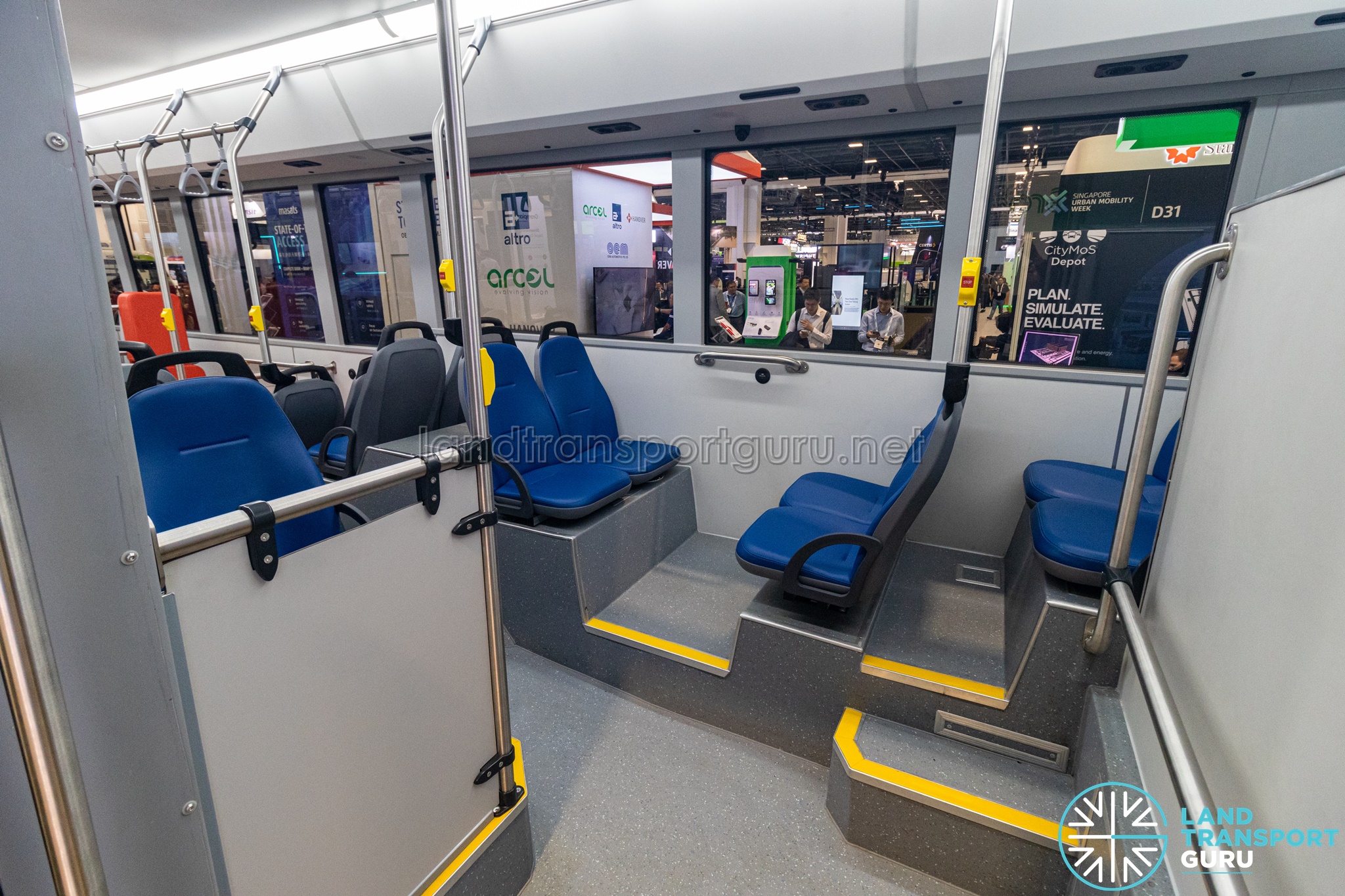
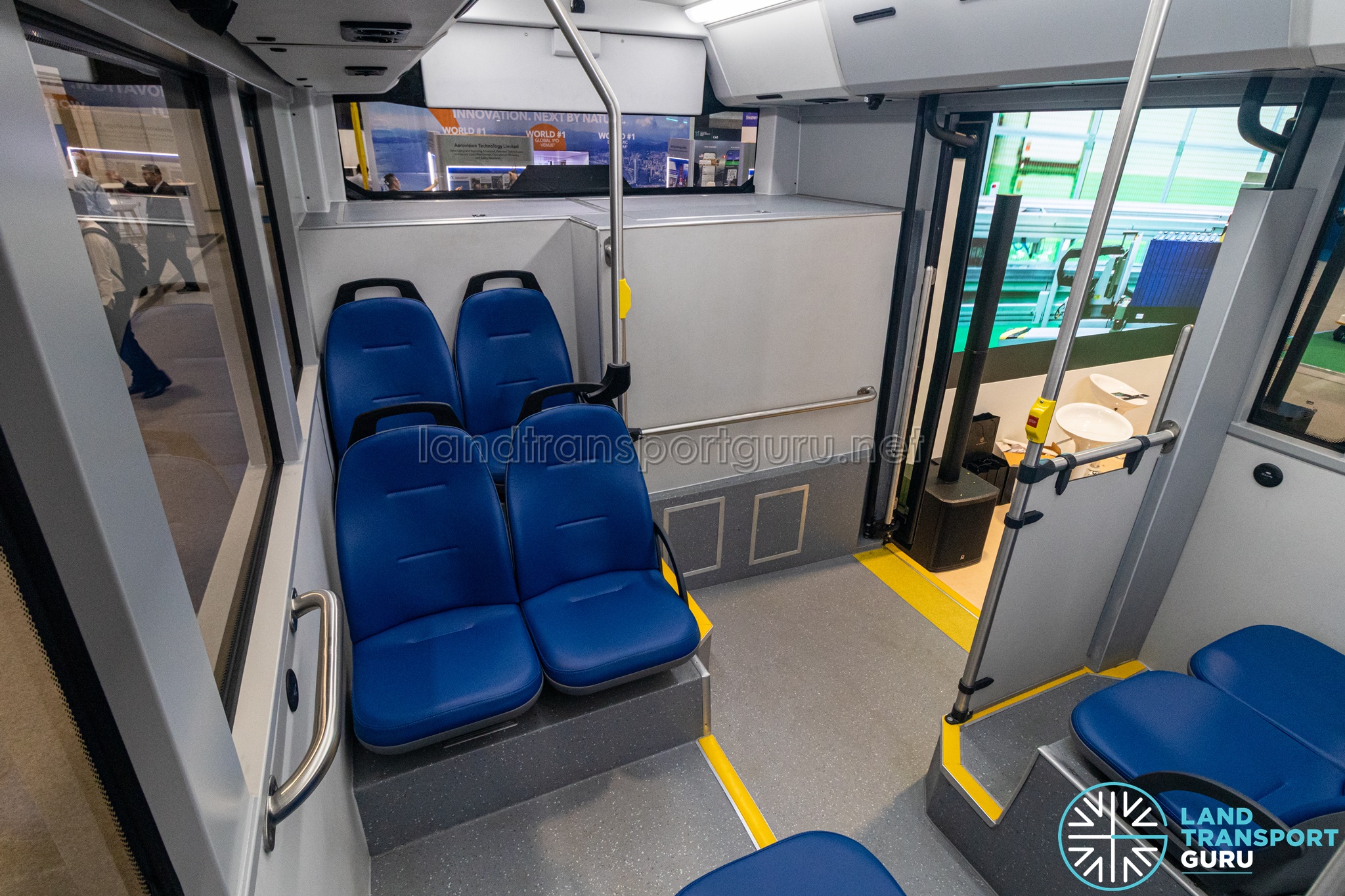
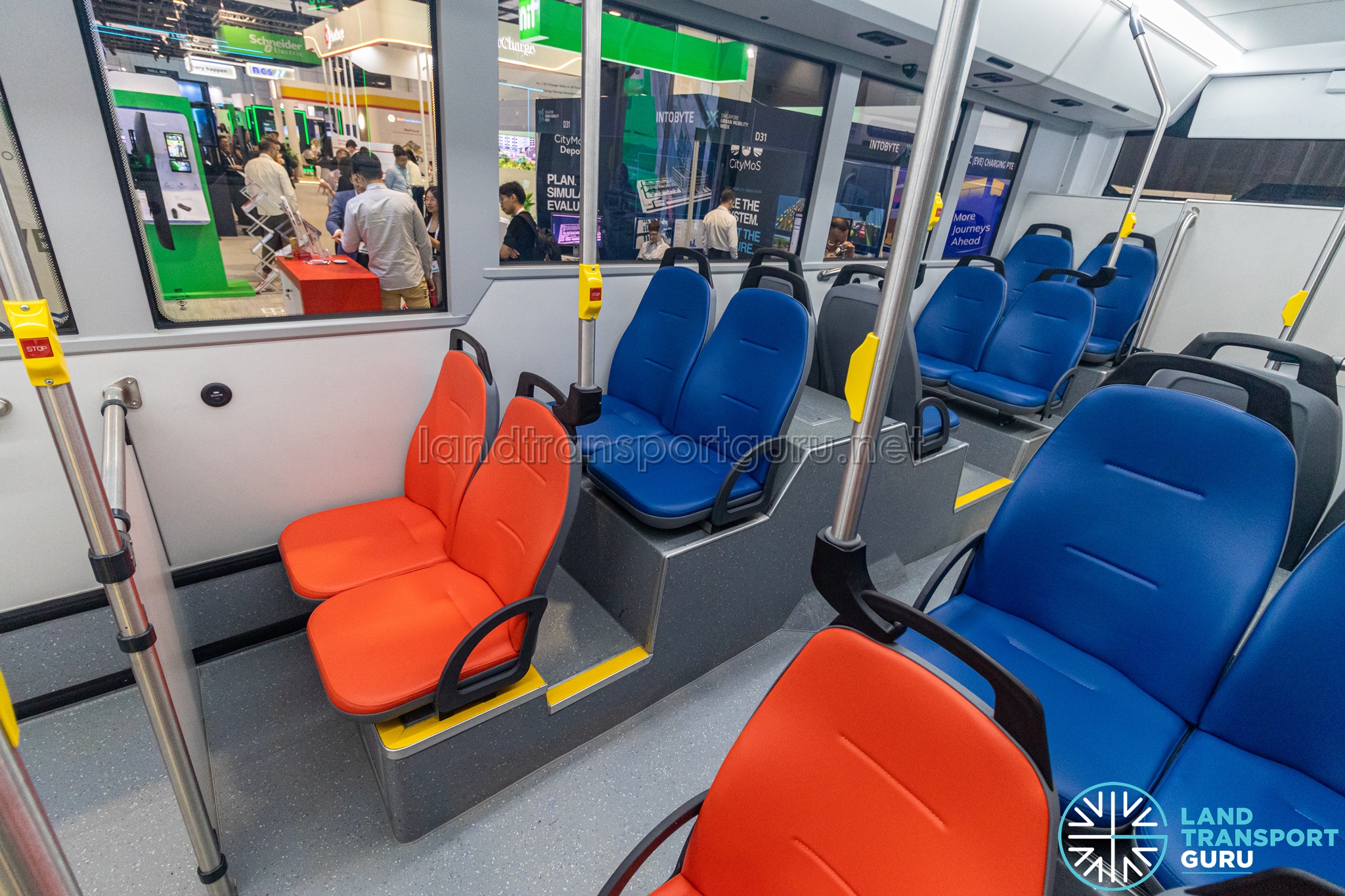
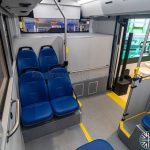
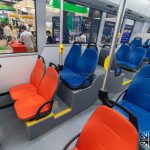
The rearmost exit door features a double-leaf sliding plug mechanism, with a narrower clear opening compared to the front and middle passenger doors. The last row comprises two passenger seats recessed into the rear compartment, offset from the exit door and accessible via two steps from the main passenger aisle.
Accessibility
The bus is equipped with two wheelchair bays, each featuring a foldable seat integrated into the backrest. Pivoting handlebars are also provided at the wheelchair bays and can be deployed or stowed as required.
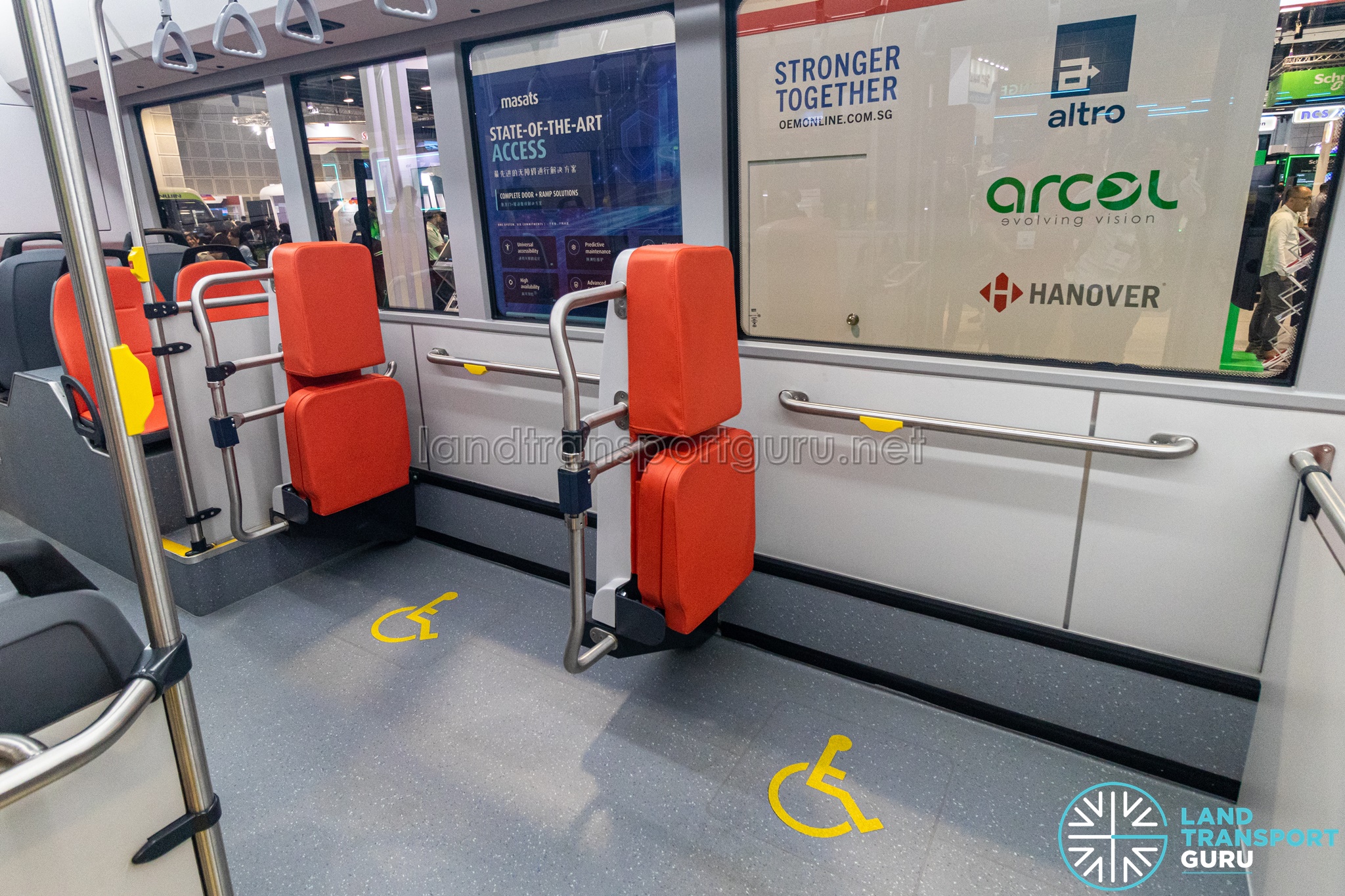
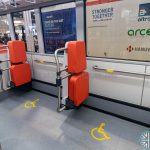
The bus is equipped with 2-in-1 wheelchair ramps, which can be deployed either manually or automatically.
Other Features
The JBM ECOLIFE e12 bus is installed with Electronic Display Sign (EDS) and Passenger Information Display System (PIDS) units from LECIP.
Full-colour Electronic Display Signs (EDS) are fitted, including a larger rear display.
The interior PIDS comprises two display screens: a front-mounted full-colour LED display showing basic bus service information, and a mid-mounted LCD screen providing additional information such as subsequent bus stops and rail connections. Another external-facing LCD screen informs commuters about upcoming rail connections along the bus route.
USB Charging Ports are also installed at alternate seats.
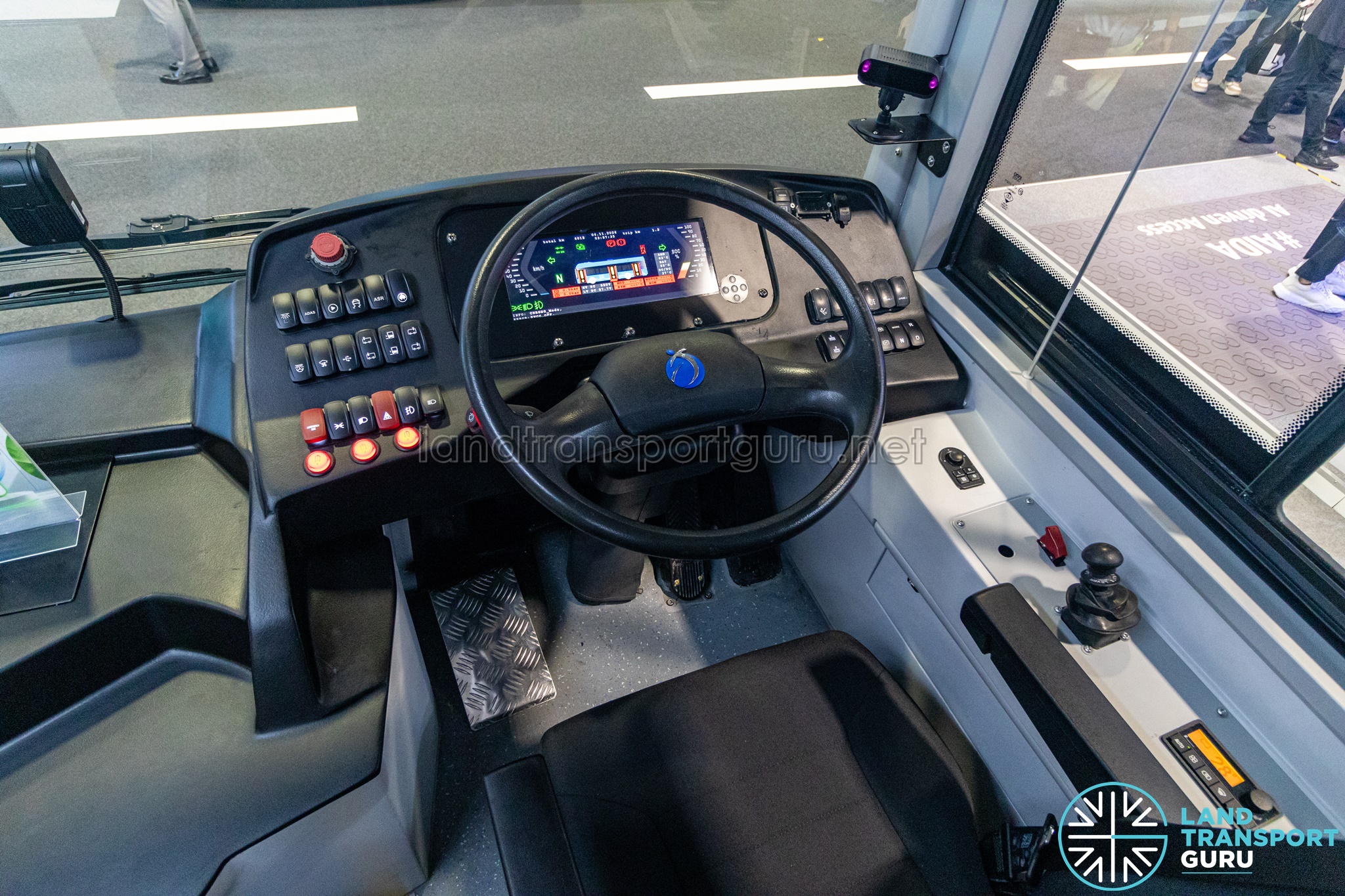
Driver’s Cab
The bus is fitted with a Camera Mirror System in place of usual wing mirrors. Display screens located in the driver’s cab show real-time footage from high-definition cameras mounted on the exterior of the bus—where traditional wing mirrors are mounted.
The camera mirror system comprises three screens – two in place of the original wing mirrors, and a third for the bus’ left and front blind spots.
why does this bus look like SG4006X bruh
I mean its ok but why cant we just have more of the A22s
Low-key kinda true, man. Can’t we just order more of the same type of bus routes instead of keep trying new ones? Only a few of the tried ones become proper. Just stick to the OGs, man.
ICE vs EV is world of difference… LTA wouldn’t take the risk to buy Chinese diesel buses compared to Battery powered buses.As for ICE, European and Japanese is kore reliable and durable than China made diesel engine. Even most PRC diesel buses using Cummins, Scania and MB/MAN engines.