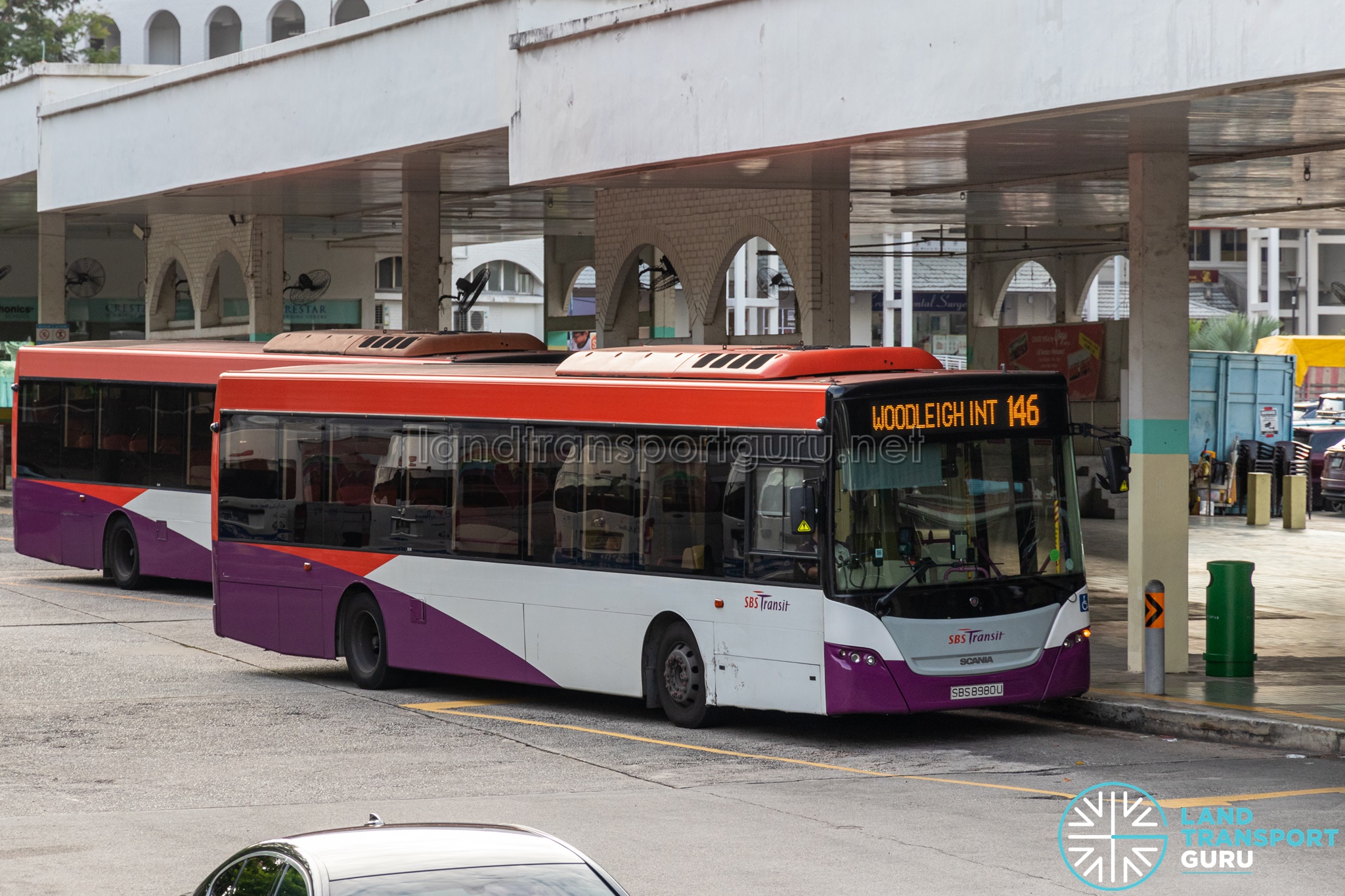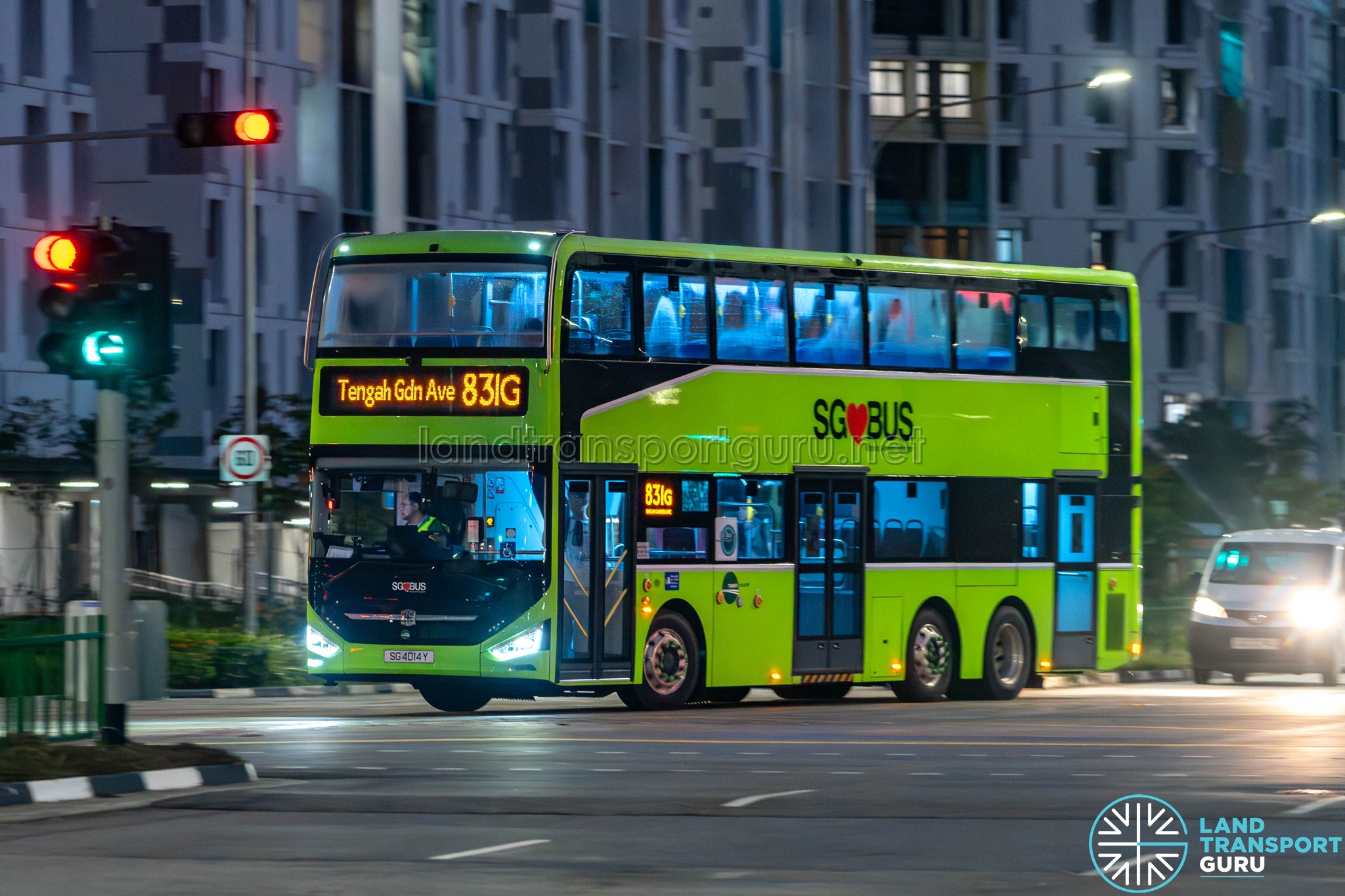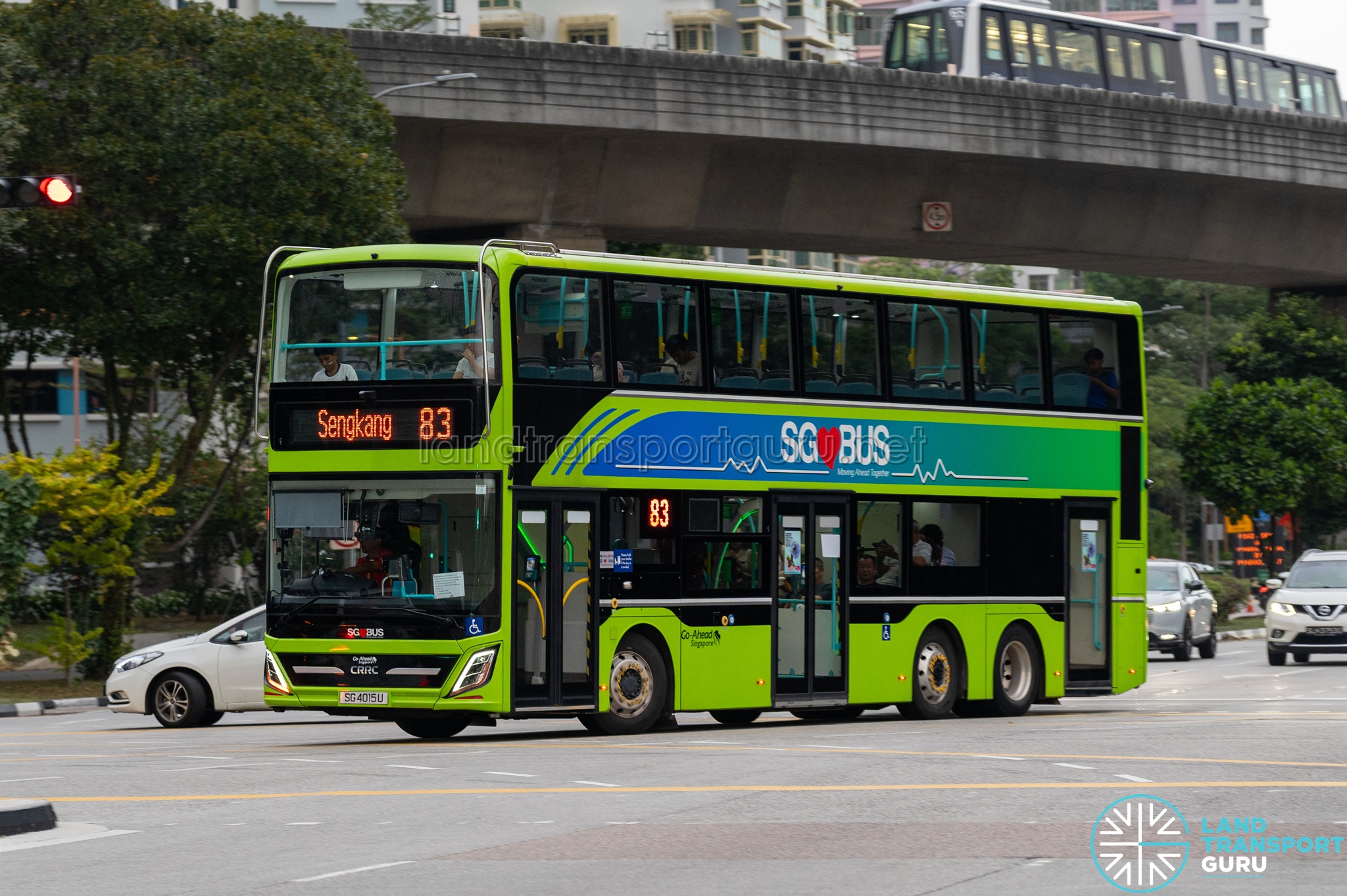
The Electronic Display Sign (EDS) is a digital display system retrofitted on the front, side and rear of public buses in Singapore, indicating the service number, destination and roads / amenities served by bus routes for the ease of commuters in identifying the services they wish to take to reach their destinations regularly.
In this article, we explore the history of how EDS programming by bus operators in Singapore have evolved since the adoption of EDS displays on public buses in the 1990s. For the specific history of EDS displays in general, refer to the main article: Electronic Display Signs (EDS) for Buses.
Background
Since the reorganisation of public bus services in the 1970s, buses have traditionally employed a interchangeable static destination sign (more commonly referred to as “destos” by bus enthusiasts), which mainly indicated the service number that the bus is operating on.
In the subsequent years under the Singapore Bus Service (SBS), these signs would later also reflect the origin and destination / looping point of the bus routes, providing instant information to commuters unfamiliar with the services. This was during a time when bus service information was not as readily available in their fingertips on personal devices, requiring commuters to either obtain physical bus guides, refer to route details at bus stops, interchanges and terminals, or ask the Bus Captain or fellow commuters for directions.
As technology continued to improve in the 1990s, a digital version of such displays, referred to as the Electronic Display Systems (EDS), would be gradually rolled out on Singapore’s public buses.
1990s: Initial EDS Programming on Flipdot EDS Displays
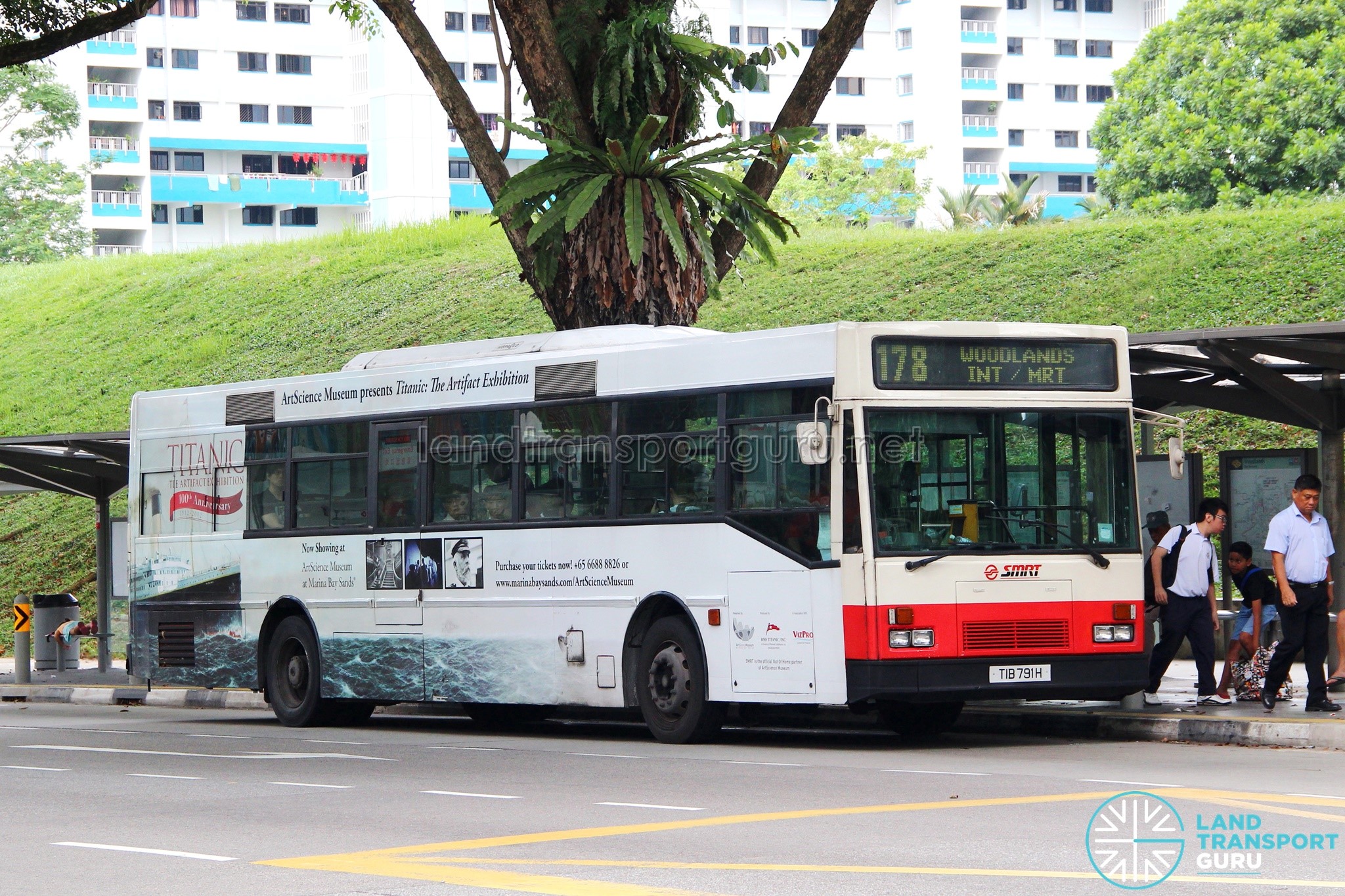
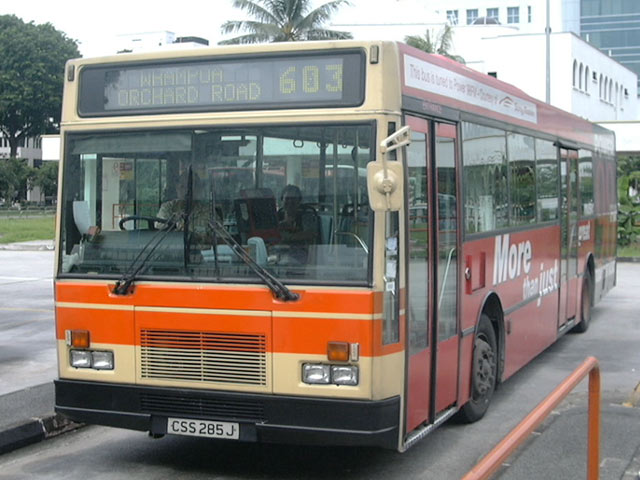
The earliest version of EDS displays in Singapore were of the flipdot version, retrofitted on the DAF SB220 single-deck buses newly procured by the Trans-Island Bus Services (TIBS) and Singapore Shuttle Bus (SSB) in the early 1990s, manufactured by BKB Electronica.
TIBS displayed the service number on the left of the EDS, followed by the destination / looping point (for long distance looping routes) and the roads served by their operated bus routes. Meanwhile, SSB displayed the service number on the right of the EDS, with the destination / looping point and roads served by their bus routes displayed before the service number (from left to right).
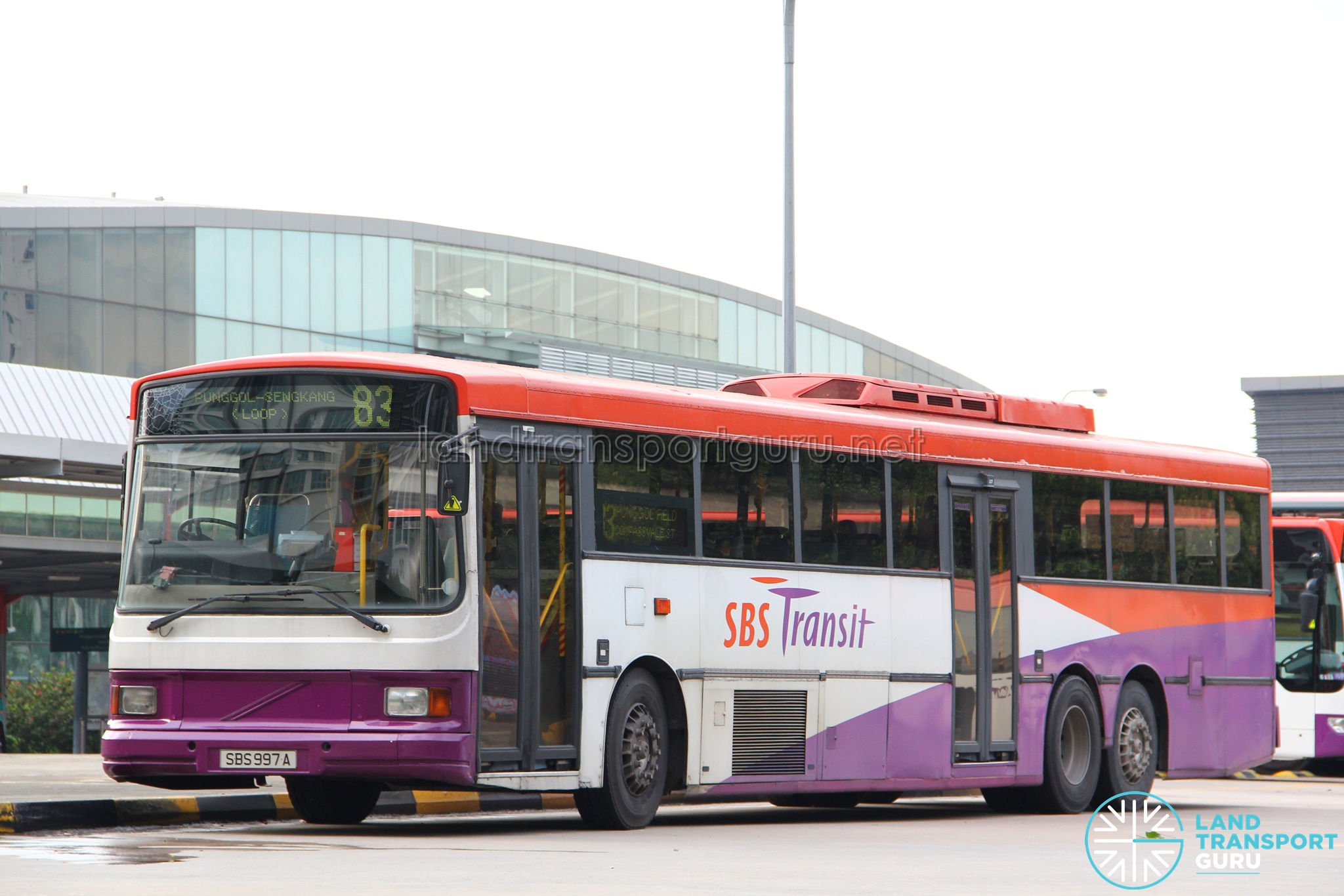
SBS would only enter the EDS market from 1997, when they procured several demonstrator units for evaluation purposes – the Volvo B10M Mark IV Superlong (SBS997A), Volvo B10MA articulated bus (SBS998Y) and Mercedes-Benz O405G articulated bus (SBS999U). Unlike TIBS/SSB, their earliest EDS programming only indicated the service number and destination, with the service number placement at the nearside (i.e. the right) of the bus, but would evolve to follow the TIBS/SSB format of indicating the roads served by their operated bus services as well.
2001 – 2005: Early EDS Programming on LED EDS Displays
In the new millennium, the technology for electronic displays on public buses and other public amenities have evolved even further, which saw the adoption of Light Emitting Diode (LED) electronic displays on public buses purchased since 2001. These displays have become the default type of electronic displays for buses in Singapore due to their longer lifespans and greater ease of maintenance.
The 1st public bus model in Singapore to adopt LED displays is the Dennis Trident double-deck buses procured by SBS. Unlike buses with flipdot EDS displays, the EDS programming for the operator’s 1st buses with LED displays by Transit Media indicated the destination at the top row, followed by the roads served on the bottom row.
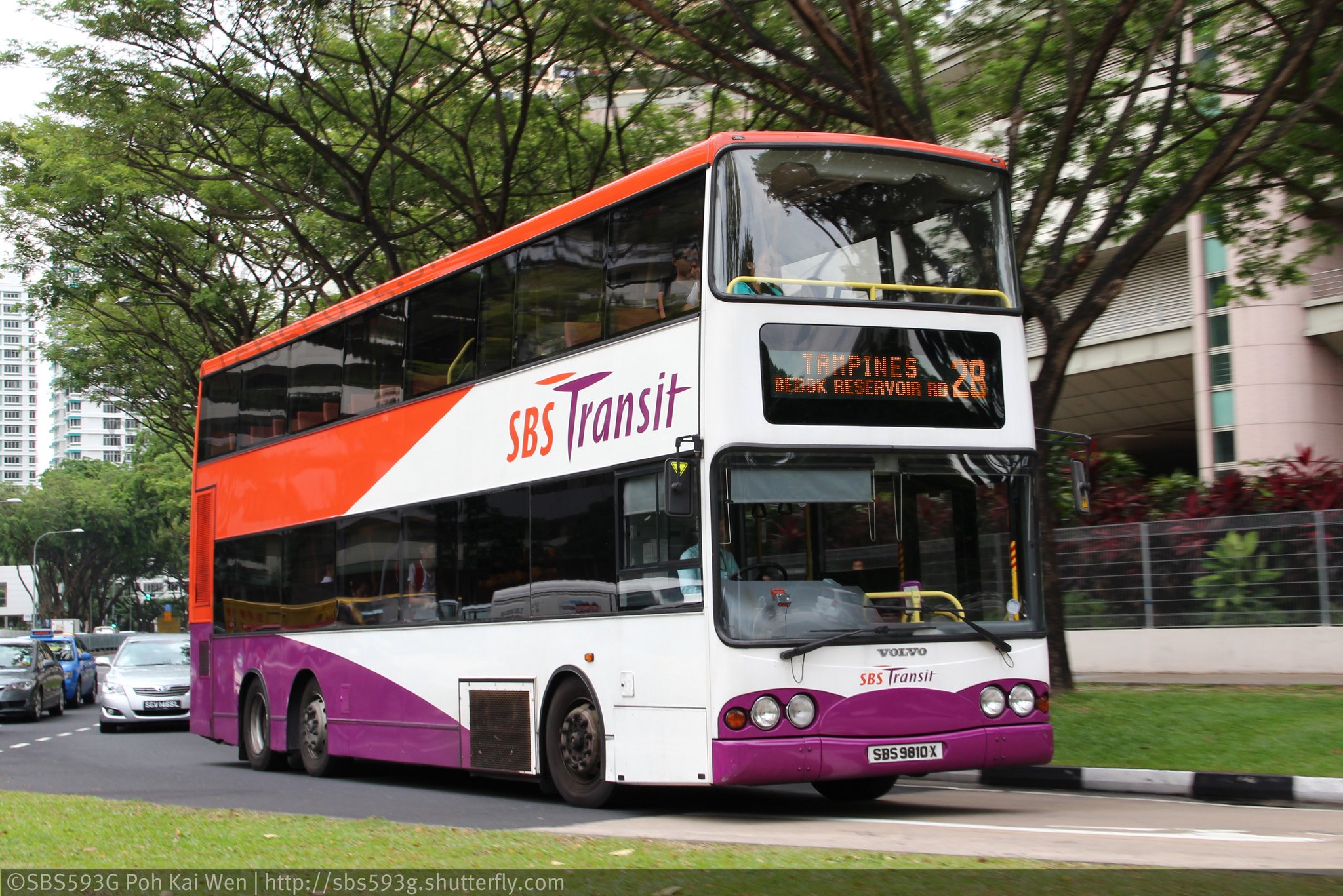
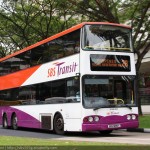
When SBS Transit procured the Volvo B10TL “Super” Olympian double-deck buses in 2002 from Volgren, 1 unit (SBS9810X) was shipped directly from Australia with LED displays manufactured by Transit Media. This was before the remaining Volvo B10TL buses would be retrofitted with EDS systems in the 2010s.
2007 – Present: Standardisation of EDS Programming on Wheelchair-Accessible Buses (WABs)
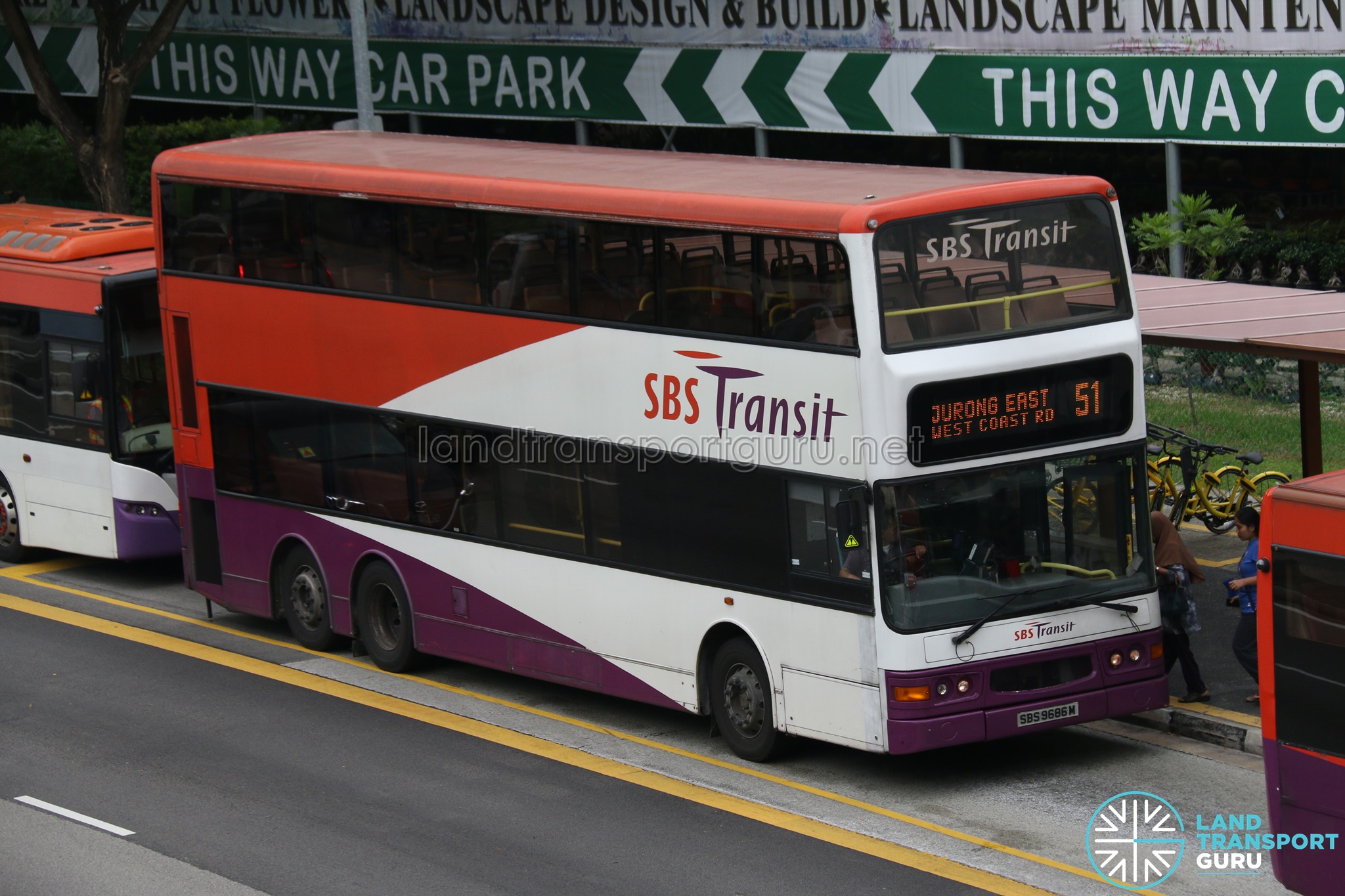
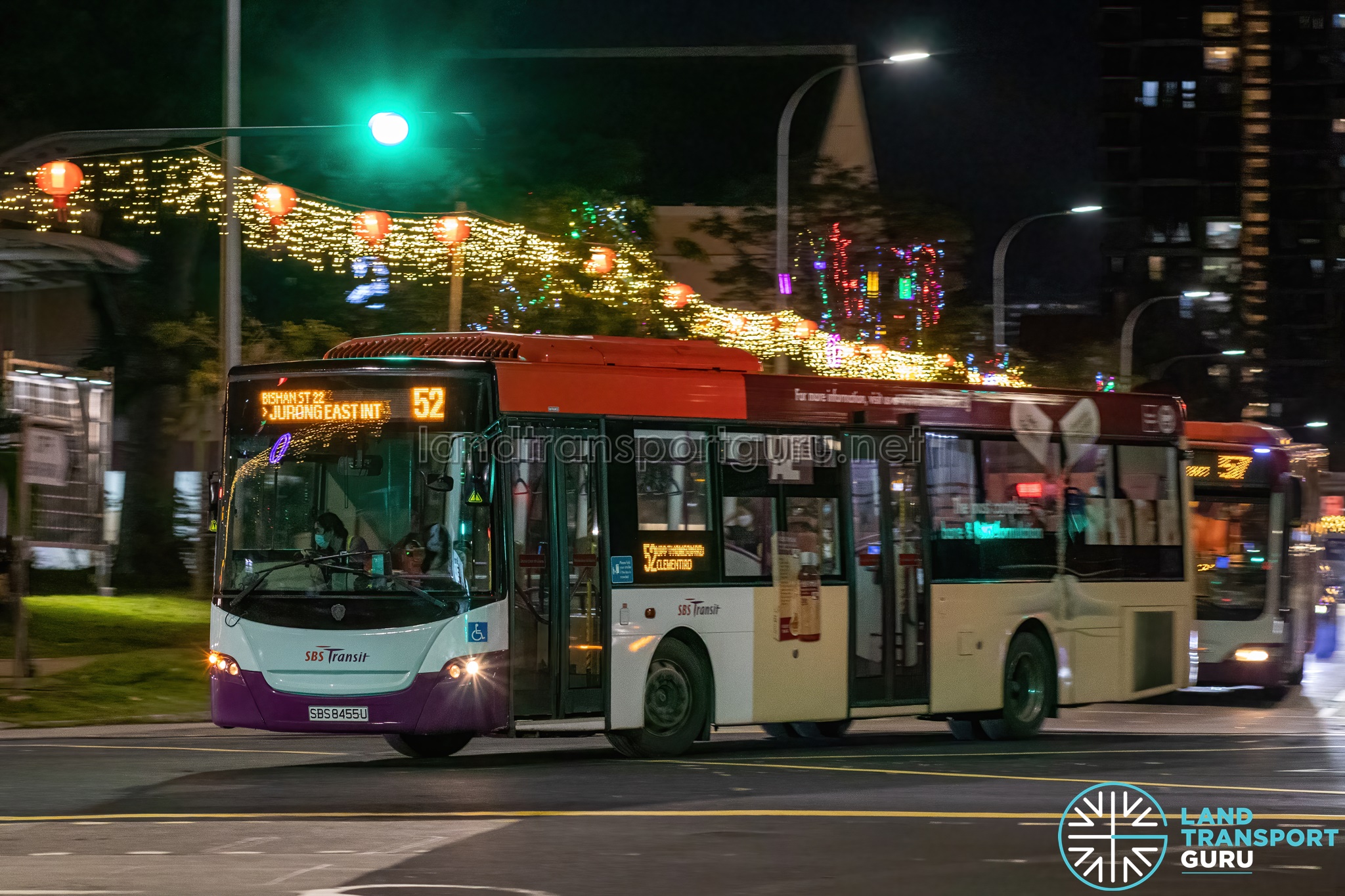
When the Land Transport Authority (LTA) mandated that new public buses procured after 2005 had to be retrofitted with a wheelchair bay for the ferrying of Passengers-in-Wheelchairs (PIWs), the adoption of LED EDS displays was expedited for new SBS Transit buses purchased since 2007, starting with the newly-registered Scania K230UB single-deck buses. With this mass proliferation of EDS displays, the programming was changed by the operator once again, indicating the destination and the service number only. However, the programming was updated to yet another format in 2008, with the top row indicating the roads served, while the bottom row reflects the destination, with a “>” symbol before it.
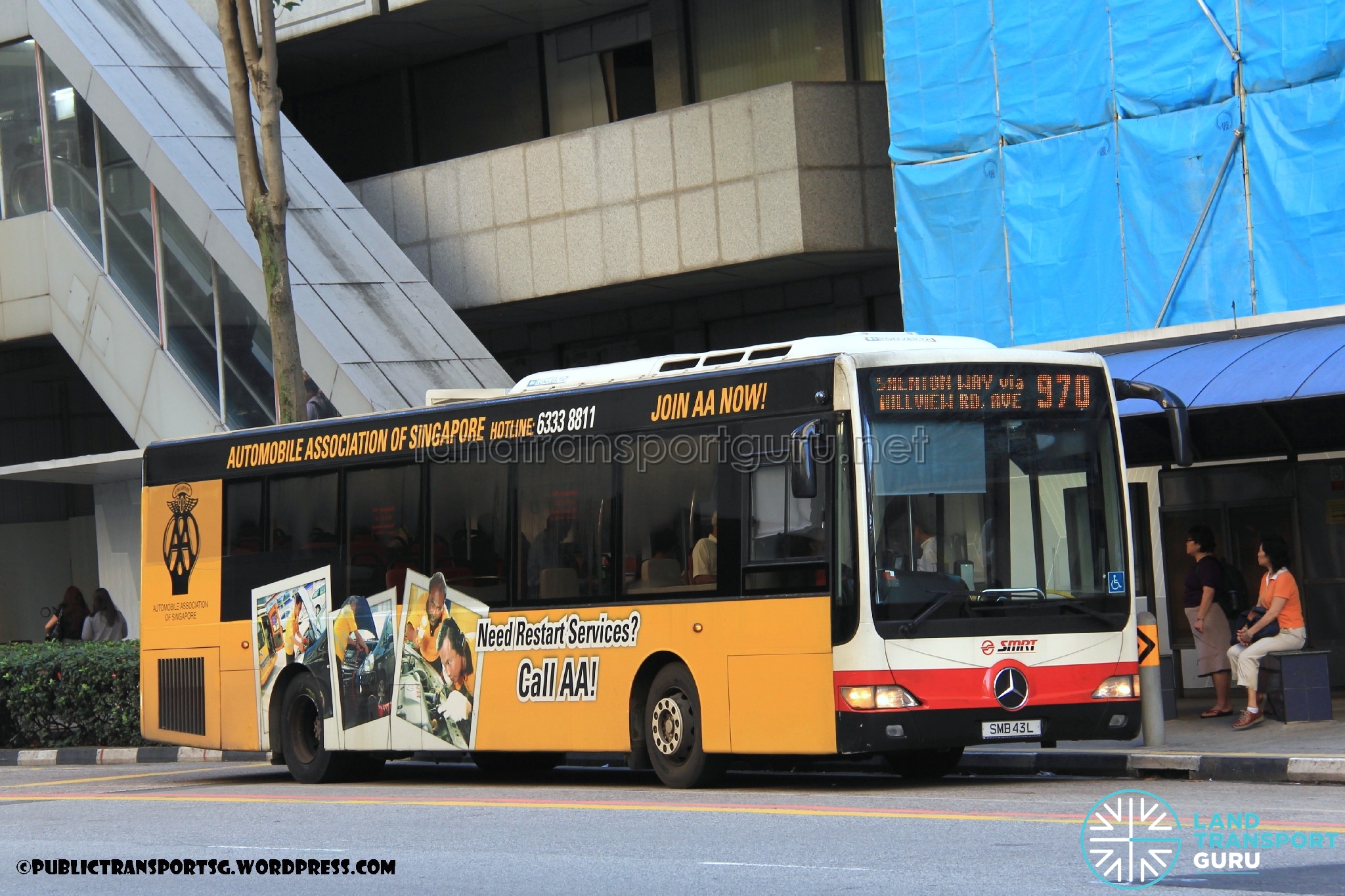
Meanwhile, SMRT Buses would carry forward the legacy EDS programming from TIBS on their newly procured Mercedes-Benz OC500LE single-deck buses, continuing to indicate the destination first before the roads served by their operated bus services. Initially, the EDS displays would still indicate the service number on the left on these new buses, before being subsequently modified to be reflected on the right side of the displays.
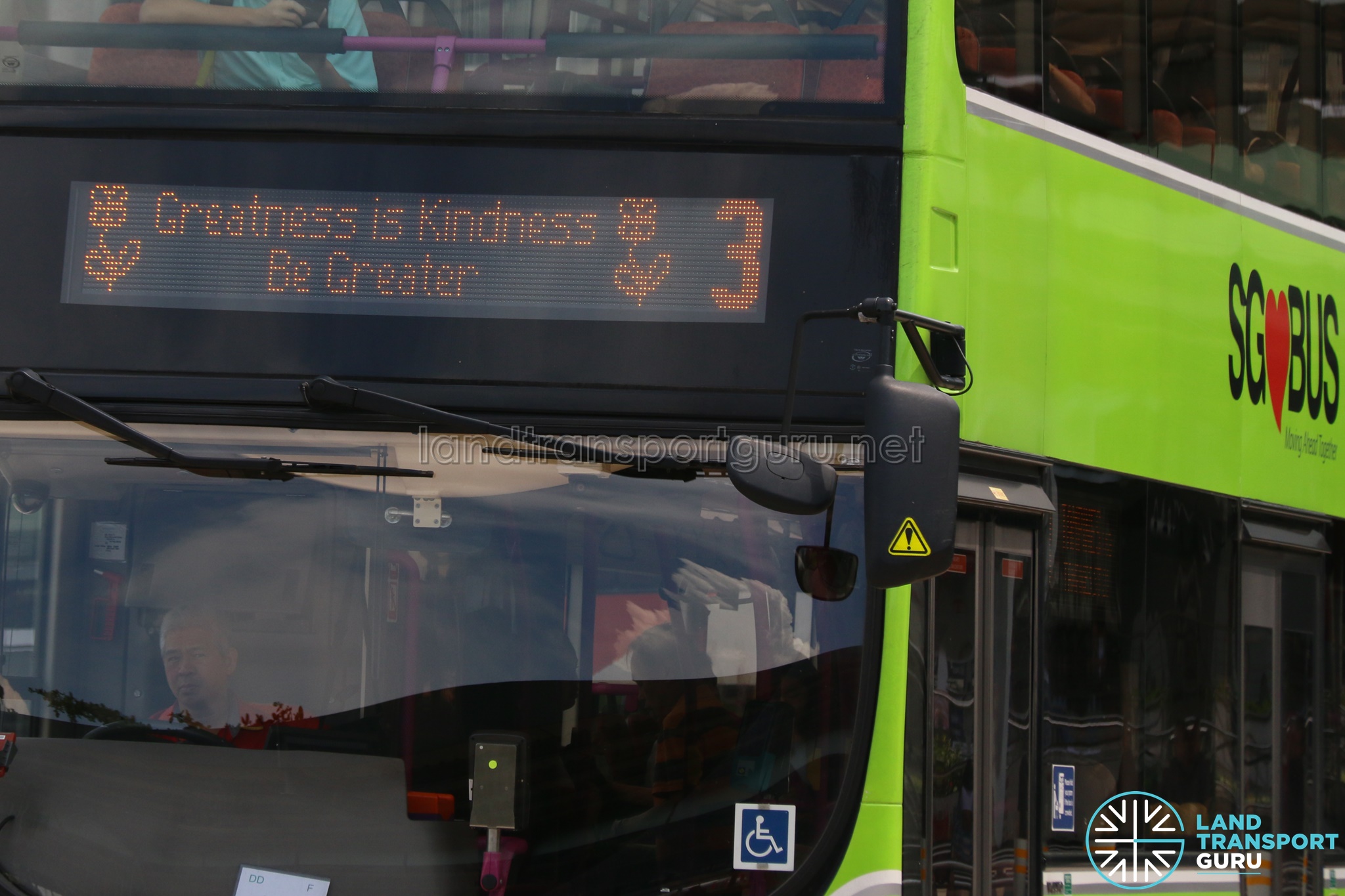
In addition, festive greetings were also added to EDS displays which alternated with the standard destination and route displays, first by SMRT Buses and followed by SBS Transit. These would later be discontinued by the LTA after 2023.
2016 – 2025: EDS Programming by Foreign Public Bus Operators
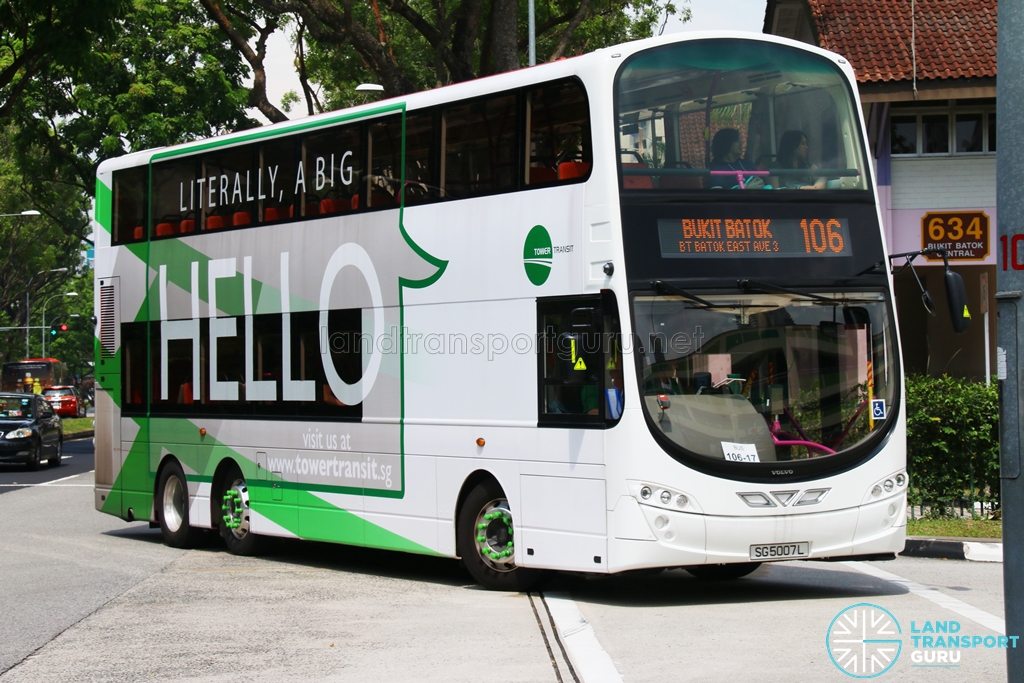
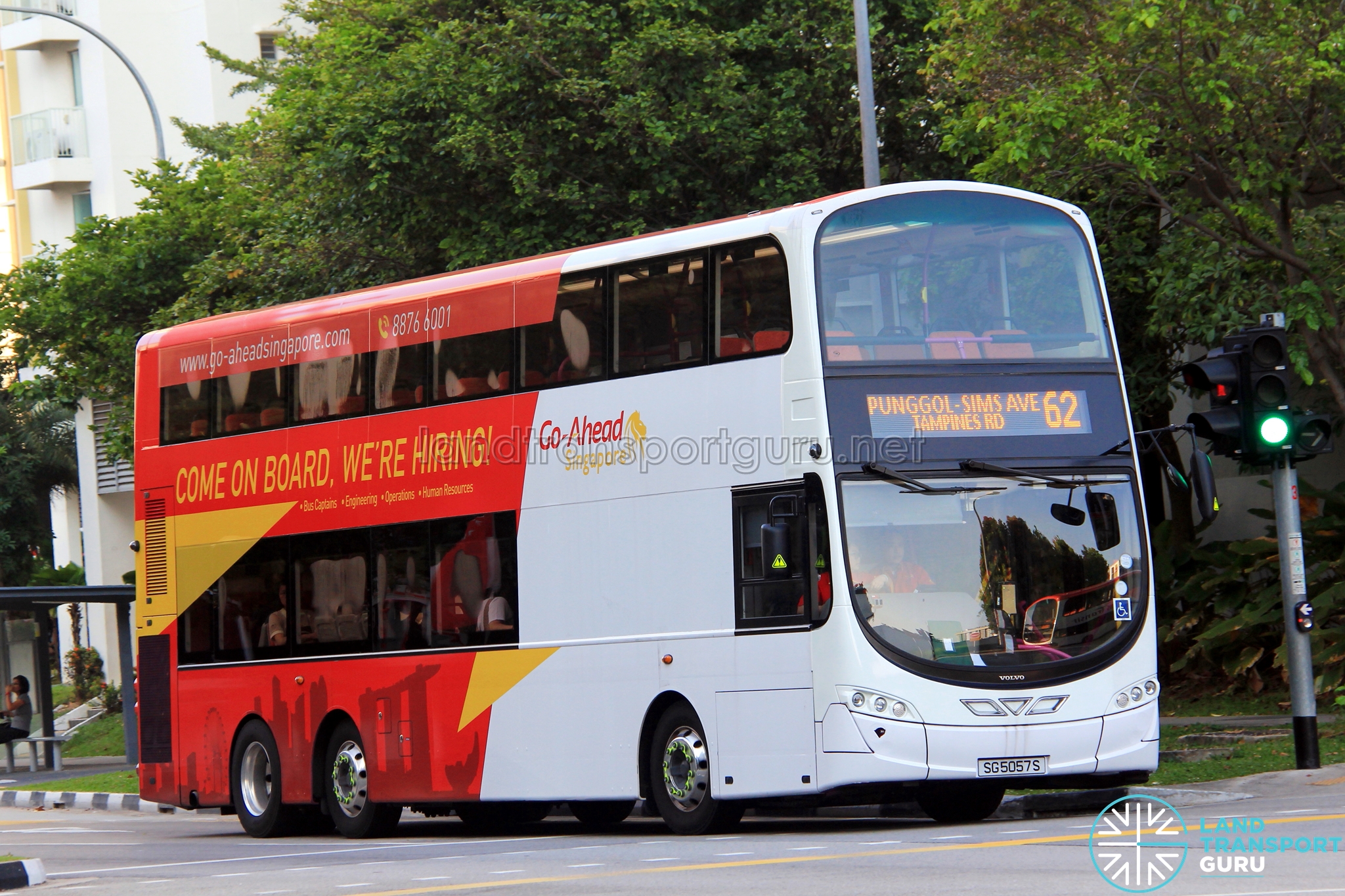
When Tower Transit and Go-Ahead started their Bulim and Loyang bus contracts respectively in 2016, both operators adopted the initial EDS format on the 1st SBS Transit buses with LED displays back in 2001, where the destination is indicated on the top row, while the bottom row reflected the roads and key landmarks served by their operated bus services.
Over the years, both operators have gradually changed the font size and type for their service numbers to better differentiate their operator identities from the incumbent public bus operators.
Festive greetings, as well as customised bus service messages, were also added to EDS displays for Tower Transit buses during their initial years of operations in Singapore. However, they would also later be discontinued by the LTA after 2023.
2023 – Present: Large Service Number EDS Displays
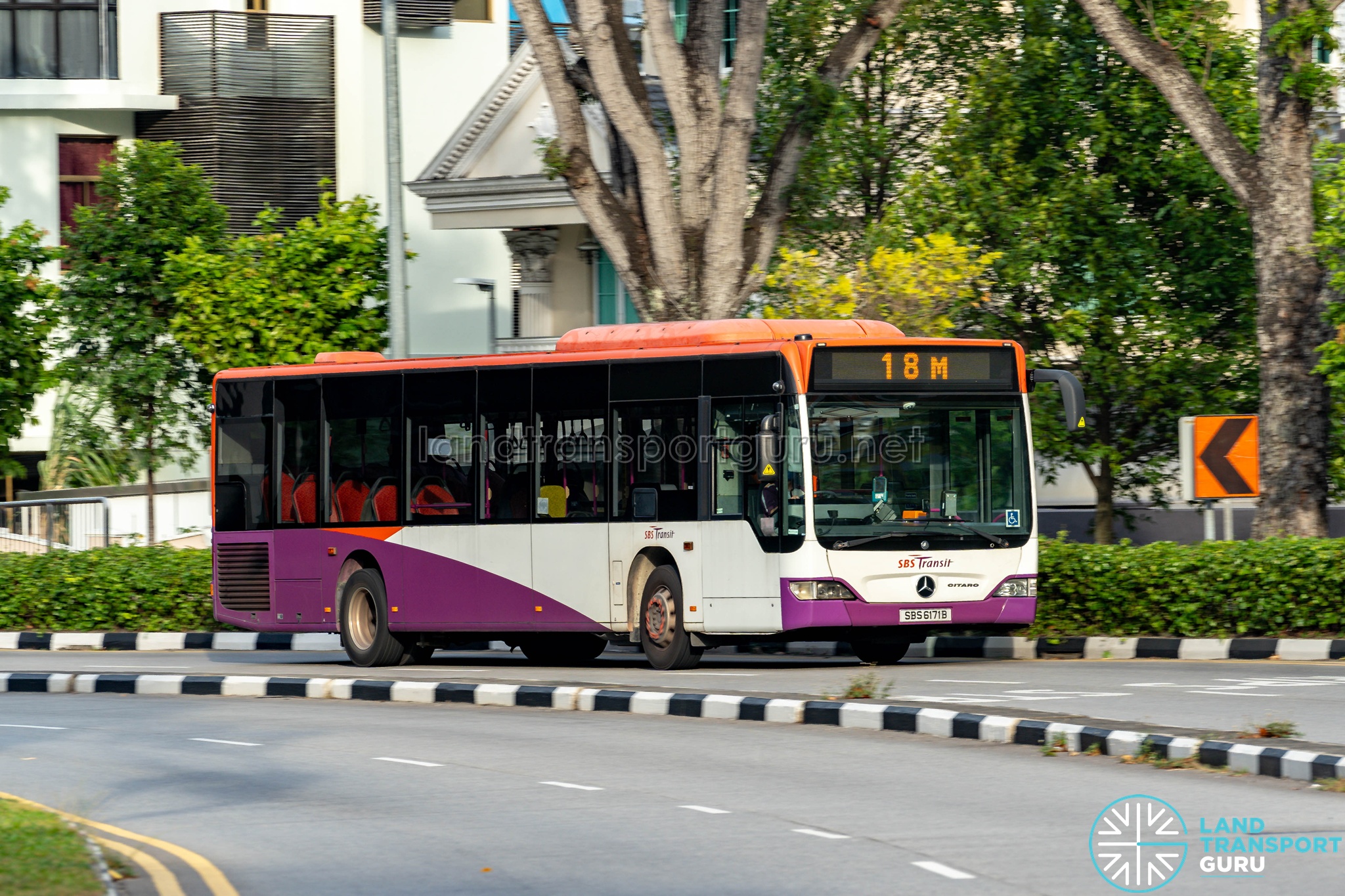
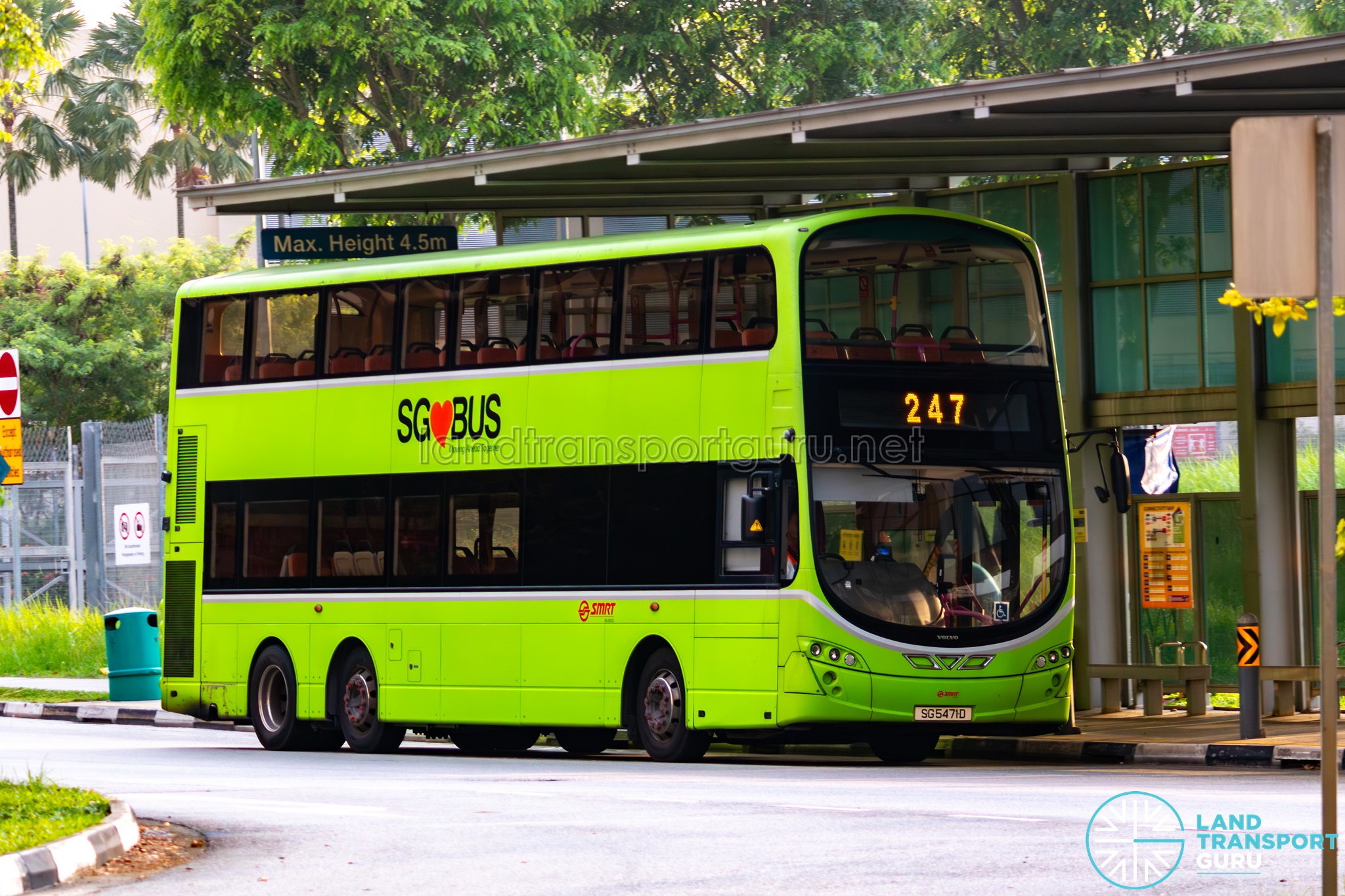
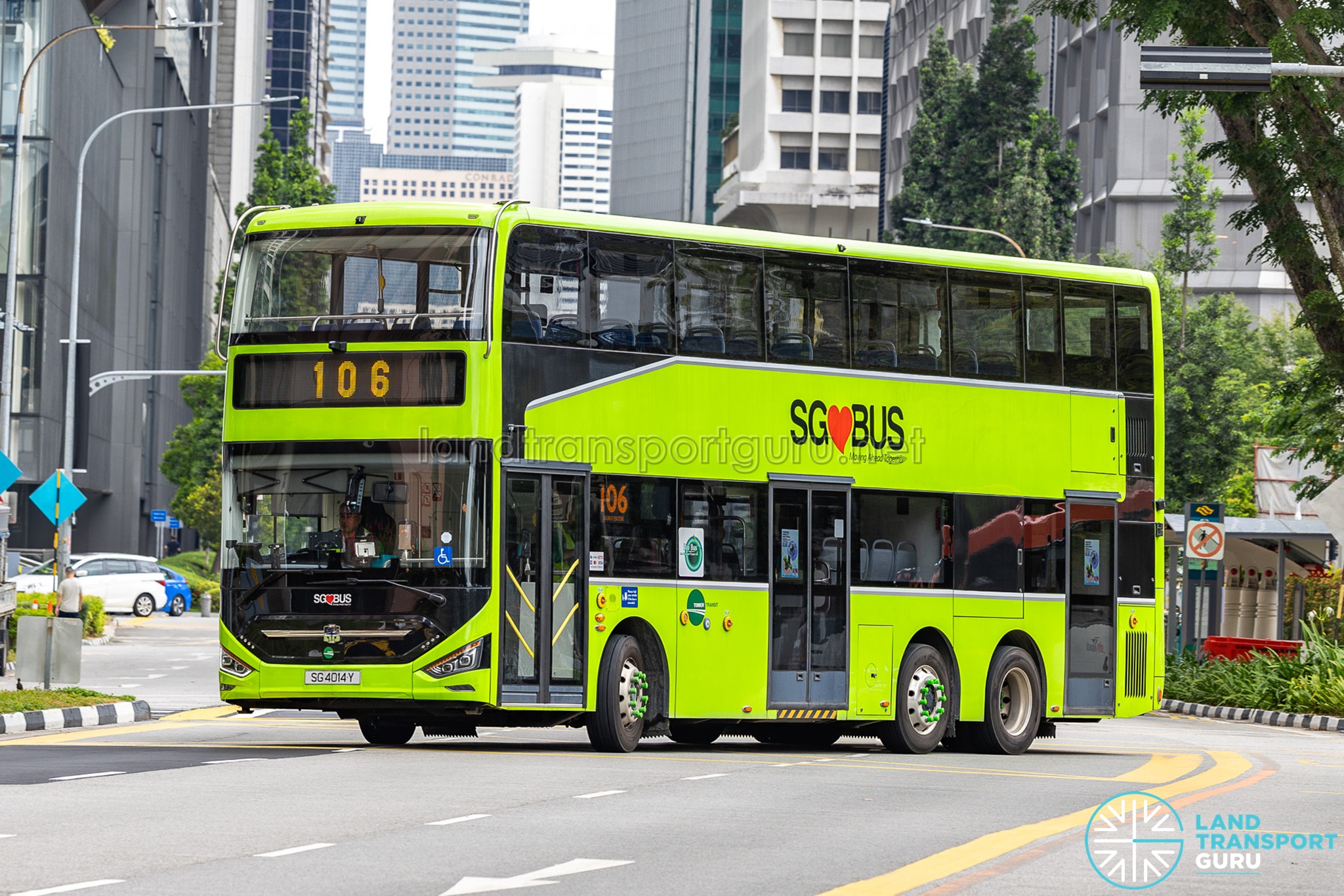
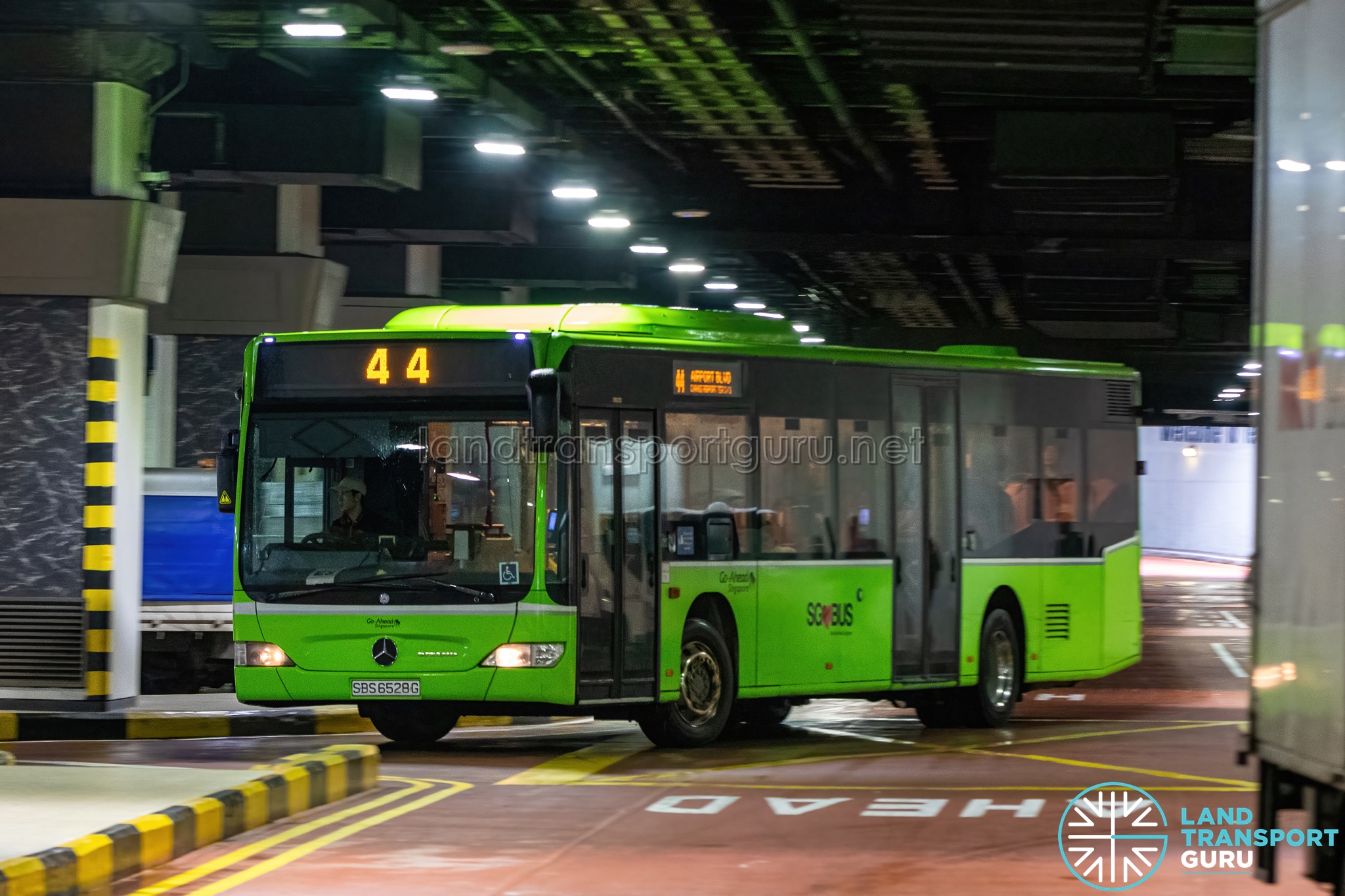
In an effort to improve the visibility of bus service numbers on EDS displays of public buses, the LTA introduced a new EDS format, where the present EDS display with the destination and roads served would alternate with an EDS display where only the enlarged version of the bus service number was reflected in the middle of the EDS.
2025 – Present: Destination Only EDS Displays
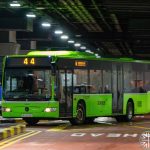
In 2025, the EDS display for public buses were further simplified, when Tower Transit and Go-Ahead changed the EDS programming for the front displays on all their buses to reflect only the destinations or looping points of their operated bus services.
SBS Transit and SMRT Buses only changed the EDS displays for new and amended bus services since 2025 to this new format, with the destination reflected only. However, over time, Mercedes-Benz Citaro single-deck buses under SBS Transit also switched to the “destination only” EDS programming for their other operated bus services.