Since 2025, Public Transport Operators (PTOs) in Singapore have been progressively reducing the continuous driving hours of Bus Captains, as part of broader efforts to enhance safety.
Background
The initiative follows recommendations from the Bus Safety Tripartite Taskforce, which was published in March 2025. Feedback gathered from bus captains suggested that the optimal duration for a single journey should not exceed two hours, as longer runs tend to cause fatigue and stress. Extended driving durations can lead to lapses in concentration and physical discomfort, such as the urge to use the restroom, both of which increase the risk of accidents.
The Taskforce’s report also advised the Land Transport Authority (LTA) to avoid introducing new bus routes that exceed two hours in runtime, and to review and shorten 54 existing routes that run for over three hours where feasible. These recommendations were also accepted by the Government.
The Taskforce also noted that the longest routes in overseas cities—such as London—typically have runtimes of around one hour, in contrast to Singapore’s comparatively longer operating patterns.
Affected Bus Routes
Authorities have not released the full list of 54 bus routes exceeding the three-hour threshold. However, these are believed to include long trunk services during peak hours (such as 51 and 61) and long-distance loop services (such as 857, 966, and airport services).
Methods
Mid-Route Driver Swaps
To address fatigue without cutting or amending existing routes, operators have begun adopting mid-route driver changeovers, a practice known in the local bus industry as CLOWBus (Crew Lay-Over Without Bus) or “jumpbus”. Traditionally, such swaps occurred only at bus interchanges or terminals, but they are now being introduced en route to reduce continuous driving durations.
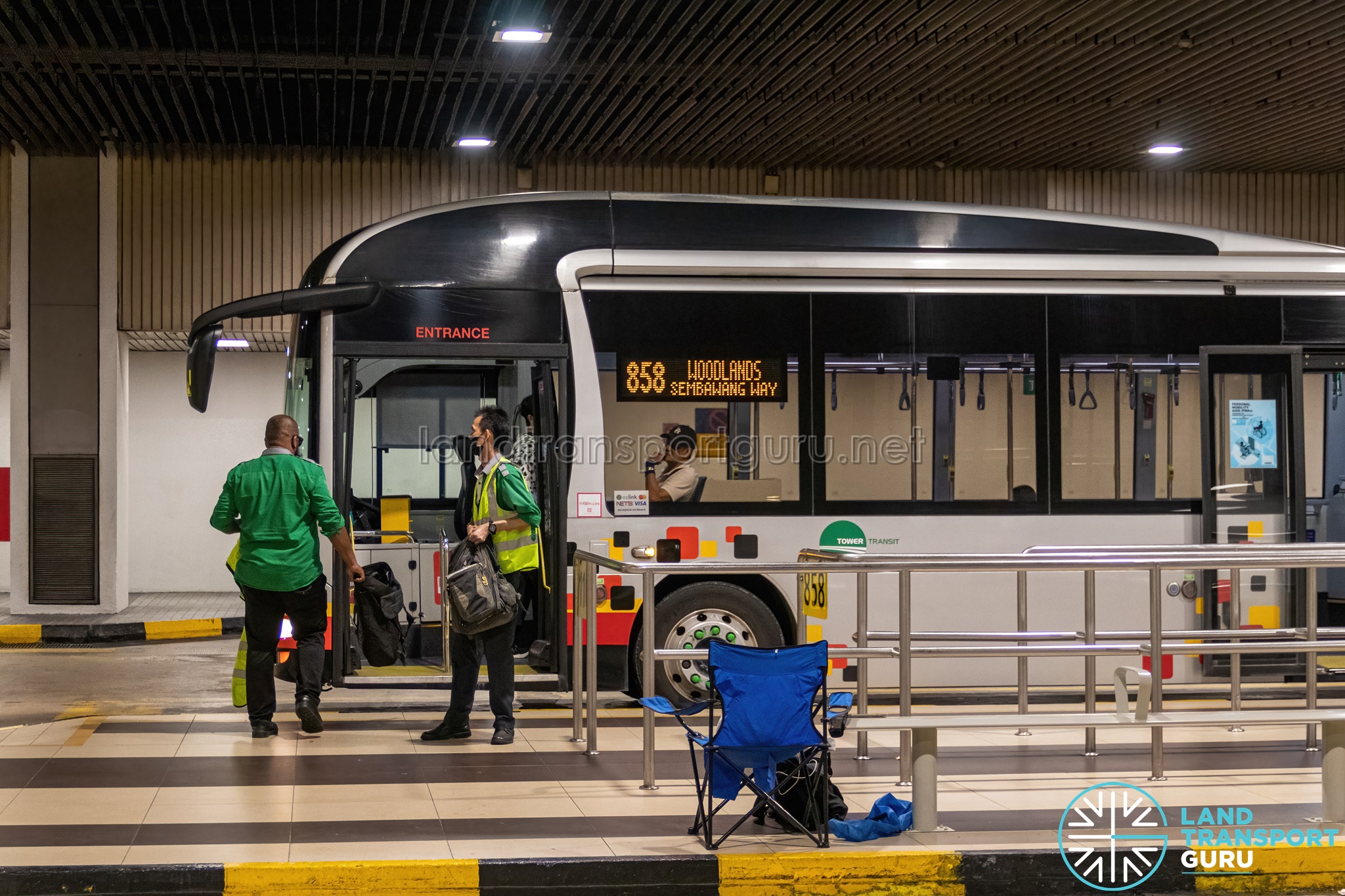
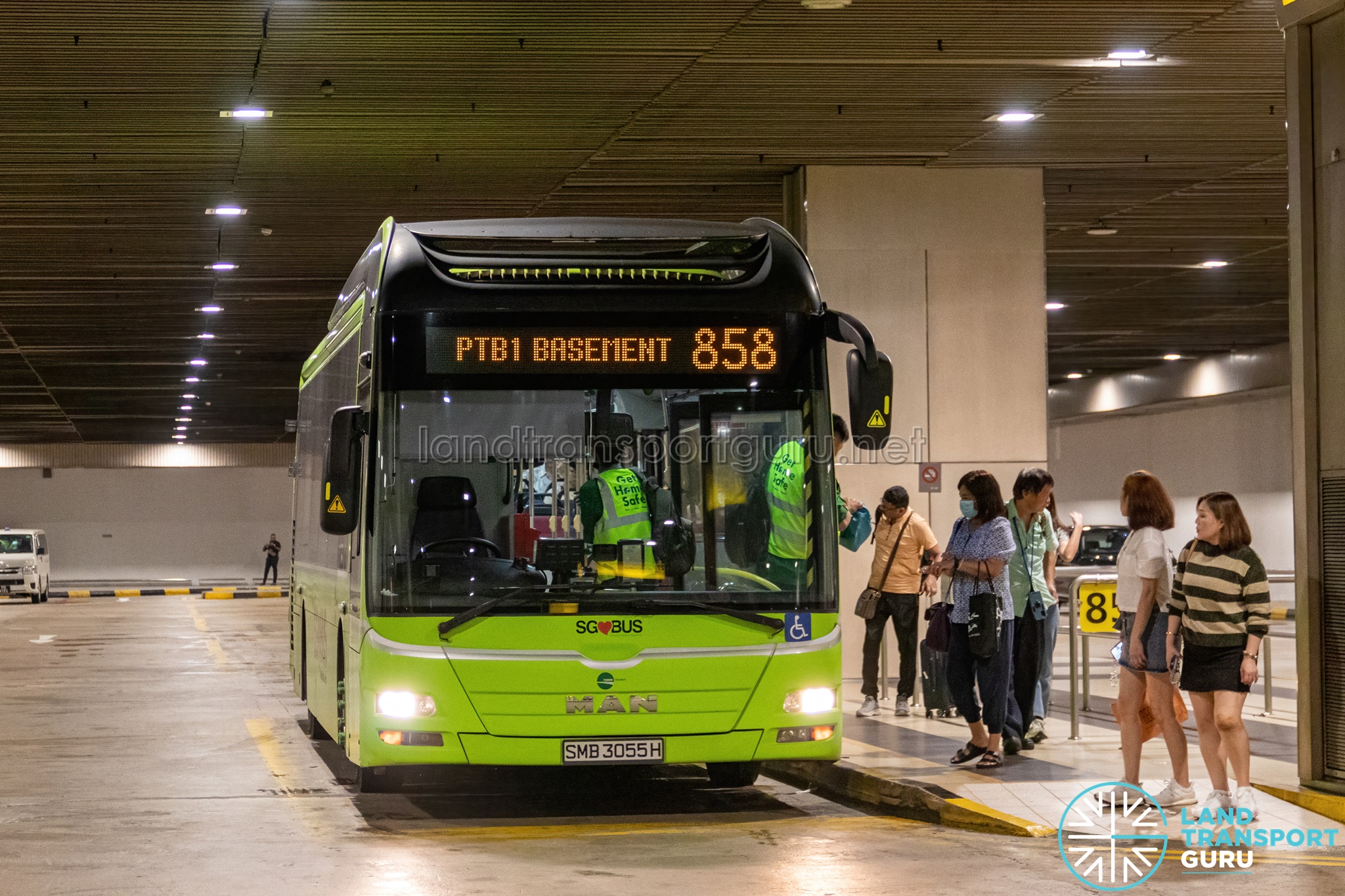
One such example is Bus Service 858 (Woodlands Int ↺ Changi Airport (Loop)), Singapore’s longest bus route at 73.4 km. Since 18 March 2025, Tower Transit has implemented mid-route driver changes at Changi Airport Terminal 2, allowing each driver to operate for a shorter period before resting. Service 858 now includes scheduled breaks of four to nine minutes during peak hours, and eight to fifteen minutes during off-peak hours.
Tower Transit introduces Mid-Route Driver Swaps on Bus 858 to Boost Safety | Land Transport Guru
Converting Loop Services to Bidirectional Routes
Another way to reduce driving durations involves converting some loop services into bidirectional operations where suitable layover points exist, such as at bus interchanges and terminals. This allows Bus Captains to complete shorter one-way trips instead of continuous loops.
For example, effective 26 October 2025, Bus Services 63 (Eunos Int ↺ Jalan Rumah Tinggi (Loop)) and 173 (Bukit Batok Int ↺ Clementi Int) will be amended to operate bidirectionally.
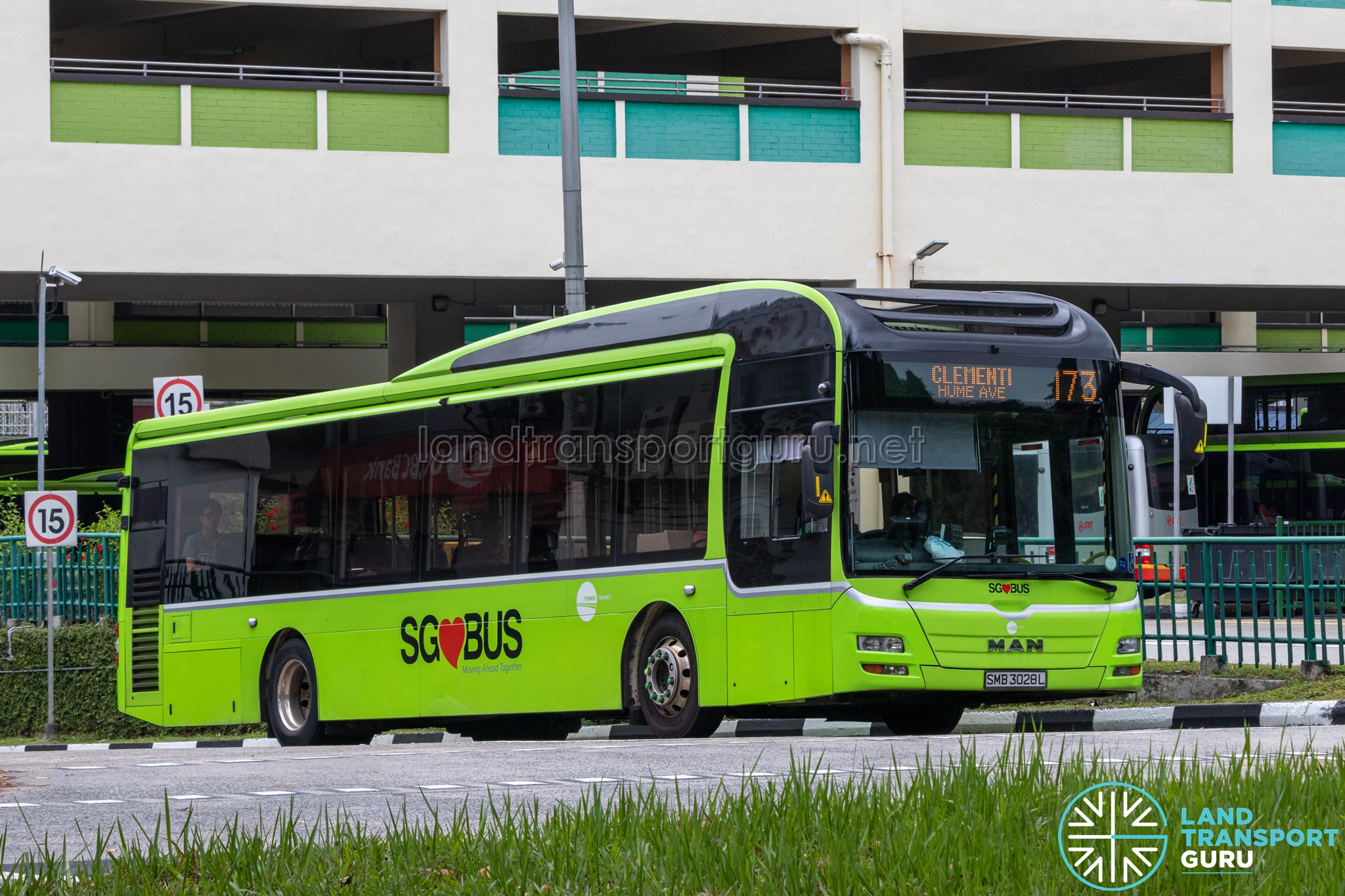
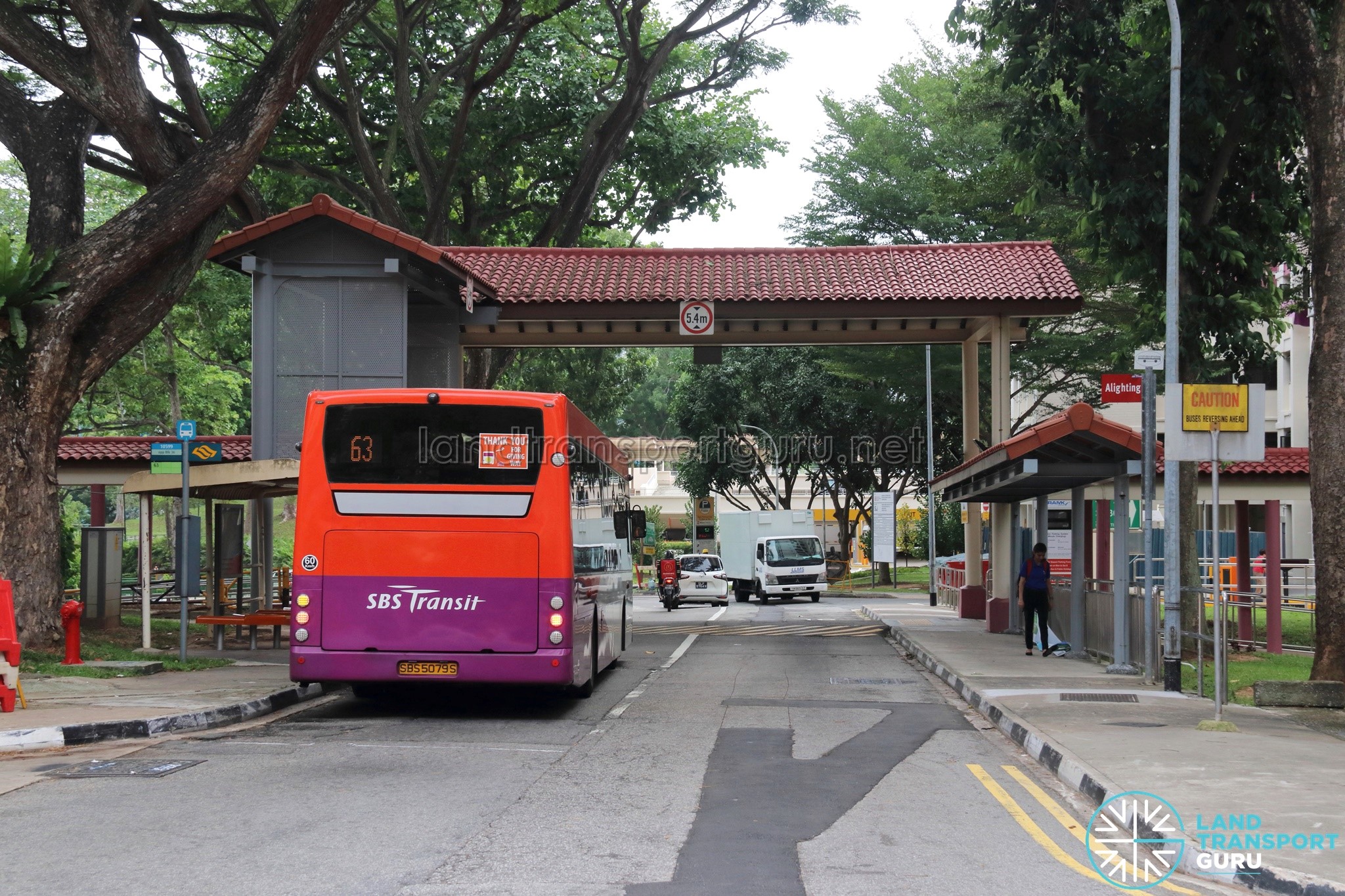
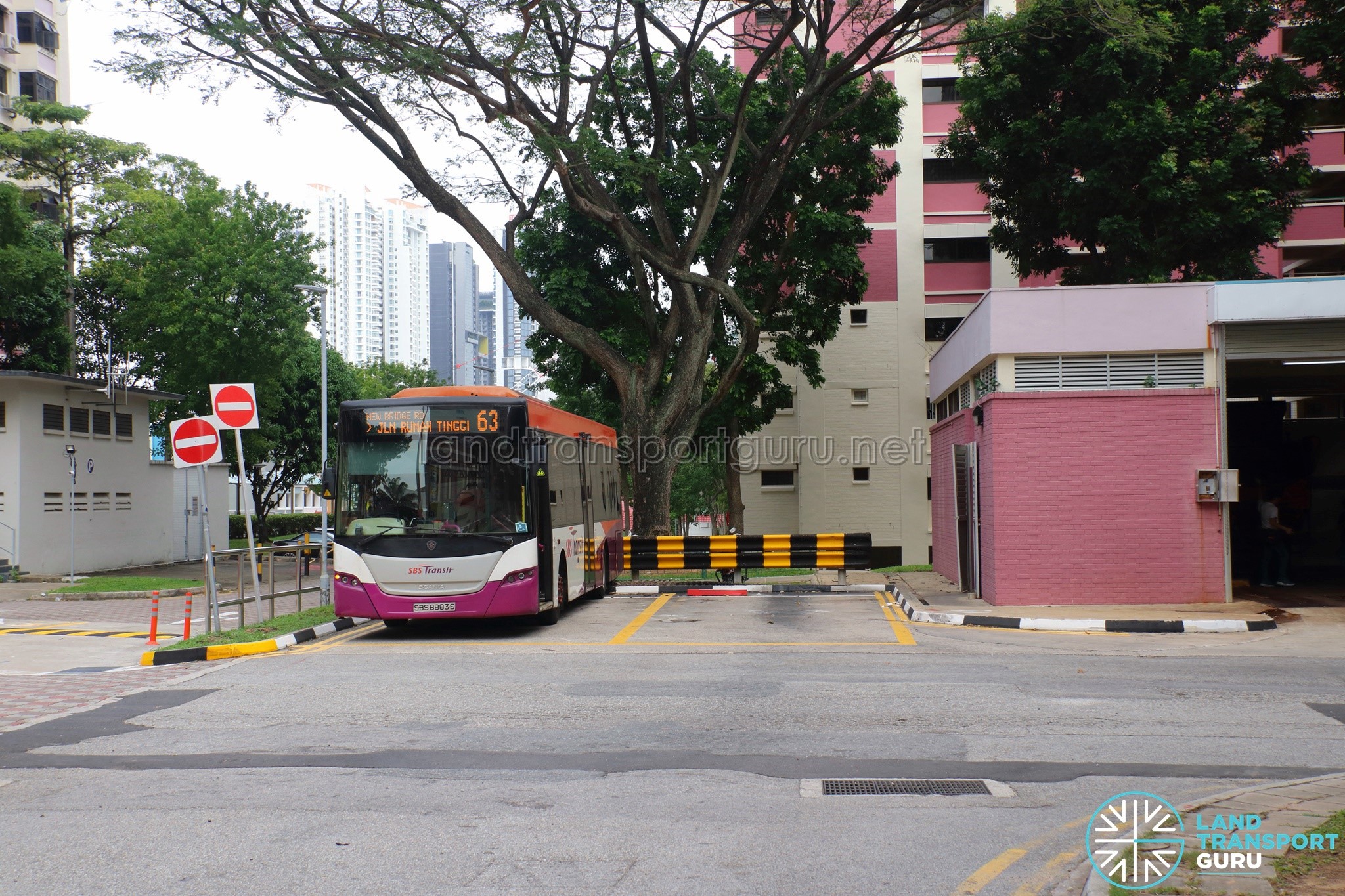
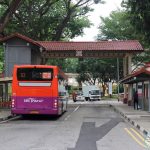
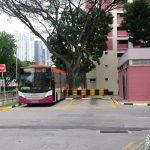
While Service 173 will terminate at Clementi Interchange, Service 63 will terminate at Jalan Rumah Tinggi, where existing bus parking lots facilitate layovers and driver breaks. These reverse-parking lots are a legacy of the former Rumah Tinggi Bus Terminal.
Potential Route Amendments
As of now, no bus routes have been formally amended, although the Taskforce’s recommendations suggest that such amendments should be explored.
Routes with available city termini or feasible layover points, such as Service 857 near Marina Centre, are among the more practical candidates for restructuring.
Operational and Financial Implications
Under the Bus Contracting Model, operators are paid service fees based on mileage operated, which incentivises efficient operations using fewer drivers. Should operators be mandated to add rest time, this is likely to increase the cost of operations by requiring more bus drivers per route.
For example, when Tower Transit Singapore introduced the mid-route driver swap arrangement, it had to add one extra driver each for the morning and afternoon shifts.
It is not known if PTOs will be compensated for the cost of these arrangements moving forward, especially as these changes represent additional costs not factored into the competitive tendering process for existing tendered bus contracts.
Ancillary Benefits
In addition to improving safety, operators could also gain ancillary benefits through these efforts to reduce continuous driving time. For instance, longer bus routes are more prone to delays and bus bunching due to traffic variations. By shortening routes and/or introducing mid-route breaks, operators can adjust for headway inconsistencies and potentially recover more quickly from congestion-induced disruptions.
Furthermore, restructuring driving duties around shorter continuous driving hours and longer breaks can reduce fatigue and enhance job satisfaction among Bus Captains. This can help PTOs reduce driver turnover and attract more people to the profession.
See Also:
- Bus Interlining | Land Transport Guru
- Bus and Driver Scheduling | Land Transport Guru
- Tower Transit introduces Mid-Route Driver Swaps on Bus 858 to Boost Safety | Land Transport Guru
External Links & References:
- —
Some potential amendments for such long-haul services:
70M, 111, 857 & 972/M all amend to Marina Centre Ter or Shenton Way Ter (in the latter case 70M can just be withdrawn)
Changi airport services (except 36) will likely go bidirectional once the bus interchange at Changi T5 opens
81 amend to Woodleigh Int (why isn’t this done alr?)
once the Bukit Chagar ITH opens they can amend 160, 170/X & 950 there and make them bidirectional
62 amend to Lor 1 geylang ter (or kallang int once it opens)
14 shortened to Upp East Coast Ter from Bedok (or bedok south int once it opens), while 966 extends there
965 & 975 becomes bidirectional (975 can use similar arrangements to 63)
LTA always love to shortened those important bus routes just to give us inconvenience, they will force us to take the mrt instead of having alternatives, I think probably till 2040, they will just keep shortening, maxziming inconvenience, so bad and too bad, but what can I do?? Nothing.
Hopefully one of the services included is 64. Total time 140mins since it loops at Mei Ling Street. I don’t think there is a terminus there so maybe need to extend further abit?
One of the reason to shortened long distance svc and push many px to MRT… What bc need is longer breaks for long distance not 8-14 mins..
should change all the long distance svc to short distance
make it the same as all the new services introduced, short and sweet to nearby MRTs
Then what’s the point of buying high-capacity buses? Might as well utilise a fleet of exclusively minibuses a la ex-USSR and cram every single person onto it and funnel everyone into the 3-car trains