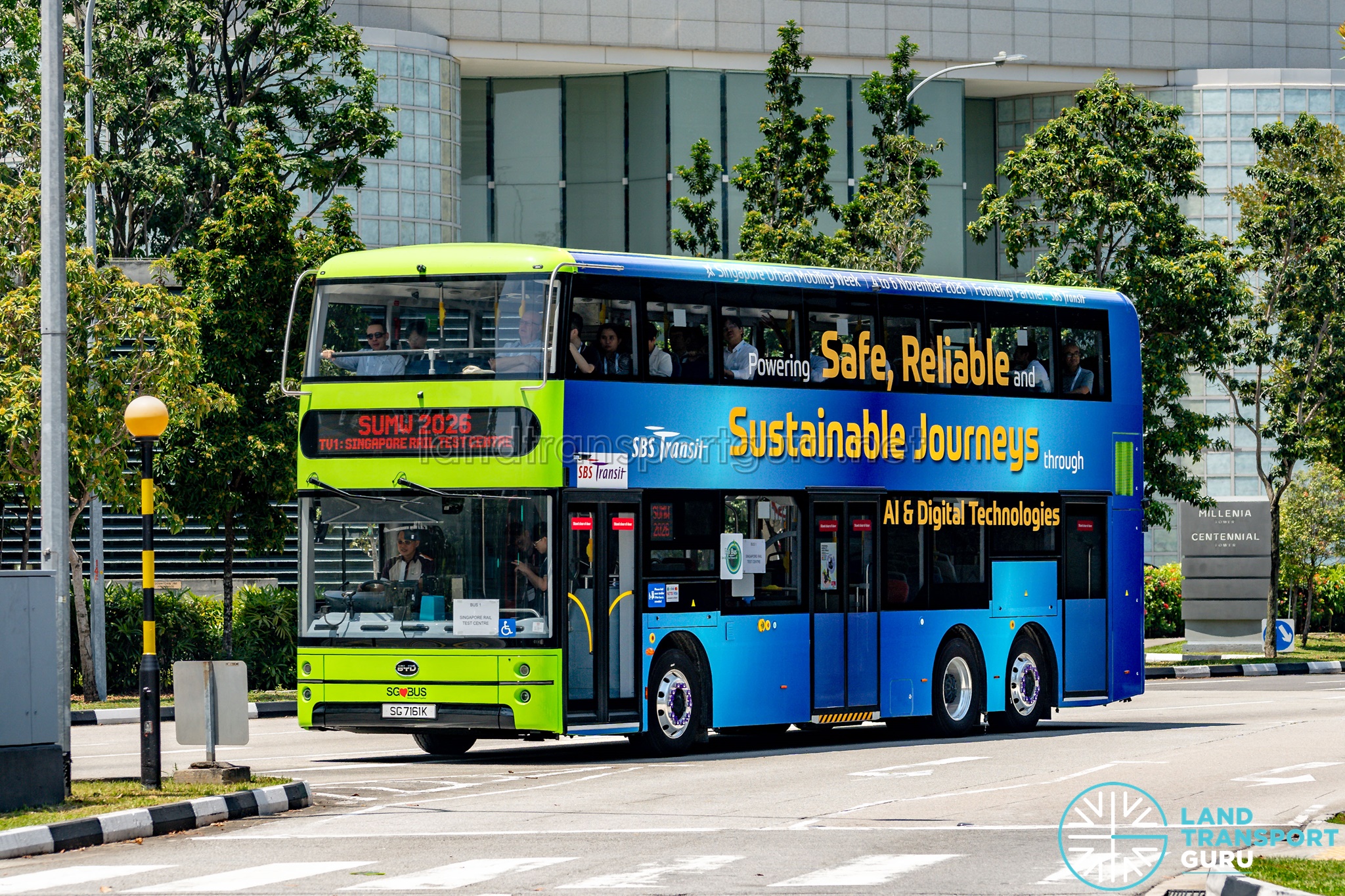
| BYD BC12A05 (B12DS) |
|
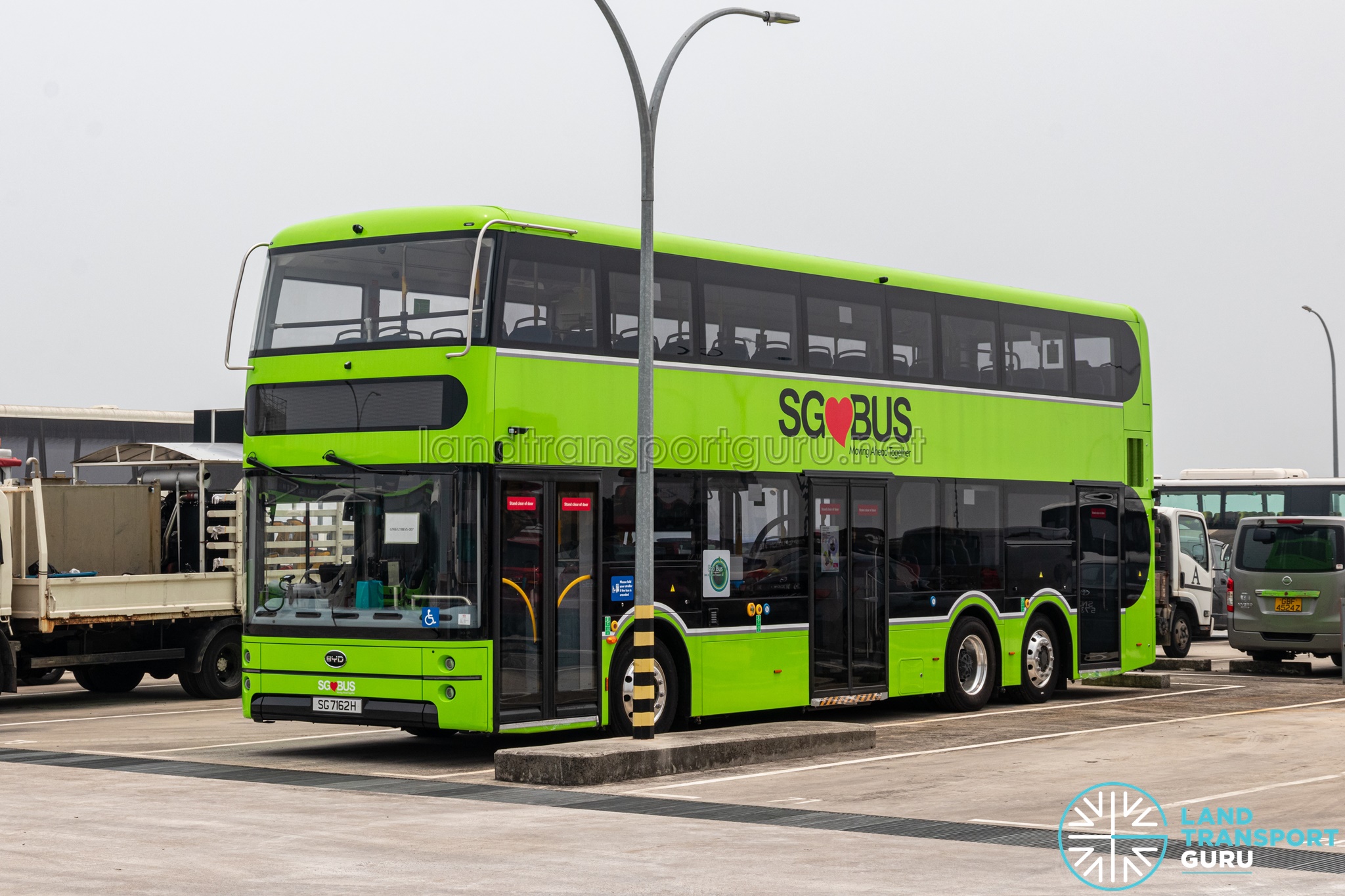 BYD BC12A05 in Singapore |
|
| Manufacturer | BYD Auto Industry |
| Bodywork | Zhuhai Guangtong |
| Years in operation | 2026– (Projected) |
| Operators | SBS Transit |
| Technical Data | |
| Length | 12m |
| Motor | BYD AC Synchronous Motor |
| Battery | BYD Blade LFP (616 kWh) |
| Accessibility | Low Floor |
| Emission Standard | Zero tailpipe emissions |
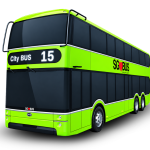
The BYD BC12A05, also marketed as the BYD B12DS, is a battery-electric, double-deck city bus manufactured by Chinese electric vehicle manufacturer BYD Auto (比亞迪).
Singapore’s Land Transport Authority (LTA) ordered 50 units in 2025, as part of a larger order for 660 electric buses (Contract PT602). The buses feature three doors and two staircases, and are assigned the registration numbers SG7160M – SG7209H. The first units were registered on 21 October 2026, are expected to enter passenger service at the end of 2026.
The procurement forms part of Singapore’s broader transition toward an electric public bus fleet, with LTA targeting half of the public bus fleet to be electric by 2030. Further information on Singapore’s electric bus rollout is detailed in the article Electric Buses in Singapore.
BYD B12D model background
BYD introduced its B-series electric bus range on 29 July 2020. The initial range comprised the 10-metre B10 and 12-metre B12 single-deck buses, as well as the 12-metre B12D double-deck bus.
The buses use twin wheel-hub hairpin electric motors connected directly to the driven wheels. This configuration eliminates the need for a conventional transmission and driveshaft, thus maximising space in the passenger cabin. The B-series also features a six-in-one electronic controller incorporating silicon carbide (SiC) components. The unit combines the controls for the two electric motors, steering control, air compressor, DC-DC conversion and power distribution into a single module.
The B12D is offered with BYD’s proprietary Blade battery, which uses lithium iron phosphate (LFP) chemistry. The battery’s cell-to-pack (CTP) design provides high energy density and enhanced safety from external damage. The battery system incorporates liquid cooling to regulate operating temperatures and a battery management system for monitoring and control. BYD also offers cell-to-chassis (CTC) integration, wherein the battery is incorporated into the vehicle’s chassis structure to improve packaging efficiency and lower the vehicle’s centre of gravity.
As of 2026, apart from Mainland China, BYD B12D buses have also been introduced in Hong Kong, operated by Kowloon Motor Bus.
Early units in Singapore
The BYD B12DS was first exhibited in Singapore at the Singapore International Transport Congress & Exhibition (SITCE) in November 2024. Both a completed bus and a bare chassis were displayed. The exhibited bus’s chassis plate identified it as a BYD BC12A05, with chassis number LC04S44M6R0000006.
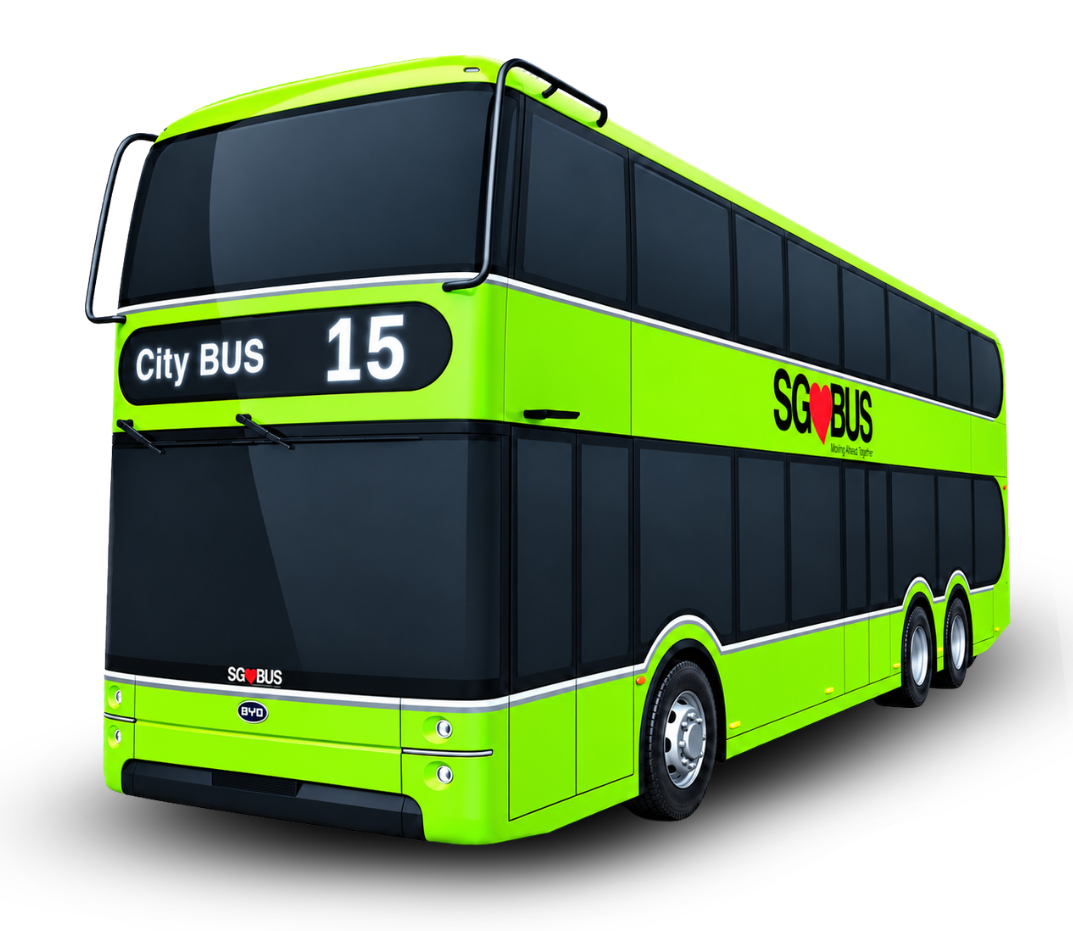
In late March 2026, another BYD BC12A05 was sighted in Singapore. The vehicle, bearing chassis number LC04S44M5RE000002 and registration SG4016S, featured the Lush Green livery used on Singapore public buses. The vehicle was believed to be intended for LTA revenue service trials, as the SG4001 registration series onwards are reserved for LTA trial buses. However, no such trials have materialised by late 2026. The vehicle was subsequently observed undergoing extensive interior modification works in Singapore.


LTA Tender & Production Batch
In December 2025, LTA awarded BYD (Singapore) Pte. Ltd. a S$34.5 million contract to supply 50 double-deck electric buses under Contract PT602D. The contract formed part of the LTA’s wider procurement of 660 electric buses under Contract PT602, which also involved Chinese manufacturers CRRC, Yutong and Zhongtong.
The double-deck buses supplied under PT602D were identified as BYD BC12A05 units, with an approximate unit cost of S$690,000 per bus.
Under the same procurement, BYD was also awarded Contract PT602C, valued at S$71.3 million, to supply 160 single-deck electric buses. Buses were delivered to Singapore starting in late 2026.
Deployment in Singapore
In July 2026, an Instagram reel posted by user @Penghuiz59 showed one of these new buses at Nansha Port in China before shipment to Singapore. The post attracted widespread attention in Singapore and was subsequently covered by local media outlets, including AsiaOne. Other social media users also shared sightings of buses awaiting shipment in China.
The first bus in the production batch, bearing the registration plate SG7160M, was sighted at BYD Singapore’s premises in August 2026. The 50 buses are assigned the registration numbers SG7160M to SG7209H.
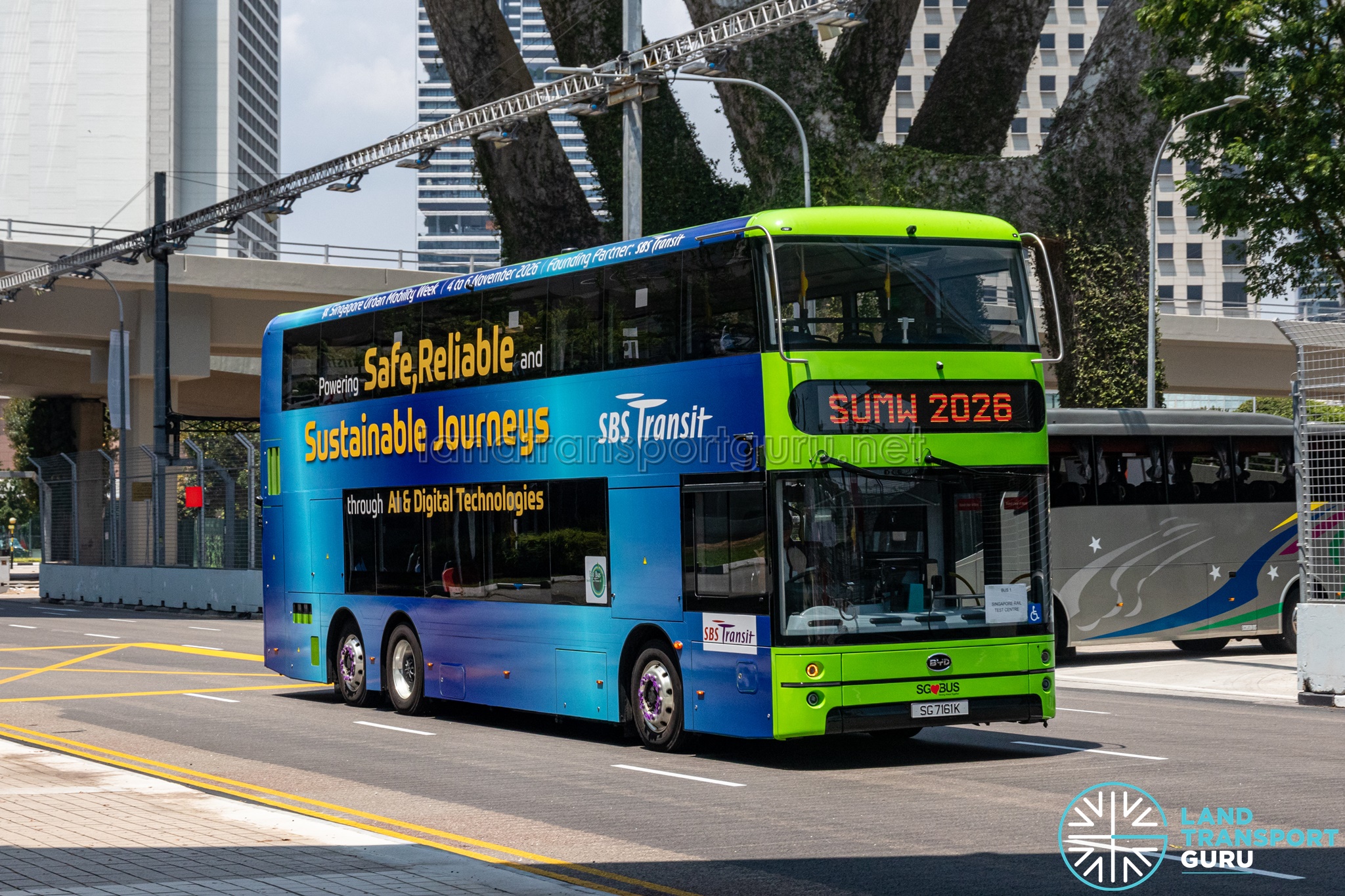
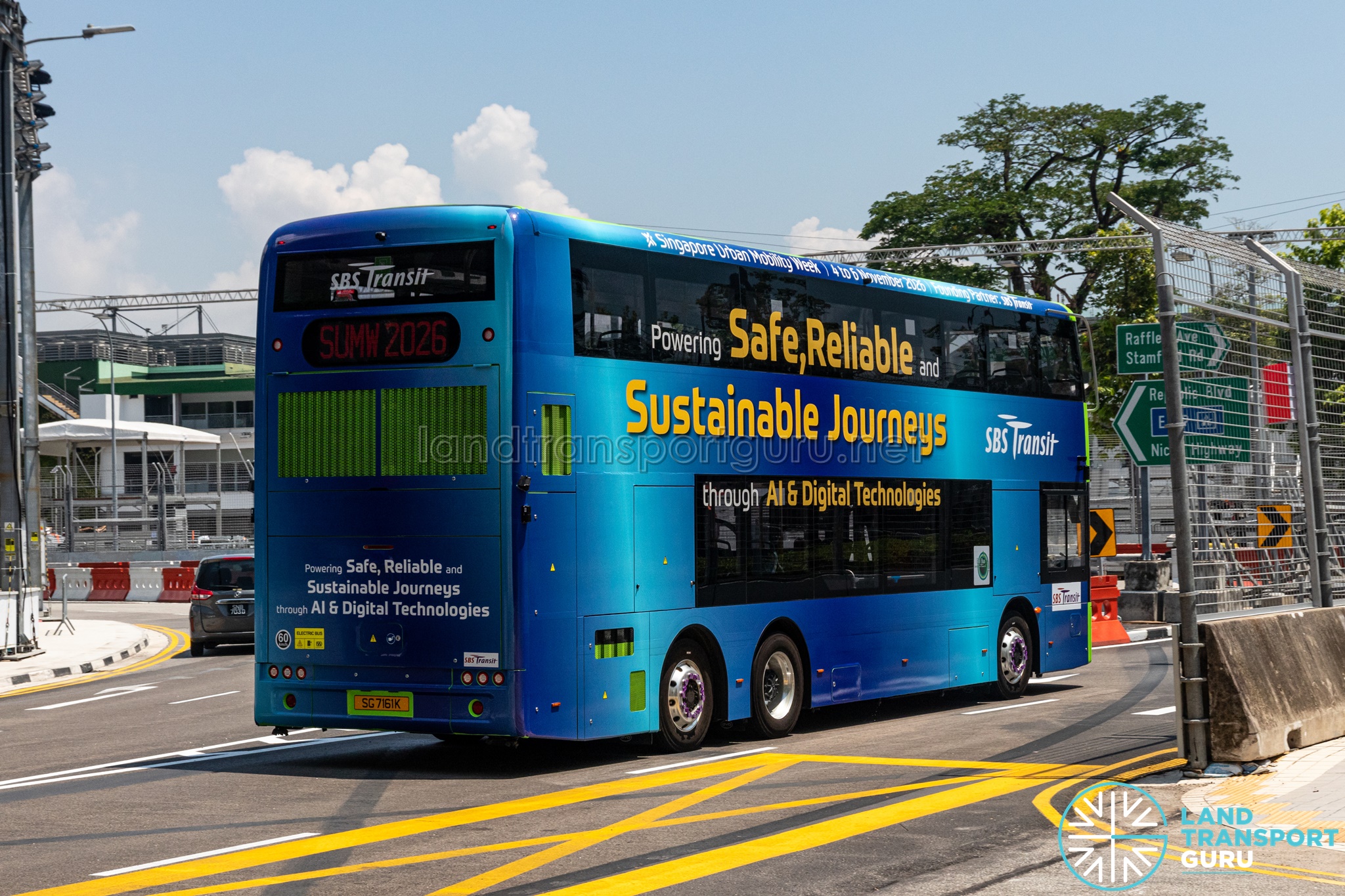
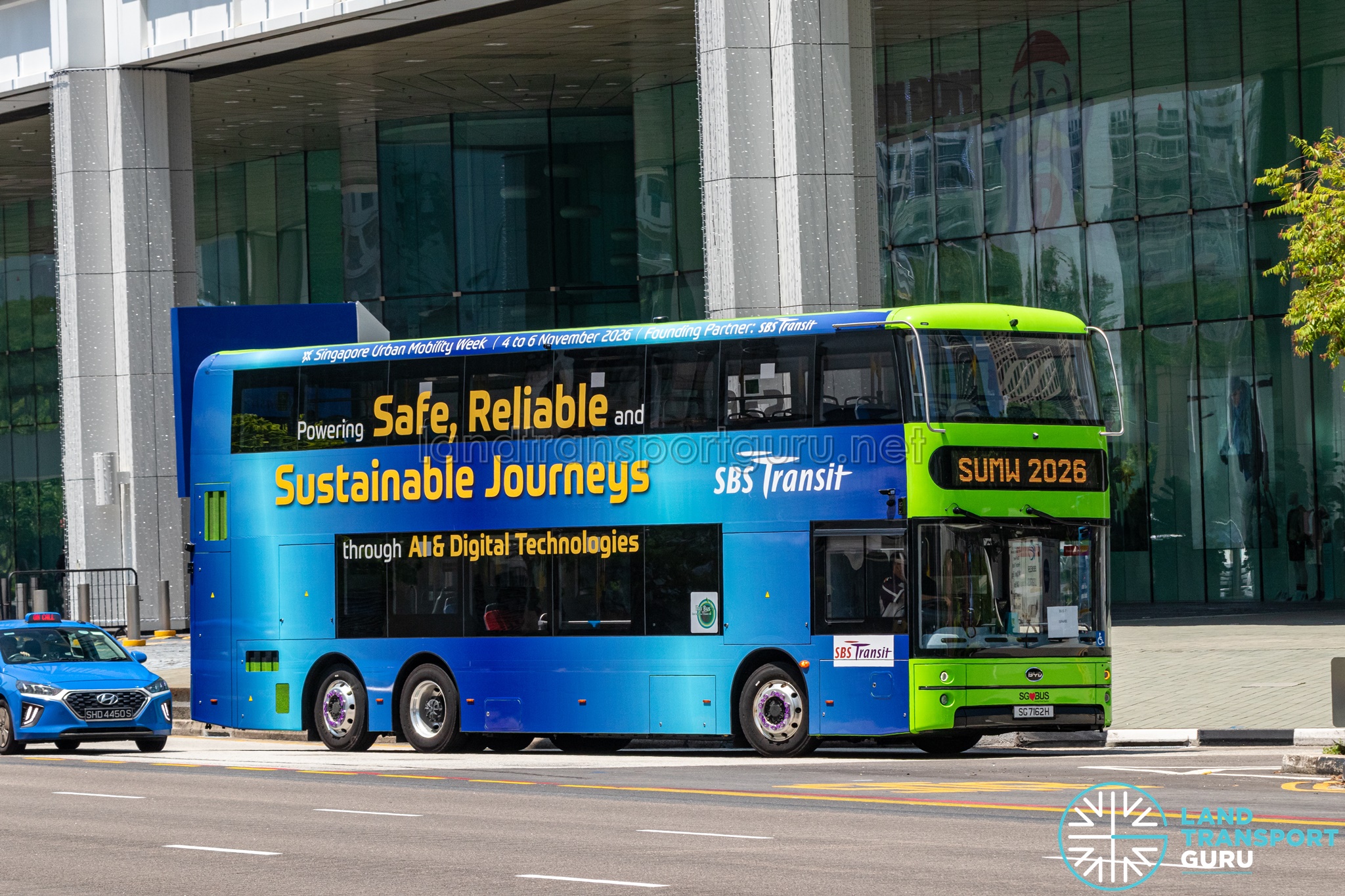
The first three units to be registered, SG7161K, SG7162H, and SG7163E, were registered on 21 October 2026 under SBS Transit.
These buses were deployed by SBS Transit to provide shuttle services for delegates attending the Singapore Urban Mobility Week (SUMW) 2026, held at Suntec Singapore Convention & Exhibition Centre in November 2026. Another unit was exhibited as a static display during the event.
Preliminary Specifications
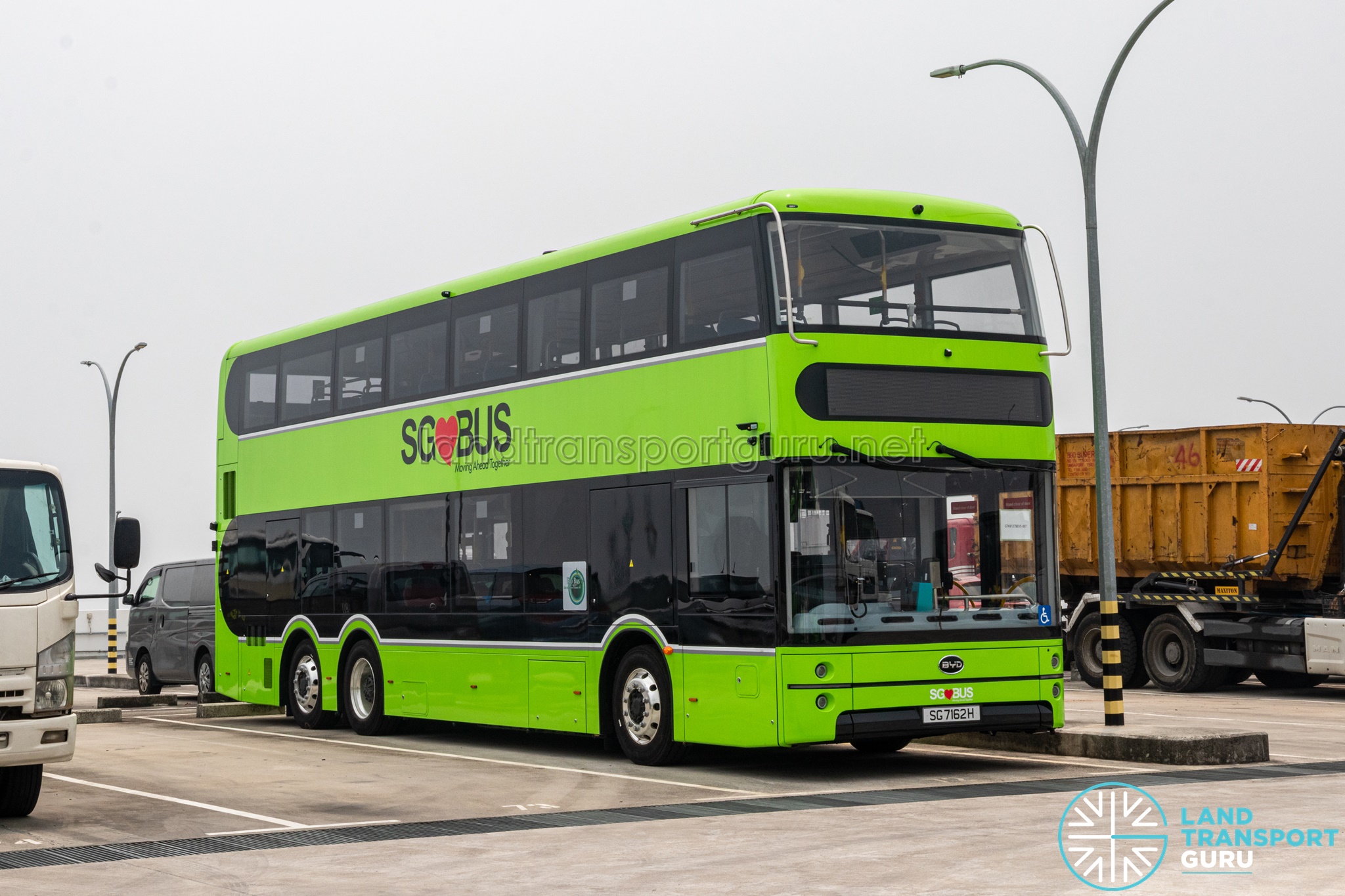
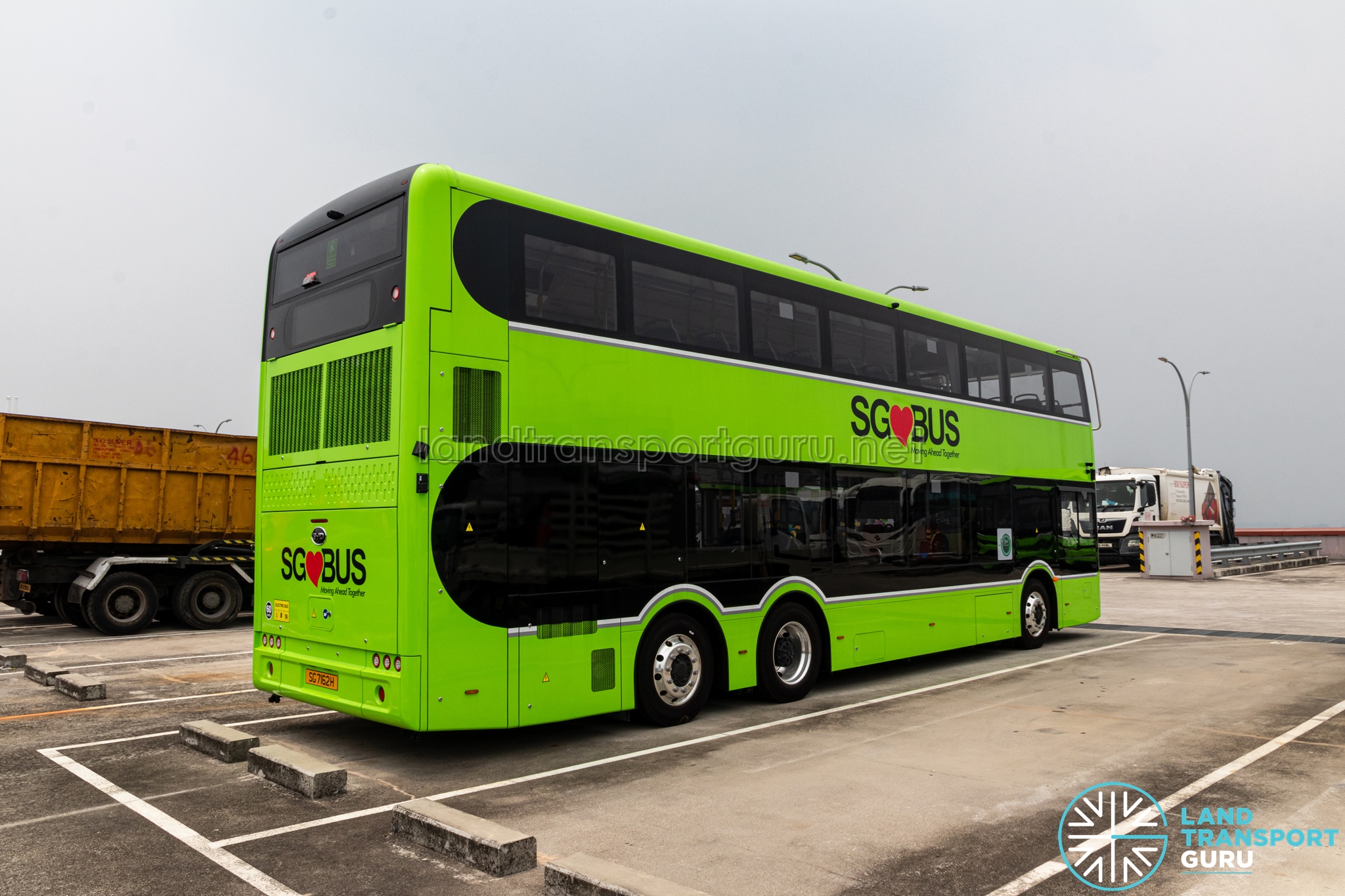
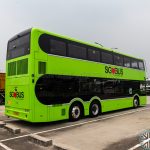
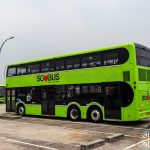
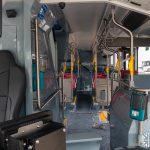
| BYD BC12A05 (LTA PT602 Batch) – Specifications |
|
| Vehicle Model | BYD BC12A05 (GTK6127BEVS) |
| Weights | Unladen weight: 18,500 kg Manufacturer’s data plate: 25,880 kg / 26,000 kg Axle 1: 7,100 kg Axle 2: 12,600 kg Axle 3: 6,180 kg / 7,100 kg |
| Drivetrain | BYD axle with integrated AC synchronous motors (×2) Maximum power/torque of 300 kW (150 kW × 2) / 1200 Nm (600 Nm × 2) |
| Battery | BYD Blade Battery (Cell-to-Chassis, CTC) (Capacity 616 kWh) Lithium Iron Phosphate (LFP) chemistry Range: 300 km (100%-20%) |
| Bodywork |
Zhuhai Guangtong Vehicle Manufacture Co., Ltd. Assembled in Zhuhai, China |
| EDS | Luminator Electronic Display Sign (EDS) Full Colour LED Matrix design. Luminator Basic driver controller. |
| PIDS | Luminator SMART Passenger Information Display System (PIDS) Exterior-facing LCD screen Lower & upper deck interior-facing LCD screen Lower & upper deck LED text display |
| Doors | Masats • Front 2-leaf inward gliding door • Middle 2-leaf plug sliding door • Rear 1-leaf plug sliding door |
| Passenger Capacity | 14 Seated (Lower Deck) + 50 Seated (Upper Deck) + 58 Standing = 122 Passengers Not including 4 foldable seats, 2 wheelchair bays |
| Driver Assistance |
TNT Surveillance – Integrated Display Screen – T-CMS831 Camera mirror system – Forward collision warning system & lane departure warning (T-FA Front Alert Camera) – Side collision warning system (T-SA Side Alert Cameras) – Anti-Fatigue system (T-DA Driver Alert Camera) – Surround view camera system (T-A.I. 360°) |
| Other Specifications | • Green/Red LED illuminated staircases • Maximum charge power: 500kw • Retractable Stroller Restraint • USB charging ports (USB-A & USB-C) • Xinder EWR-TD03 2-in-1 Wheelchair Ramp • Upper deck rear emergency exit hatch |
As with the earlier BYD BC12A05 demonstrator vehicle seen in Singapore, the production buses are bodied by Zhuhai Guangtong in China and shipped to Singapore as completed buses.
Model Overview & Exterior – SUMW 2026 Exhibition Bus
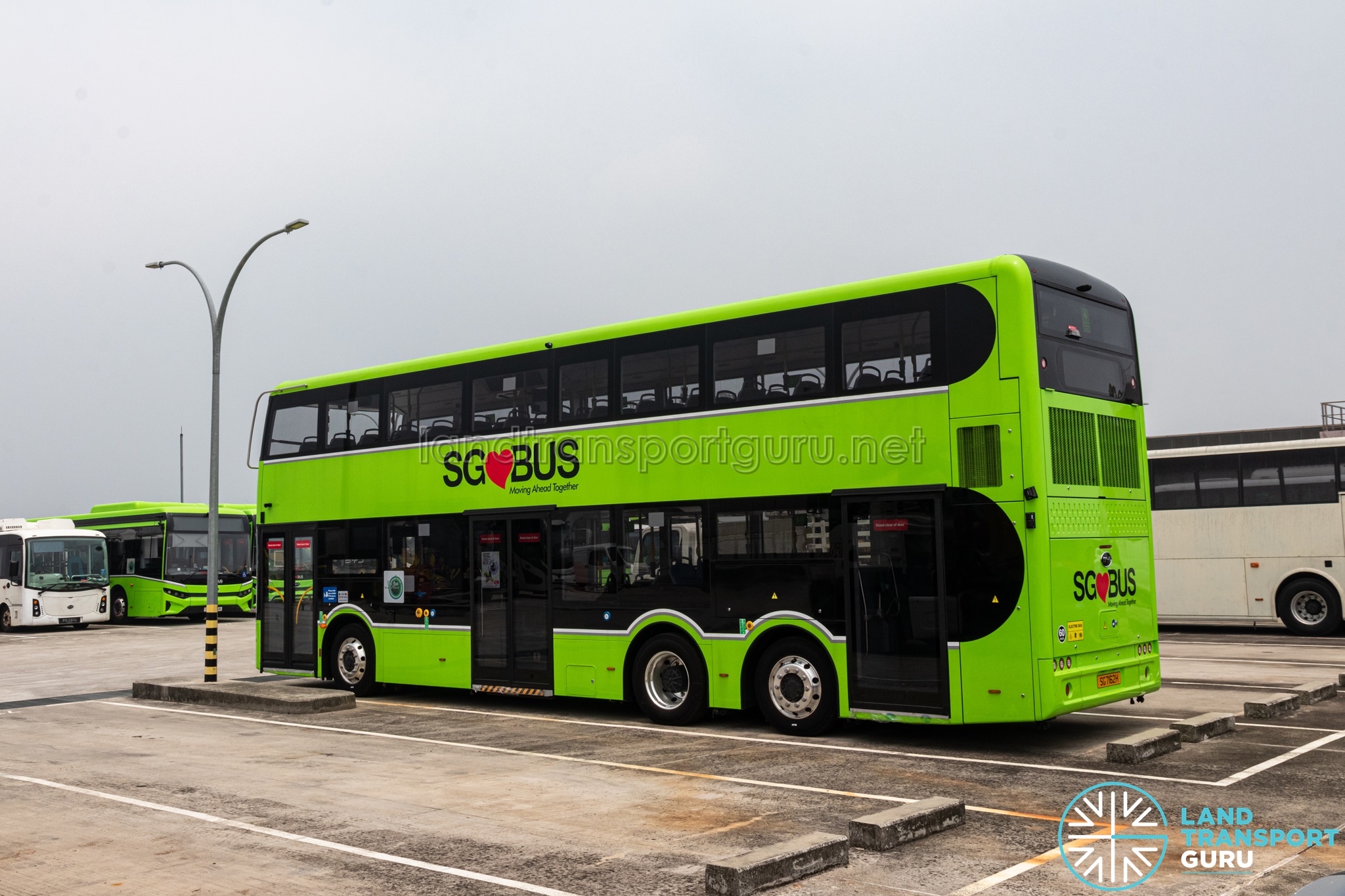
The BYD BC12A05 buses delivered under Contract PT602 are built by Zhuhai Guangtong Vehicle Manufacture Co., Ltd., a contract manufacturer of buses based in Zhuhai, Guangdong, China. BYD supplies the bus chassis, while Zhuhai Guangtong assembles the completed bus in Zhuhai before delivery to Singapore. The bodywork design is nearly identical to the BYD B12DS exhibited at SITCE 2024, but without staircase windows between the lower and upper decks.
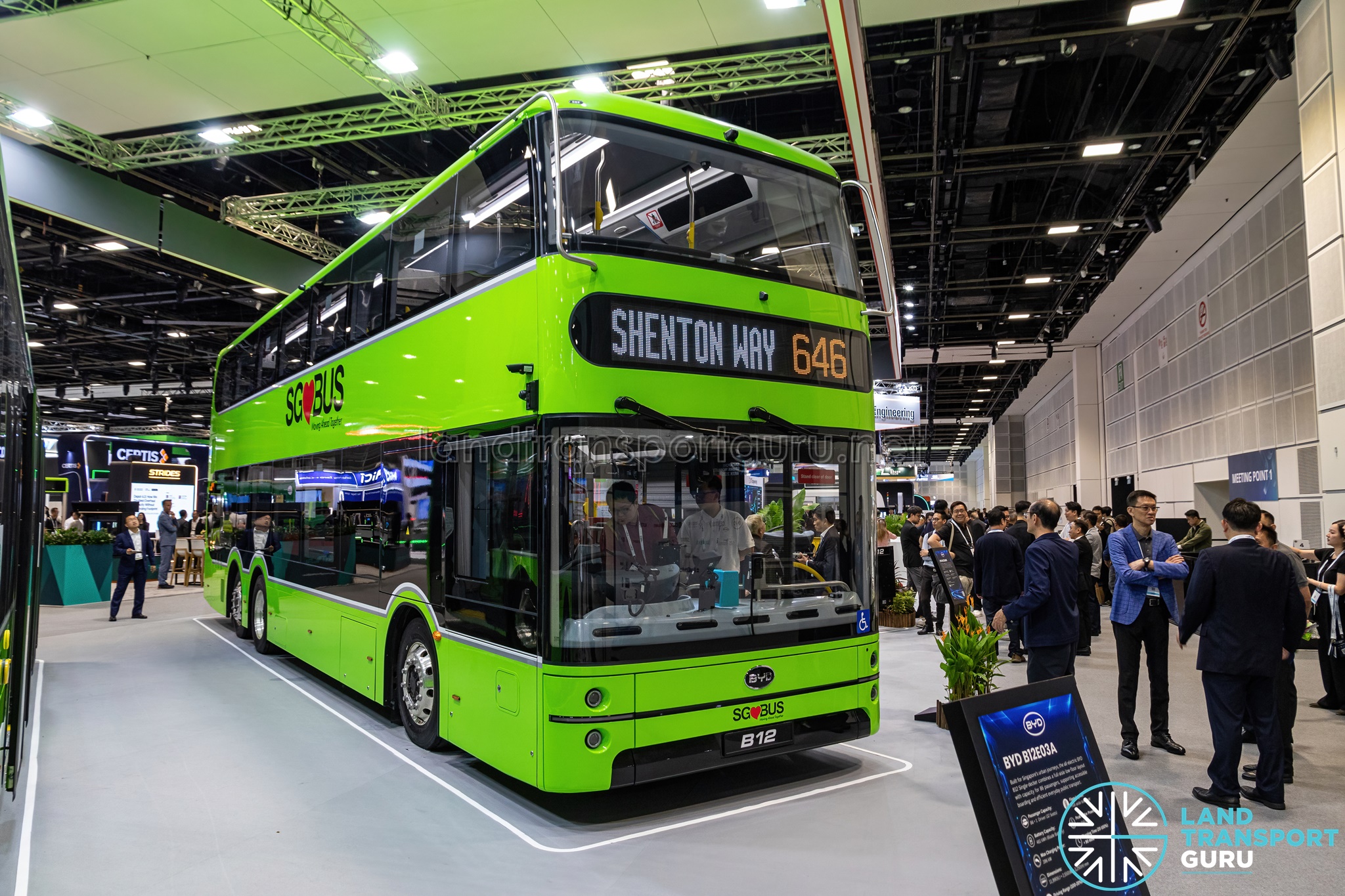
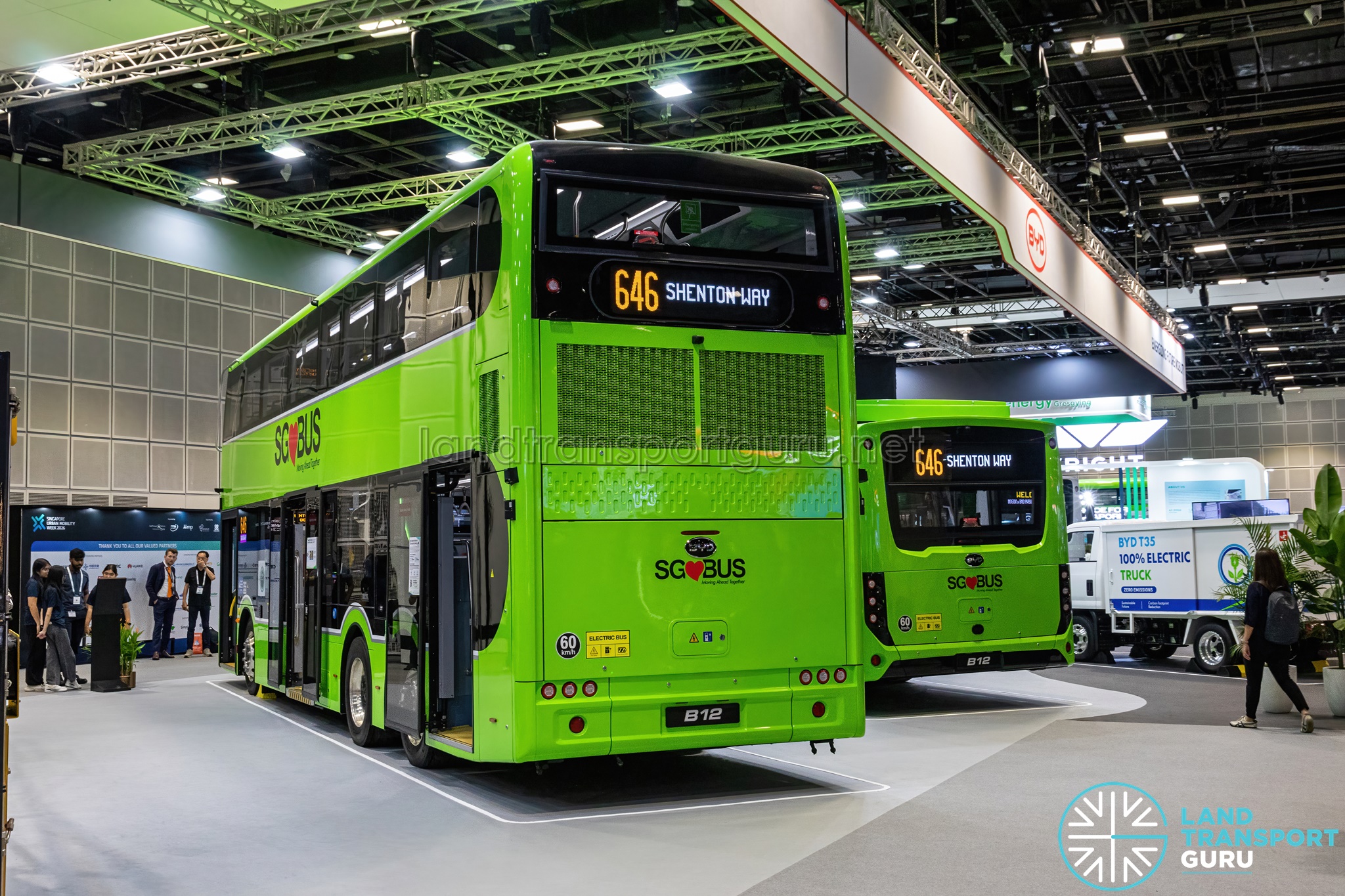
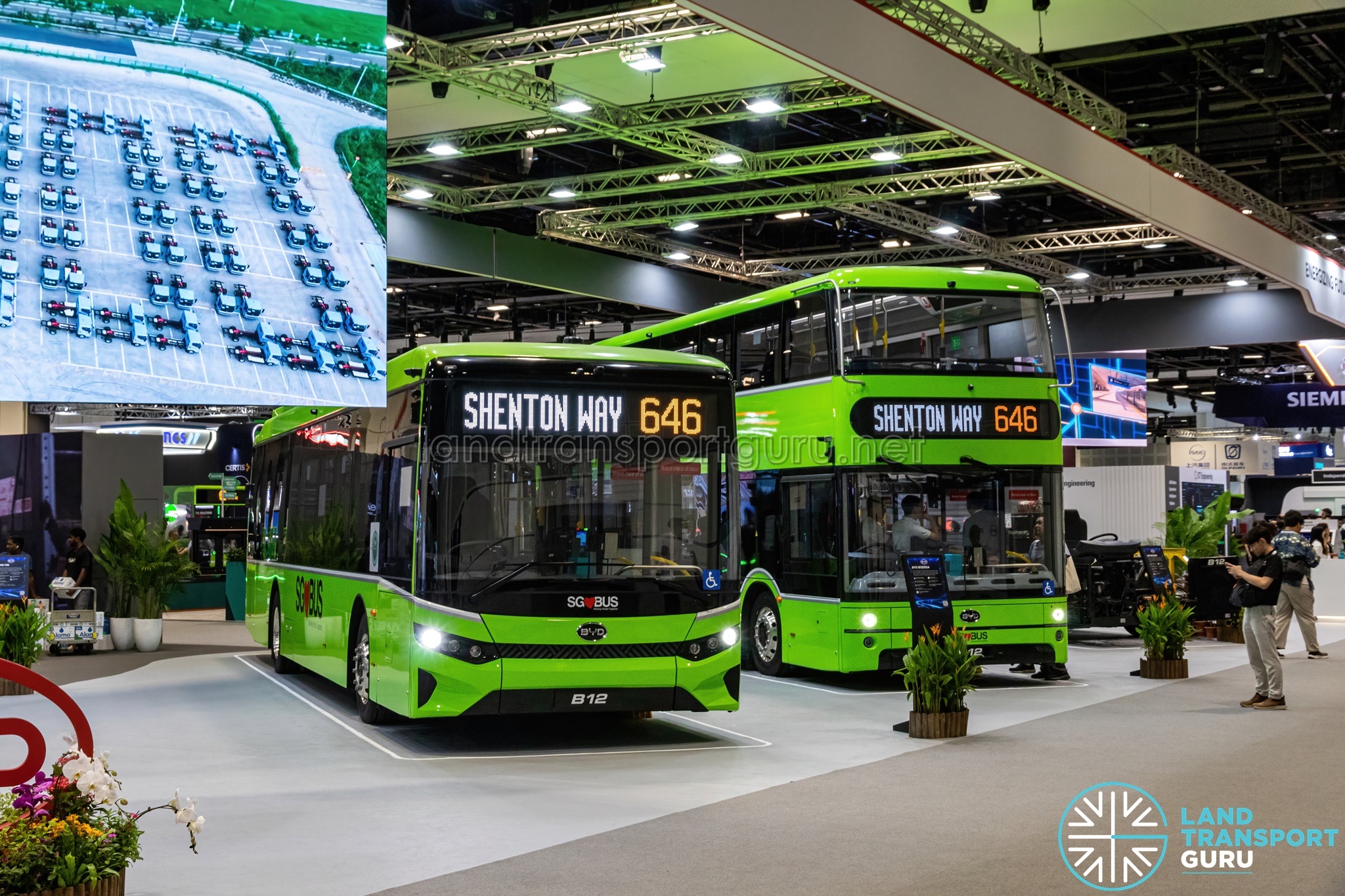
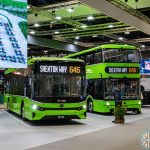
Buses are painted in LTA’s unified Lush Green base livery, with accompanying SGBUS decals.
The traditional wing mirrors are also replaced with a high-definition Camera mirror system (from TNT Surveillance). Electronic Display Signs (EDS) are supplied by Luminator.
Interior Showcase – SUMW 2026 Exhibition Bus
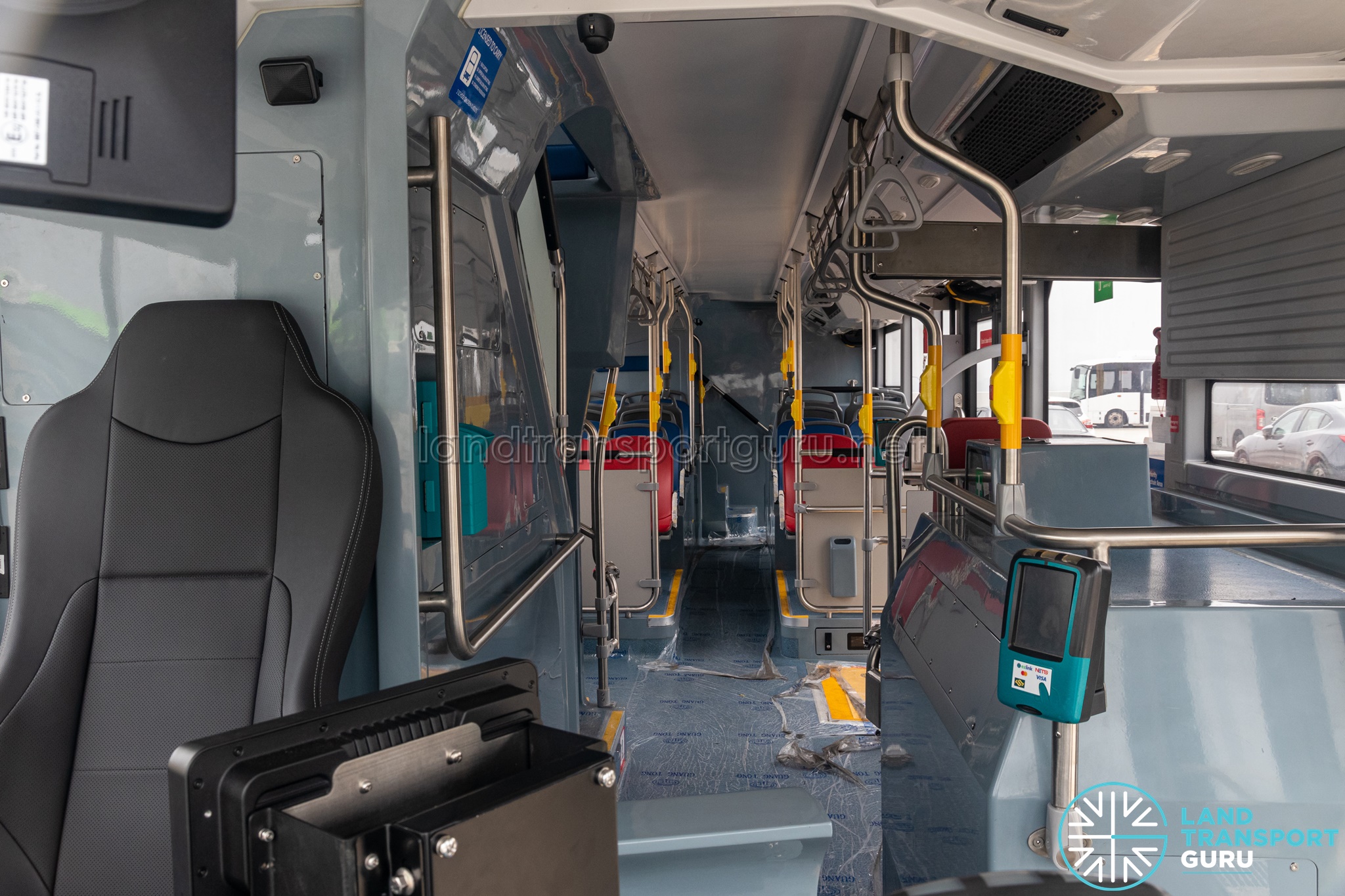
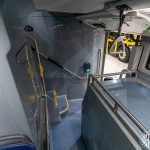
The BYD BC12A05 features a fully low-floor design for step-free access throughout the bus. LTA’s PT602 specifications require a three-door, two-staircase layout for ease of passenger movement, with the rearmost door located behind the rear axle. This comes at the cost of seating capacity.
The lower deck of the bus is fitted with just 14 seats and 2 wheelchair bays.
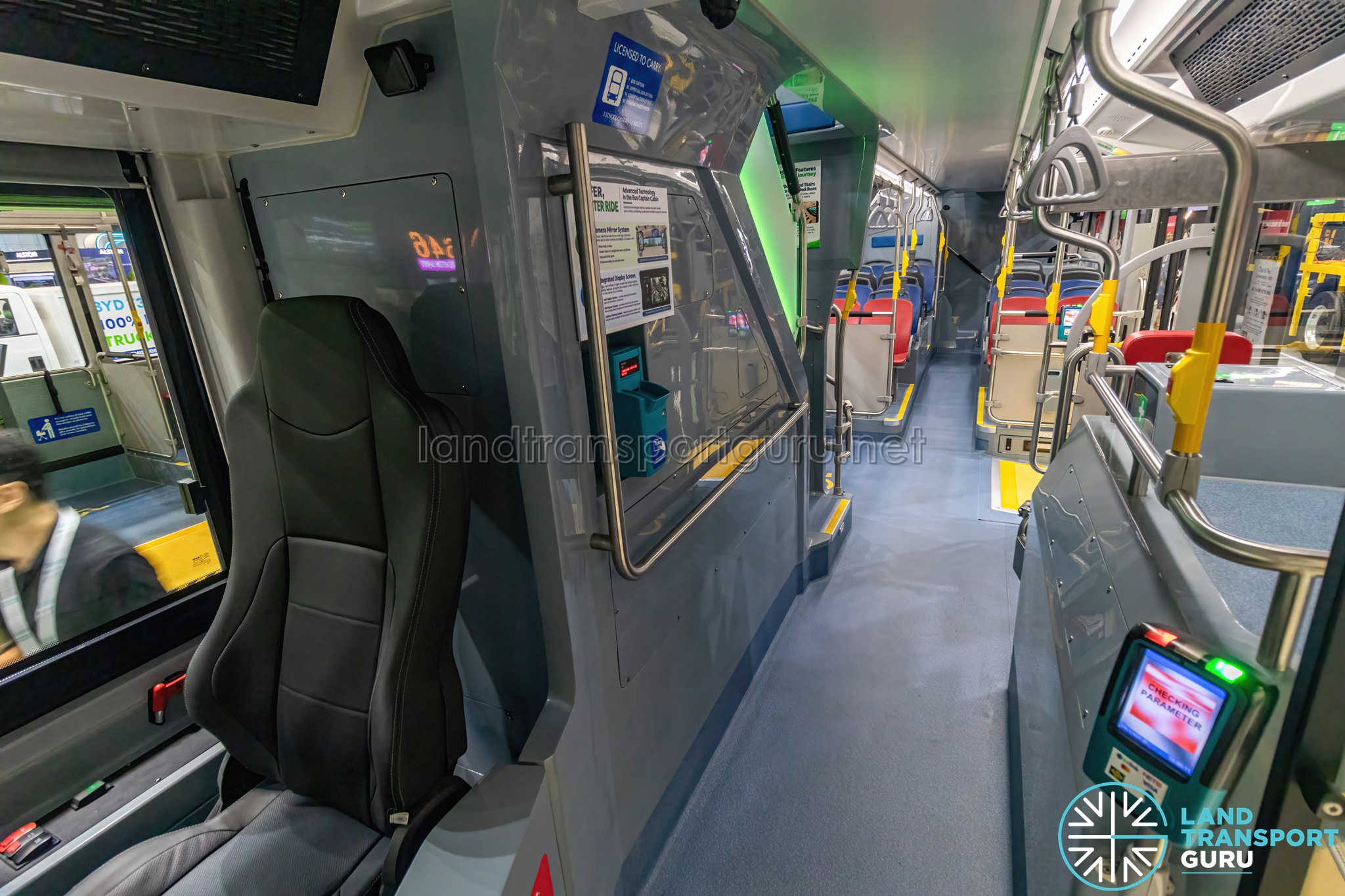
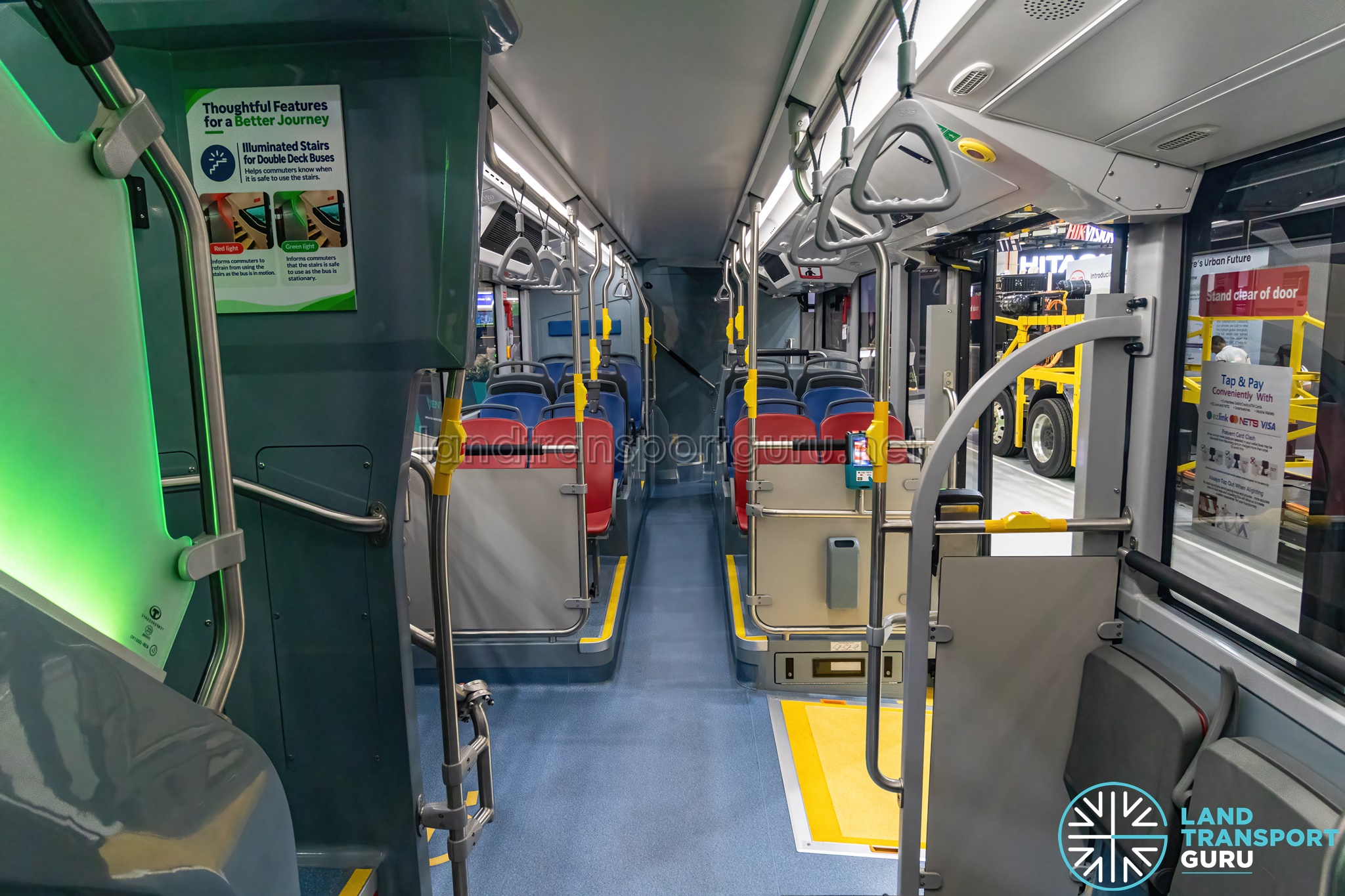
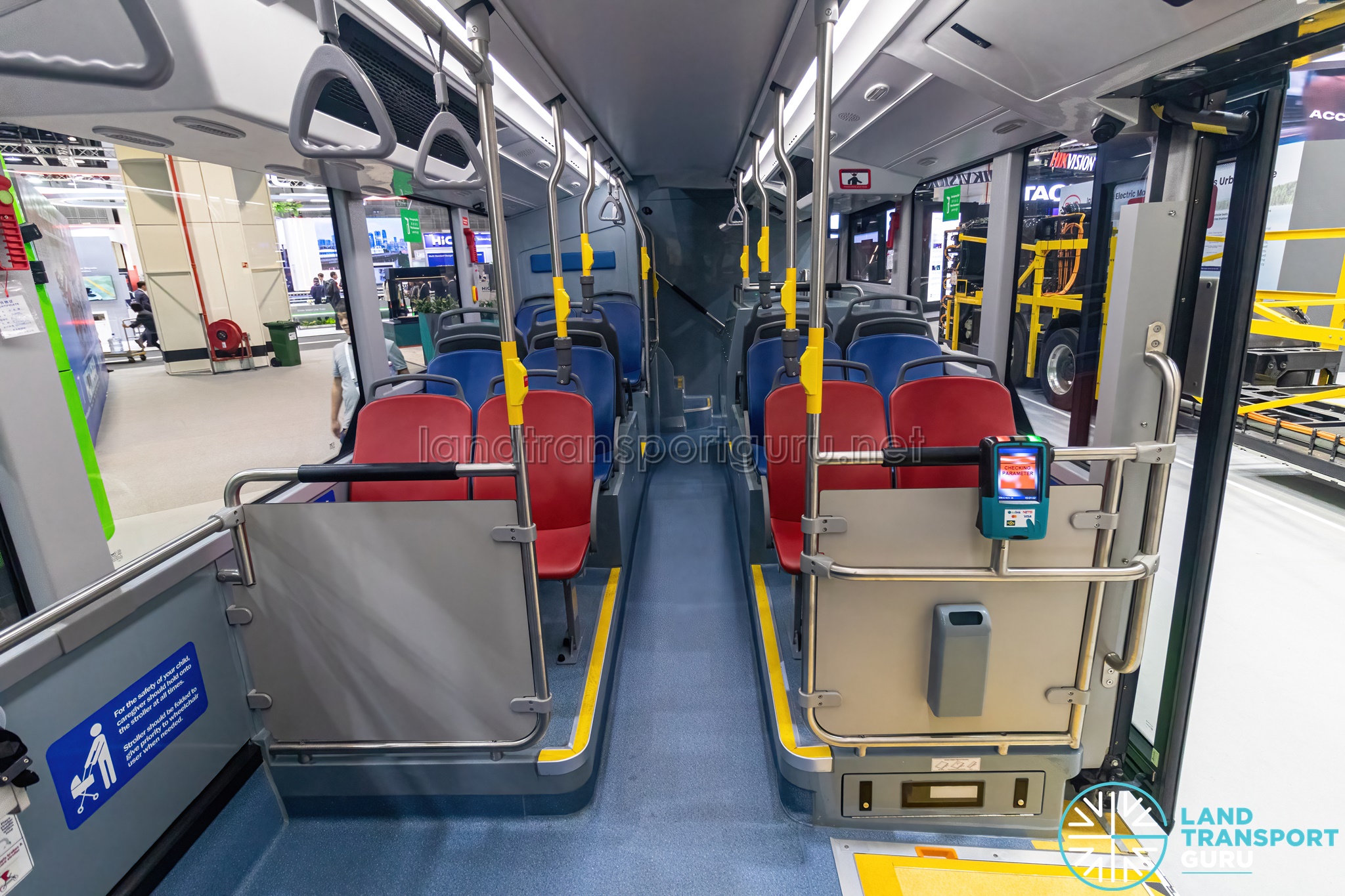
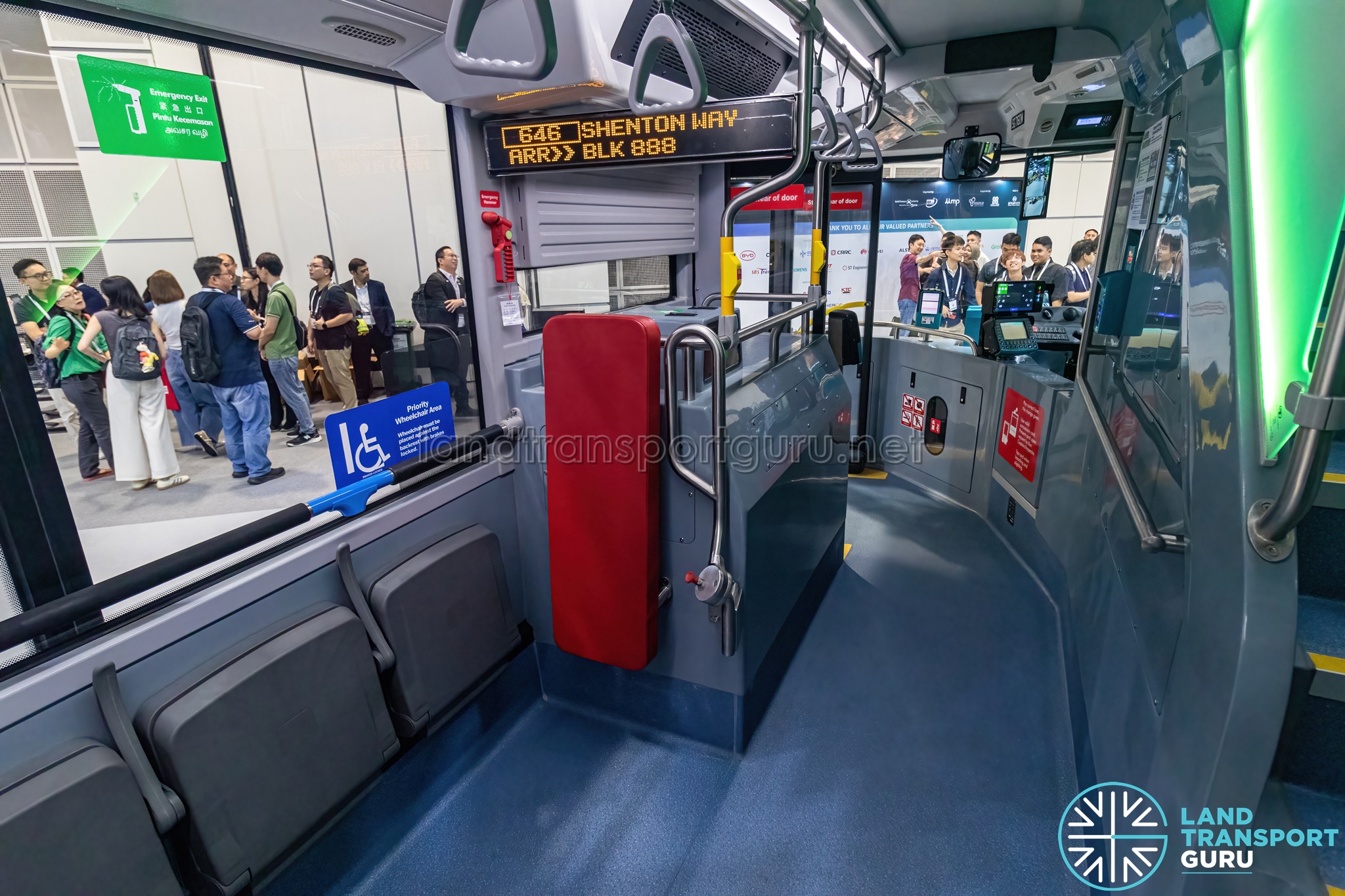
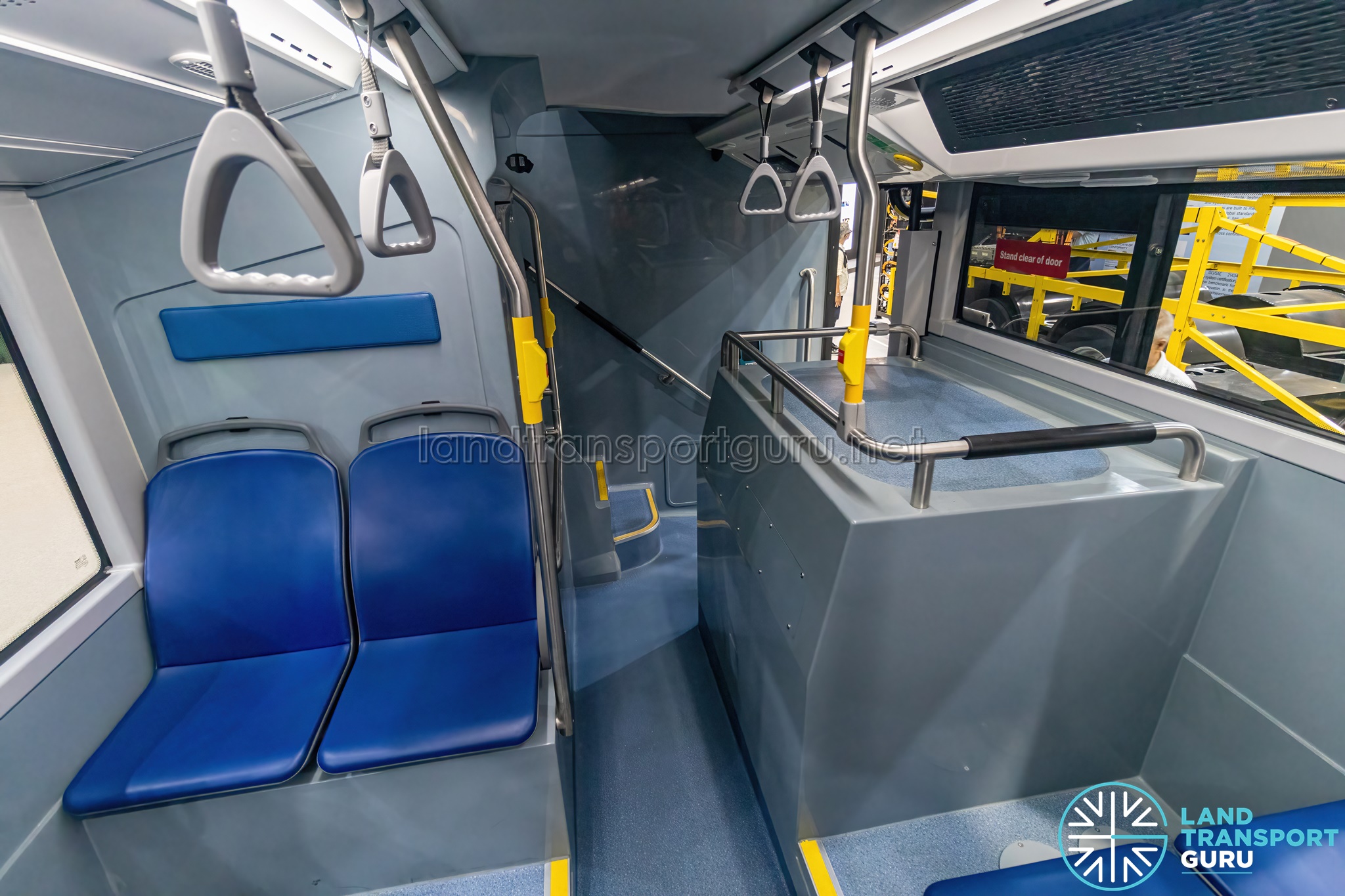
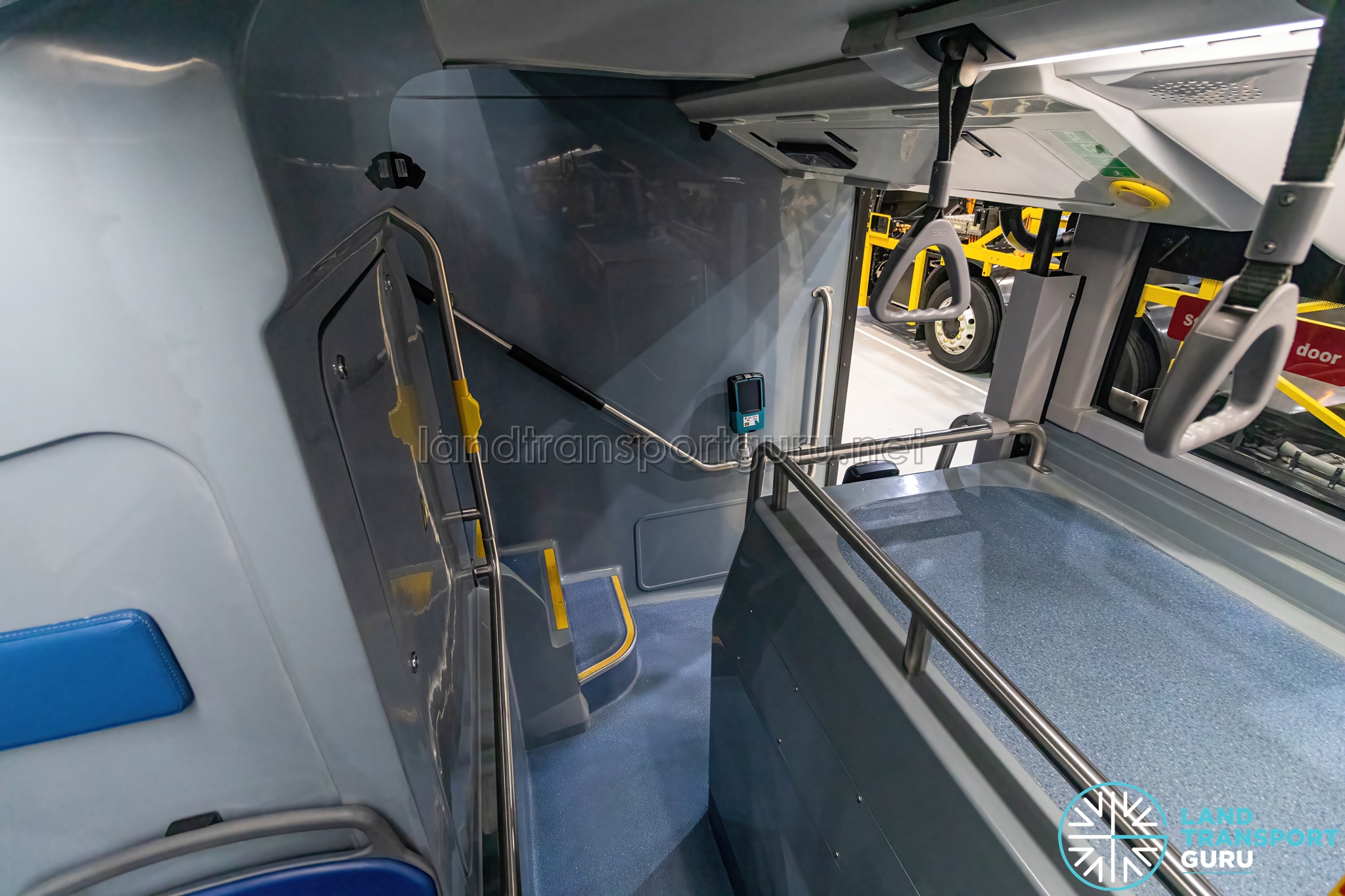
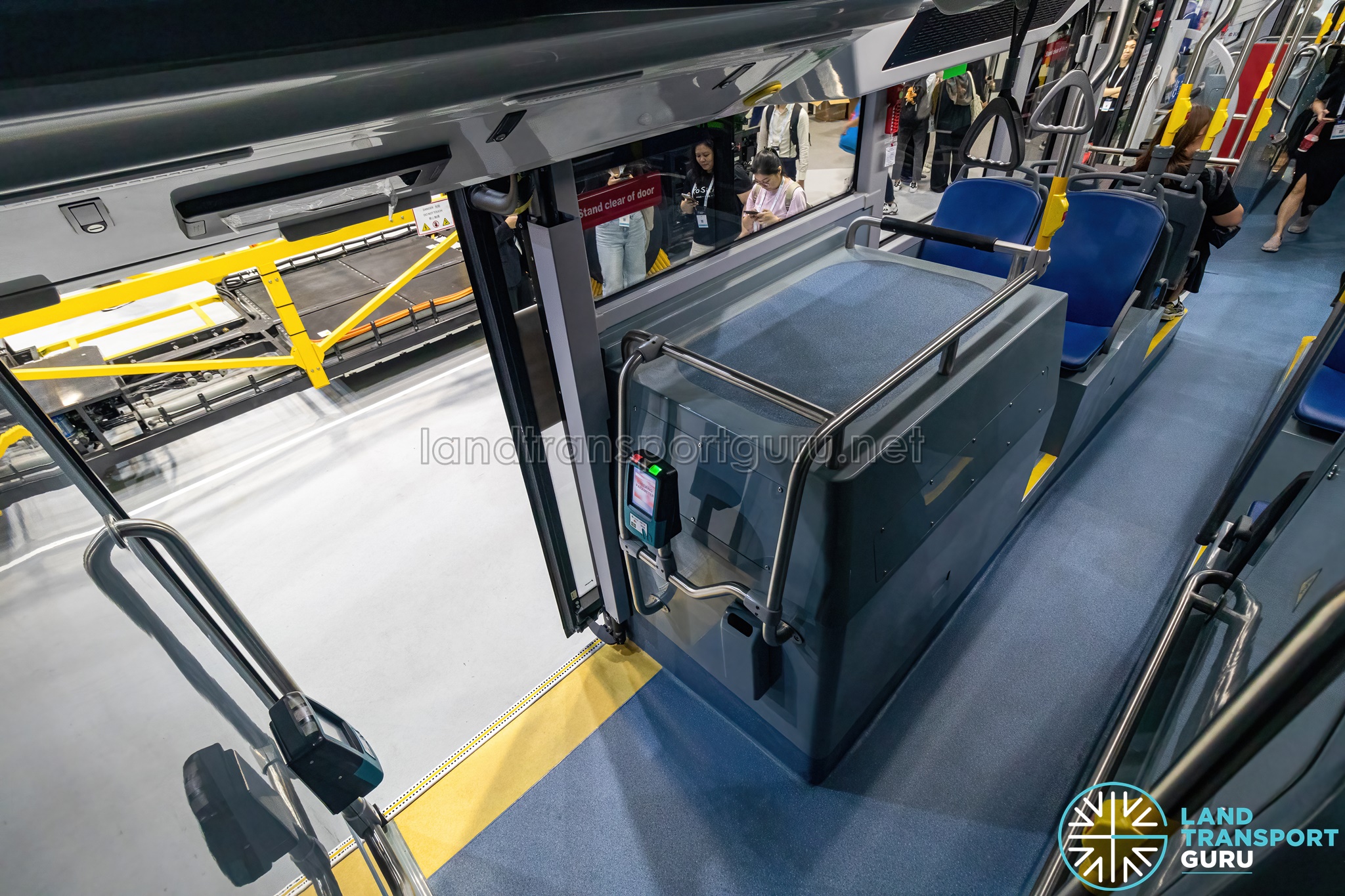
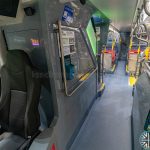
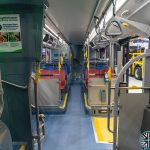
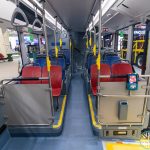
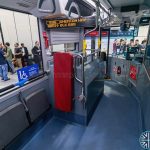
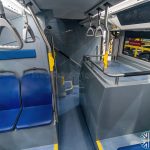
Seats are upholstered in blue for general use (10 seats) and maroon for priority seating (4 seats).
Accessibility
LTA specifications call for two wheelchair bays for passengers travelling in wheelchairs (PIWs) or using personal mobility aids.
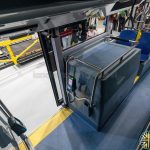
The forward wheelchair bay (beside the exit door) has three foldable seats, while the rear wheelchair bay (opposite the exit door) has one foldable seat integrated into the backrest. These foldable seats do not count towards the seating capacity.
Pivoting handlebars can be deployed or stowed for convenience; this particular design, locked via an index plunger, first appeared on ADL E500 3-door buses, and was also used on earlier BYD BC12A04 buses.
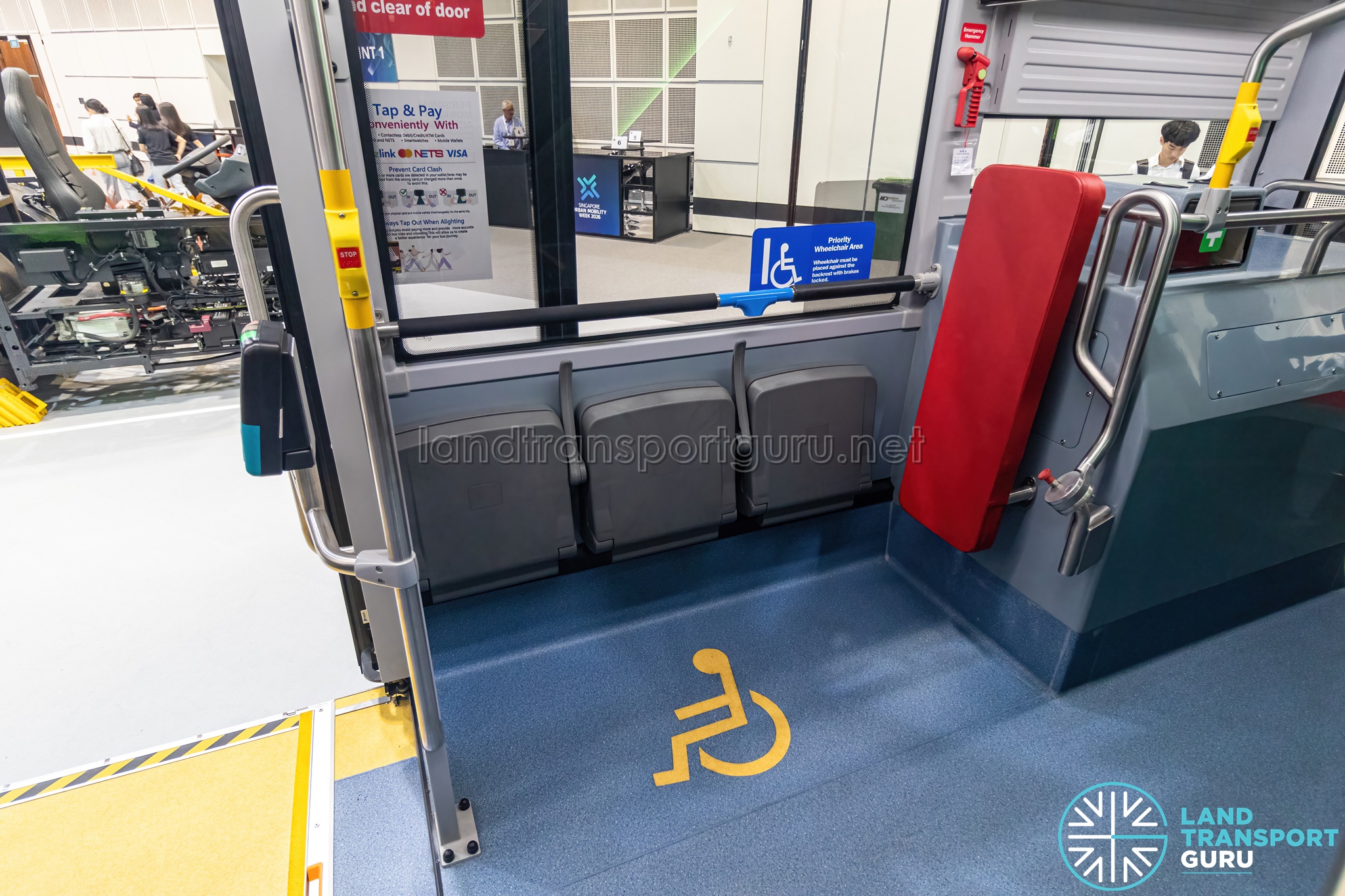
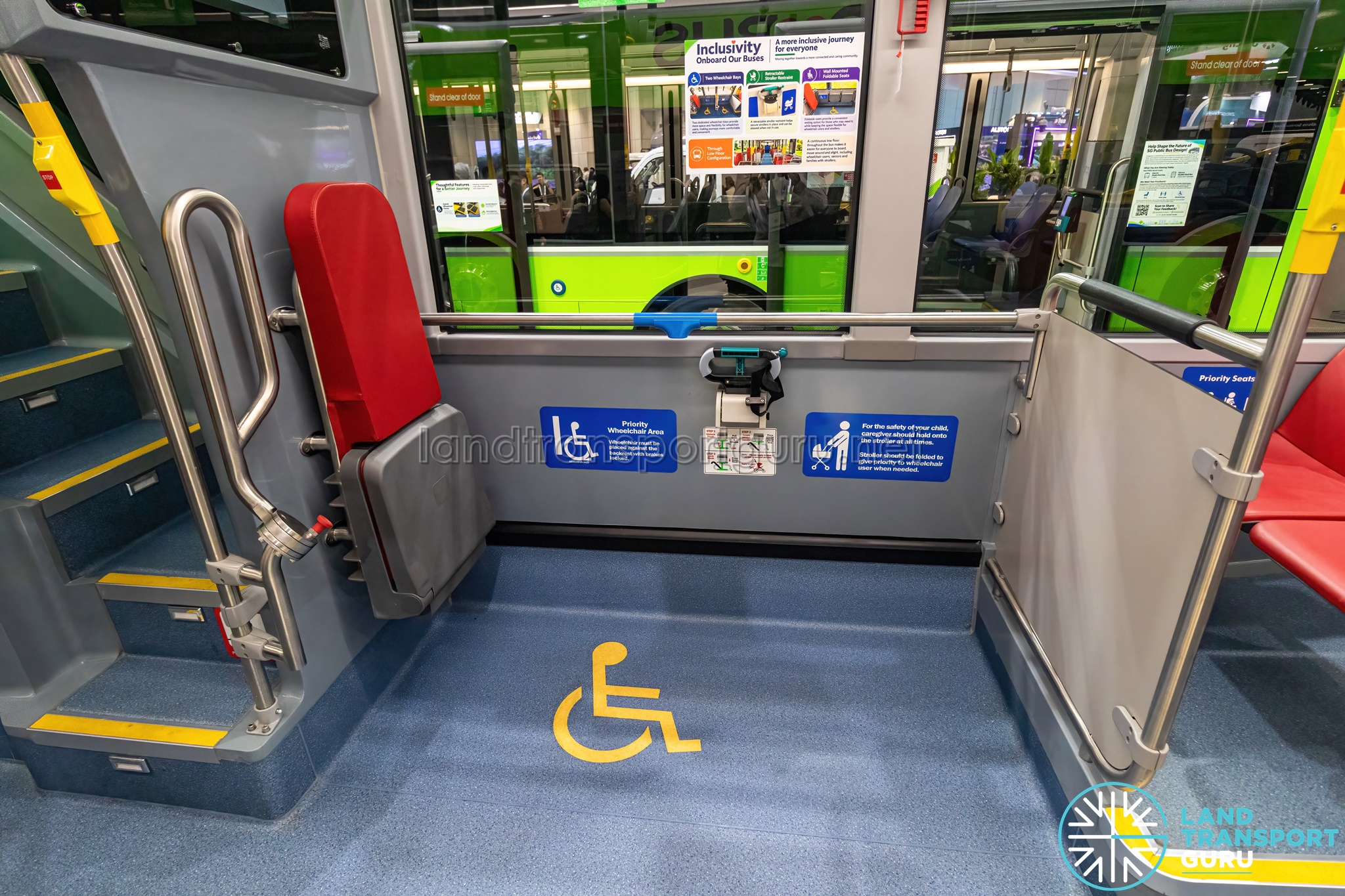
Contract PT602 buses come fitted with 2-in-1 wheelchair ramps, which can be deployed either manually or automatically.
Stairs
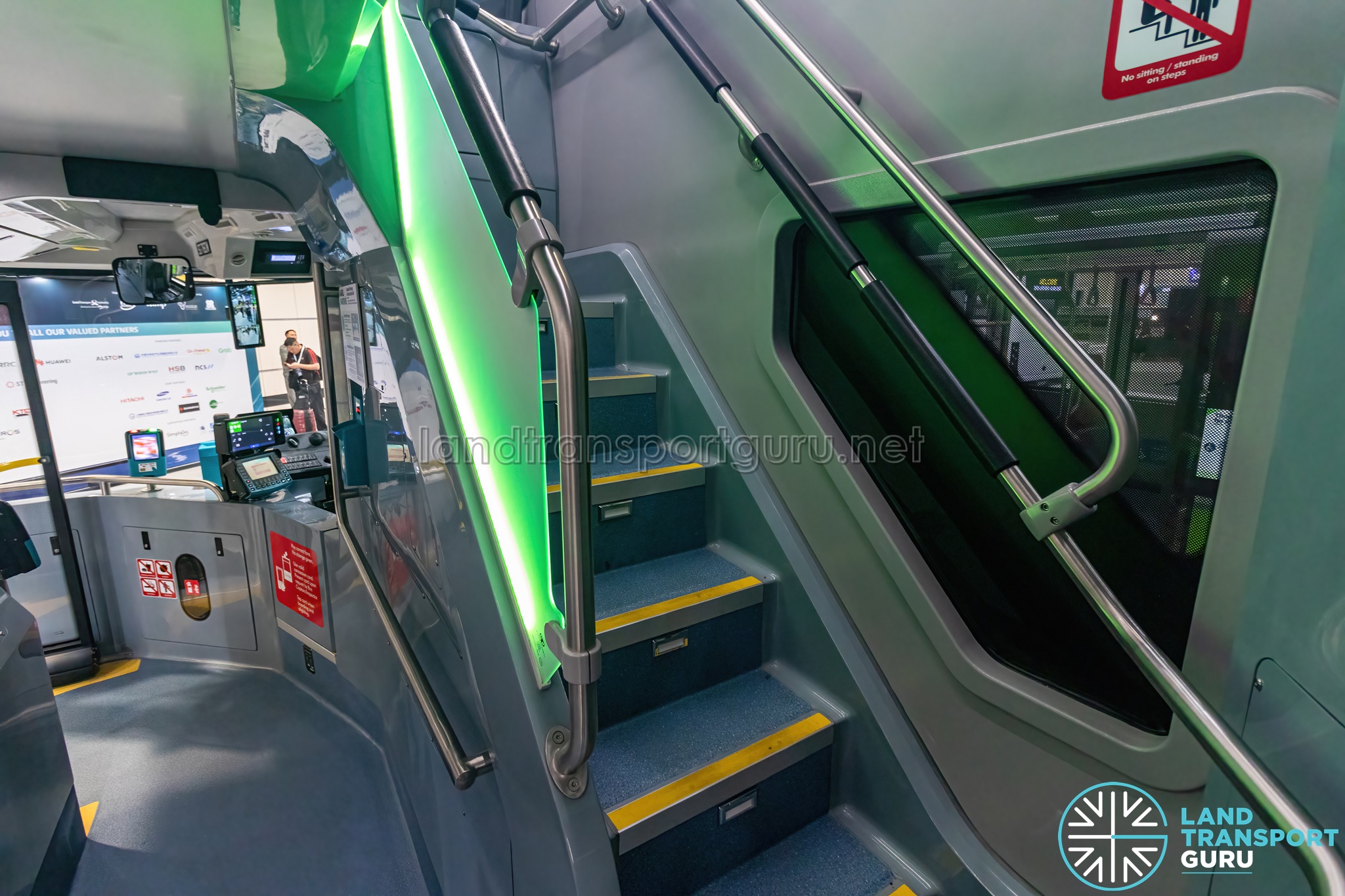
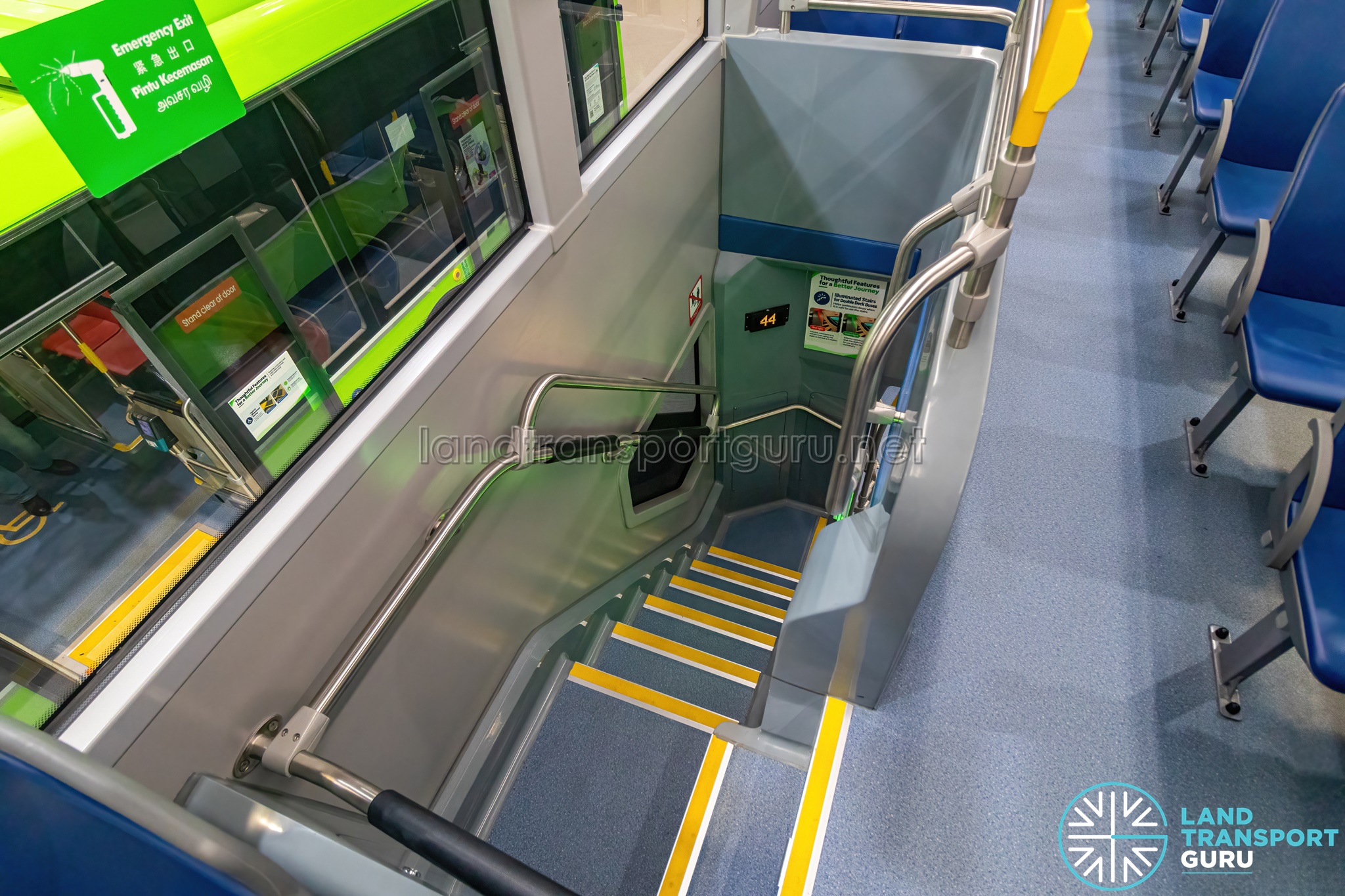
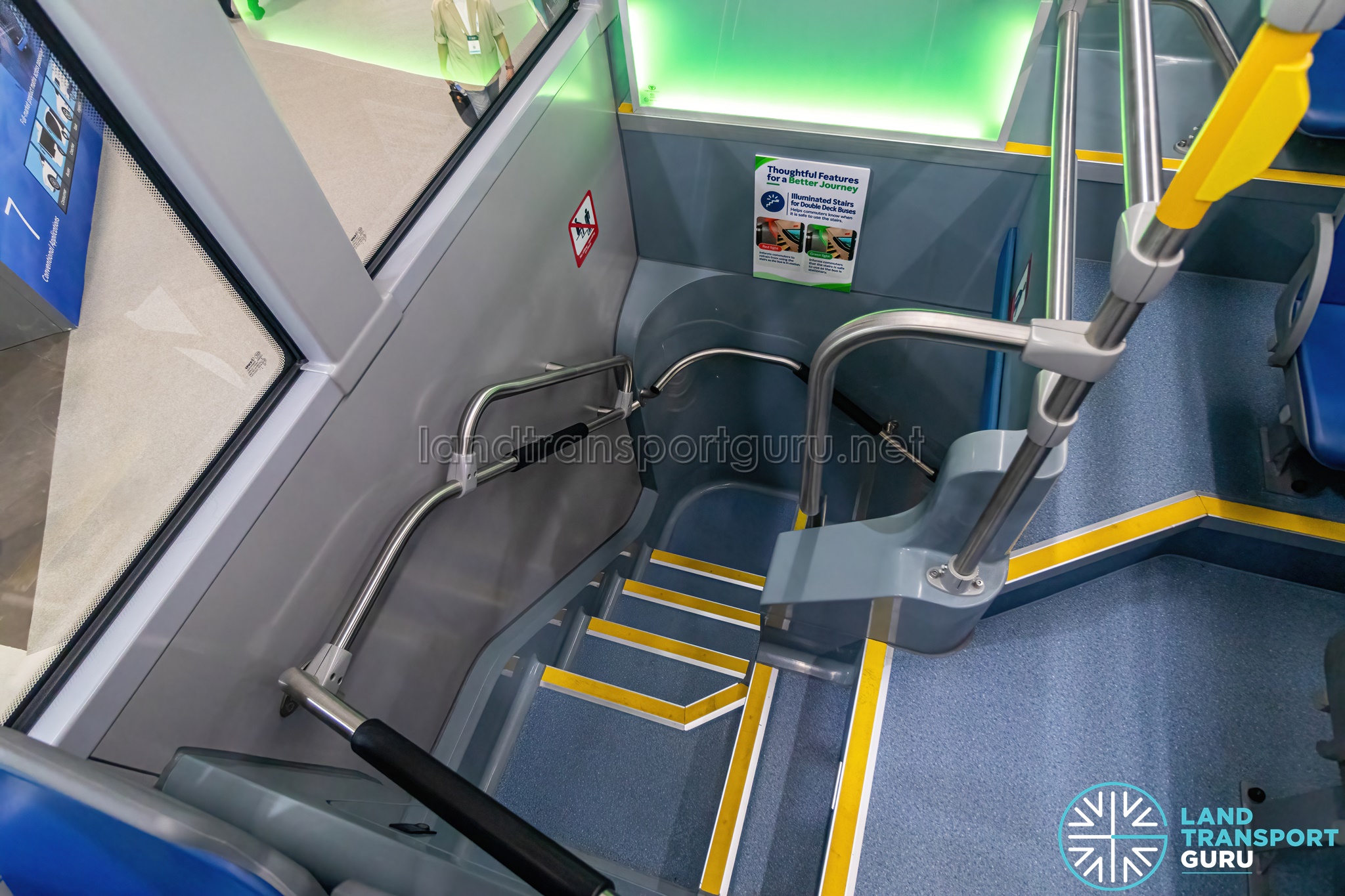
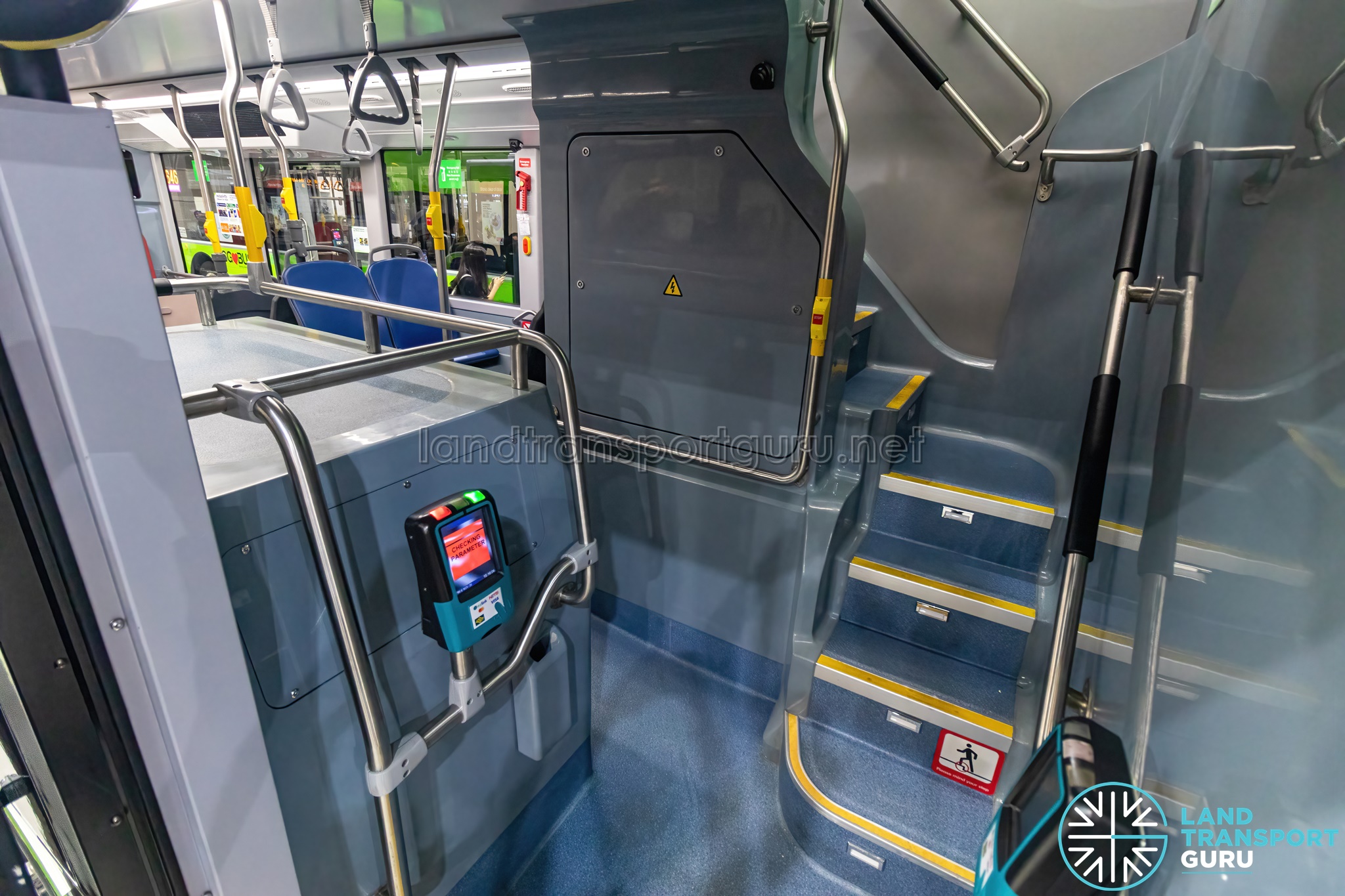
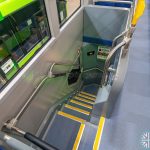
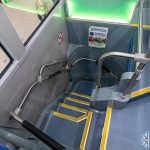
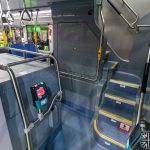
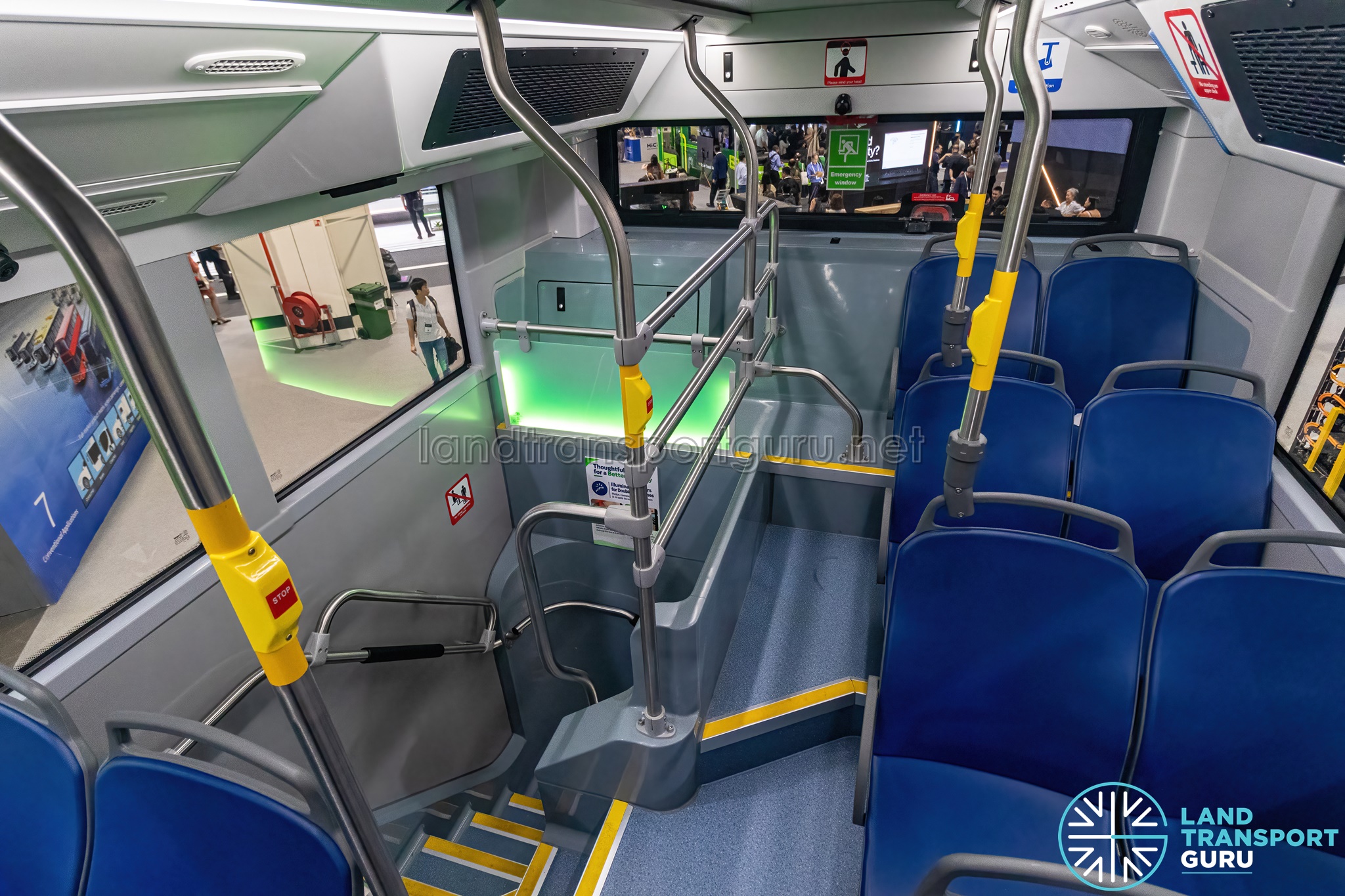
PT602 specifications add staircase lighting to provide clear visual cues to commuters. A red light indicates that the bus is moving and commuters should avoid using the stairs where possible, while a green light indicates that the bus is stationary and the stairs may be used safely.
Upper Deck
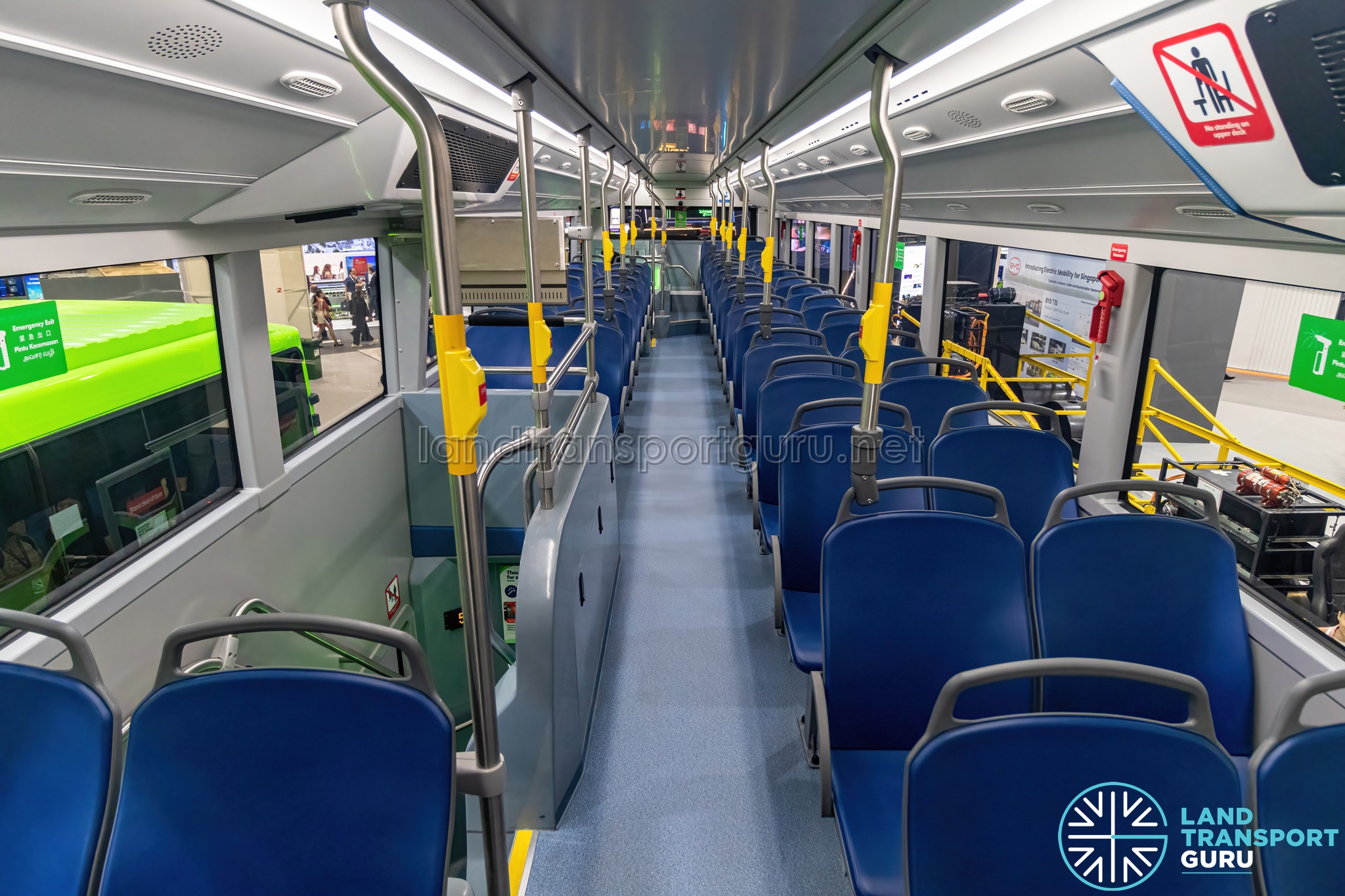
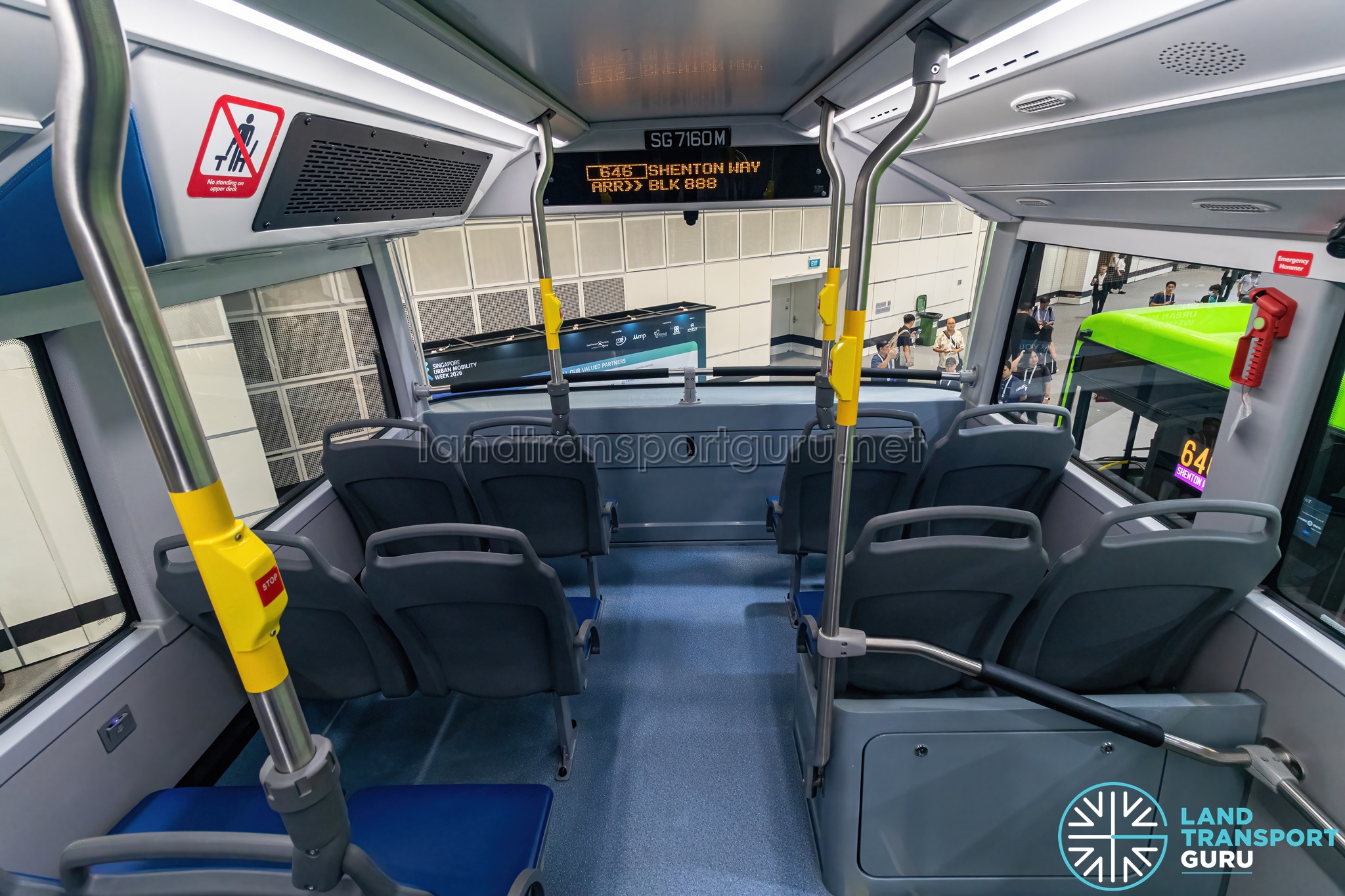
The upper deck seats 50 passengers.
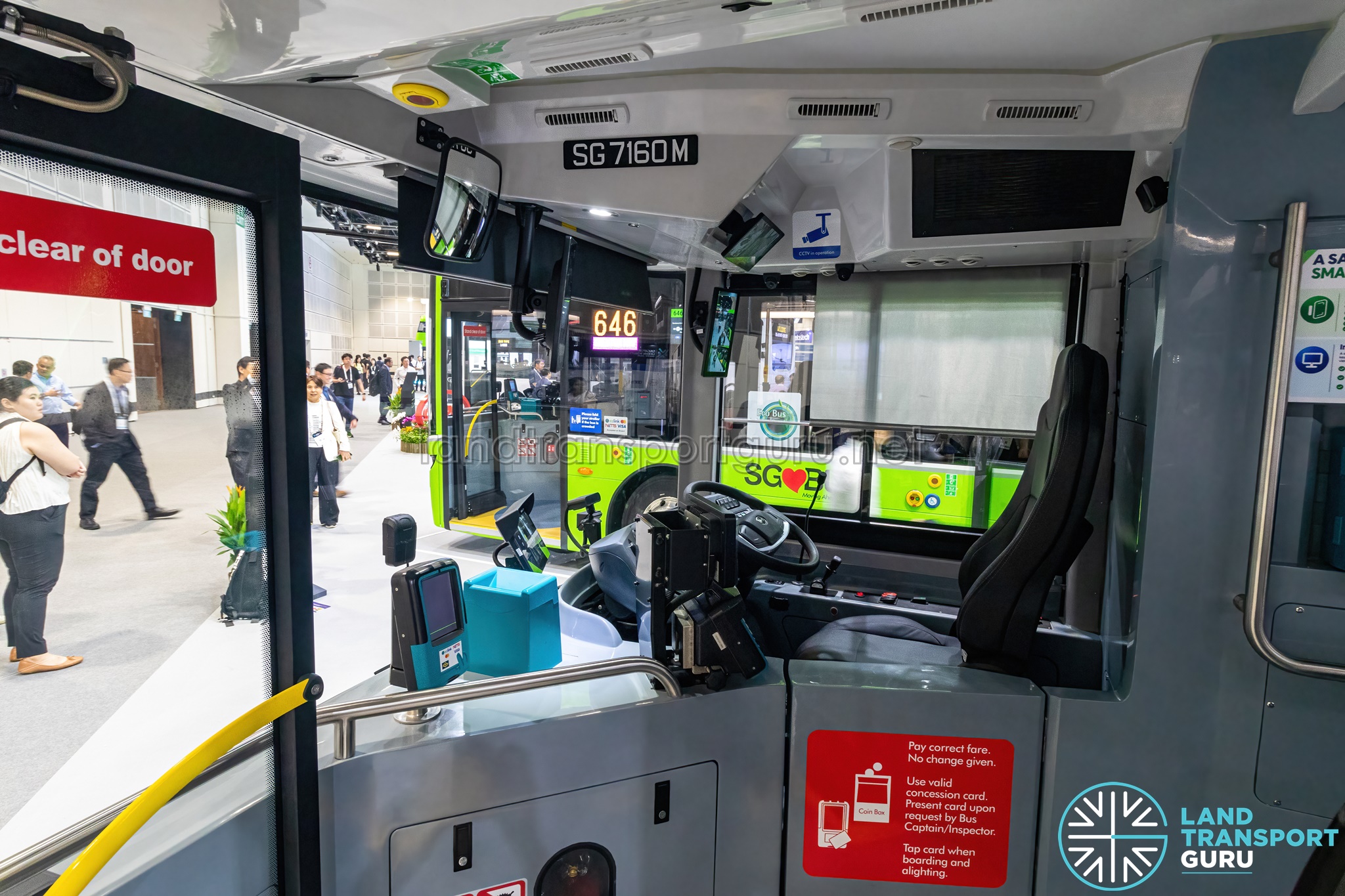
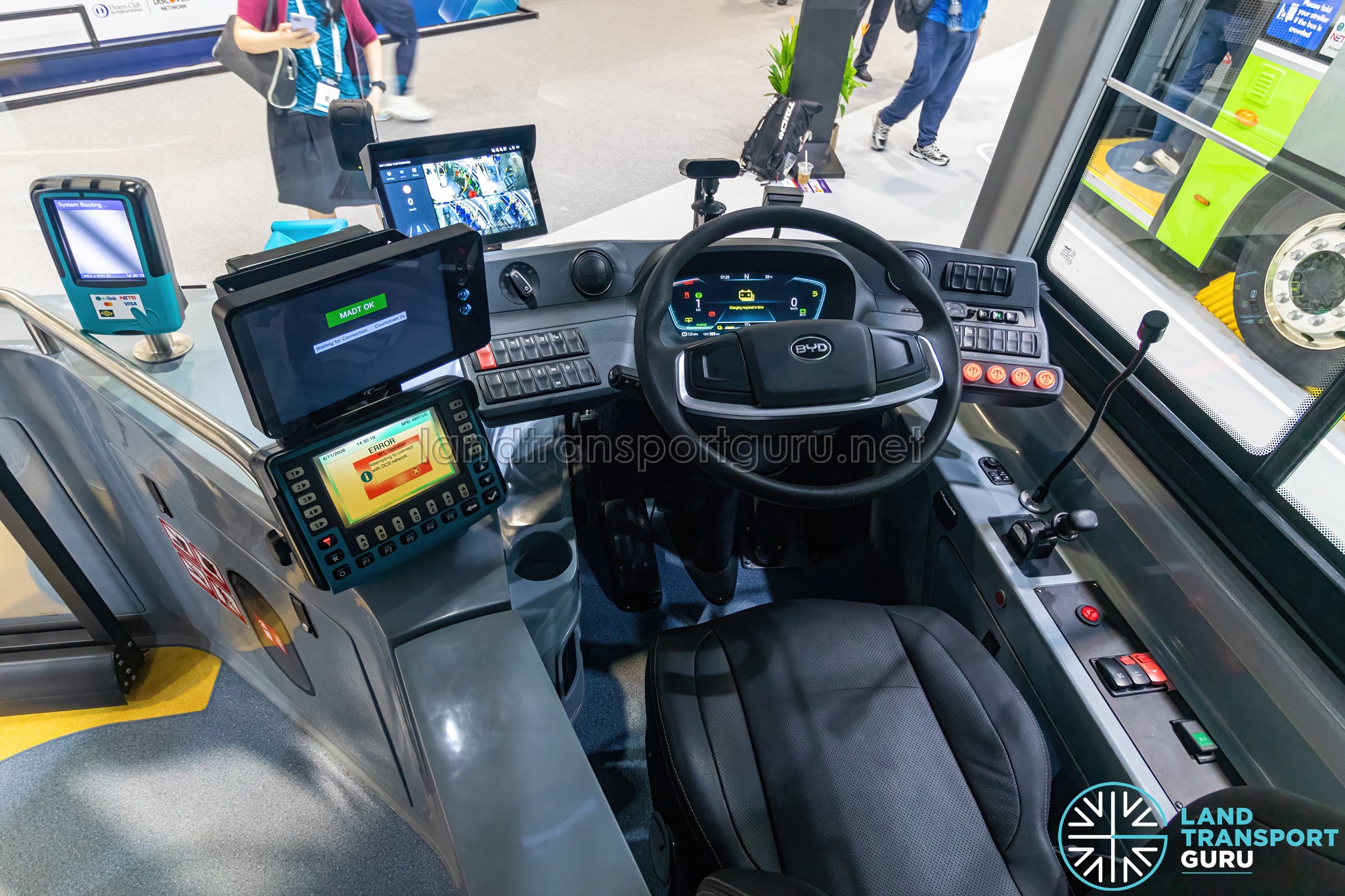
Driver Cabin
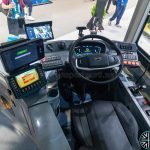
The driver’s cabin is outfitted with a TNT Surveillance Advanced Driver Assistance System (ADAS) and Anti-Fatigue System, which integrates lane departure warning, forward collision warning, distance monitoring, pedestrian detection, side blind spot monitoring, and driver fatigue/distraction monitoring features into a single system. A single dashboard-mounted touchscreen display is used as the display screen and controller.
Additionally, the bus uses a Camera mirror system instead of traditional wing mirrors. Two vertical CCTV monitors replicate the view of wing mirrors, while a third overhead monitor provides an overhead view of the front and front-left blind spots.
Gallery
See Also:
- BYD BC12A04 – Previous LTA order for 300 units
- BYD K9 (Gemilang) – Previous LTA order for 20 units
- BYD K9RC – Demonstrator unit (SG4005Z)
- BYD B12A03 (LTA Trial Bus) – Demonstrator unit (SG4013A)
- BYD B12A03 (Private Bus) – Owned by Private Operators
References:
- BYD B12DS Specifications (as at SITCE 2024) [Accessed 6 Nov 2024]
- BYD B12 DD – Singapore Urban Mobility Week 2026 [30 Oct 2026]
- Factsheet: More Electric Buses with Improved Accessibility, Comfort and Safety Features from End 2026 – Land Transport Authority [4 Nov 2026]
Back to Bus Models
Why need until year end? Pity only 12m would be better if 12.5m like the E500 configuration.
By the way 25 each for both Gali Batu and Sengkang West.
Ok… doesn’t look too bad… however I’m still concerned by the lack of mirrors, as well as that weird rear EDS indicating the driver’s actions. The driver already has to look out for traffic, onboard passengers and the NOBE, as well as all the cameras in their face in the cabin. To top it all of, now they also need to worry about the directional EDS. Some drivers are already so busy that they forget to change the EDS at looping points or forget to use turn signals… how does LTA seriously believe that this will be used!?
In the best case scenario the drivers just wont use it, but if a driver leaves it on or uses it wrongly, it could be really dangerous for traffic behind. Whoever is in charge at LTA clearly hasn’t taken a bus in the past 5 years, and I’m not even talking about the 3-door monstrosities.
Yeah at least just install normal mirror in case else have to cancel trip because of malfunction
wow… no side view mirror but instead got camera, how can liddat one? i keep seeing this on the newer buses, what if the camera doesnt work then how, the bus driver stops driving and the bus have to repair isit?
ever since BC12 rolled out, it has Mirrorless Camer setup
what happen to the demo?
Since we have byd bus, can we also have honda bus, if honda got make bus? The honda fit car quite cute and compact, and well received in the Singapore and Taiwan markets. If honda got make buses, and more specifically electric buses, we should procure some honda ev buses to run on Singapore public bus routes.
Not happening Brudda
Might as well ask for Nissan, Toyota, Tesla.
We ever had Nissan buses on SBST and SMRT bus routes, but they were decommissioned at around 2010.
Toyota doesn’t make large size buses. They only make mini buses.
Tesla don’t make any buses.
So the closest is Nissan, Byd and Mercedes, if we want car manufacturing brands. Of which we already have 2, so that’s good enough.
Actually, Toyota made large size buses, but only Hydrogen fuel cell buses known as the Toyota Sora. Toyota’s heavy duty company Hino has made large size bus chassis for Singapore’s market, including the HS3KRK for Trans Island Bus Services, which were retired around 2013, and coach chassis such as the RK1JSLL. Domestically in Japan, they made large integral buses such as the Hino Blue Ribbon (one of which was trialed in Johor years ago), Hino Rainbow, and the Hino S’elega.
LTA will only continue to buy from PRC manufacturers to appease Winnie the Pooh
Otherwise they can kiss their social credit score bye bye
That’s not the reason. It’s because Japan and Korea are not making buses and trains nowadays. Nowadays the production has shifted to China. That’s why we have Chinese brands nowadays. China is the new Japan.
I mean, just look at CCTV1 (television channel) 新聞聯播. Every now and then will say that their material science and technology is top notch.
So, really, we got a good deal.
That’s just Chinese propaganda. It doesn’t take a genius to observe our Chinese made buses on the road and notice the severe lack of quality that they have. Japanese manufacturers are old and reliable, but LTA simply cares only about cheap pricing and appeasing China. Japanese vehicles are at least very high quality even in the past, where you can drive for a very long time and they won’t break down.
> Japan and Korea are not making buses and trains nowadays
??? They still do? Where do you think Thailand, Indonesia and even Malaysia is getting some of their trains from? Hell even the upcoming J151 rolling stock is made in Korea
> …just look at CCTV1…
Ok now you’re just parroting propaganda at this point. Don’t try to bring up any whataboutisms about other countries when China does it the worst
>So, really, we got a good deal.
More like the short end of the stick. There is a reason why we’ve never heard of Japanese buses being rejected and returned to sender (not like we gave them any chance to begin with), unlike certain Chinese buses. I can only imagine how they’ll fare 10-15 years down the road
(hint: NOT good, the PRC vehicles we have here approaching that age are starting to wear at a rate never seen before, and even the latest batch had to be modified because of piss-poor design)
Exactly. Just look at Thailand, who recently purchased ex-JR East Japanese KiHa 40s from the 1970s, which is working really well for them on the Bangkok – Ayutthaya route. These Japanese workhorses have been running for decades, which proves their exceptional quality. Much better than any of the cheap metal that China could offer…
U right the k9s are terrible haha