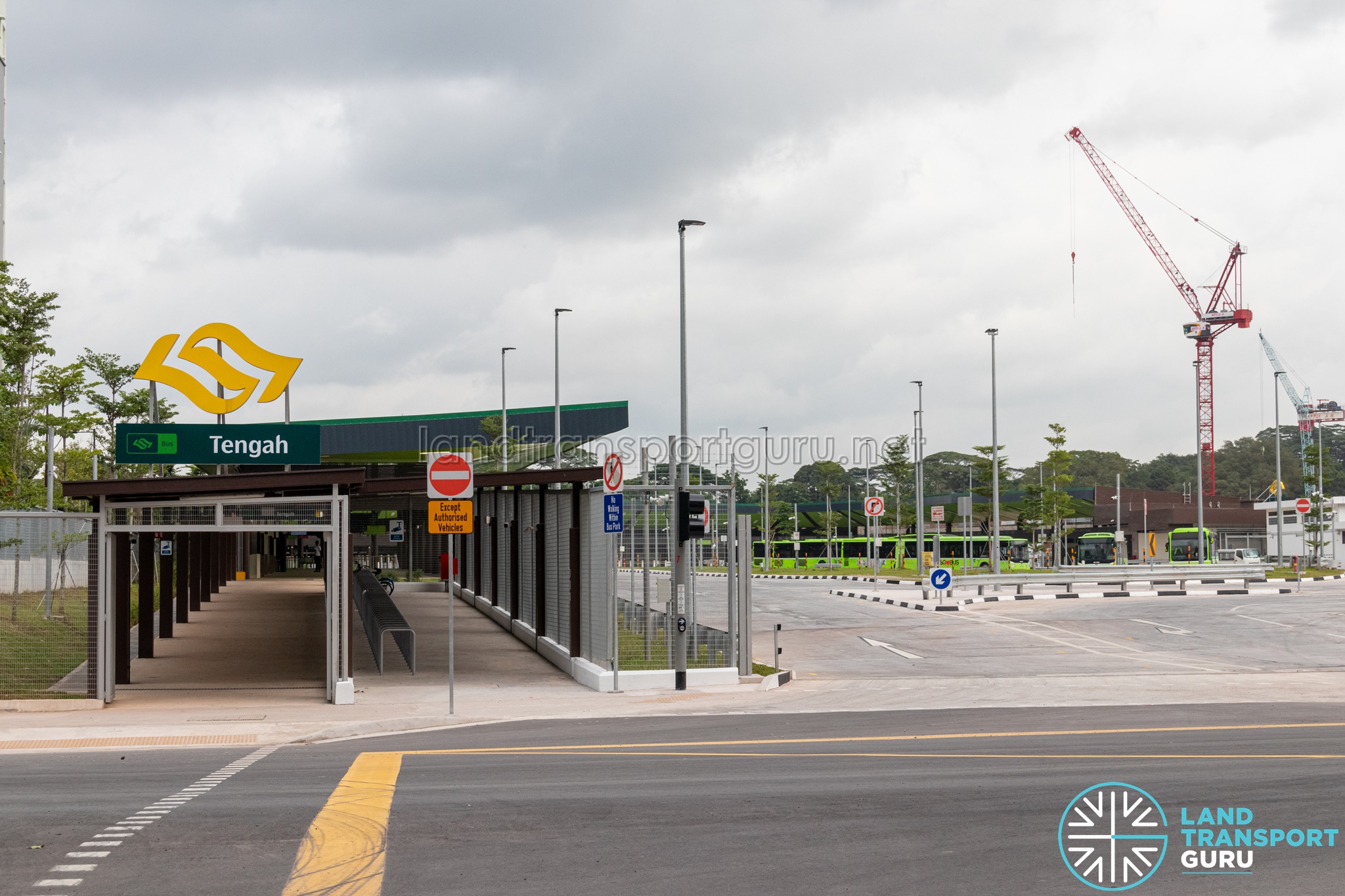
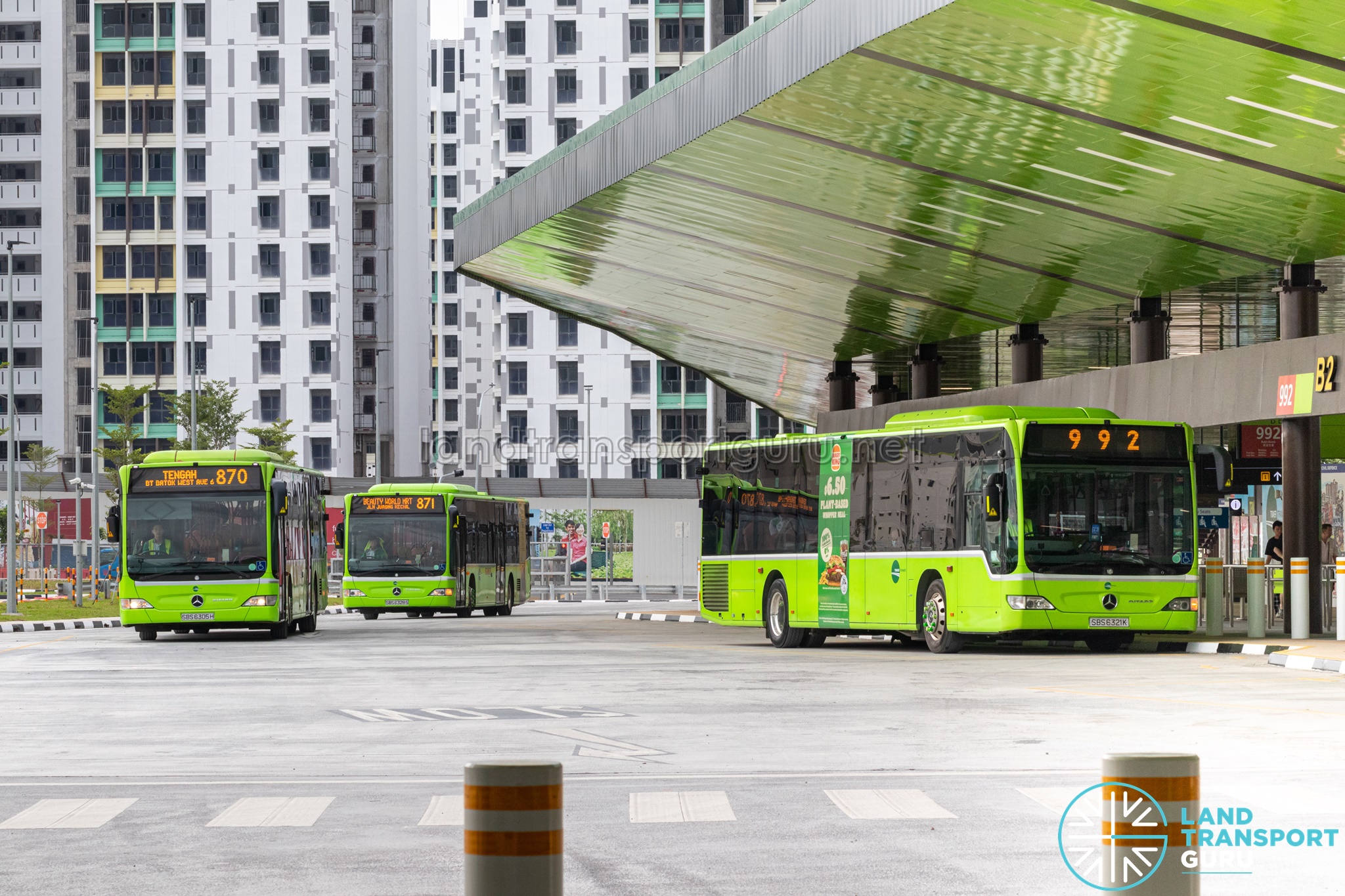
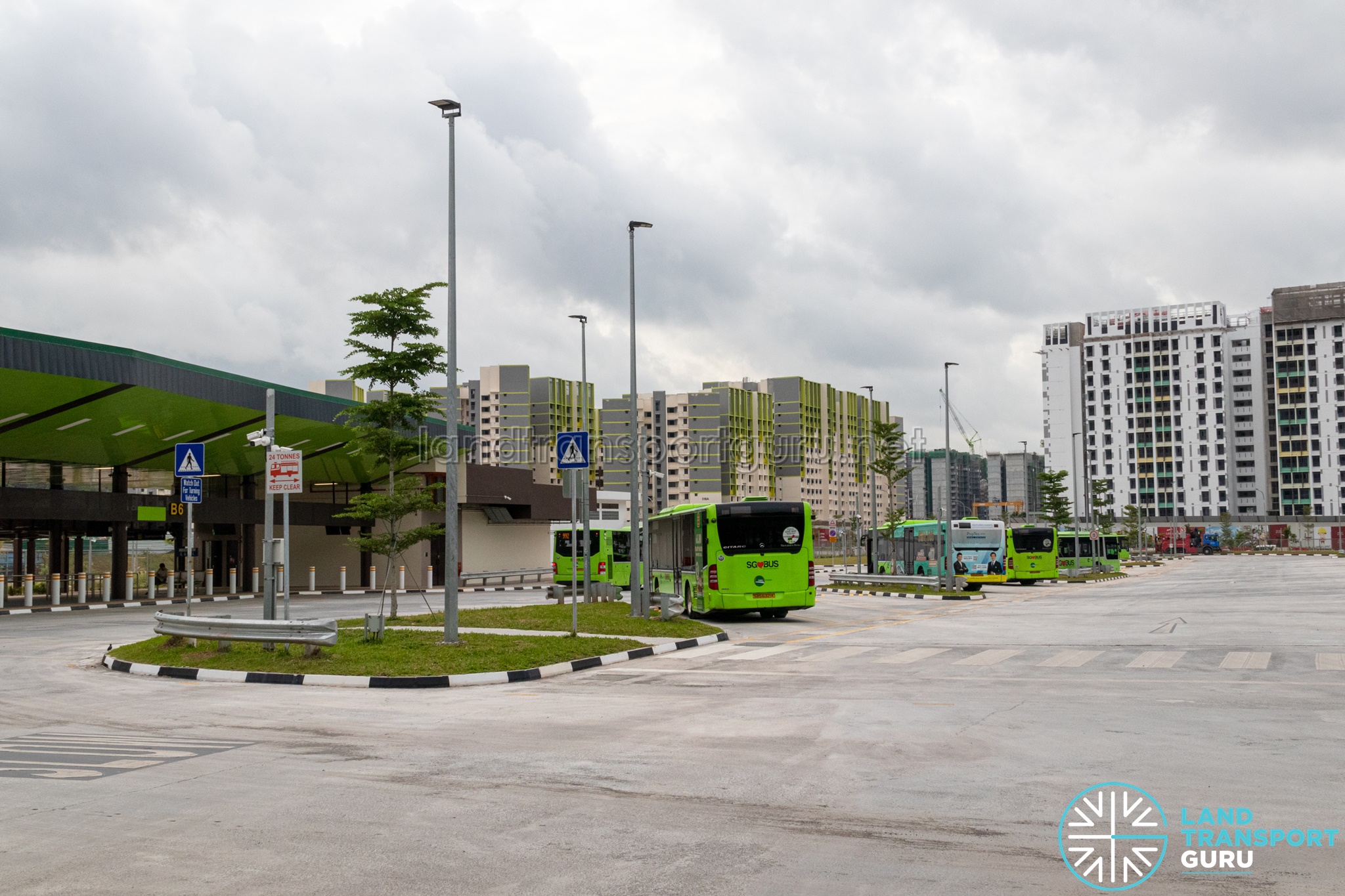
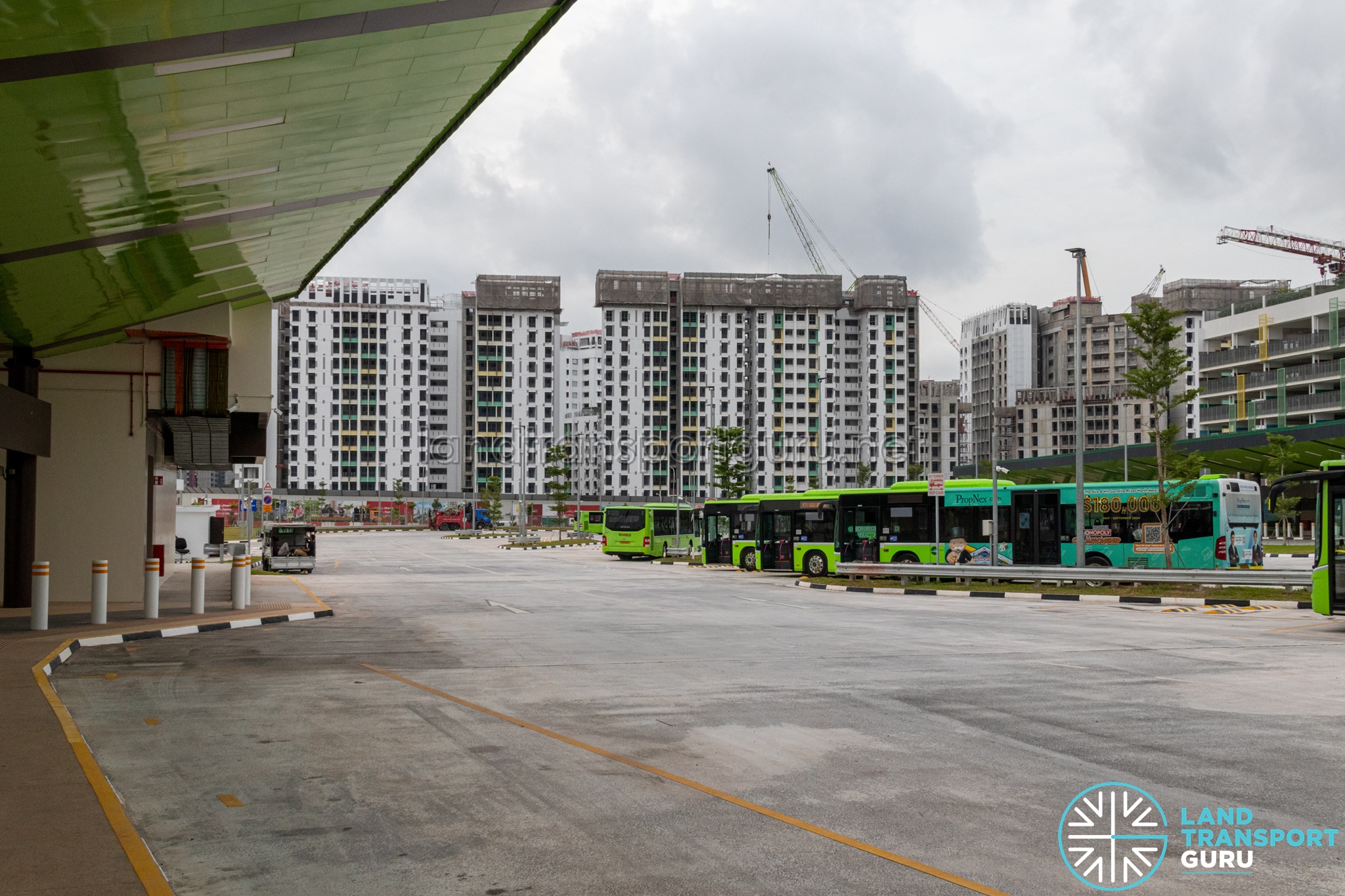
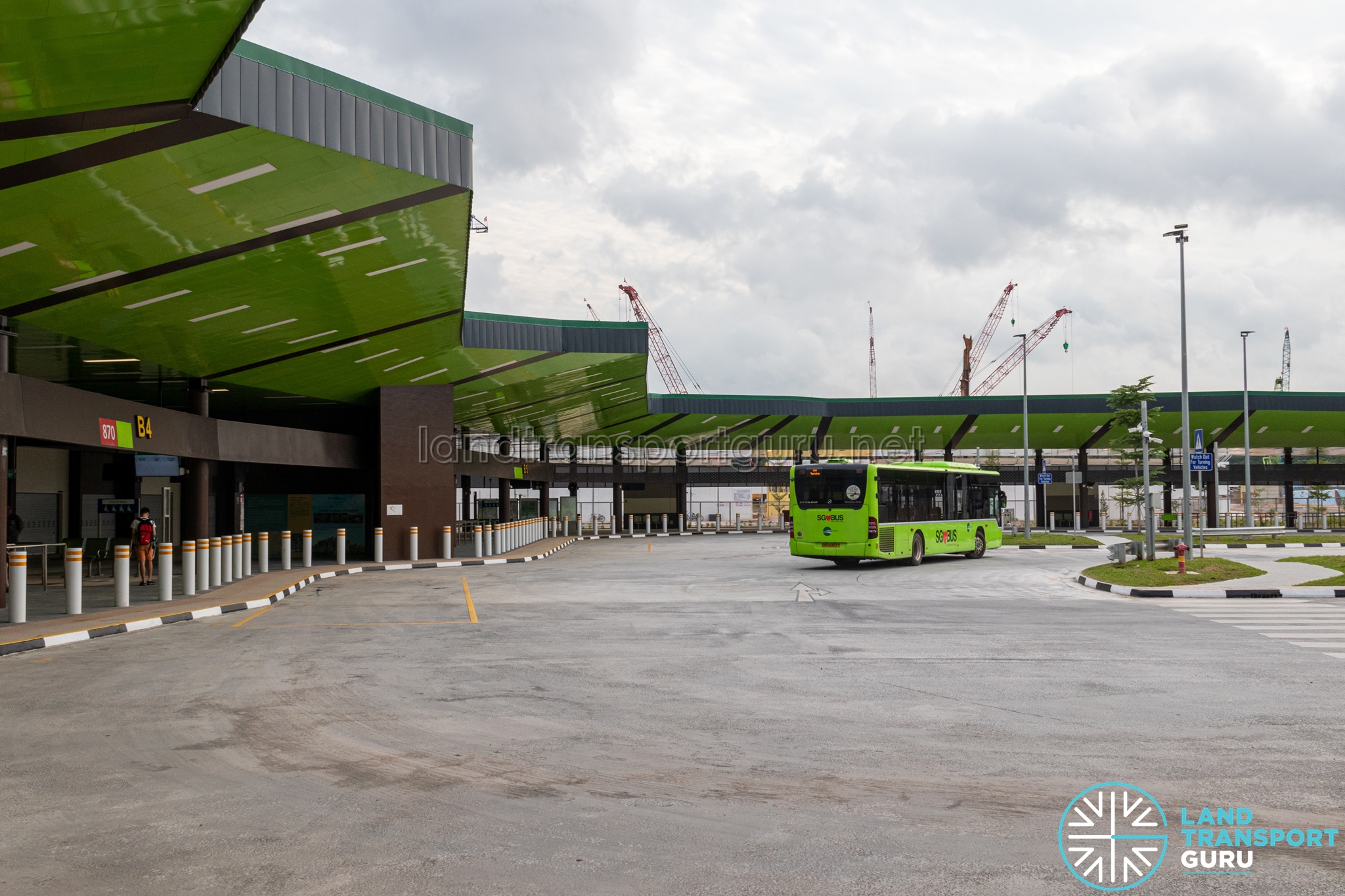
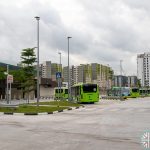
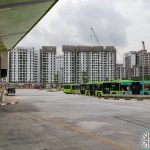
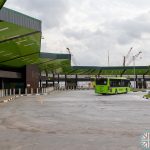
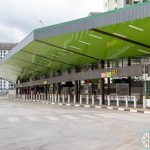
Tengah Bus Interchange is an interim Bus Interchange with the Tengah New Town. It is bounded by Tengah Park Avenue, Tengah Boulevard, and the Parc Woods @ Tengah residential estate.
The interim bus interchange commenced operations on Sunday, 21 July 2024. This facility is not to be confused with the upcoming Tengah Integrated Transport Hub, which will be built at Tengah Town Centre, adjacent to Tengah MRT Station (Jurong Region Line).
Details:
| Name | Tengah Bus Interchange |
| Address | 42A Tengah Boulevard, Singapore 699896 |
| BCM Route Package | Bulim Bus Package |
| Anchor Operator | Tower Transit (Tower Transit Singapore Pte Ltd) |
| Bus Routes | 9 (Tower Transit) 1 (SMRT Buses) |
| Berths | 6 sawtooth boarding berths |
| Rail Connection | Not Applicable |
Brief History
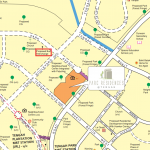
In December 2019, the construction tender for the bus interchange (Contract PT396 – Proposed Design and Construction of Bus Interchange and Associated Works at Tengah Boulevard) was put up by the Land Transport Authority. This contract was awarded to Tat Hin Builders Pte Ltd in October 2020. The location of the interchange was also indicated within Tengah town maps issued by the Housing and Development Board (HDB) in 2020.
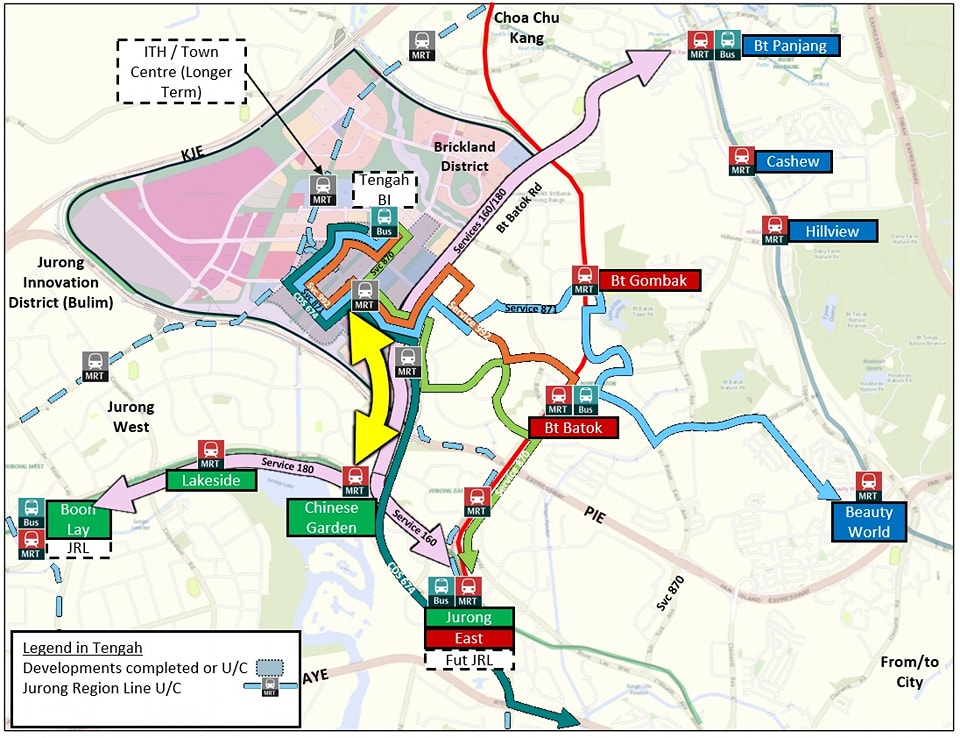
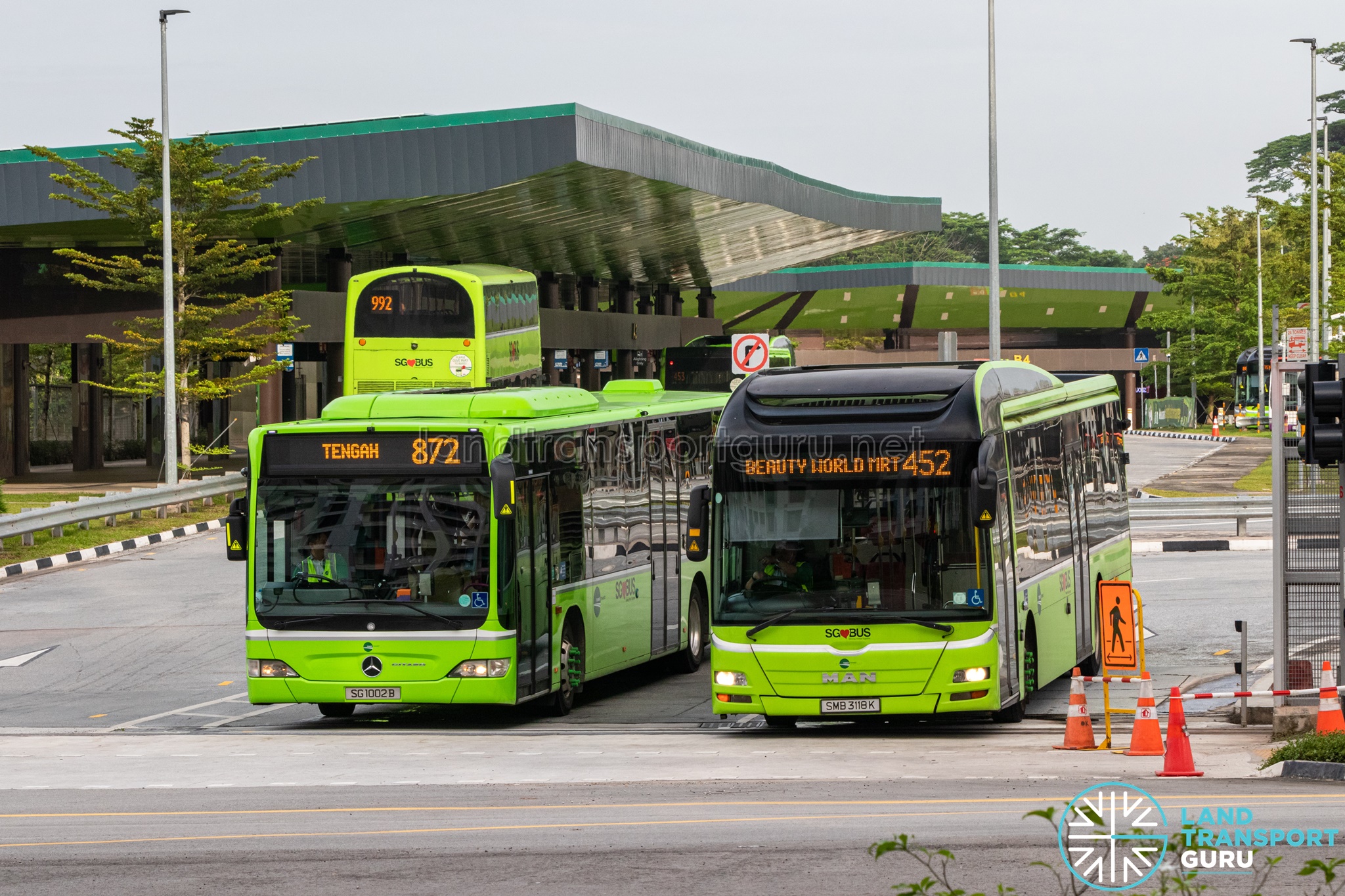
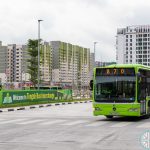
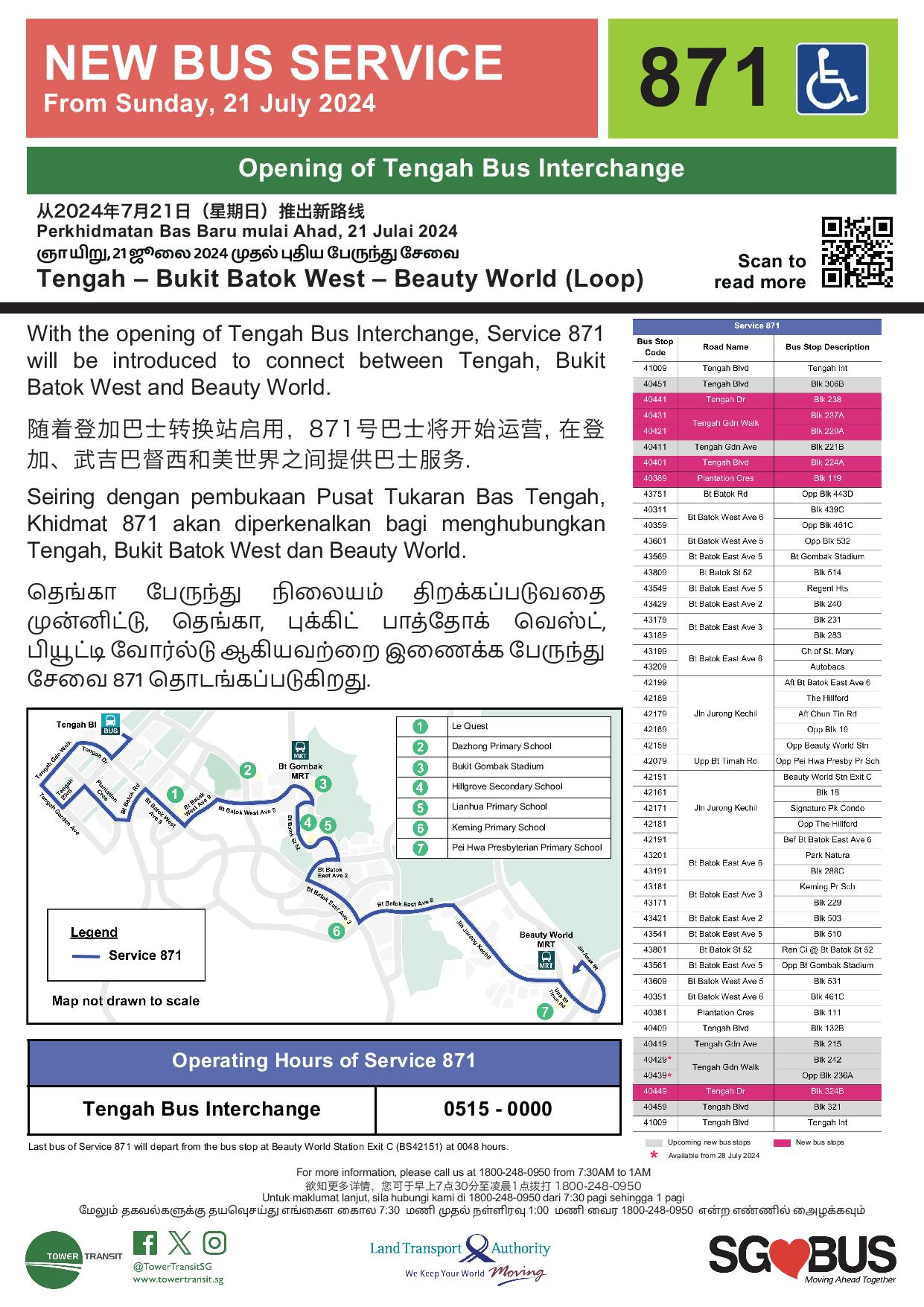
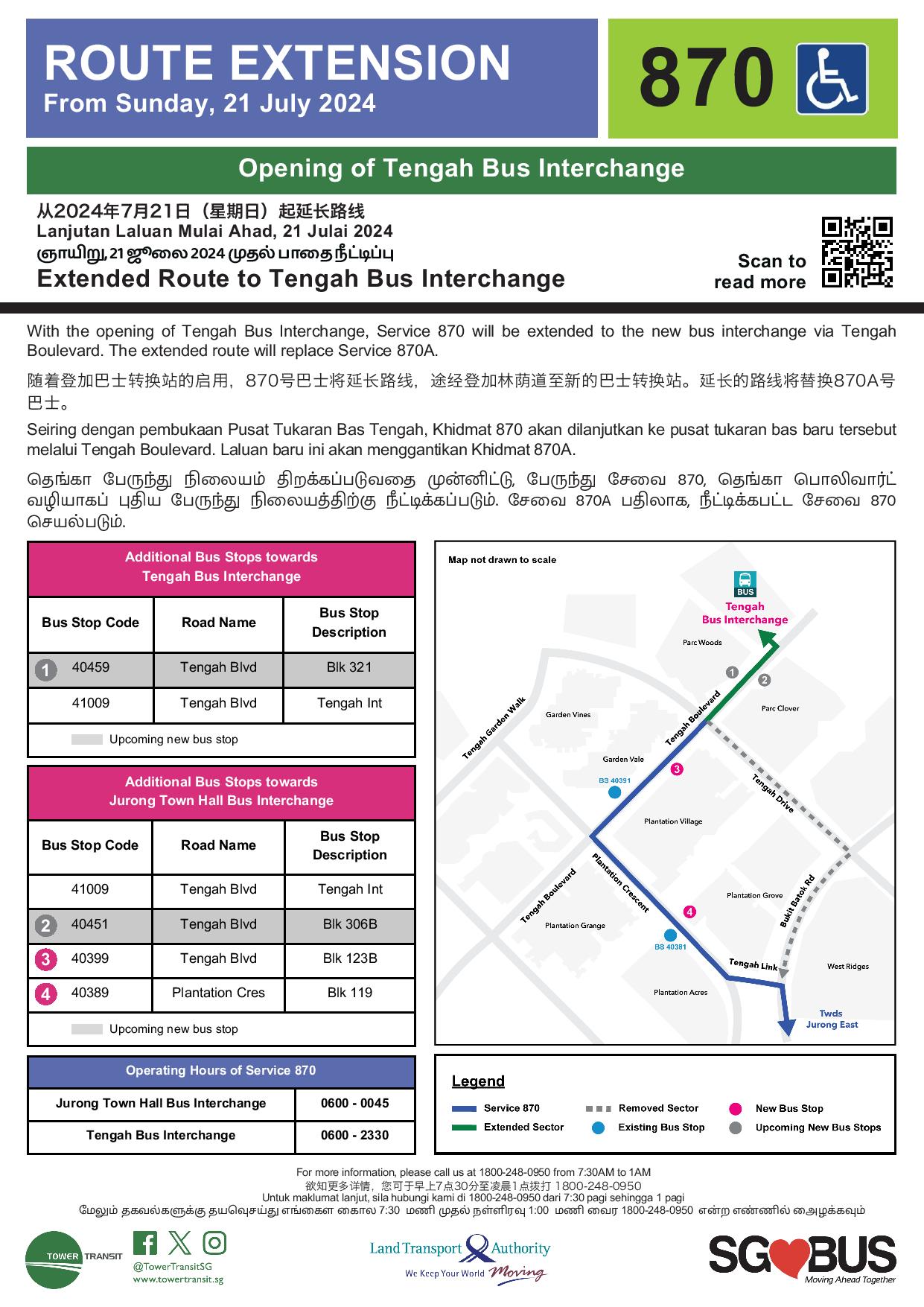
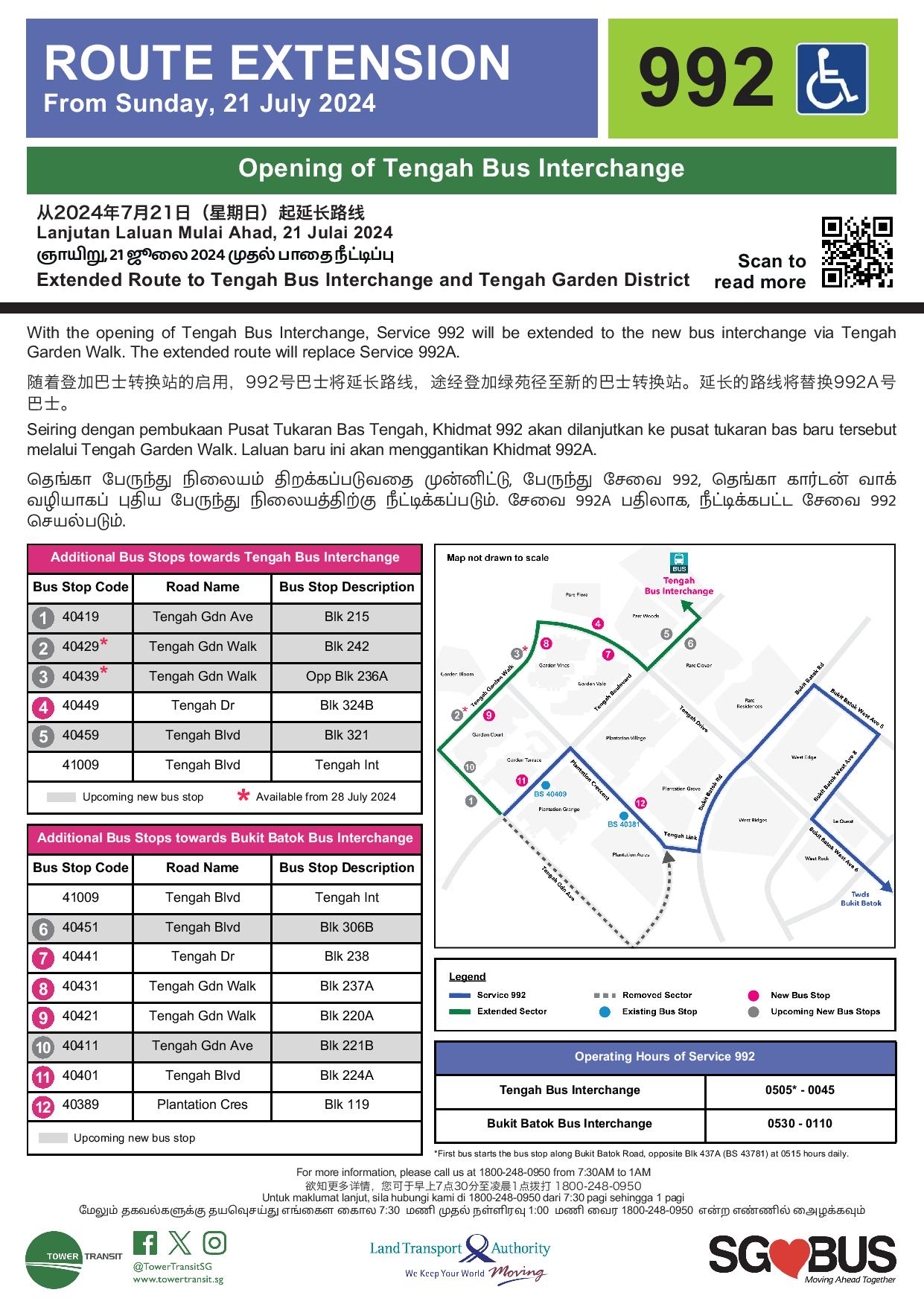
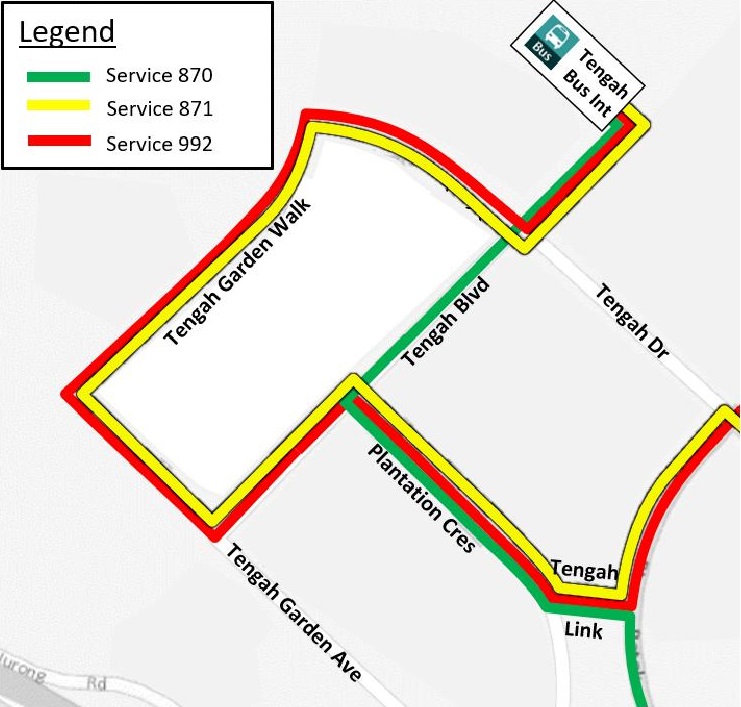
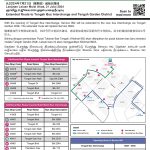
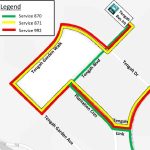
Tengah Bus Interchange opened on Sunday, 21 July 2024. Bus Services 870 & 992, which were loop services, were extended to serve the new interchange and become bi-directional services. A new bus service, 871, was also introduced on the same day, connecting Tengah New Town with Bukit Gombak and Beauty World.
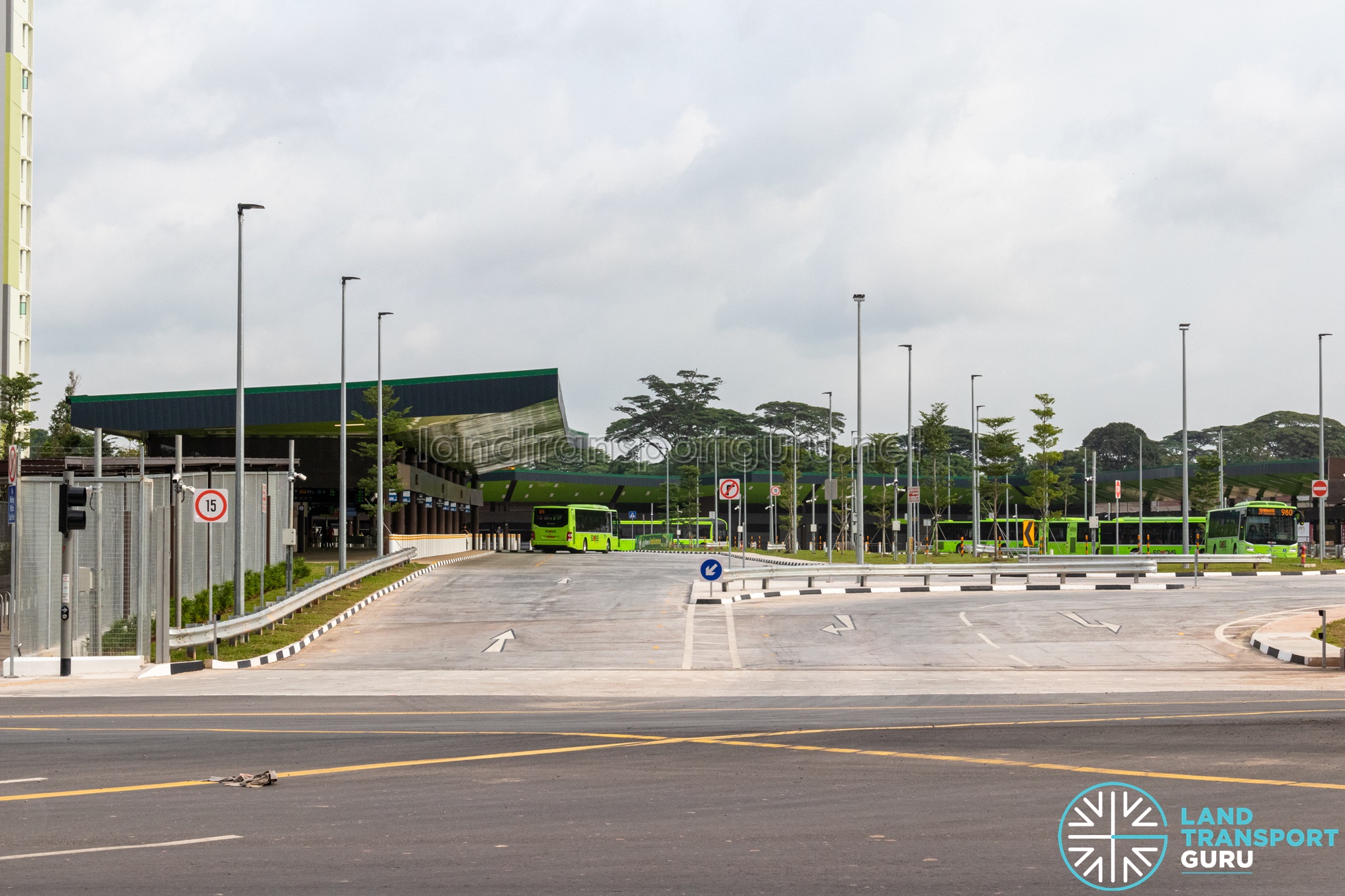
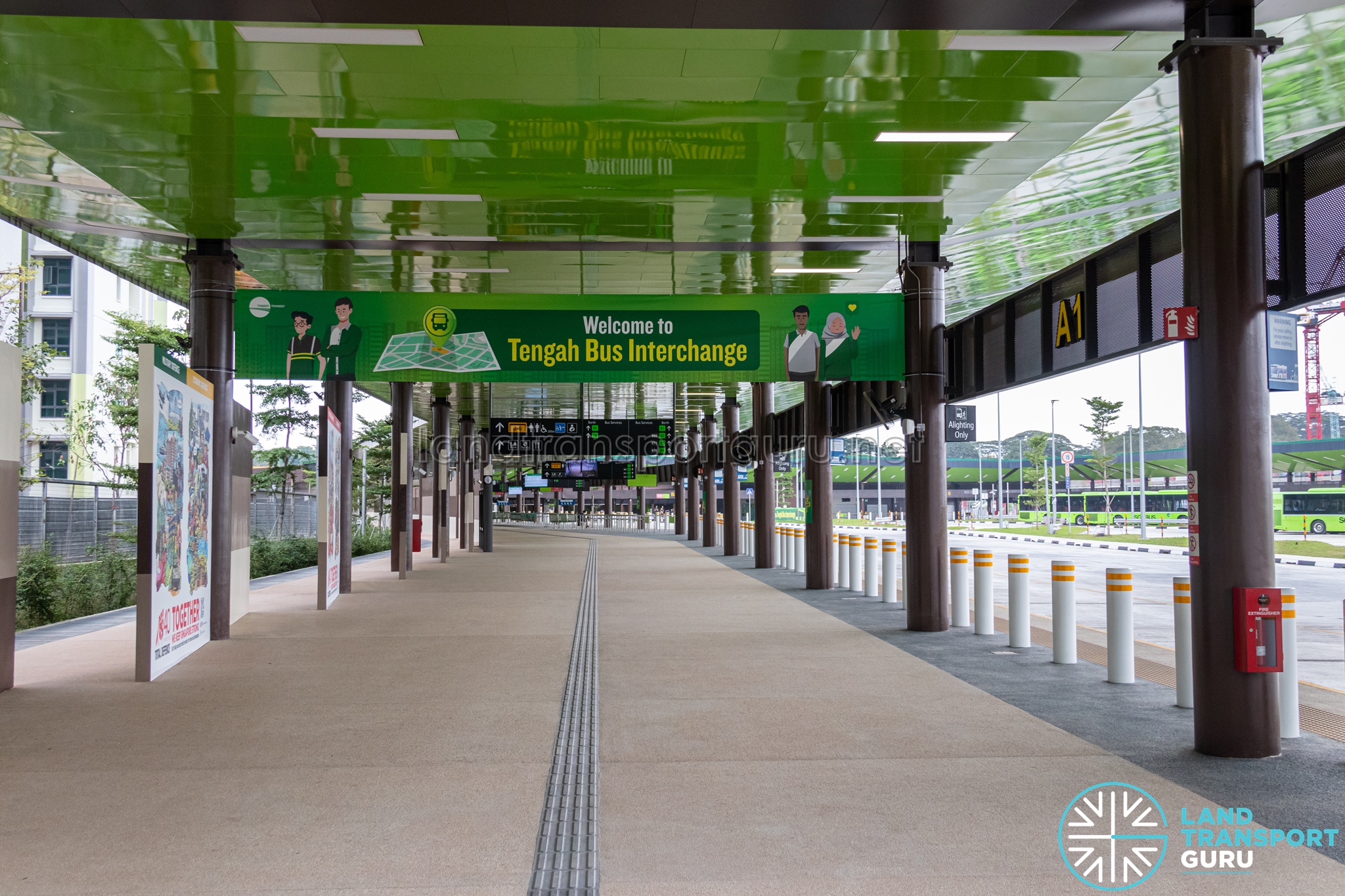
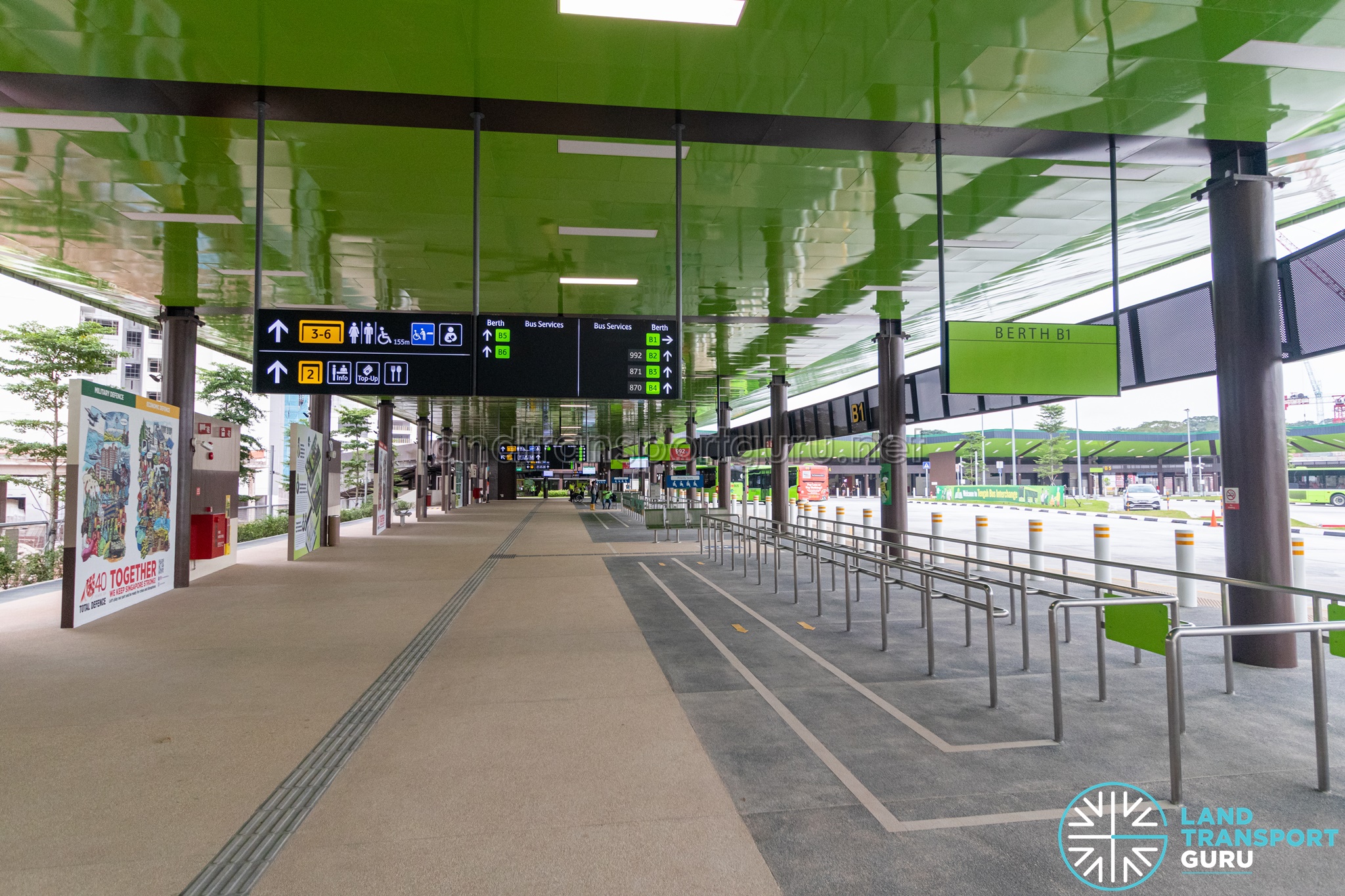
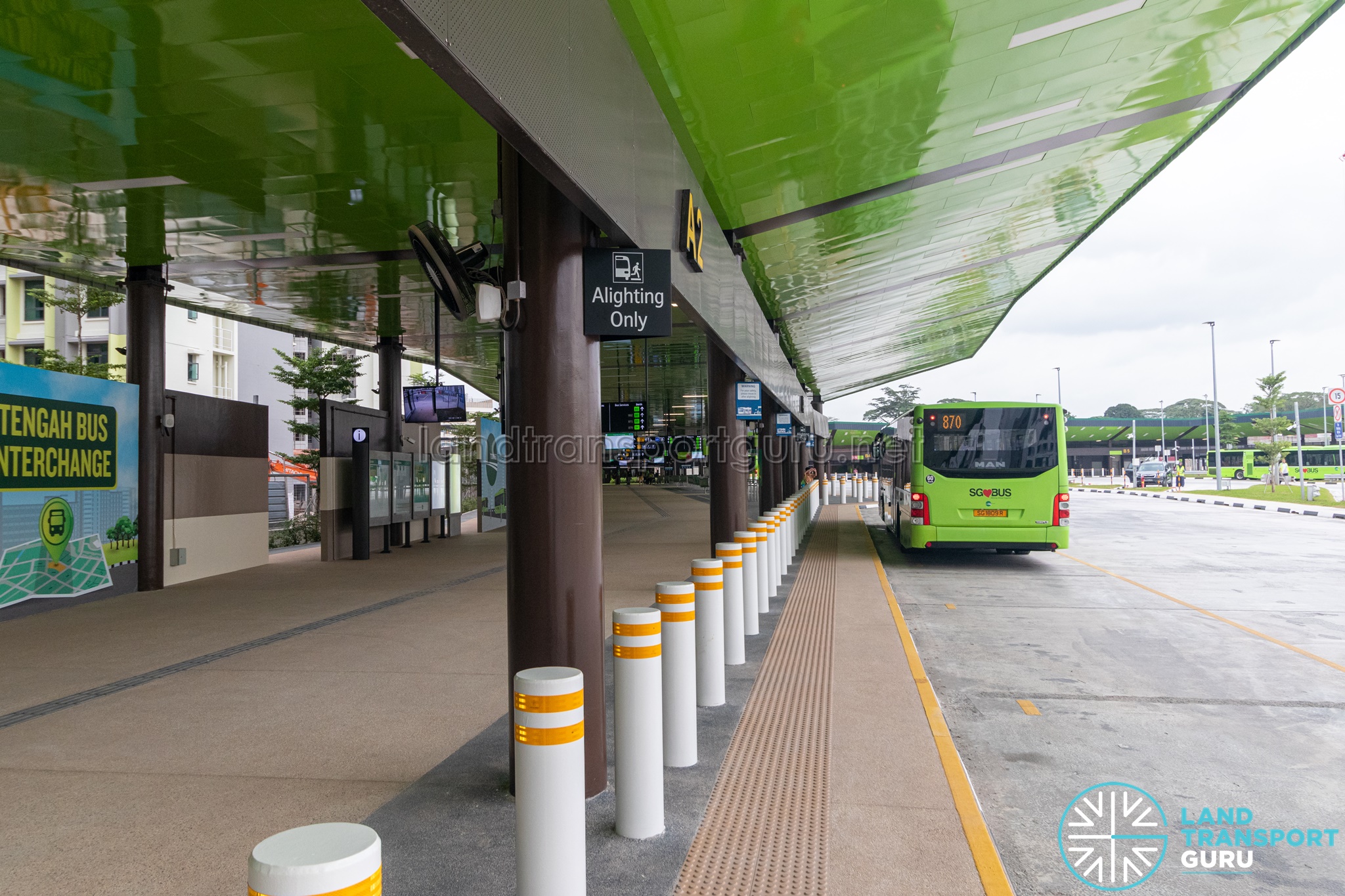
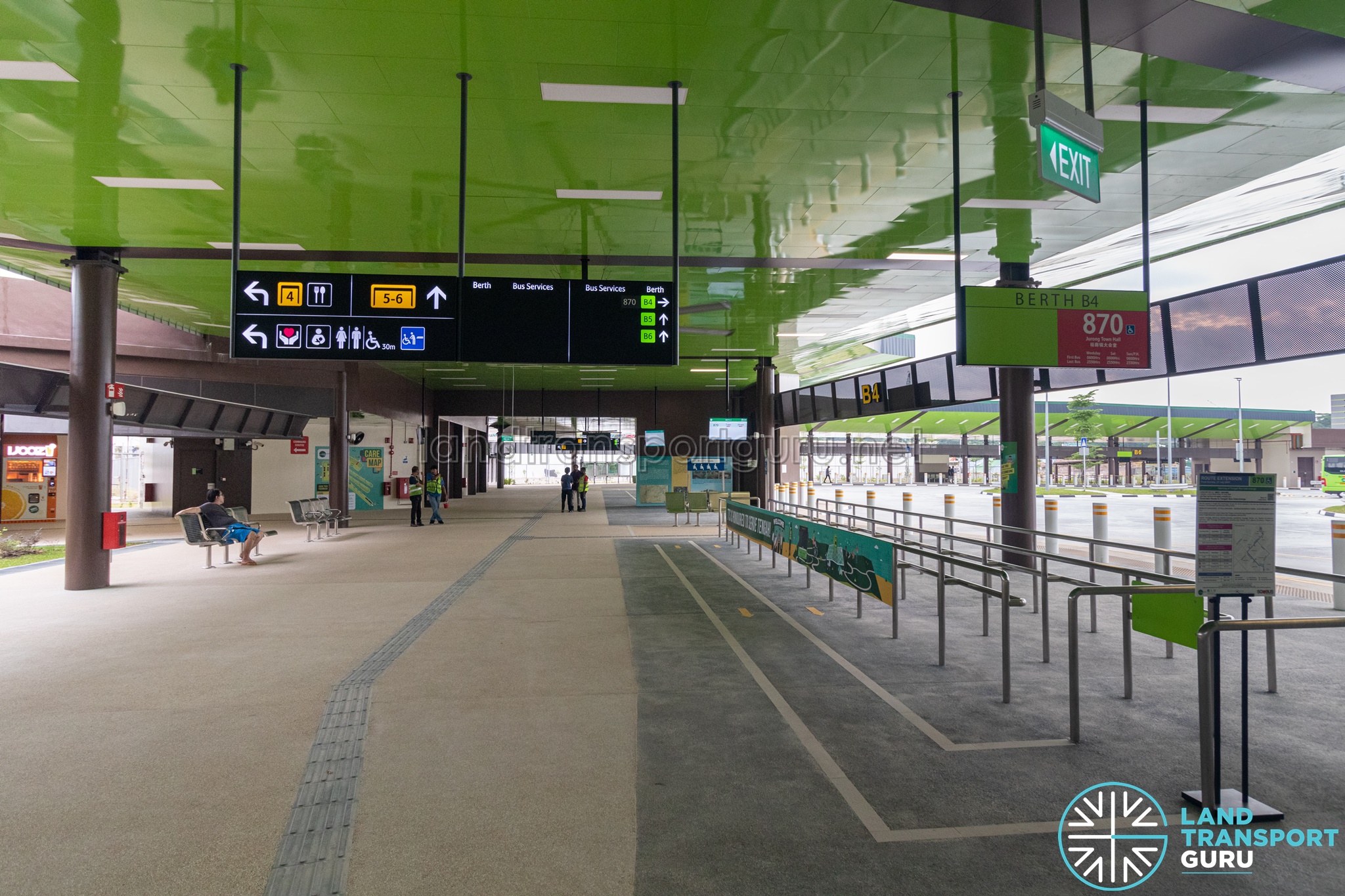
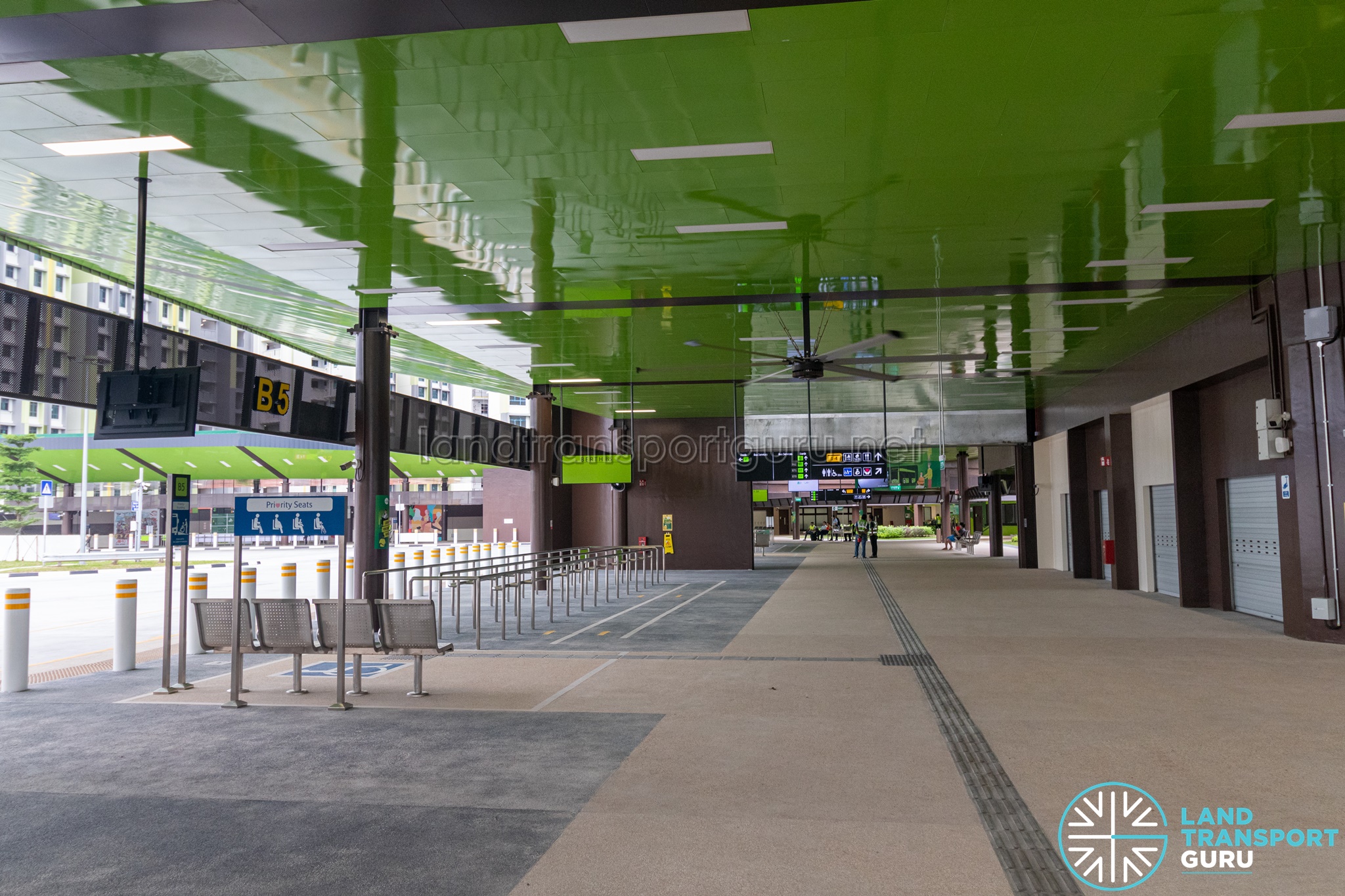
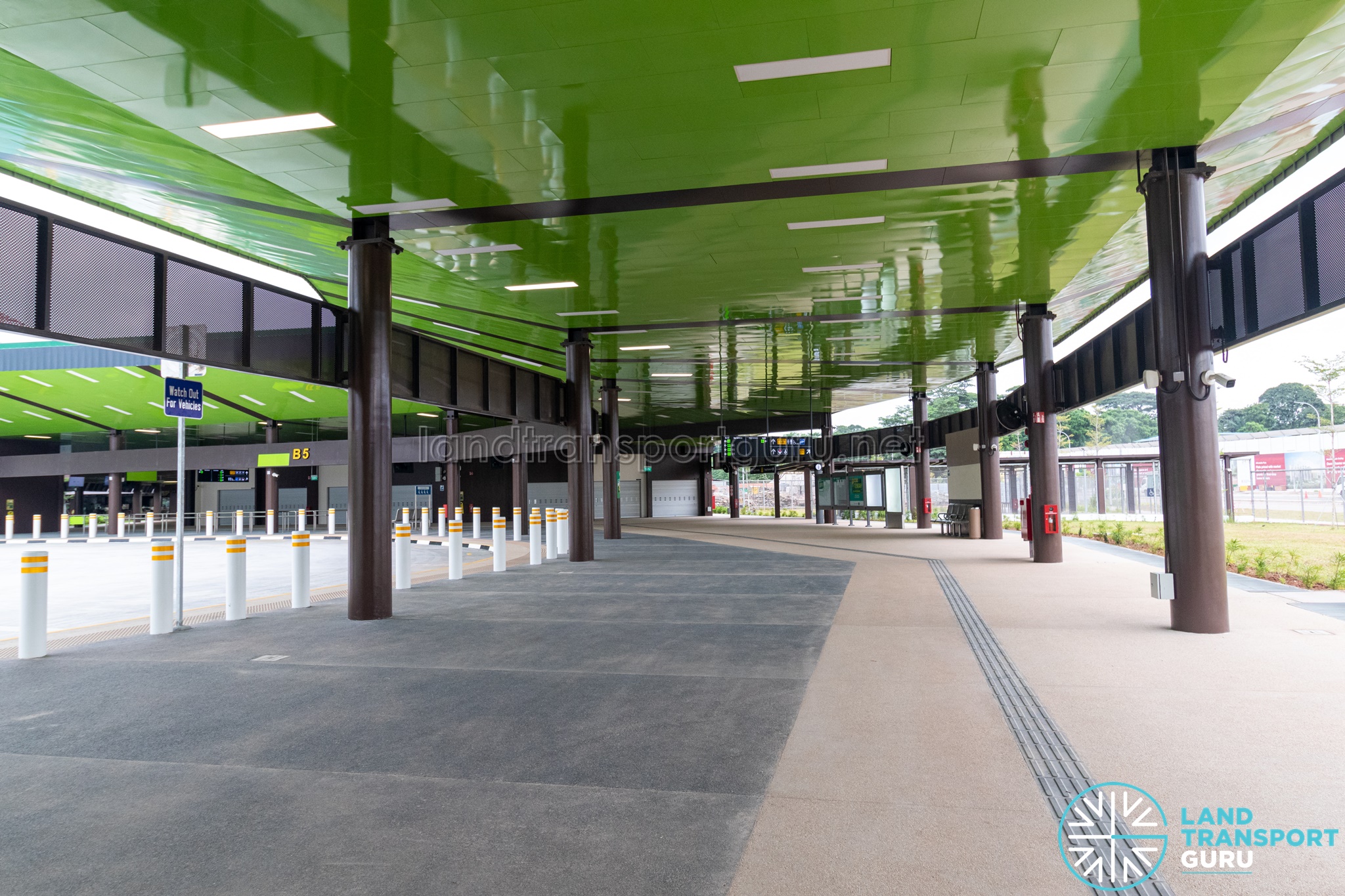
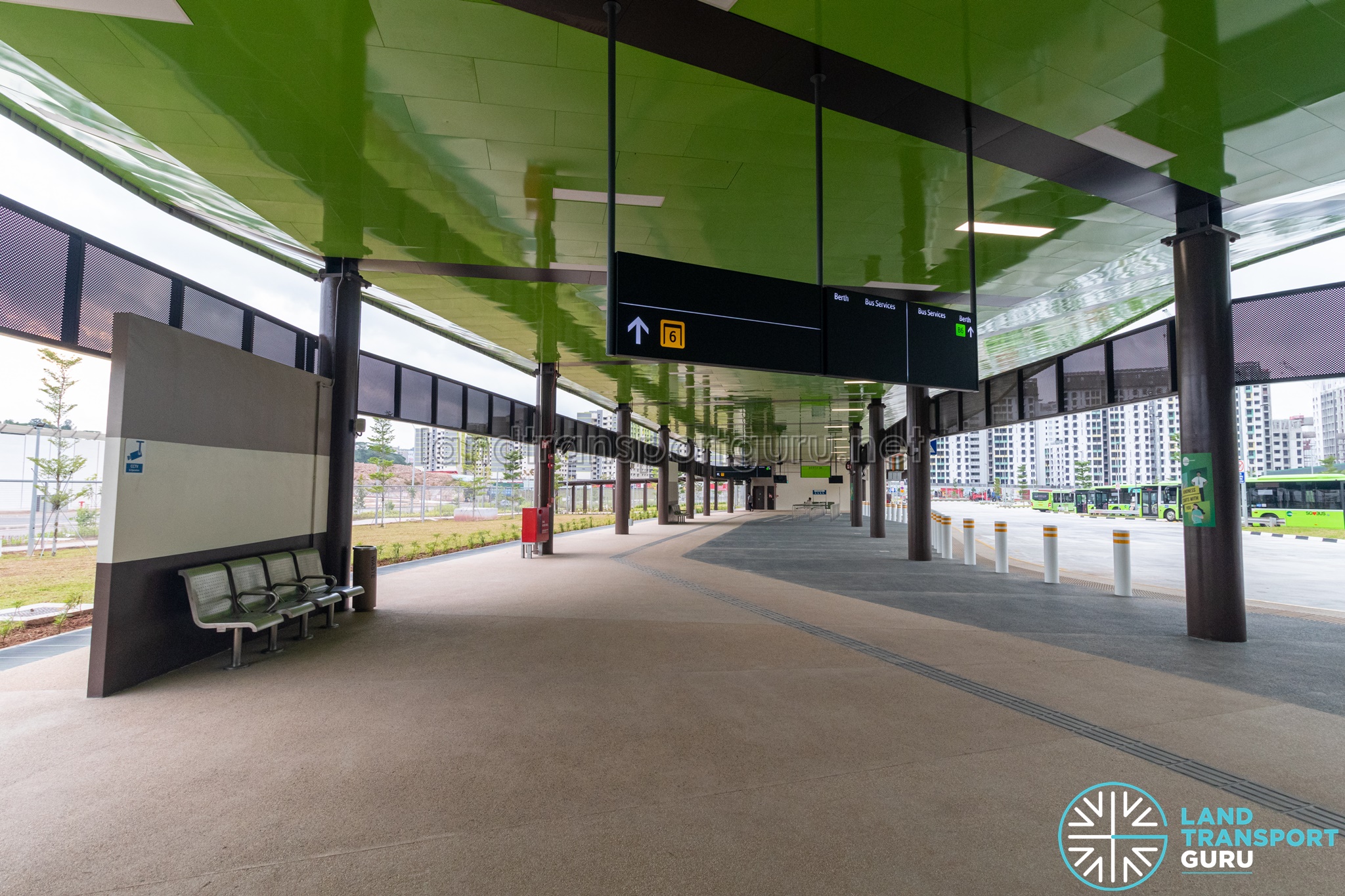
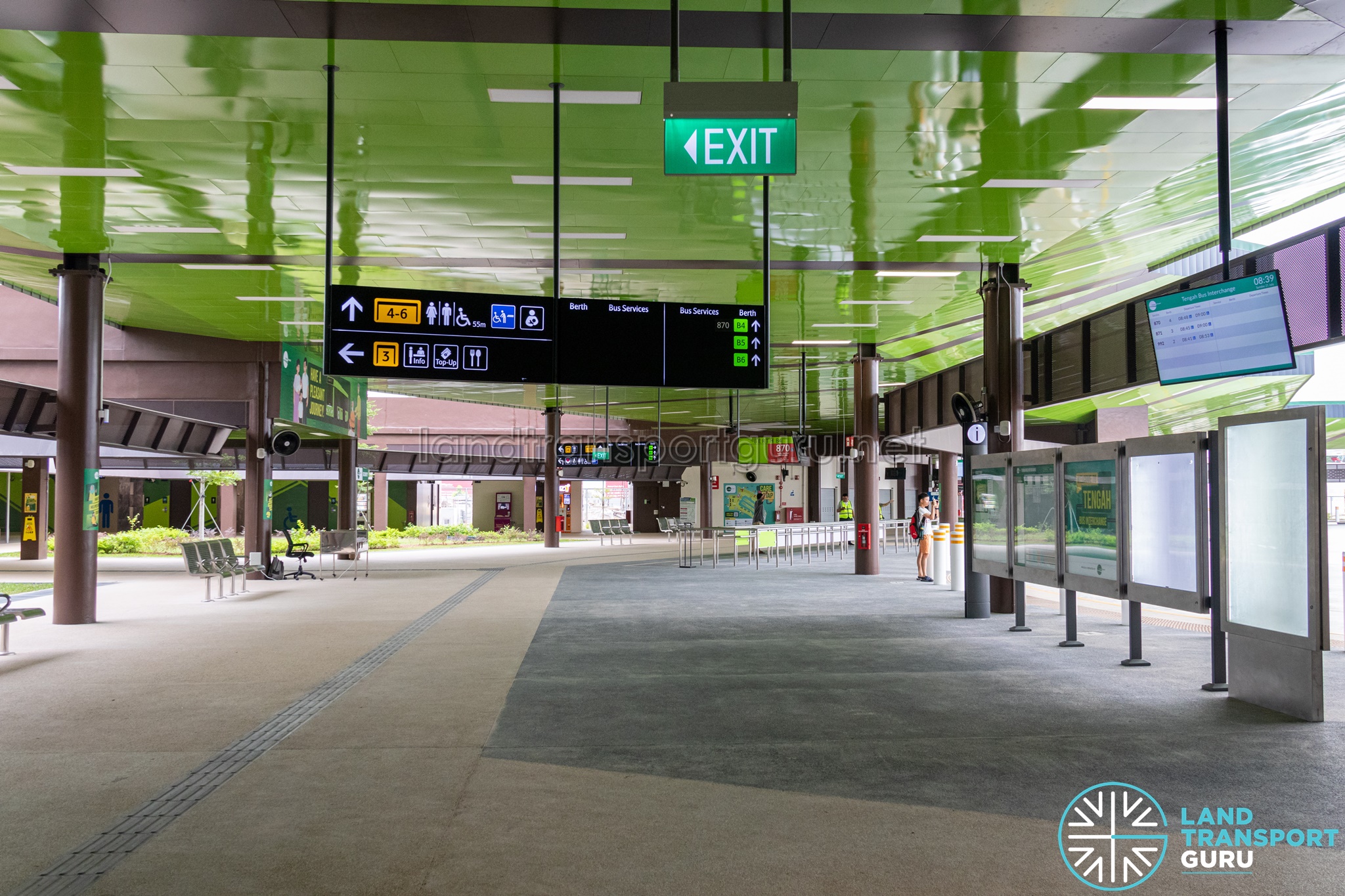
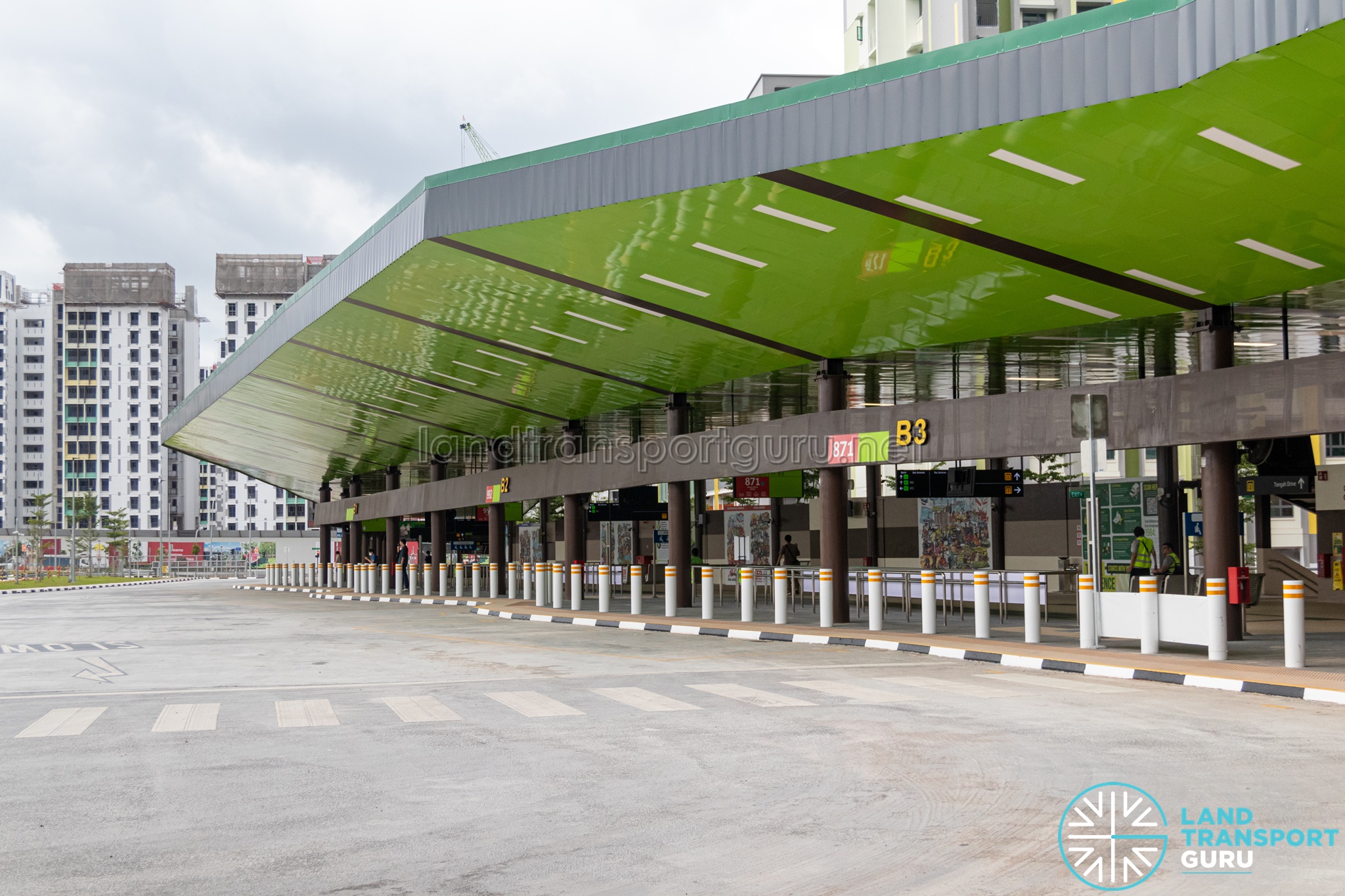
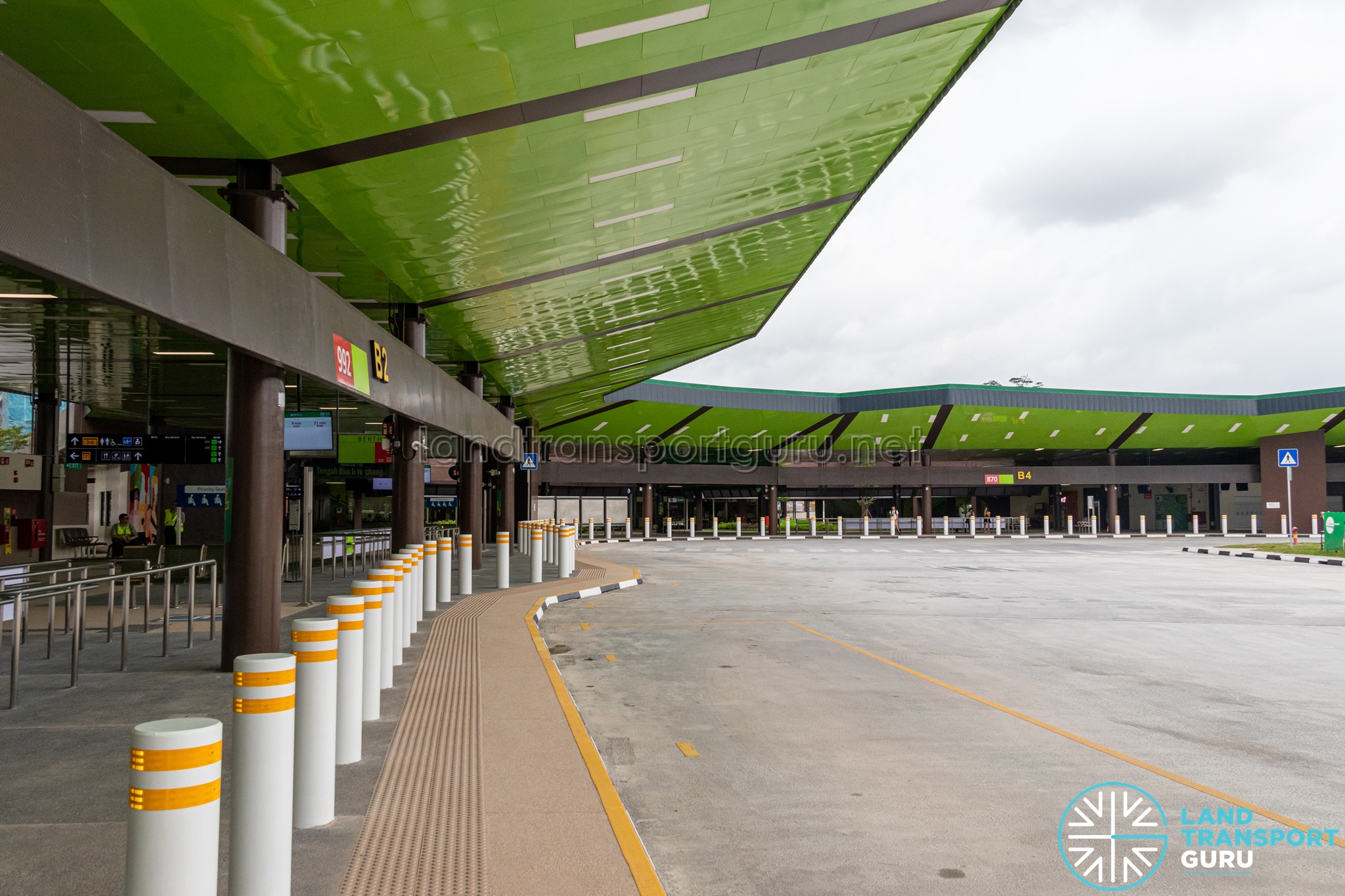
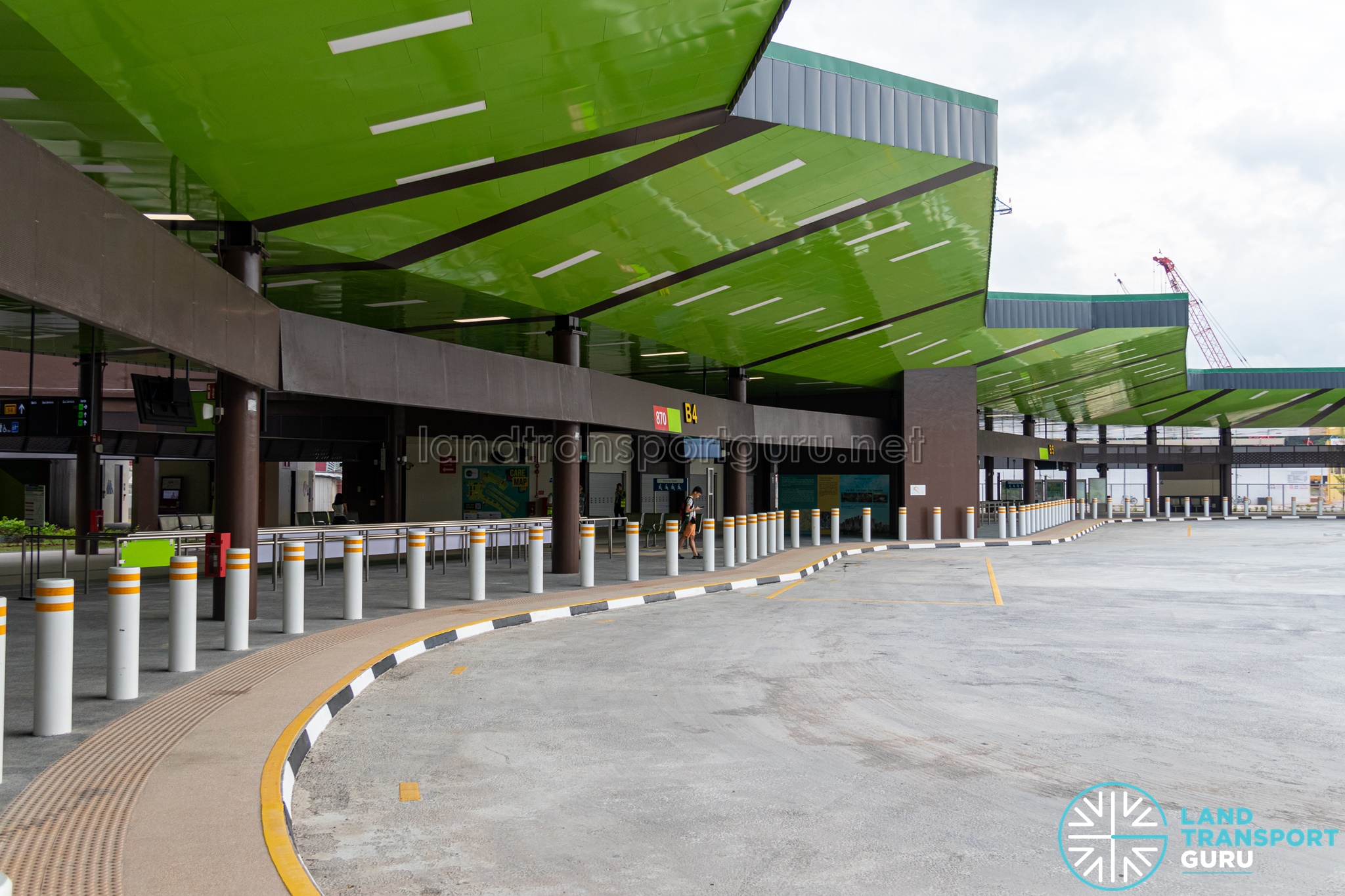
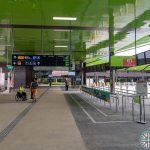
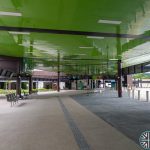
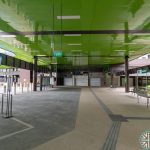
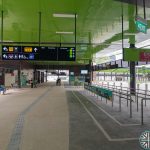
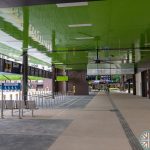
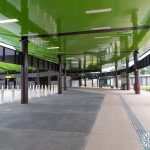
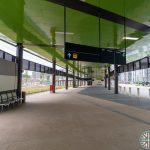
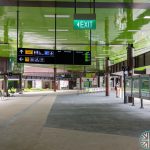
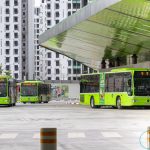
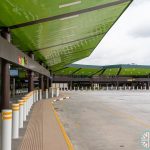
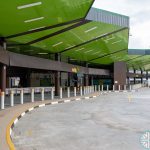
Tengah Bus Interchange has three alighting and six boarding berths, with vehicle access via a signalised intersection with Tengah Boulevard.
Future Plans
The interchange is likely to be an interim facility, as it is zoned for residential use under the URA Master Plan 2019. Another bus interchange is being built to serve Tengah New Town—Tengah Integrated Transport Hub—which is situated adjacent to Tengah MRT Station (Jurong Region Line) along Tengah Central.
In line with current LTA naming conventions, interim and/or temporary bus interchanges no longer carry the “Temporary” name.
Interchange Facilities:
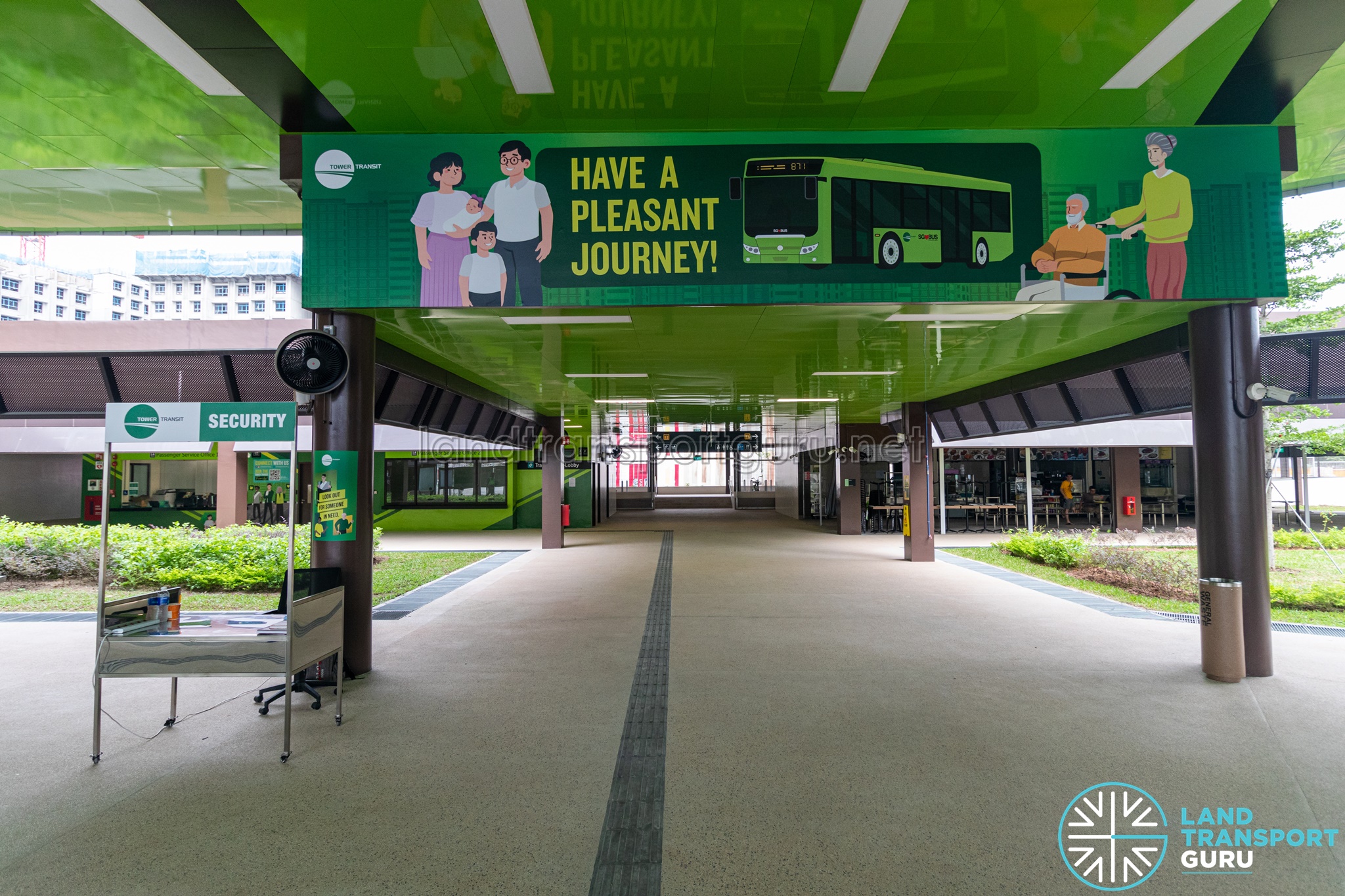
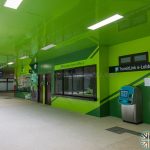
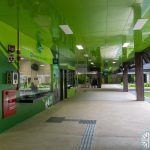
- Interchange Offices / Passenger Service Offices (Tower Transit Singapore & Empty Provision)
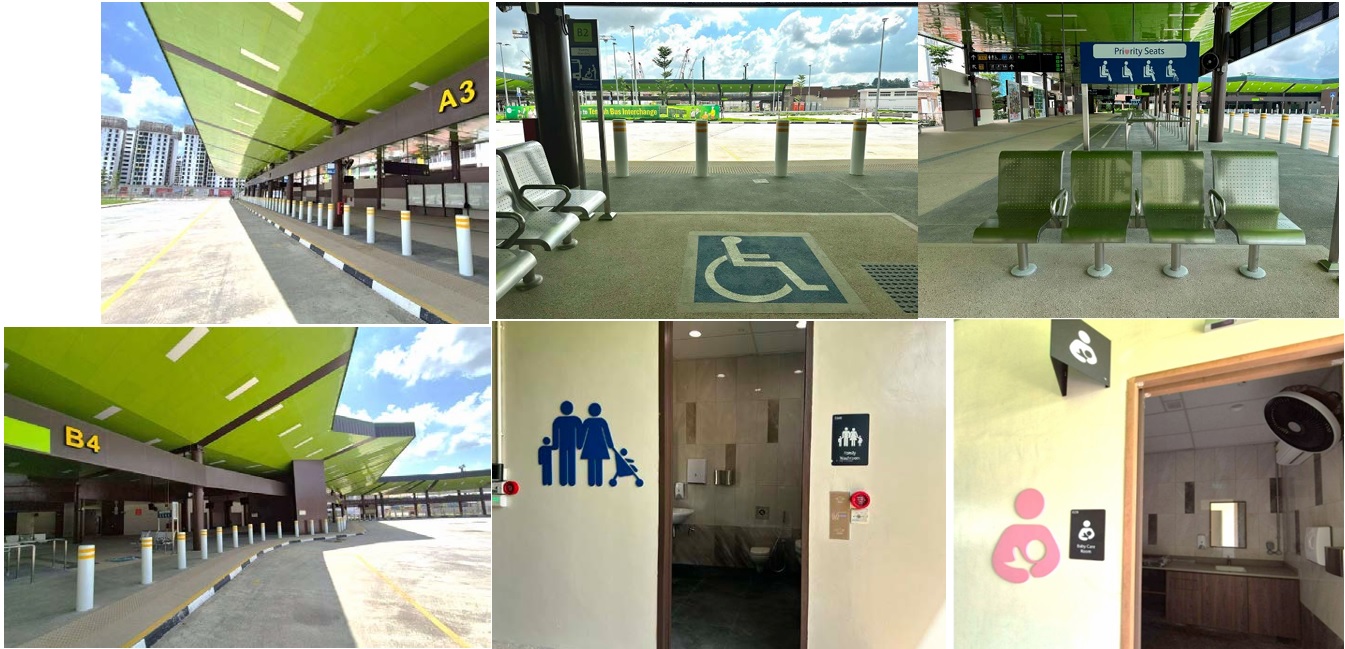
- Barrier-free boarding and alighting berths
- Dedicated priority queue zone with seating at all boarding berths
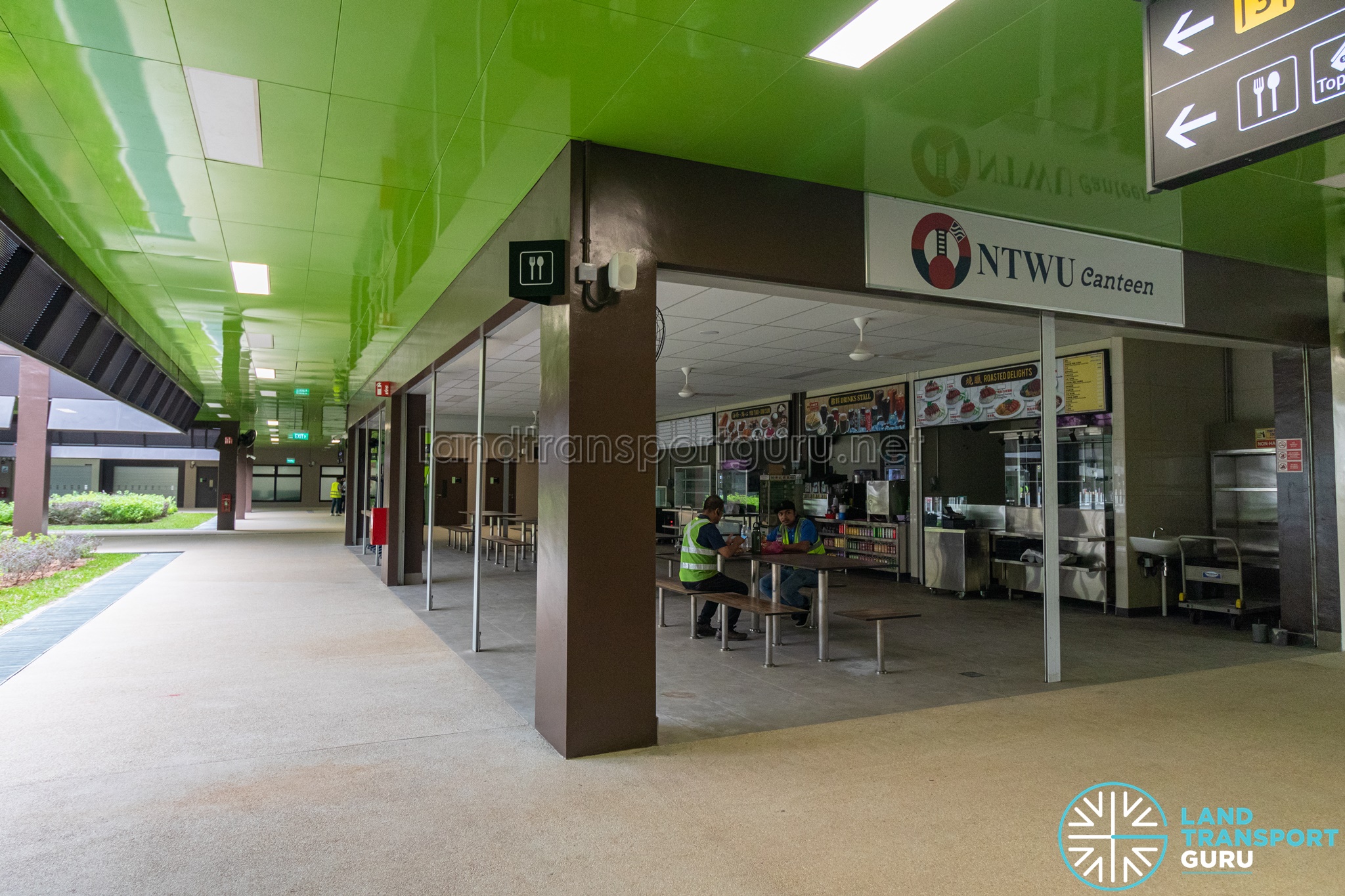
- NTWU Canteen
- Bicycle Parking
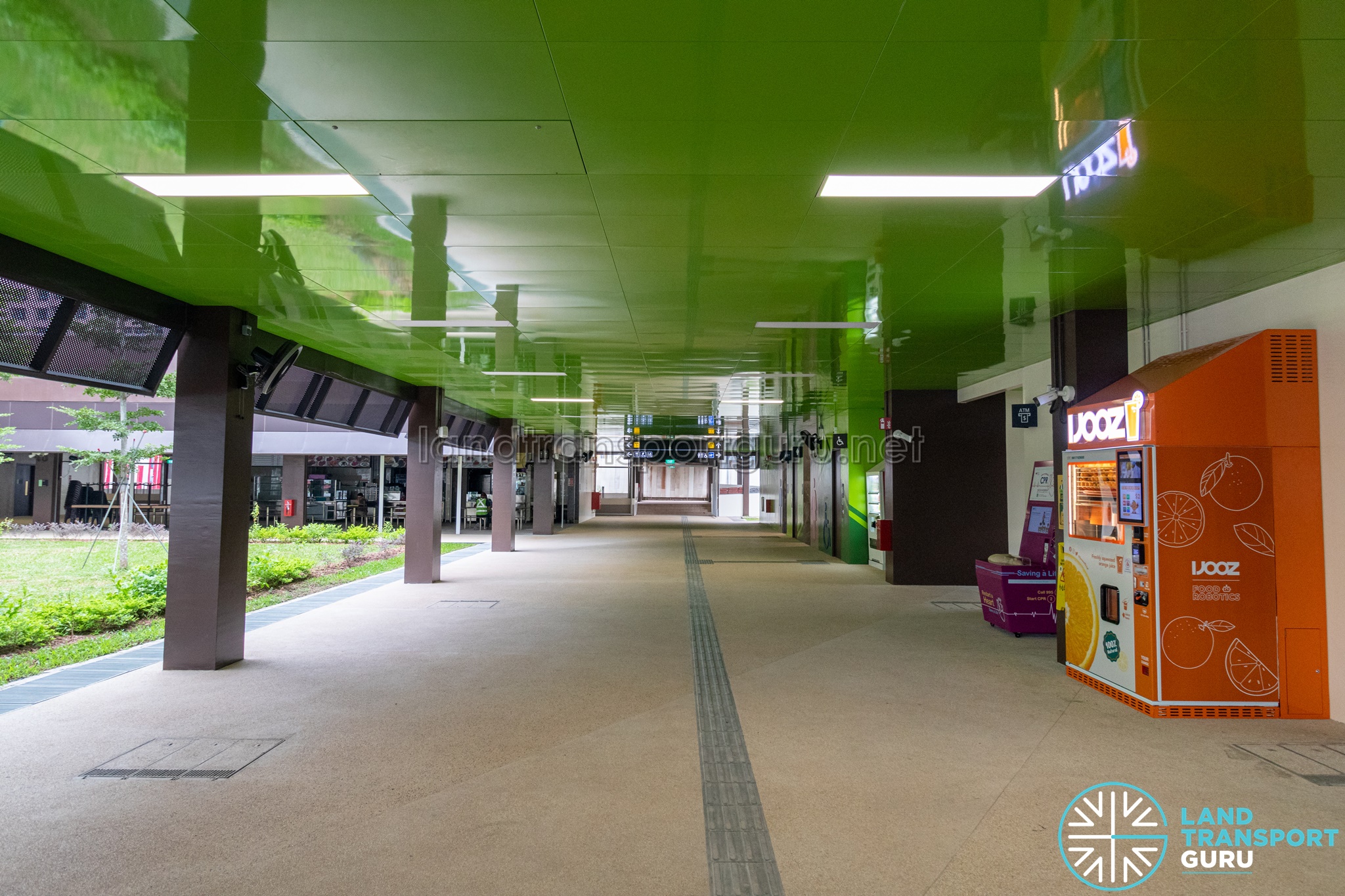
- Heartzone
- Public Toilets
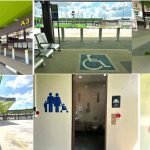
- Wheelchair Accessible Toilets & Changing Room
- Family Washroom
- Baby Care Room
- Commuter Care Room
- First Aid Room
- Retail Spaces
- Vending Machines
- Top Up Kiosk
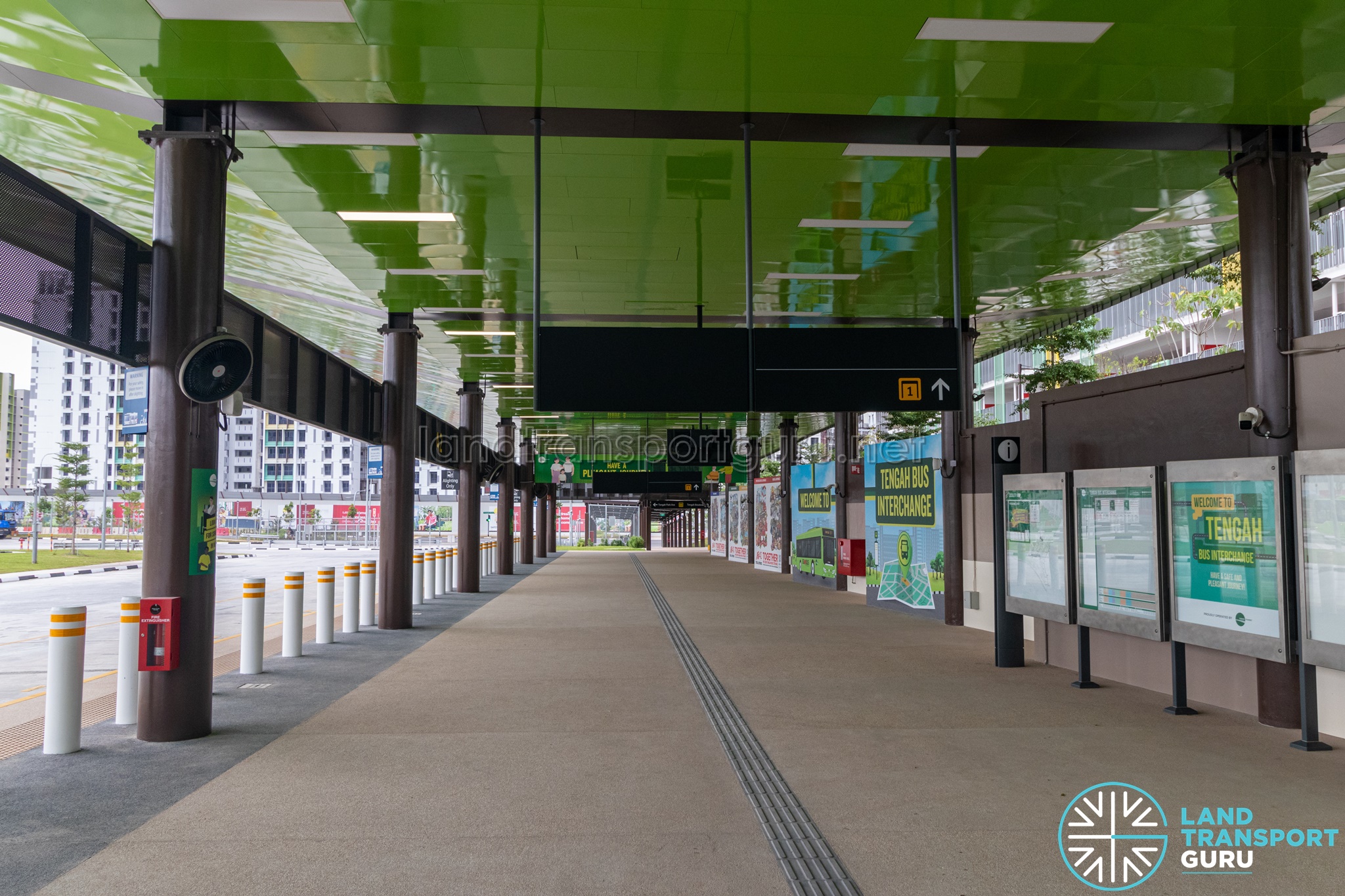
- Total Defence Alley Exhibit
Bus Services:
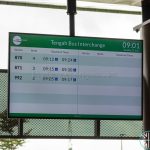
| Service | Berth | Destination | Remarks |
| 97 | B1 | Marina Centre | |
| 97e | B1 | Marina Centre | Express Service; Weekday Morning Peak Hours only |
| 181 | B6 | Boon Lay | |
| 452 | B3 | Jalan Jurong Kechil (Beauty World Stn Exit C) | Weekday Morning Peak Hours only |
| 453 | B2 | Bukit Batok | Weekday Morning Peak Hours only |
| 831G | B5 | ↺ Tengah Garden Avenue via Bukit Batok Rd |
|
| 831W | B4 | ↺ Tengah Garden Avenue via Tengah Dr |
|
| 870 | B4 | Jurong Town Hall | |
| 871 | B3 | ↺ Upper Bukit Timah Road | |
| 871A | B3 | Bukit Batok East Avenue 2 (Blk 240) | Short Trip Service |
| 872 |
B1 | ↺ Jurong East Street 32 | |
| 872A | B1 | Boon Lay Way (Chinese Gdn Stn) | Short Trip Service |
| 873 | B5 | ↺ Upper Bukit Timah Road | [From 25 Oct 2026] |
| 873M | B5 | ↺ Bukit Batok Street 52 | [From 25 Oct 2026] |
| 874 | B6 | ↺ Choa Chu Kang Avenue 4 | [From 25 Oct 2026] |
| 992 | B2 | Bukit Batok |
Berth Allocation:
| Berth | Bus Services |
| A1 | For Alighting Only |
| A2 | For Alighting Only |
| A3 | For Alighting Only |
| B1 | 97/97e, 872/872A |
| B2 | 453, 992 |
| B3 | 452, 871/871A |
| B4 | 870, 831W |
| B5 | 831G, 873/873M |
| B6 | 181, 874 |
Exits
The interchange has 6 pedestrian exits. All exits are wheelchair accessible.
- Exit 1 – along Tengah Boulevard
- Exit 2 – Parc Woods @ Tengah Blk 323 / Tengah Drive
- Exit 3 – Parc Flora @ Tengah
- Exit 4 – Parc Flora @ Tengah
- Exit 5 – Tengah Park Avenue
- Exit 6 – Tengah Park Avenue
Gallery:
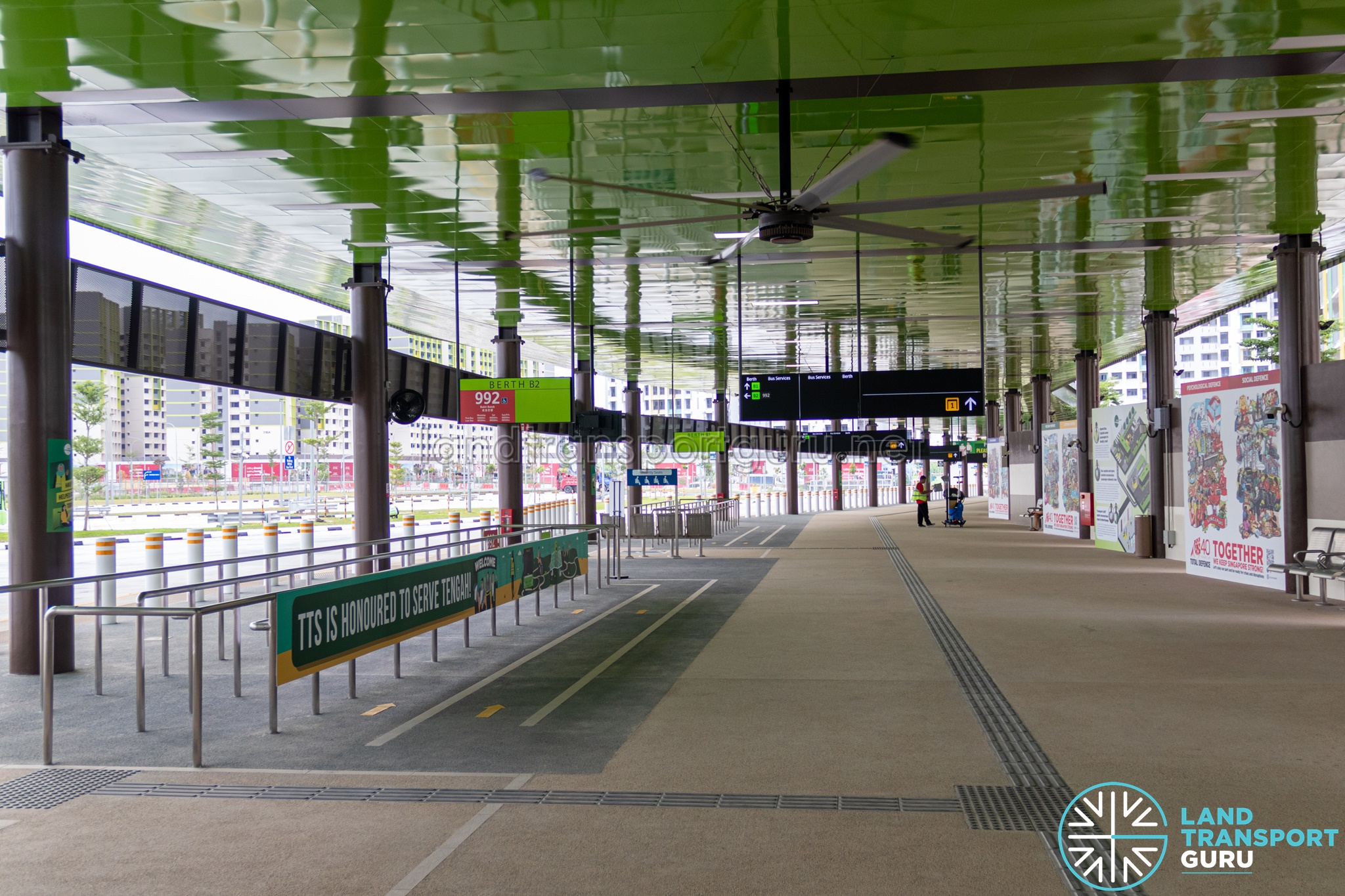
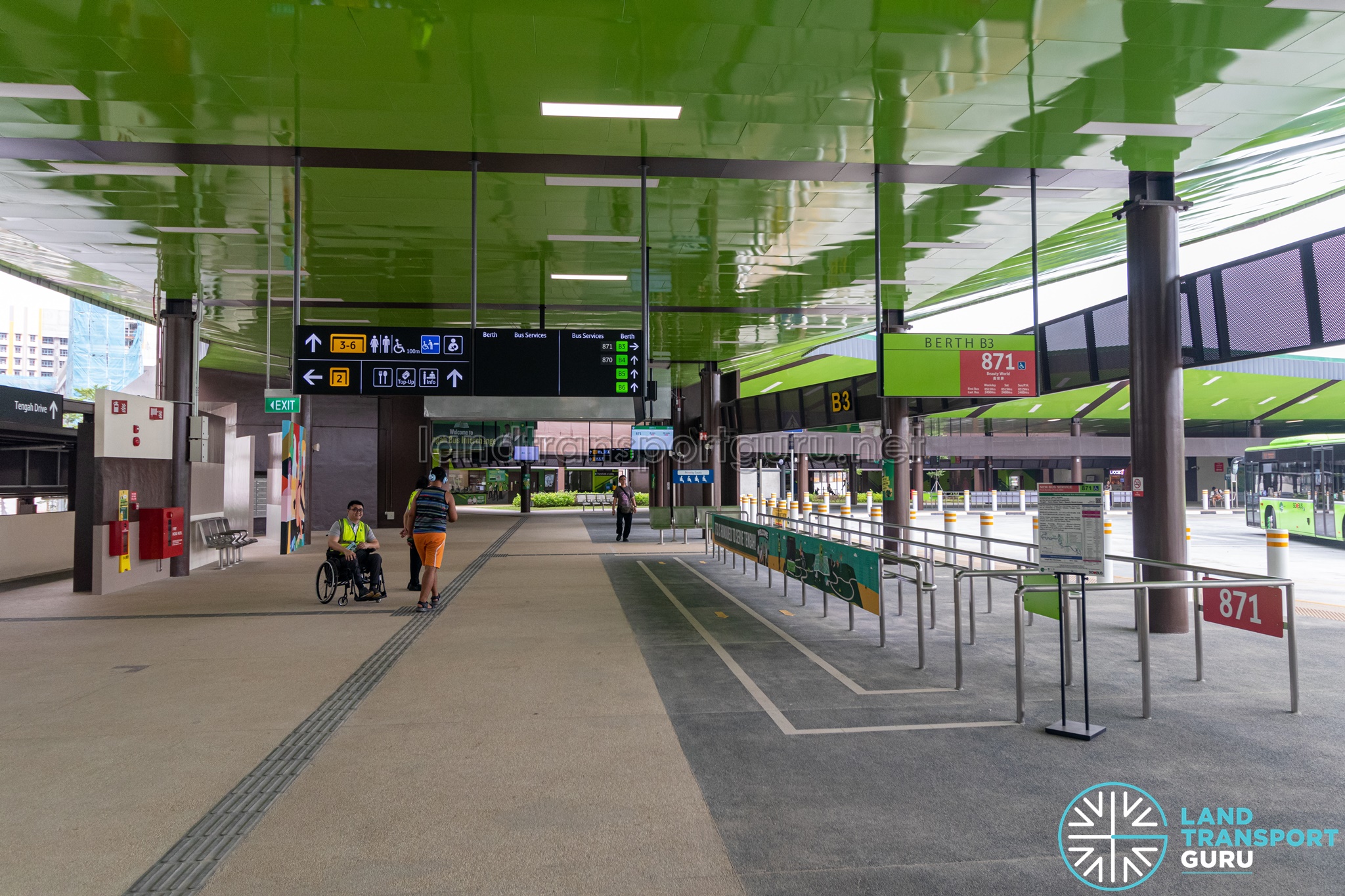
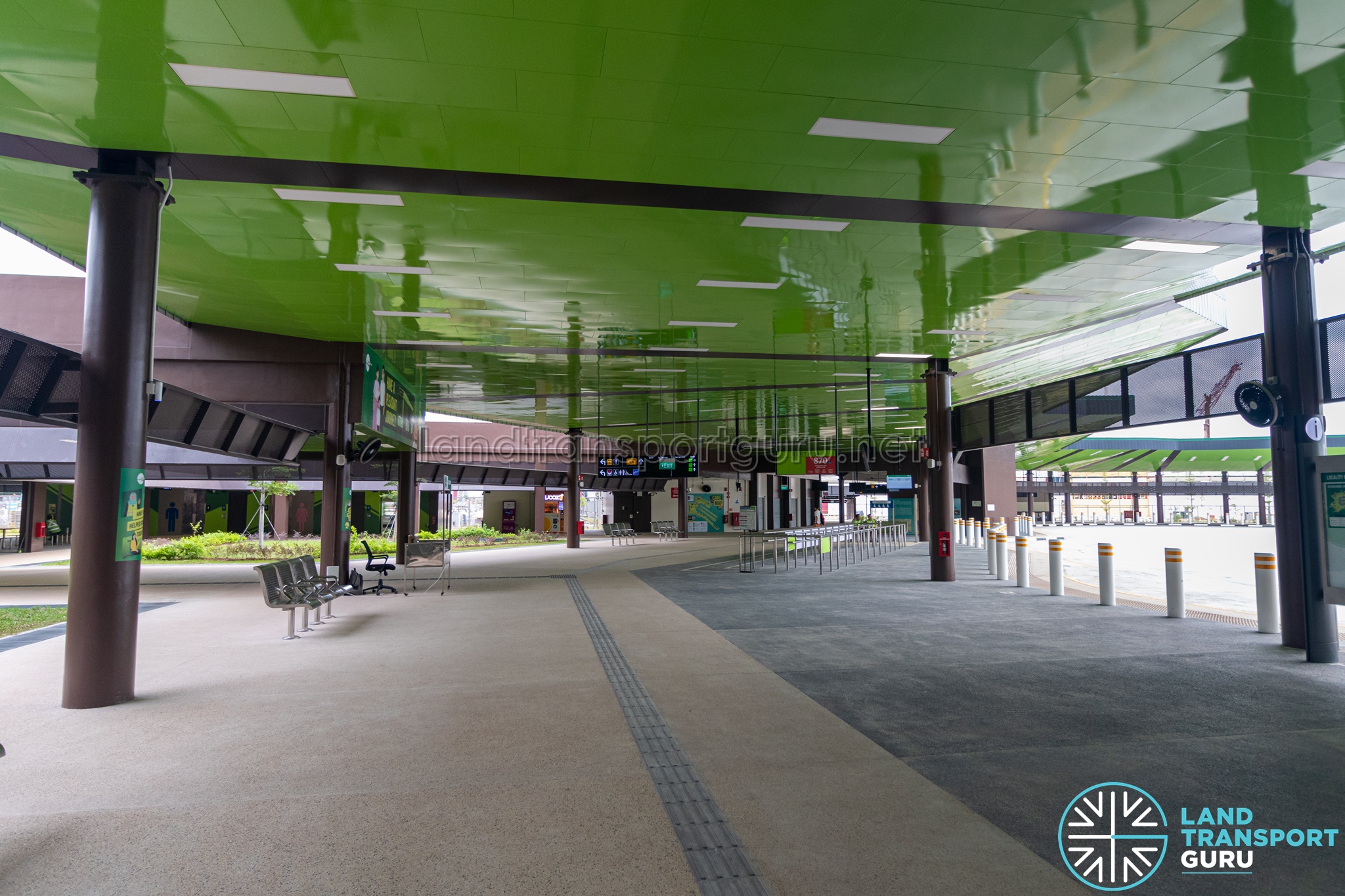
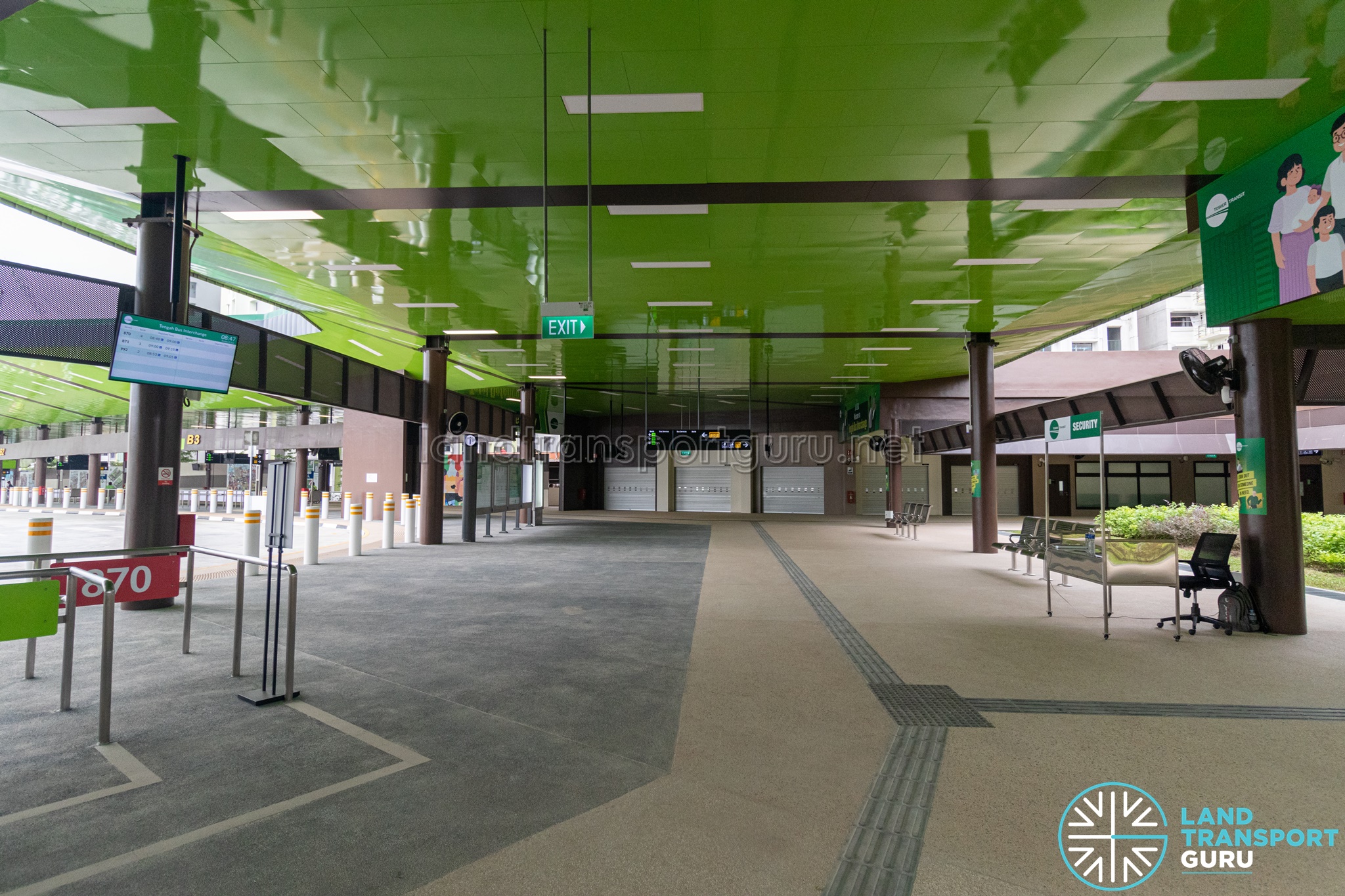
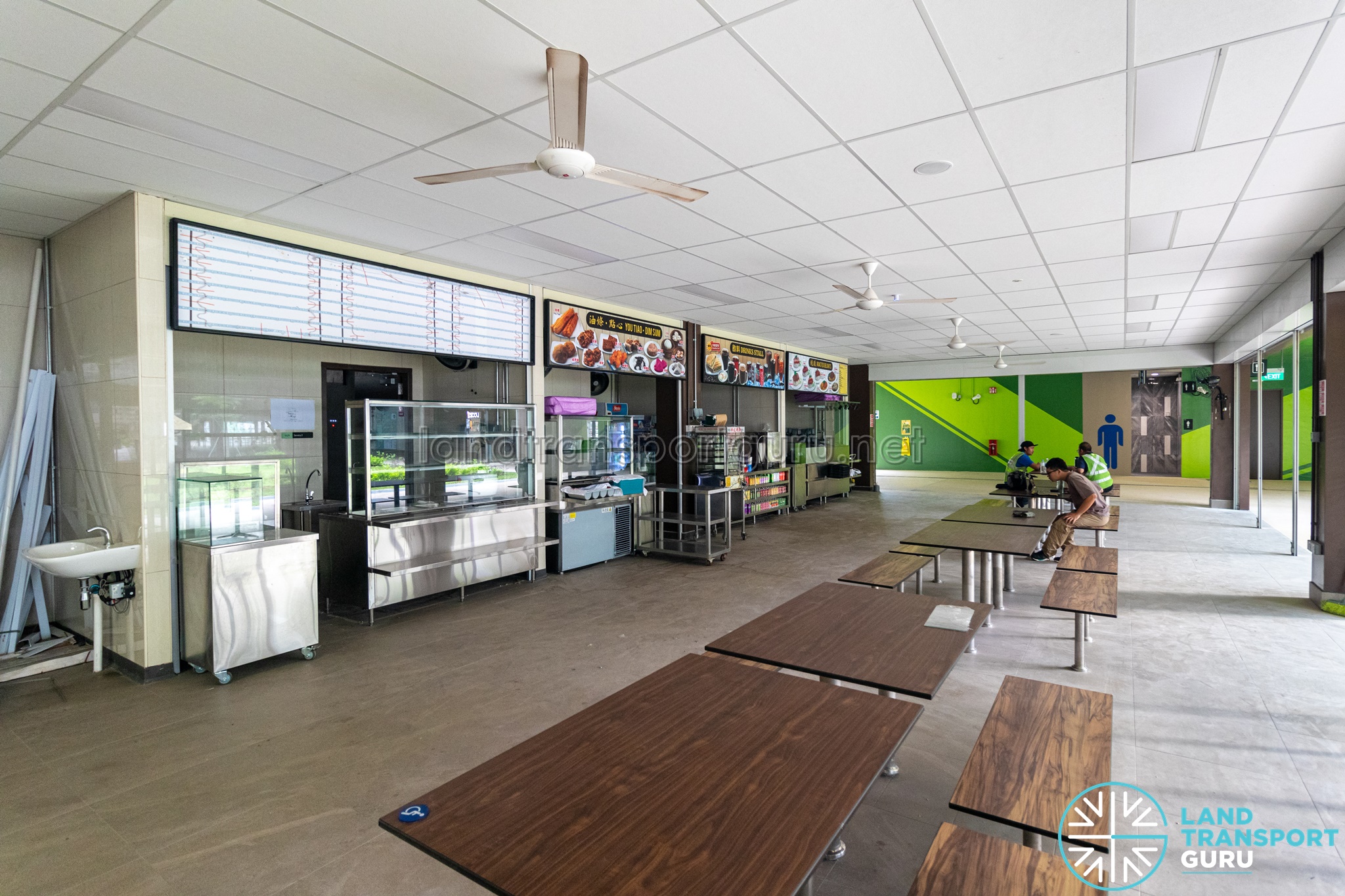
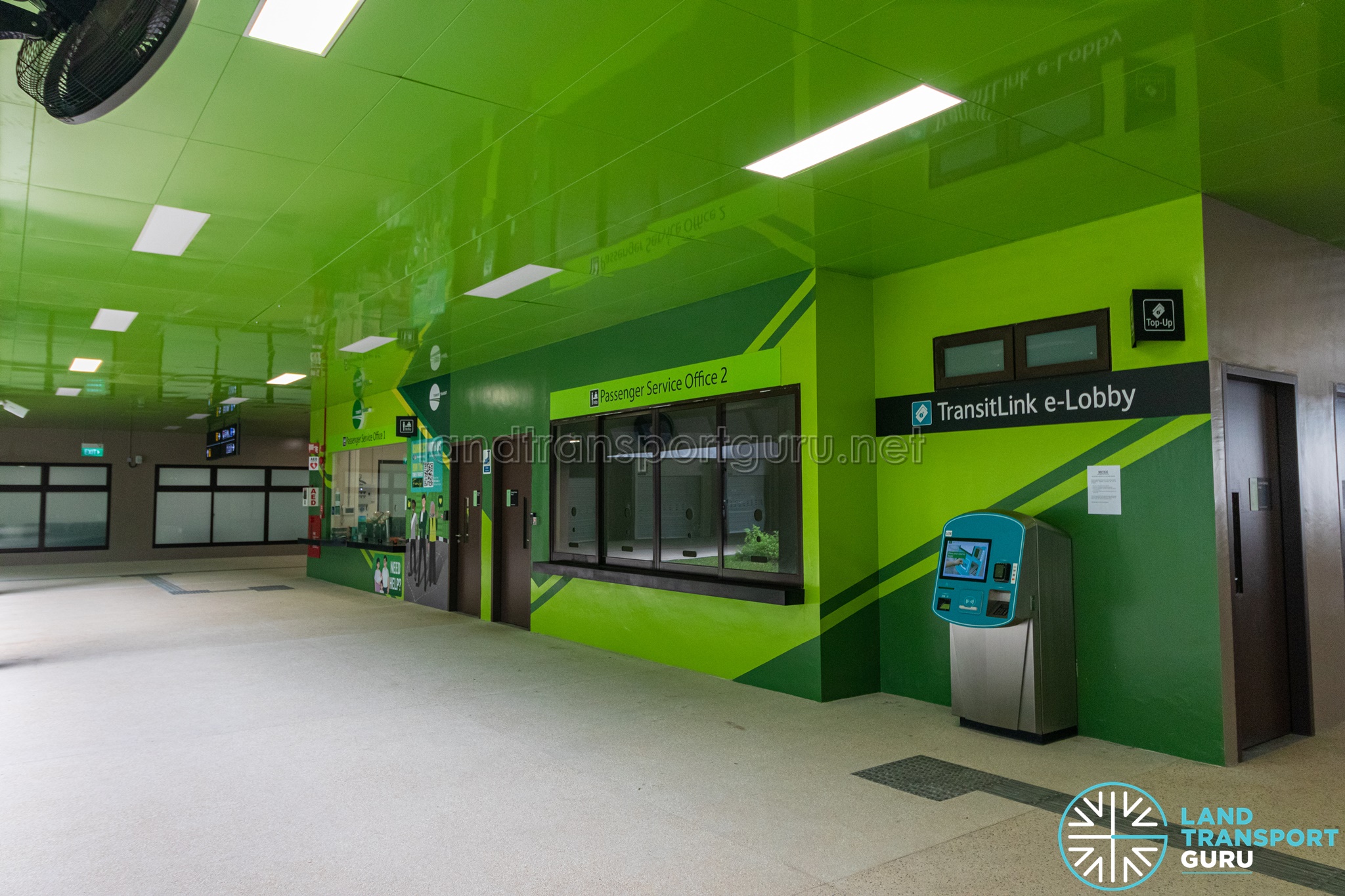
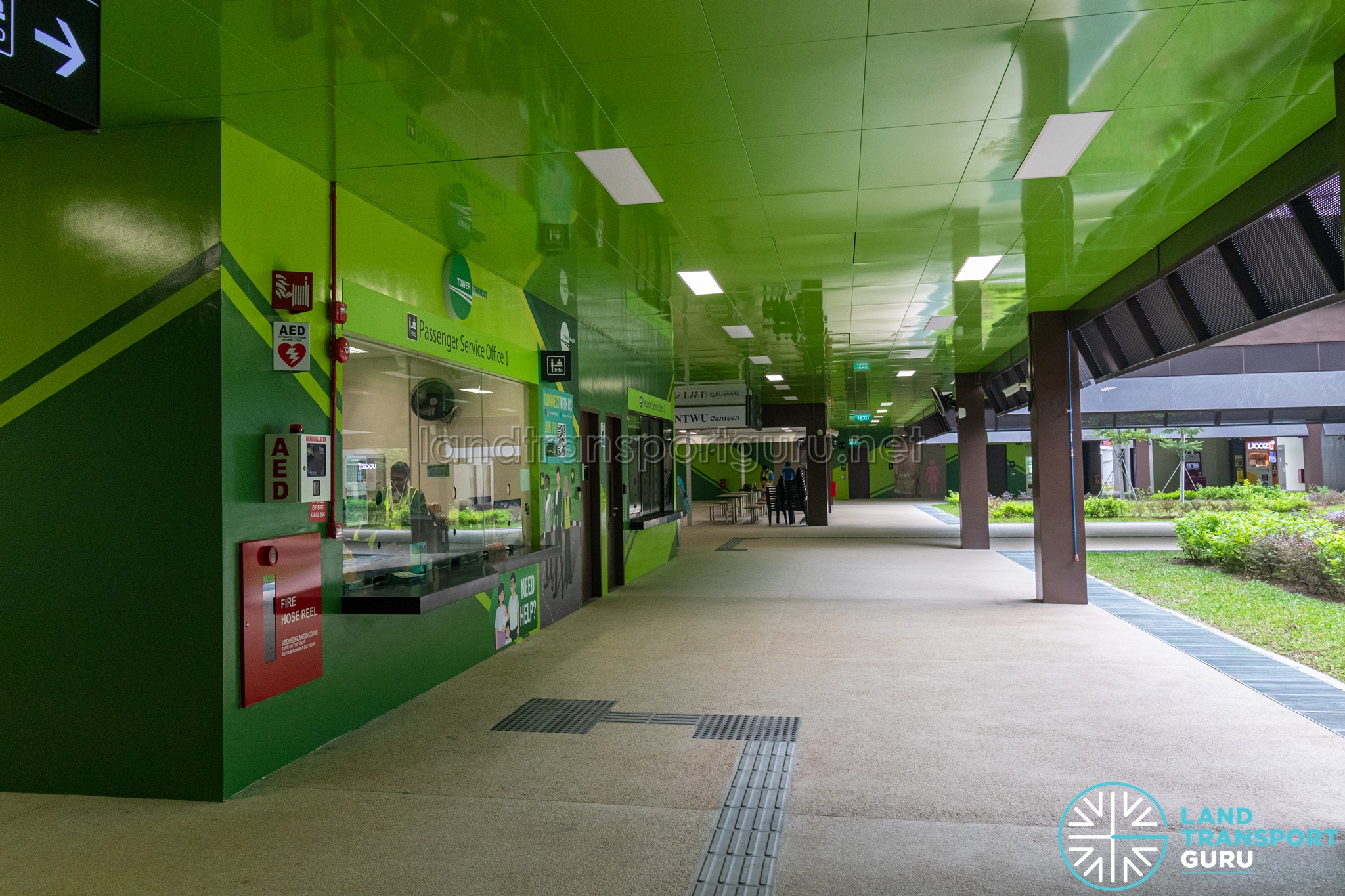
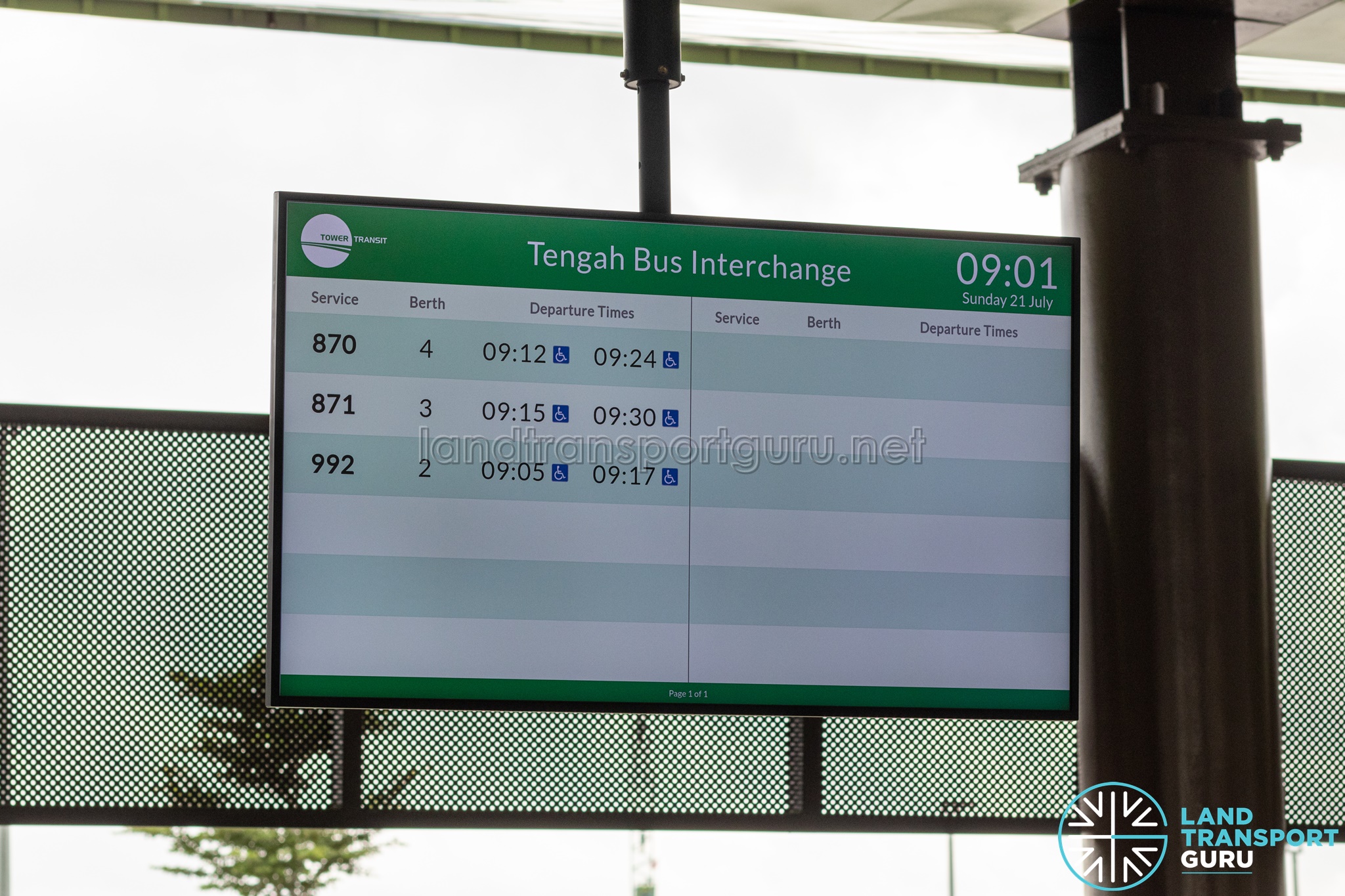

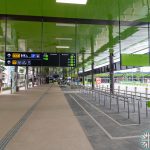
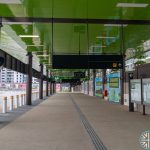
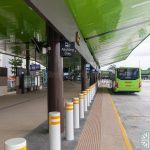
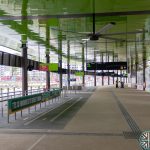
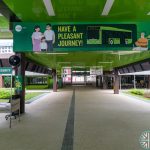
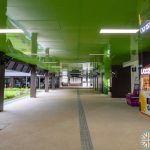
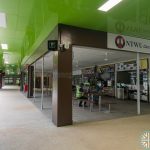
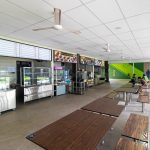
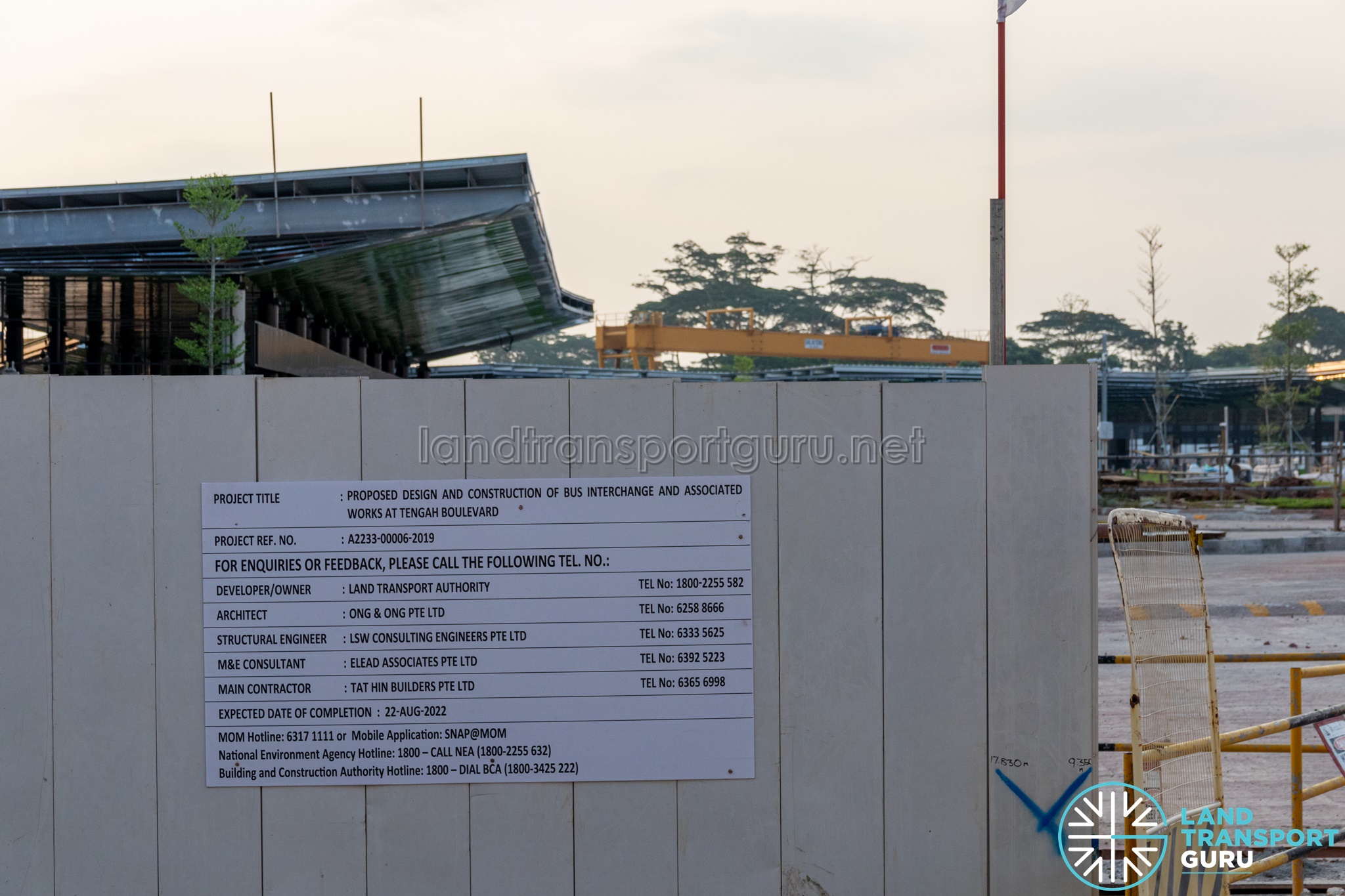
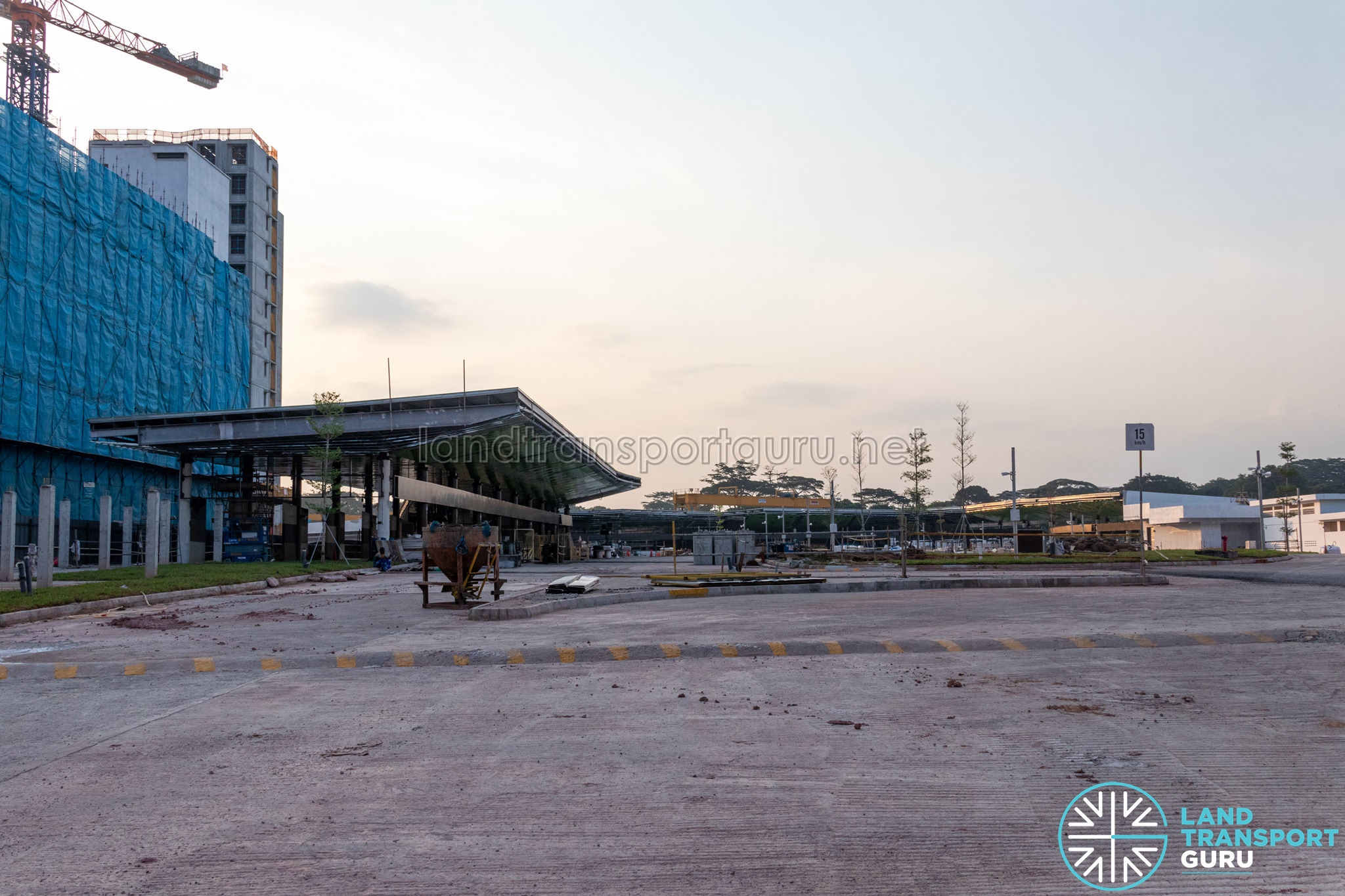
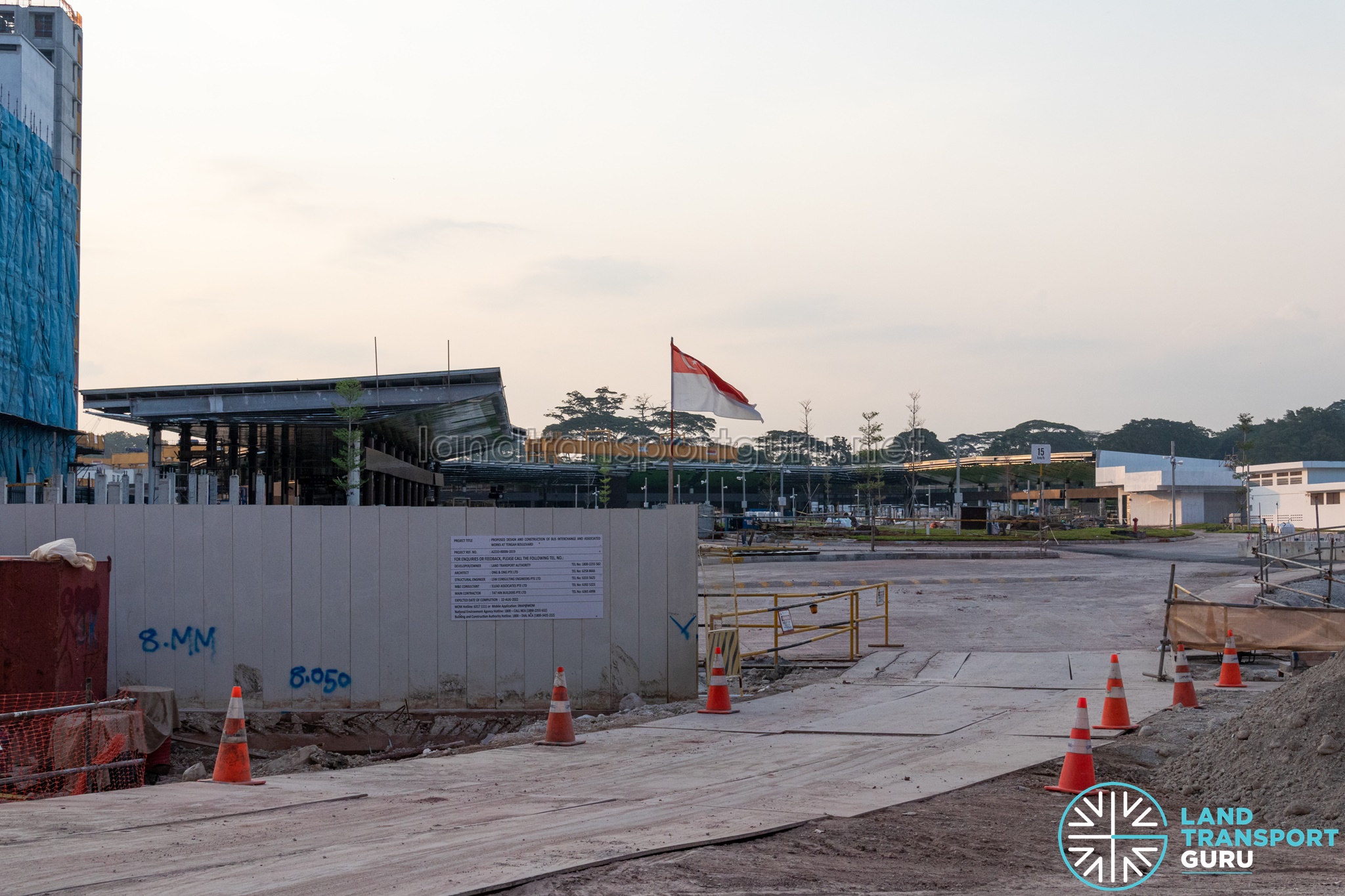
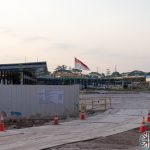
Construction



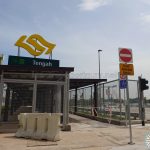
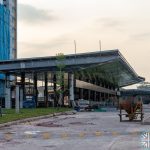
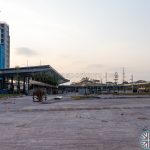
Opening Posters
Article Name Change
This article was formerly titled “Tengah Boulevard Bus Interchange”, referencing the name used within the construction. It was changed to “Tengah Bus Interchange” in October 2023, referencing signages mounted at the new interchange and a Facebook post shared by local Member of Parliament Dr. Amy Khor.
References
- Tengah Bus Interchange to Start Operations On 21 July 2024 – Land Transport Authority [Accessed 5 July 2024]
- Amy Khor Facebook Post [Accessed 5 July 2024]
Bus and rail complement one another in Tengah.
When JRL opens in 2028, a general guideline should be: wherever JRL does not cover, let bus cover.
Meaning to say, any Tengah bus route that goes to Boon Lay, Choa Chu Kang and Jurong East would naturally be subject to elimination.
The other Tengah bus routes that go to Bukit Batok, Bukit Gombak, Chinese Garden, CBD, or run within Tengah only, are safe.
In other words,
Not safe (may be removed from Tengah when JRL opens): 181, 984, 870.
Safe (do not overlap with JRL): 992, 871, 873, 872, 97, 831, 452, 453, 674.
Ps, write wrong. It should be 874. But anyway, 984 ridership also cui. All these bus routes (181, 874, 870, 984) are really subject to elimination (at least from Tengah area) next time when the JRL opens.
Actually, maybe take out 181, since not really duplicating JRL.
But nonetheless, 870, 874 really duplicating JRL, and 984 ridership cui. At least it’s these three that should be eliminated when JRL opens in 2028.
While my proposal may seem a bit radical, I believe that it would overall result in a net positive for the Tengah area. 75 could be integrated with 871 and amended to Tengah, and the Bukit Panjang – Beauty World sector of 75 could be integrated with 975.
Service 75: (Tengah Interchange – Bukit Merah Interchange)
Current 871 routing until Beauty World, then current 75 routing to Bukit Merah
Service 975: (Beauty World Interchange – Lim Chu Kang Road End)
Current 975 routing, then current 75 routing to Beauty World
Extending 75 to Tengah would enable Tengah residents to have a new direct connection to Holland Road, Tanglin and Outram, giving them an alternative long-distance trunk service. Although 75’s section from Bukit Panjang to Beauty World is already covered by 184, to minimise the loss of one of the only two services along Cashew Road, 975 could be extended from Bukit Panjang to Beauty World. This would also ease overcrowding at Bukit Panjang Interchange, allowing a service like 974 to move in, reducing bunching on that critical service. 975 would also create a direct link from Cashew Road/Beauty World/Upper Bukit Timah to Choa Chu Kang and Teck Whye, offering an alternative to 67. This amendment would also give the currently low-demand 75 a new important purpose, giving Tengah an older-style trunk route as found in other towns in Singapore.
Some concerns about this amendment could involve the length of 975, and the low frequencies on the current 871 section. To improve bus captain welfare, 975 could be converted into a bi-directional service, allowing BCs to take a proper 15 minute break at Lim Chu Kang Road End, with a small air-conditioned container office and snack and drink vending machines for drivers to use. For the 871 section, the current frequencies are already similar to 75’s frequencies. Furthermore, the Beauty World – Tengah sector is already served by the much faster 452, and the Tengah – Bukit Gombak sector will be served by 873. If there really is high demand on that section, a 75A could be introduced, running Tengah Int – Opp SIM Campus.
Feel free to provide constructive feedback below! 🙂
Tengah roads opened in September 2023. It has only been 3 years, and development started around 2019 which was 7 years ago. It will take at least another 7 years before Tengah is substantially developed (including Forest Hill, Brickland and the JID component).
We are still early. Why not let’s take a break and let Tengah be a rural town for a while?
We are already over supplying buses in Tengah.
Tengah has two upcoming developments:
1. JRL opening and possible bus network revamp.
2. That Tengah Pond construction, and possibly one more water body construction somewhere in Tengah Brickland area.
JRL itself is an unknown variable, hopefully the noise pollution won’t be that serious.
Tengah is not for investment. It is for living. The intention has to be pure (purely to live and to work). Any thoughts of profiting from Tengah (other than the children growing and learning in Tengah, and other than the adults working in Tengah), really good luck to you. (Airplane noise, JRL noise, expressway noise, who wanna buy actually unless is already living nearby and want that familiarity?)
Right now, people still moving in to Tengah. It’s going to take about 7 more years, although it has already been 3 years.
Tengah is still a major construction site, although the residential areas already opened are clearly residential oasis already.
Still so much unknown variable. Tengah is a long game.
And frankly, Tengah is a spillover from surrounding towns (Jurong West, Jurong East, Bukit Batok, Choa Chu Kang). The heart will naturally also spread from the existing towns into Tengah.
It’s a growing up process.
Tengah probably will have one more bus route after this round of new bus routes, and that is to Tengah Park area. Thereafter, to Tengah Brickland is just route amendment of 873 and/or 874 when that road opens.
May everyone continue to grow up happily (快乐长大). You are welcome.
I agree with what you are saying, but I feel that Tengah should at the very least get one or two long-distance trunks extended, connecting it to other parts of Singapore. CCK/BBT/JE already quite far from the city, can you imagine commuting from Tengah to the nearest town centre then further on to other parts of the island? I would instead propose that there be more permanent services added to Tengah, since realistically, most of the current Tengah services seem temporary and can be absorbed or extended.
Tengah’s Future Bus Network
Tengah’s current bus network should not be mistaken for its final form. As a new town planned with extensive transport modelling, its eventual public transport network would have been considered well before the town was built. The present arrangement mainly reflects the fact that the Jurong Region Line (JRL) has yet to open.
Services such as 181 and 97 were extended into Tengah, while 870 and 874 were introduced to provide connectivity during its development. Once the JRL opens, some of these services will no longer need to perform their present roles. Bus routes can instead focus on first- and last-mile connections, while the JRL handles the main passenger flows.
Service 872 is likely to be one of the routes reshaped by this transition. Once the relevant roads and the JRL are operational, it could take over Service 181’s Tengah Boulevard sector and use Jurong Canal Road to connect Tengah with Chinese Garden MRT. A revised routing through Town Hall Road and Avenue 1 before returning to Tengah would provide a more direct and coherent connection.
In the longer term, Tengah’s network could be built around four main trunk services — 871, 872, 873 and 992 — supported by a smaller feeder network. Each trunk route could follow a major corridor such as Tengah Drive, Tengah Boulevard, Plantation Crescent or the northern and southern sections of Tengah Boulevard. Peak-hour services such as 452 and 453, together with direct city routes, would provide additional capacity where required.
This would create a clear hierarchy. The JRL would provide rapid, high-capacity connections; trunk buses would cover major corridors beyond the railway; and feeders would connect neighbourhoods to JRL stations and the town centre. Forest Hill, being close to the town centre, would require only limited feeder coverage.
Service 181 could still have a role despite losing its Tengah Boulevard section. Bulim would require a connection to the nearest JRL station around Jurong West Avenue 2, after which continuing towards Tengah would remain logical. One possible long-term arrangement would take 181 through Tengah before looping around Choa Chu Kang Bus Interchange via Avenue 3, similar to the proposed concept for 874.
Such a route would be approximately 21.2 km long — 11.1 km towards Choa Chu Kang Keat Hong Community Club and 10.1 km on the return journey. This is remarkably close to Service 180’s approximately 21.3 km total route length between Boon Lay Bus Interchange and Bukit Panjang.
Ultimately, the present network should be seen as a transition rather than a finished product. As the JRL and the remaining roads open, Tengah’s buses can be reorganised around a simpler hierarchy of trunk and feeder services. The railway will form the backbone, while buses will provide the local and cross-town connections that rail cannot.
Great AI generated content right there. In any case, what are your thoughts of keeping service 870 (much like how service 976 is around for Bukit Panjang LRT)?
Probably going to be some generic ChatGPT reply like “Service 870 should be kept after analysing the demand after the JRL opens” LOL
In practice, all of Tengah’s current bus routes may be regarded as provisional. The existing network reflects the fact that only a proportion of the planned road network is currently open and that the Jurong Region Line (JRL) has yet to commence operations.
Tengah Drive should ultimately serve as the principal access into Tengah from Bukit Batok Road, rather than Plantation Crescent. At present, however, only Service 97 operates along this corridor. It is therefore reasonable to anticipate a substantial revision of the bus network once the wider road network is completed and the JRL becomes operational.
The revised network would be expected to place greater emphasis on feeder services providing first- and last-mile connectivity to JRL stations within Tengah’s residential areas. Trunk services operating broadly in parallel with the JRL, such as Service 870 and 874, together with extensions of existing services such as Services 97 and 181, would potentially be withdrawn or rationalised following the opening of the JRL, where the rail service provides a more direct and higher-capacity alternative.
The services that may continue to have a distinct role are therefore the remaining trunk routes—Service 871 to Beauty World, Service 872 to Chinese Garden, Service 873 to Hillview and Service 992 to Bukit Batok—as well as the express feeder services to Beauty World and Bukit Batok, Services 452 and 453 respectively. Even these services may require route rationalisation within Tengah, with buses potentially being concentrated on the principal arterial roads while feeder services provide local connectivity within the town.
On this basis, the entire Tengah town may ultimately require no more than approximately four feeder services, in addition to the trunk and other through services that remain justified. In the longer term, this would suggest that Tengah Bus Interchange may need to accommodate approximately nine regular bus services under the mature network configuration.
Nevertheless, transport infrastructure should not normally be designed solely around the forecast base requirement. Engineering and transport planning should incorporate an appropriate allowance for spare capacity to accommodate demand growth, operational requirements and future network changes. Assuming a 30% capacity allowance over the forecast requirement, nine routes would imply provision for approximately 2.7 additional routes.
Accordingly, Tengah Bus Interchange should reasonably be planned to accommodate approximately 12 bus routes in total. This appears broadly consistent with the likely capacity of the existing facility and could also provide a suitable benchmark for the eventual bus interchange at the Tengah Integrated Transport Hub.
While it is reasonable to recognise that Tengah’s present bus network is provisional, the conclusion that the mature network would require only approximately nine regular services—and therefore that 12 bus routes would constitute an appropriate planning capacity—appears premature.
First, the opening of the Jurong Region Line (JRL) does not necessarily mean that bus services operating broadly parallel to the railway will become redundant. Rail and bus services perform different functions, and the eventual demand pattern will depend on the location of entrances, walking distances, interchange arrangements, service frequencies and the distribution of residential developments across Tengah. A bus route may continue to provide useful direct connections to destinations outside the JRL network even where part of its alignment overlaps with the railway.
Second, the assumption that Tengah will require only approximately four feeder services is particularly difficult to establish at this stage. Tengah is being developed as a new town with multiple residential precincts separated by a developing road network. As additional roads and housing precincts are completed, feeder demand may emerge from areas that are not efficiently served by a small number of radial routes. The number of feeder services should therefore be determined by the eventual spatial distribution of residents and JRL stations, rather than by assuming in advance that four services will be sufficient.
Third, the analysis appears to treat the number of routes as the principal measure of interchange capacity. This can be misleading. Two interchanges with the same number of services can have substantially different operational requirements depending on service frequency, fleet size, layover requirements, peak-hour demand, recovery time and the proportion of buses terminating at the interchange. A high-frequency route may require considerably more operational capacity than a low-frequency route. Consequently, “nine routes” cannot automatically be translated into a requirement for nine route berths plus a simple 30% allowance.
More importantly, the proposed 30% allowance is not clearly tied to a defined transport-planning or operational standard. Adding 30% to a forecast number of routes is not necessarily equivalent to providing adequate spare capacity. Future-proofing should consider the actual number of simultaneous buses that the interchange must accommodate, including layover and recovery requirements, peak-period vehicle accumulation, disruptions, route extensions, new services and changes in fleet requirements. Route numbers alone do not capture these factors.
There is also an important distinction between the number of services expected under a particular mature-network scenario and the capacity that a strategic piece of infrastructure should be designed to accommodate. If Tengah is intended to continue developing beyond the assumptions used for the initial network, designing the interchange around a narrowly defined nine-service scenario risks creating a facility that is adequate only under one particular configuration.
The fact that the existing Tengah Bus Interchange appears capable of accommodating the projected network does not, by itself, demonstrate that approximately 12 routes is the appropriate long-term capacity for the Tengah Integrated Transport Hub. The latter should be assessed against the ultimate development population, peak-hour passenger demand, bus frequencies, fleet requirements, road network, JRL station catchments and potential future service restructuring.
A more defensible conclusion would therefore be that the mature number of bus services cannot yet be reliably reduced to approximately nine based solely on the anticipated opening of the JRL. The interchange should instead be designed with sufficient physical and operational flexibility to accommodate a range of plausible network configurations, including additional feeder services and changes in trunk-service requirements.
In short, the uncertainty surrounding Tengah’s eventual bus network is an argument for greater flexibility in interchange capacity, rather than a justification for fixing the requirement at nine services and applying an arbitrary 30% route allowance to arrive at 12.