The shift from geographical working names to alphanumeric station codes makes Singapore’s future MRT network harder to understand, follow and discuss before stations open.
This is a commentary by Land Transport Guru.
On 31 July 2026, Minister for Transport Jeffrey Siow announced the Cross Island Line Phase 3 (CRL3) during a visit to the Singapore Rail Test Centre. The ~10-km extension will extend the CRL from the Jurong Lake District west towards Gul Circle, adding four new stations.
During his remarks, Mr Siow made an apparently off-the-cuff comment about the names of the new stations, drawing some laughter from the audience:
“I’m told I’m not allowed to say the names of the stations. No names yet. Nowadays we don’t put the names out because people get unhappy if I change the names later. But at least one, I think, should be called Gul Circle. I think that’s fair, right? Yeah, we should be using that name, right? Ok, right. At least one station would be called Gul Circle.”
These remarks do not appear in the transcript of his speech later published by the Ministry of Transport [Link; Paragraph 9].
The comment was presumably intended as a light-hearted explanation for why the new stations were announced without names. But it also highlights a change in how Singapore’s expanding MRT network is being presented to the public; that LTA increasingly does not disclose station working names when new stations are announced.
Stations that were once given geographical working names are instead identified by alphanumeric codes during the planning and construction stages, such as CR20, CR21JS12, and CR22, in the case of CRL3.
In the process, the public loses a geographical reference that effectively communicates where a future station is and how it relates to its surroundings.
LTA no longer releases new station names
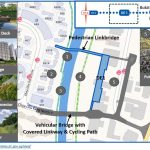
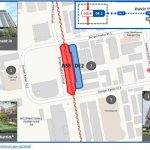
The LTA no longer publishes working names for stations, instead referring to them by station code. This started in January 2025, when LTA announced the alignment and new stations for the Downtown Line Stage 2 Extension. LTA refers to the new stations as DE1 station, and NS6DE2 station, even though the LTMP 2040 (released in 2019) already calls the new interchange station Sungei Kadut station.
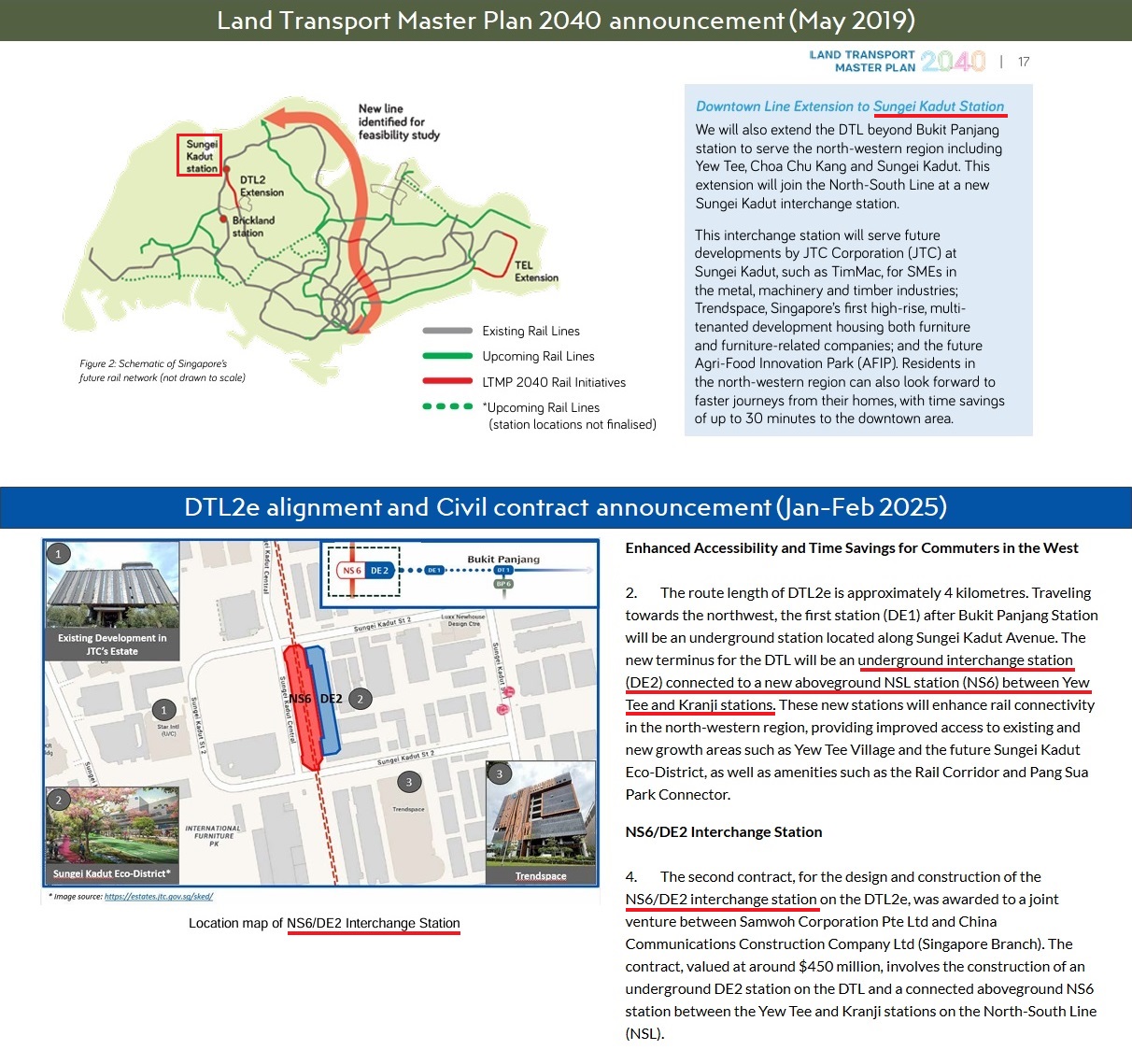
The approach has continued in subsequent announcements. LTA’s current information on the DTL2 Extension continues to identify the stations as DE1 and NS6/DE2. Likewise, when a new infill JS2A station was announced in March 2026 for the Jurong Region Line, no working name was provided.
However, there have been intermittent exceptions to this rule, such as Changi Terminal 5 MRT Station (announced in July 2025) and Brickland station (announced May 2019, civil contract awarded December 2025), wherein LTA stated in both instances that this was the station’s working name.
Removal of previously-published names
Working names for some upcoming Jurong Region Line and Cross Island Line stations, which had previously been published by the authority, were subsequently removed from its public-facing material.
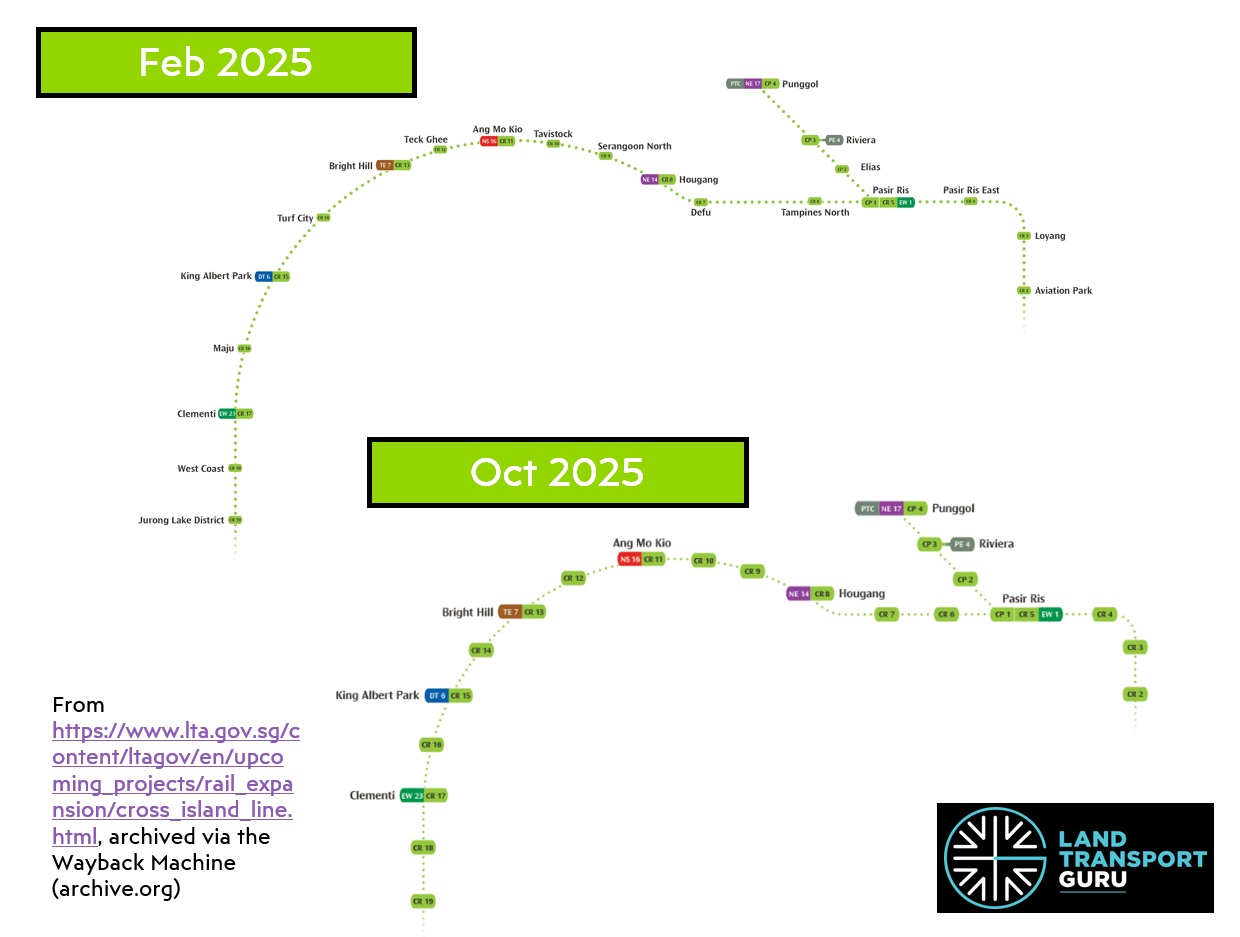
When the JRL’s alignment was announced in 2018, all stations were assigned working names. This was subsequently removed from LTA’s website sometime between 2019 and 2020, leaving only the names of interchange stations with existing lines. Likewise for the CRL, the names of all non-interchange stations were removed in mid-2025.
Therefore, when the CRL3 was announced, LTA did not name CR21JS12 station, despite previously announcing it as Jurong Pier, as JRL station names had been retroactively omitted.
These changes highlight that LTA is not merely withholding information about station names at an early stage of planning, but has also moved in the opposite direction by removing information that was already publicly available.
| Stations with previously-announced names, since removed: | |
| Jurong Region Line | Cross Island Line |
|
|
Lack of Communication
Working names are inherently provisional and can be changed before a station’s final name is gazetted, which is why they are called “working names”. But if the concern is that members of the public might become unhappy when a working name is changed, refusing to disclose the initial working name altogether is not the right solution.
There is a fundamental difference between saying, “This is the working name, and it may change,” and saying, “We will not tell you the working name at all.” The former provides information while managing expectations; the latter provides less information simply to avoid the possibility of confusion or complaints later.
If the underlying concern is that the public may object when a provisional name changes, the more appropriate response would be to communicate its provisional nature clearly — not to stop publishing the name altogether.
After all, LTA has already demonstrated that it knows how to make this distinction. Its previous announcements for Changi Terminal 5 and Brickland clearly state that these are working names, and not final.
Name versus a code
LTA’s rail projects are publicly funded infrastructure projects that take many years to plan and construct. During this period, the public follows these projects through planning announcements, environmental studies, construction contracts, system maps and other updates.
A working name provides a useful geographical reference throughout this process. It helps residents understand which part of their neighbourhood a project concerns, and allows the wider public to associate a station with its surrounding area. This is particularly useful when discussing a project years before the station eventually opens.
An alphanumeric code, by comparison, conveys considerably less information to someone who is not already familiar with the project’s station numbering system. A station referred to as “DE1” or “JS2A” may be precise from an engineering or administrative perspective, but does little to communicate where the station is, or what it is intended to serve.
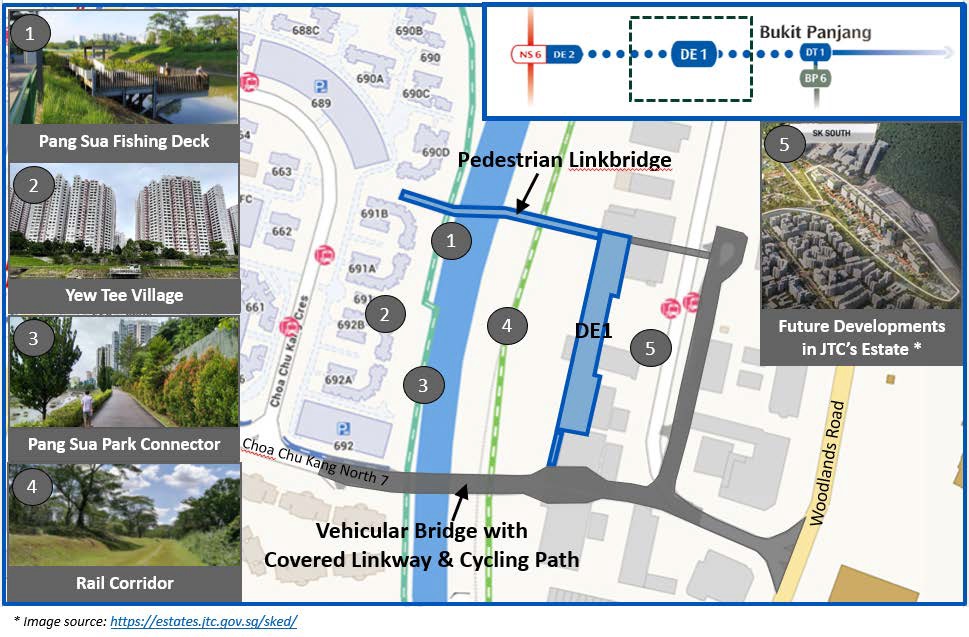
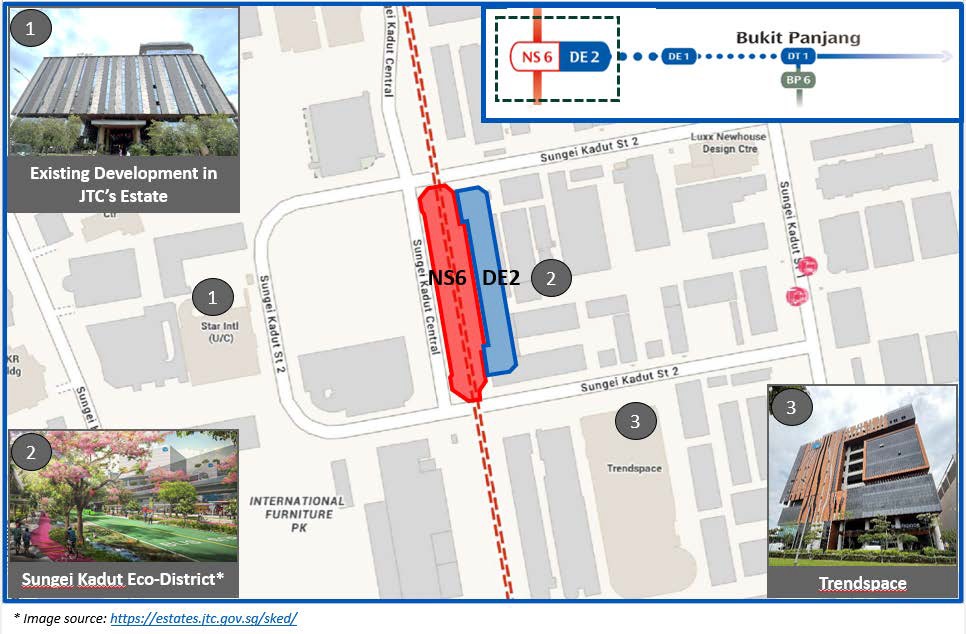
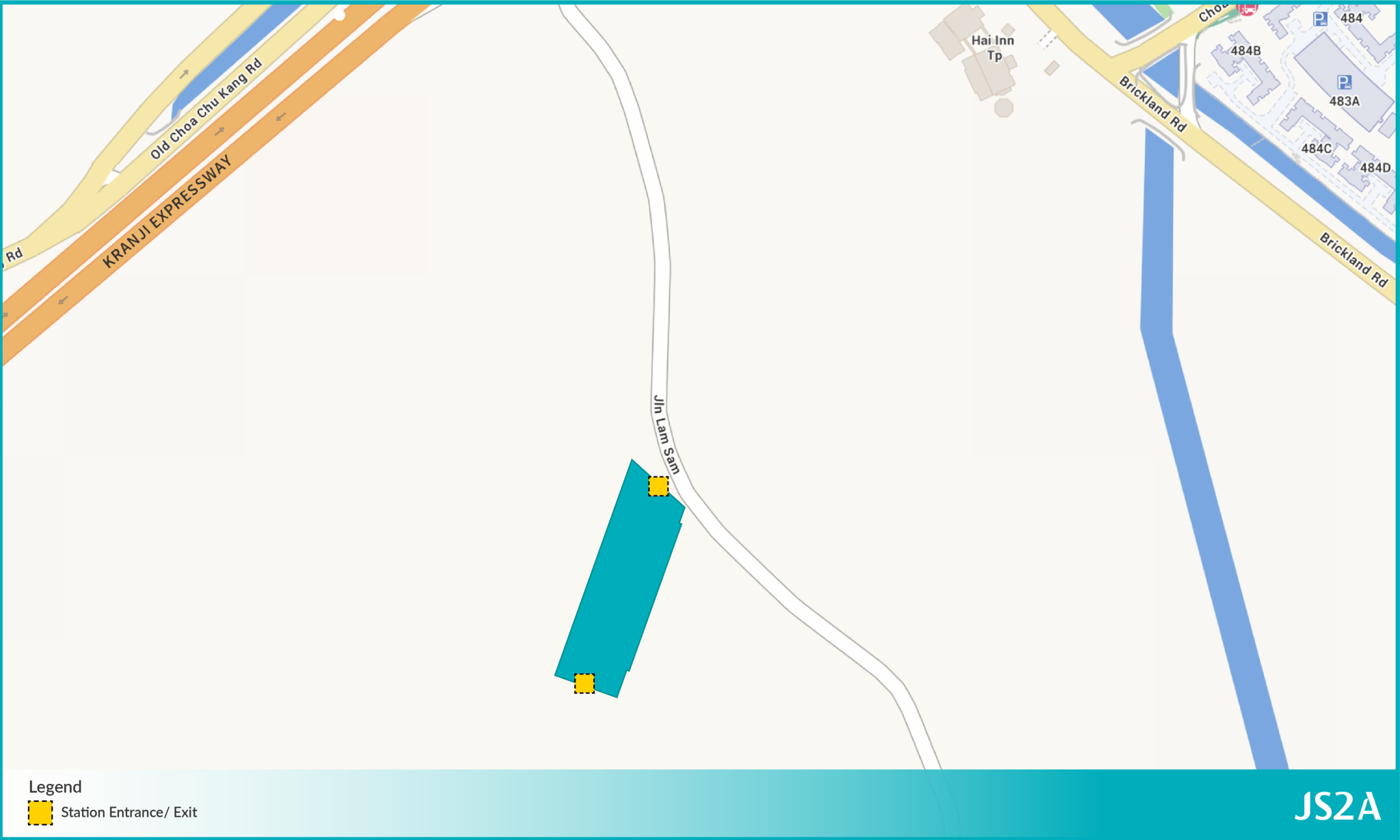
Historically, LTA previously managed this distinction between working and final names quite effectively: it could provide a working name for public reference while explicitly stating that the name was provisional. There is little evidence that this approach was inherently confusing. Indeed, LTA continues to conduct public consultation on the names of stations before settling on a final name.
If LTA has decided that working names should no longer be disclosed because they may subsequently change, it should simply say so. More importantly, the public deserves a straightforward explanation of when this practice changed, why it was introduced, and why previously published working names have subsequently been removed from some of LTA’s public materials.
This may seem like a minor issue in the context of building out Singapore’s multi-billion-dollar rail network. But transparency is not only about disclosing major decisions; it is also about being consistent and explaining when established practices change.
Video
Also at:
- Jeffrey Siow announces 4 new Cross Island Line stations, jokes about not being allowed to reveal names – CNA [Link to YouTube Shorts]
External Links
This is a commentary by Land Transport Guru.
I need it’s working names for the future upcoming stations.
My main guess is that LTA got tired of publishing names early, and then getting told off by the public because they all suck.
Particularly the JRL, maybe that started it all. IMHO:
Maybe some Teban residents were unhappy from being omitted from JE7
JS5 Corporation looks misleading and the name should be given to CR20 instead
JW5 Peng Kang Hill makes no sense. In fact all the NTU stations should simply be named Nanyang East/North/West.
I disagree with naming stations solely based off compass directions (north/south/east/west).
It is confusing especially to the elderly, even middle-aged people, who may confuse one station with another. Had an experience one time where I asked someone to meet up at Woodlands South station, only for them to show up at Woodlands station instead, because they did not know what “Woodlands South” is.
Sure, technology exists, but you simply cannot beat the convenience of not using your devices just to know where you are. As arbitrary as these names are, people will just naturally get used to them over time, otherwise we would have even less descriptive stations like Woodlands East and West as well instead of Admiralty and Marsiling
Not to forget Bedok North station, which has a completely misleading name since it isn’t even in Bedok North proper but in the Bedok Reservoir area. Even “Bedok Town Park” would’ve been a better name for it
If changing the name of a station makes people unhappy, withholding the name of a station would probably make more people unhappy (and confused)…
I don’t think withholding working names necessarily means less transparency. A working name is an internal, provisional identifier—not information intended to be final. Even with disclaimers, people often become attached to provisional names and are disappointed when they change. Using station codes until names are properly consulted on and confirmed helps avoid unnecessary confusion. Transparency isn’t about publishing every draft detail; it’s about providing accurate and reliable information at the right stage of the project.
Having a working name helps me to understand the article & location better. I may not know what extent of unhappiness cud arise from change of stn name downstream but i thot it’s about the timely completion of stn & convenience that matters more.
Thanks.